Keen on Green

Summer is winding down and the fall equinox is just around the corner. So in this, the second in a series of colour blogs, I pay tribute to our brief but beautiful summer by going GREEN. Green is the colour of life. The cells of plants and algae contain chlorophyll, a pigment that absorbs red and blue light, reflecting green back to our eyes. This wonder molecule eats sunlight and converts it into sugars via photosynthesis. All the rest of us, from mushrooms to moose, feed higher up the food chain and owe our existence to this green energy.

Seasonal Greens

Spring Greens

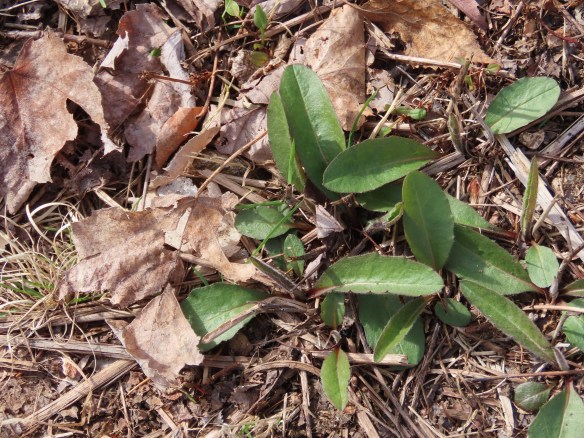
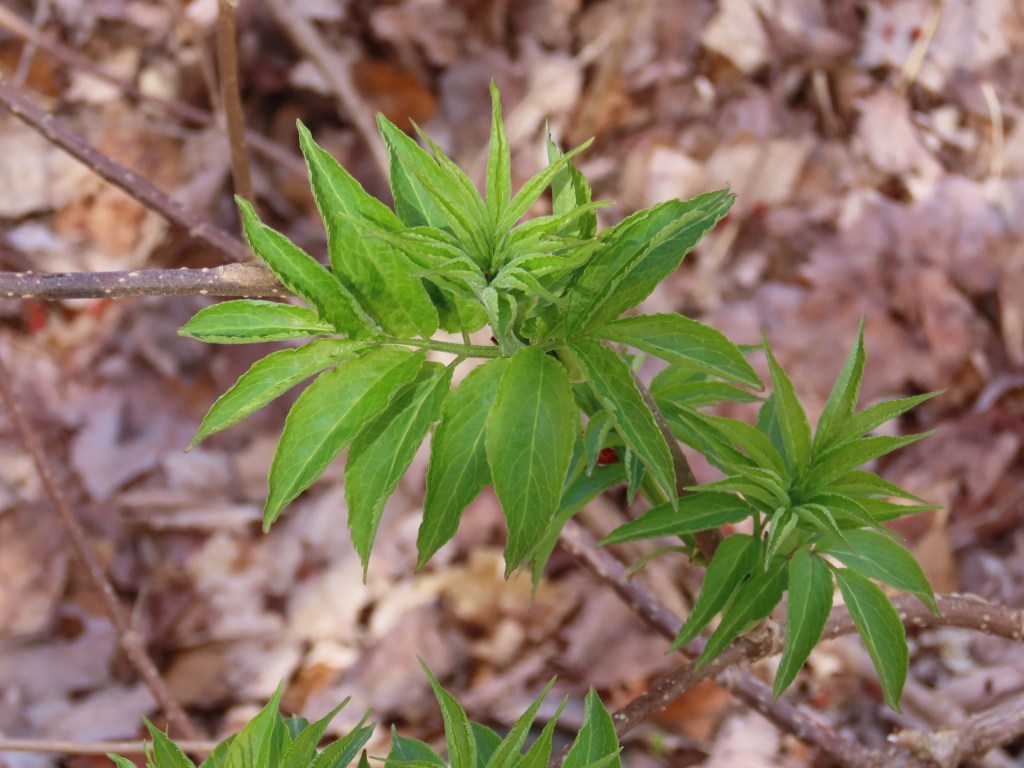
Green is the colour of new life after winter’s long sleep. Spring tends to be cool here in Cape Breton, and green things are slow to show. My first colour blog, Mellow Yellow, featured yellow as the colour of spring since it is the colour of some early-blooming flowers. Those sunny hues are soon followed by the first green plants to push up through the drab leaf litter. Wild strawberries, bunchberry and the dreaded ubiquitous hawkweed all arrive in mid-May. Shrubs like elderberry and raspberry also leaf out early.
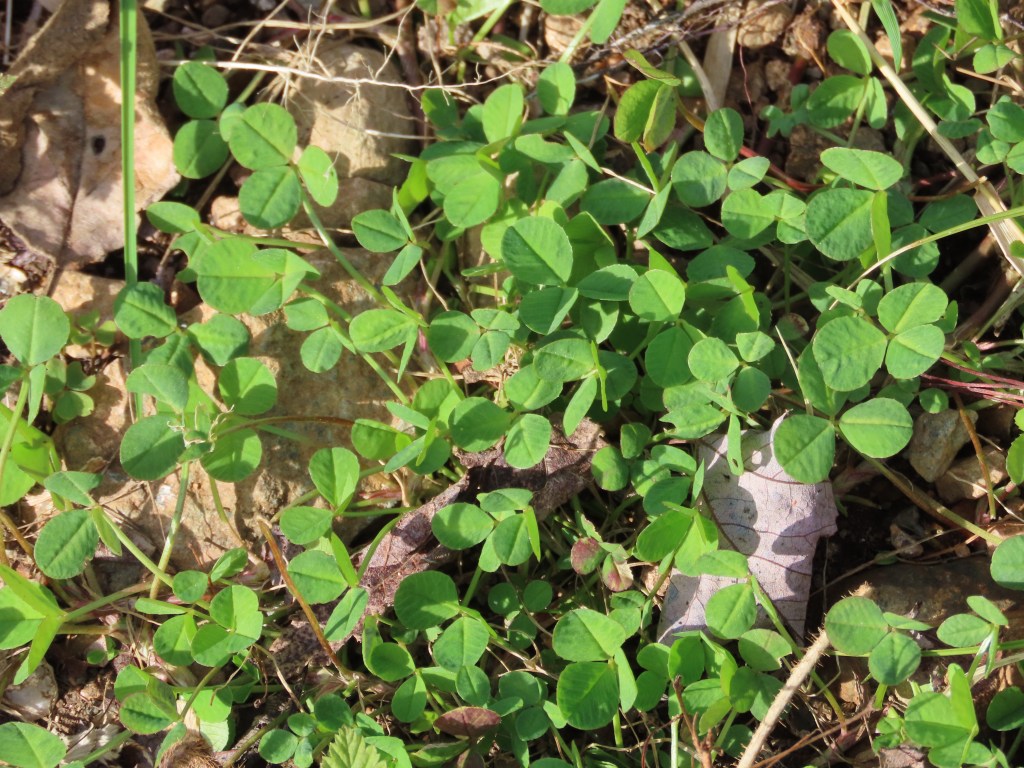
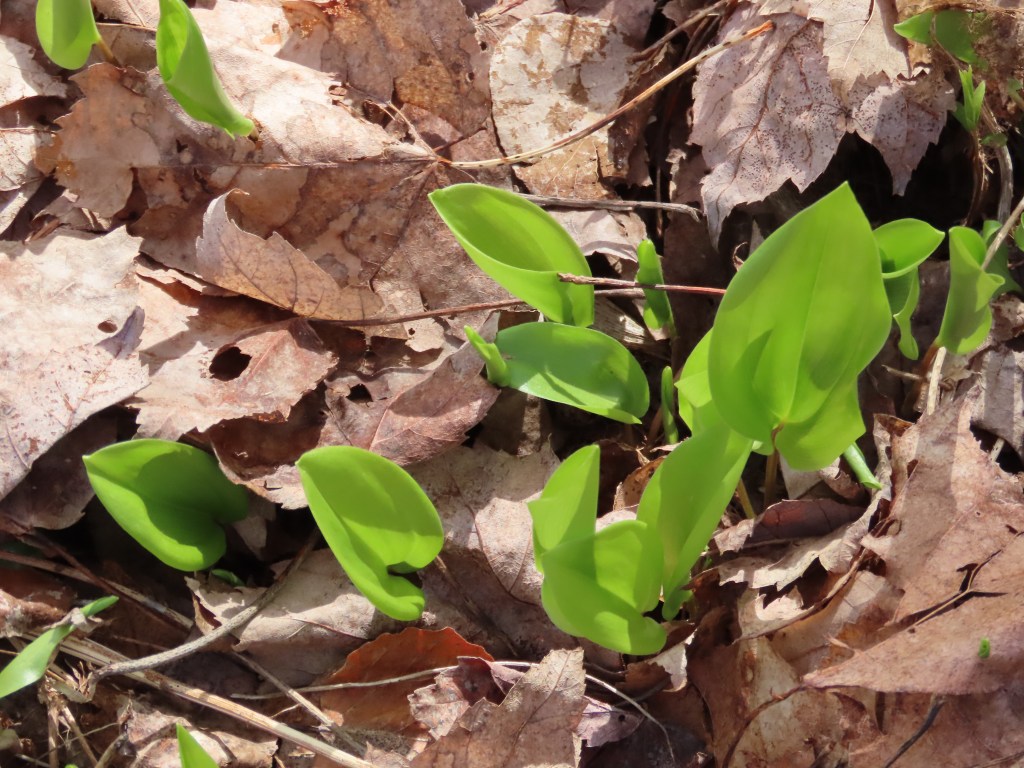
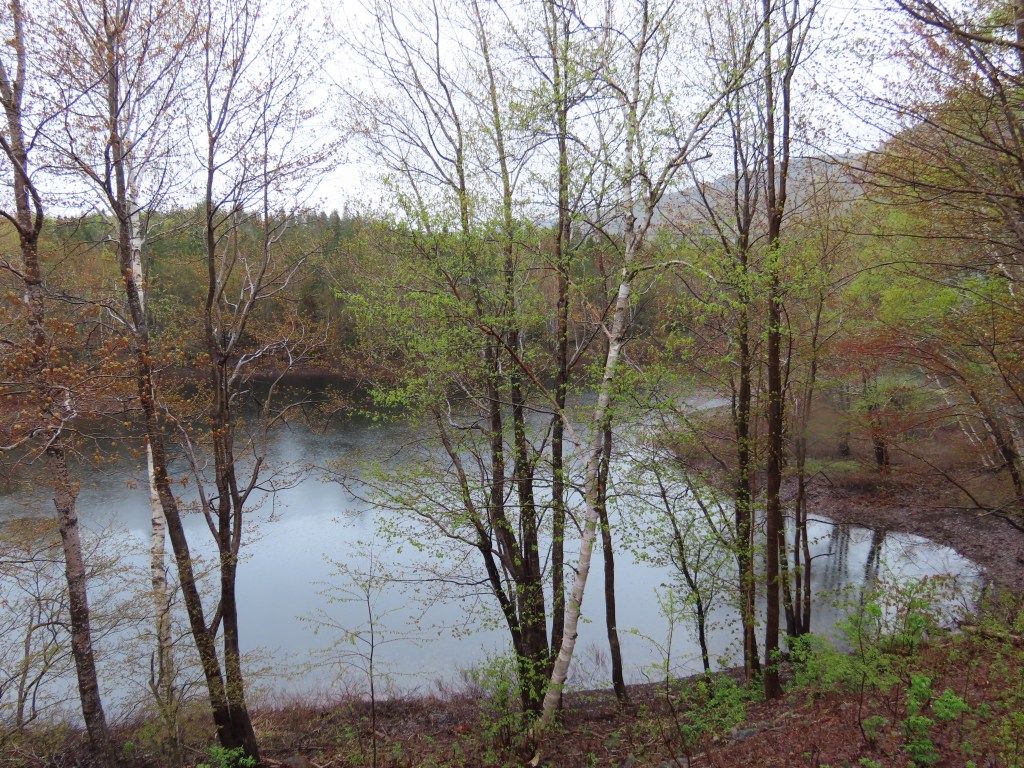
This past spring was cooler than ususal, and the deciduous trees were even later to leaf out. Bright green leaves didn’t appear until the end of May, but by mid-June the Holler was finally greening up.
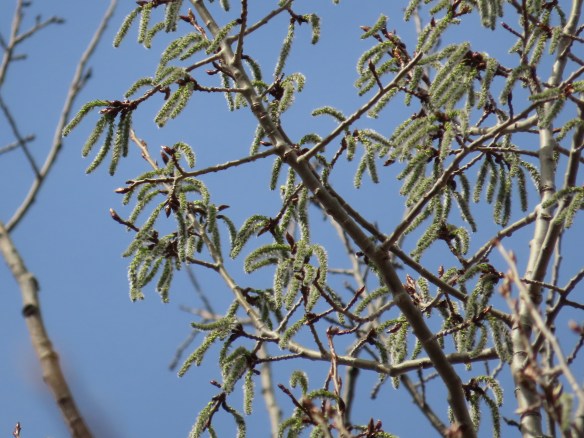
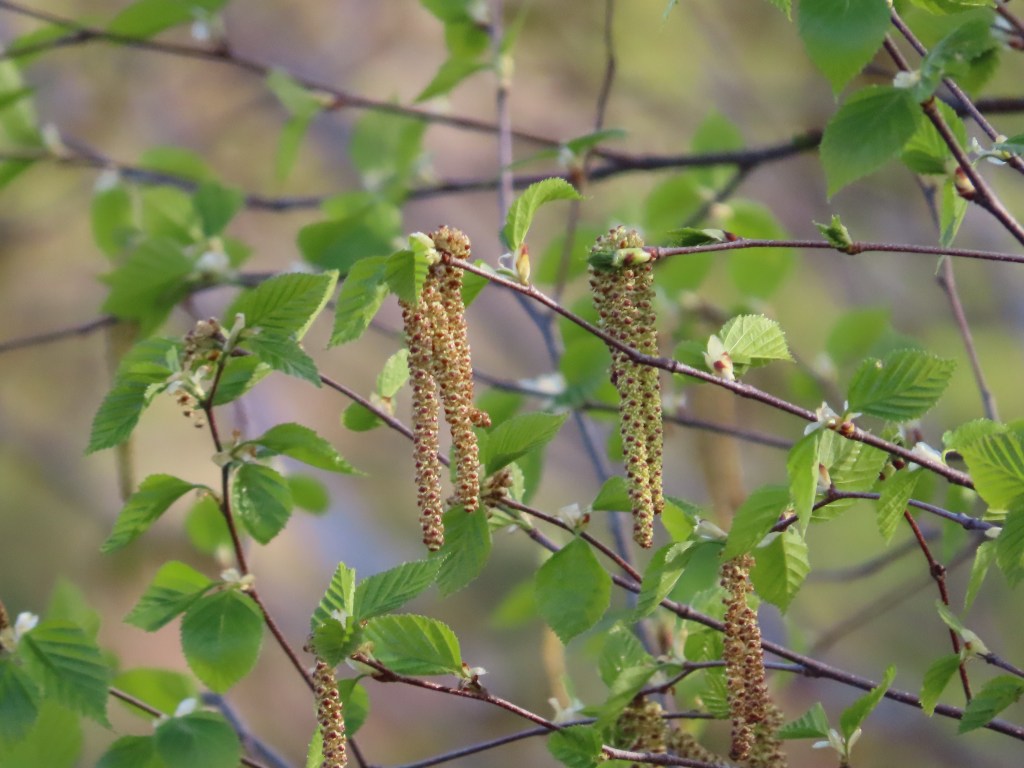
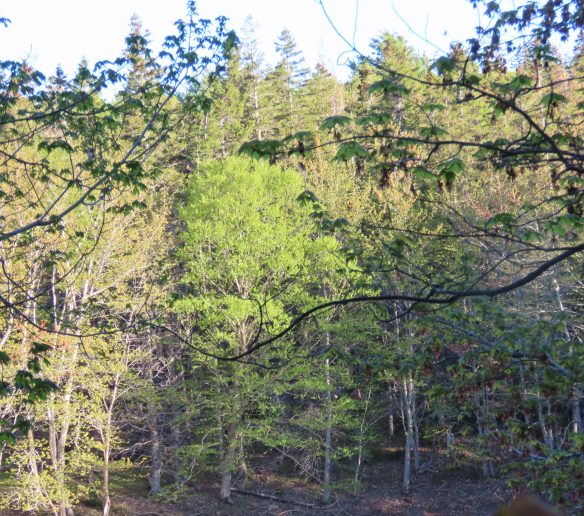
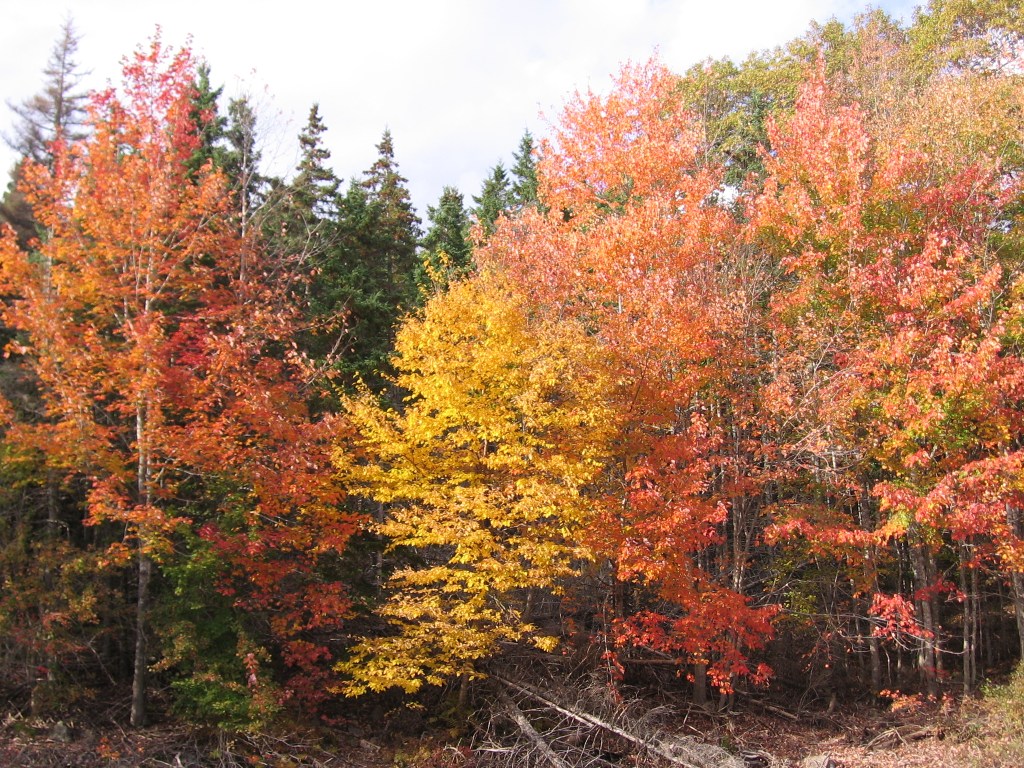
Young leaves give us a clue to their true colour. Early maple leaves tend to be tawny, their red hues mixing with green pigment. This yellow birch (below left) was bright green while its maple neighbours were still russet in late spring. This birch is one of my favourite trees and was also featured in Mellow Yellow, decked out in gold amidst the red maples (below right). It is an outstanding tree!
Summer Greens

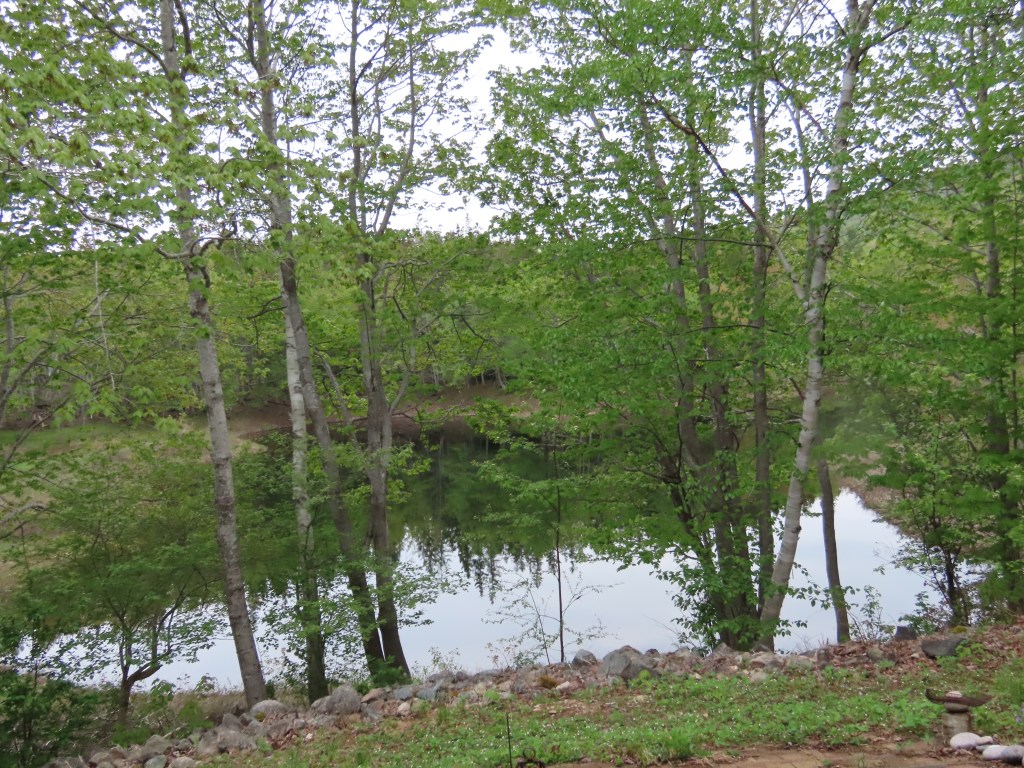
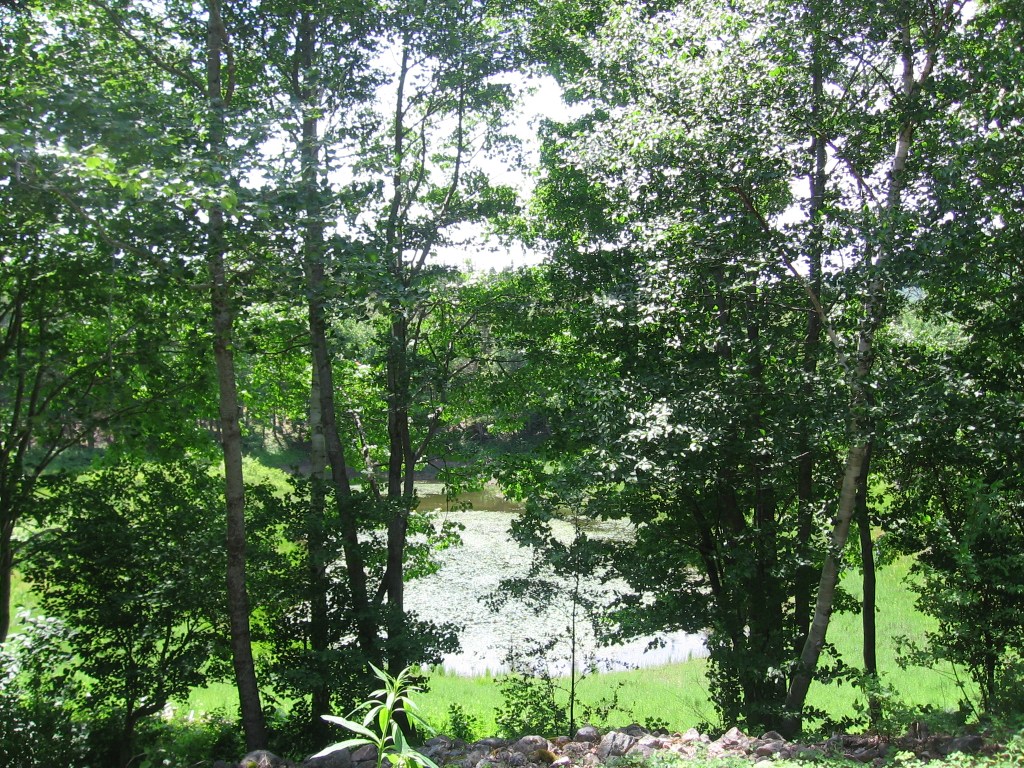
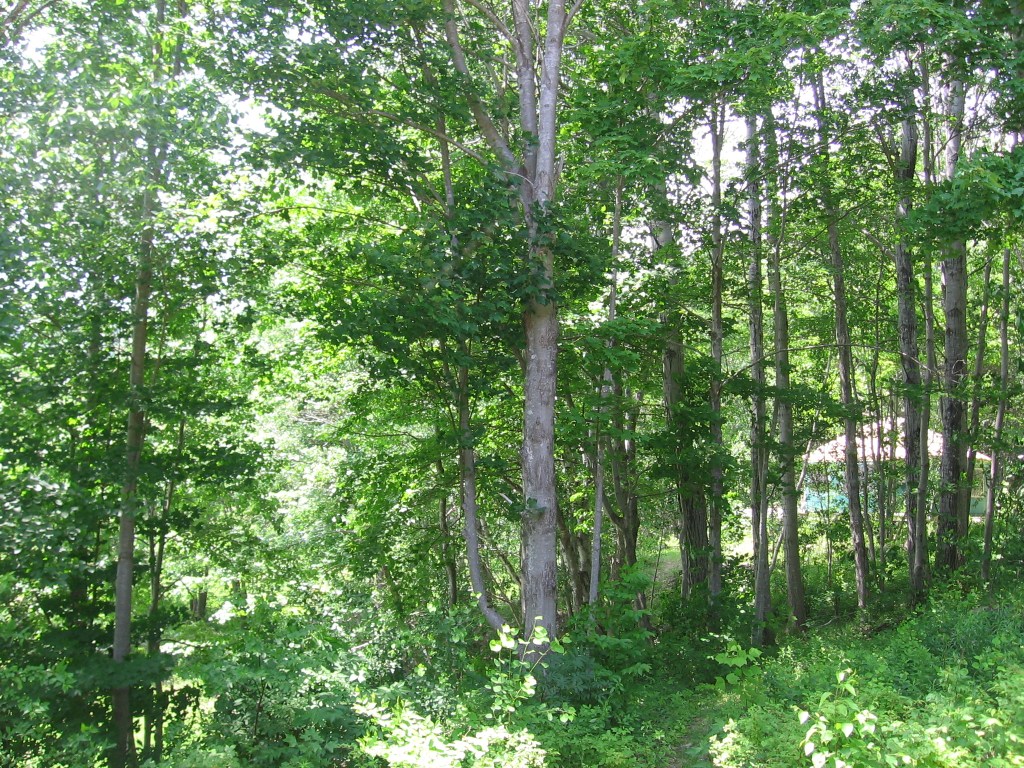
By summertime all the deciduous trees and shrubs are in full leaf. The greens become richer and deeper as the chlorophyll concentrates. Here in the Holler I am surrounded by curtains of green foliage and look down upon a carpet of green. The trees veil my view of the highlands and parts of the pond, but the shady canopy offers welcome relief in the heat of summer. In time the surface of the pond is green with lily pads.
Falling for Green

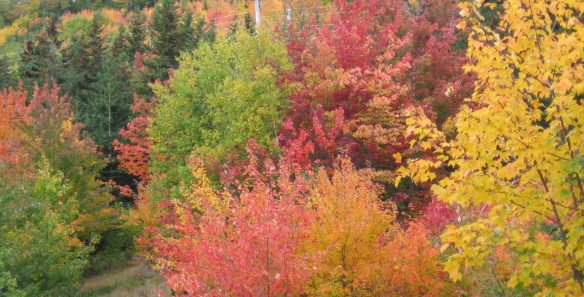
Autumn is the season of spectacular fiery shades of red, orange and yellow here in Cape Breton, but I’ll put in a plug for green. I prefer the fall foliage just before ‘peak colour’, that is, while some leafy trees are still green. I find the greens offset the complementary reds, creating a stunning contrast.

Winter Green

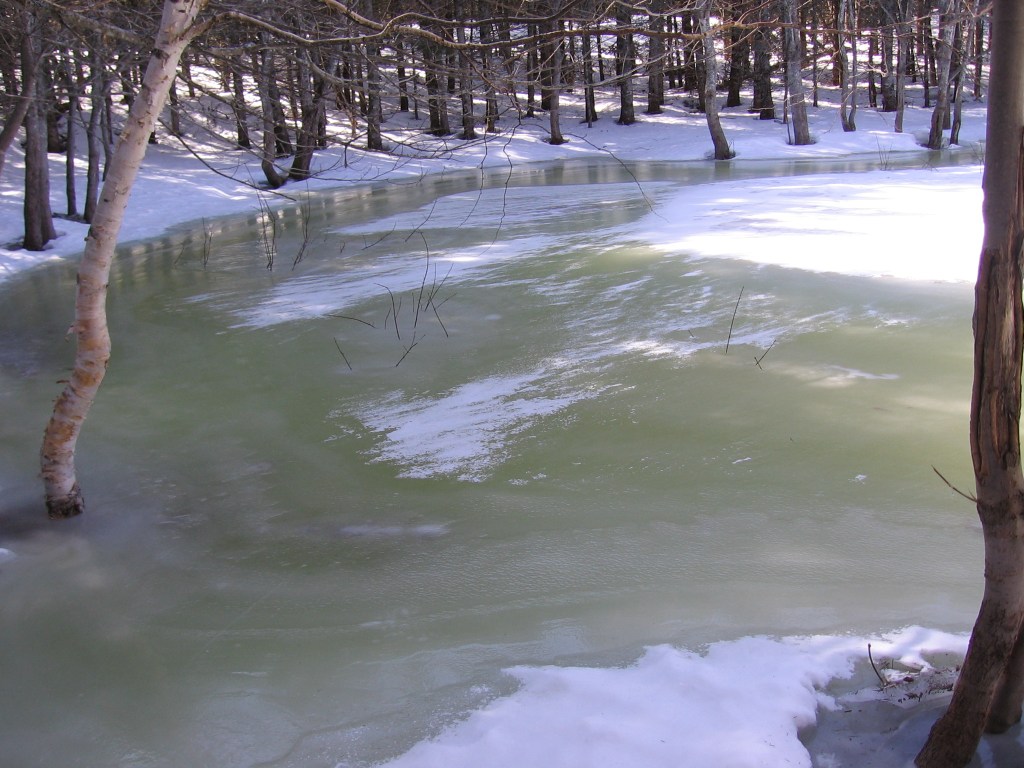
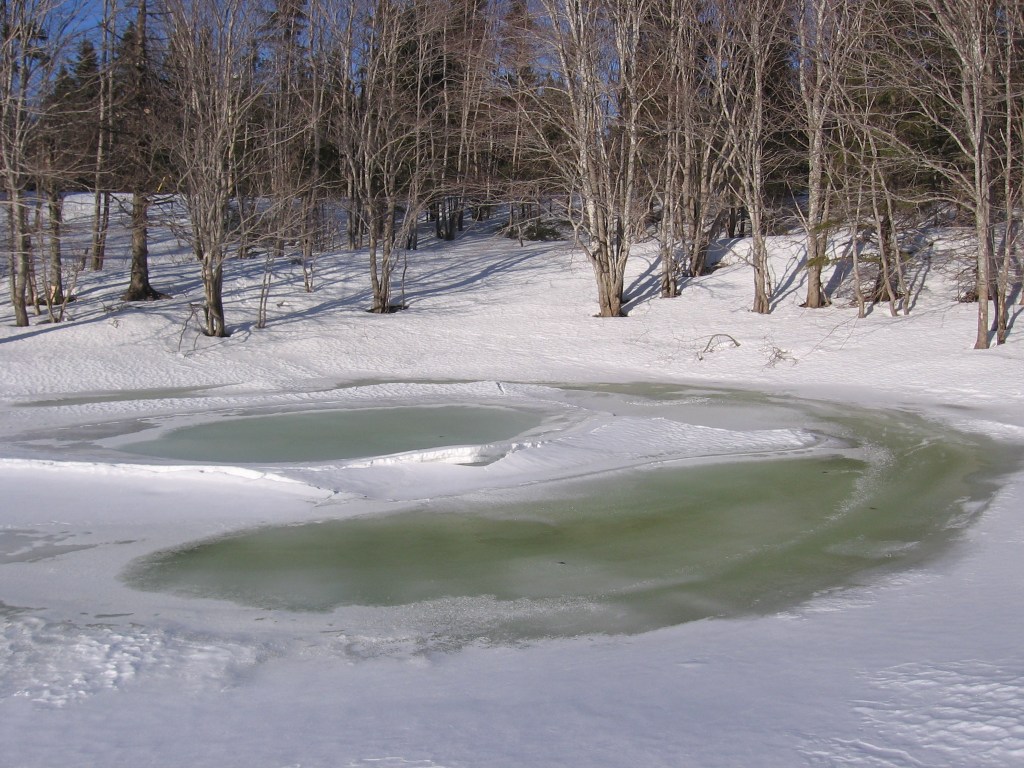
The Colours of Winter featured some winter greenery and I’m reposting some of those photos. In my diary I use a number of adjectives to describe these shades of green, such as jade, emerald, mint, peridot, sage, moss, and olive. Why is the water so green? My guess is that the colour comes from microscopic algae suspended in the pond water and then captured in the ice lattice, but I welcome your ideas and input.
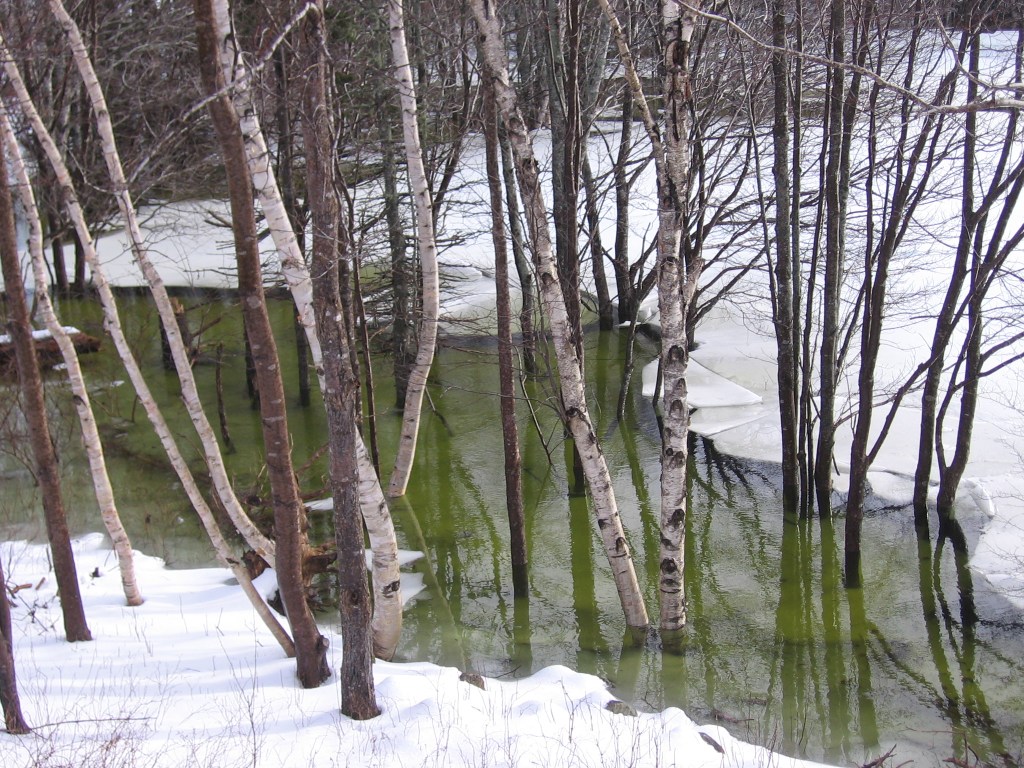
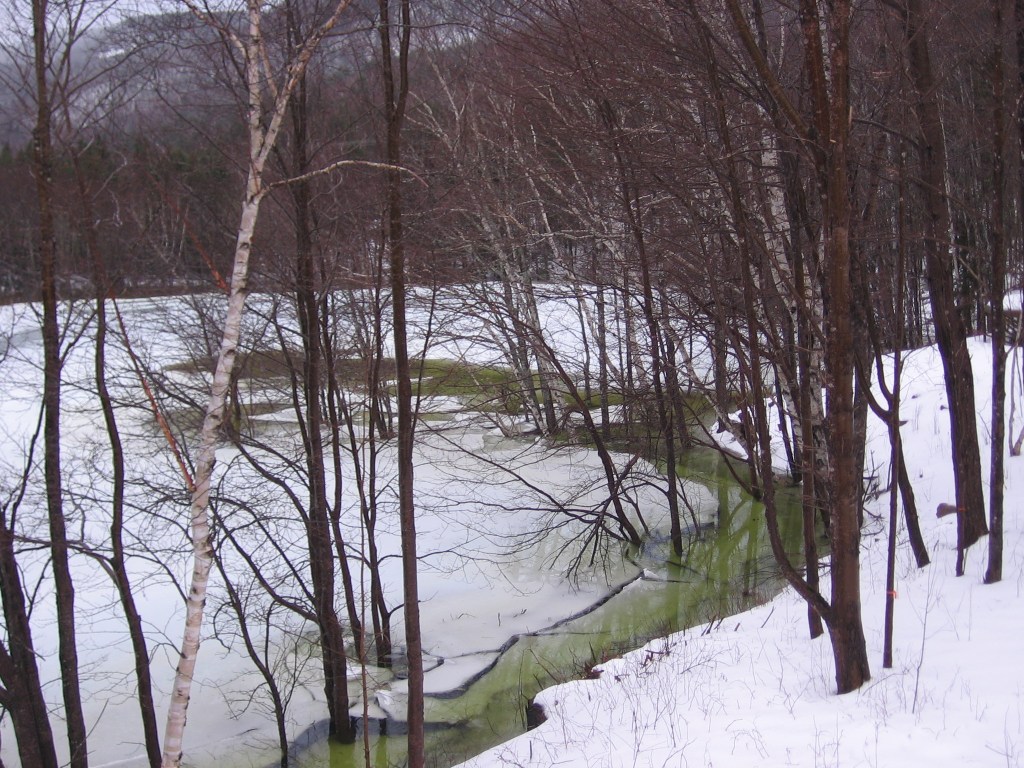
I live in a mixed forest so I see evergreens all year round. In the darkest days of December, we bring evergreens inside, putting up Christmas trees as we deck the halls with boughs of holly. A few final words on winter green. This haiku came to me while snowshoeing through the woods during a difficult time a couple of years ago. Little forest treasures can bring unexpected joy.
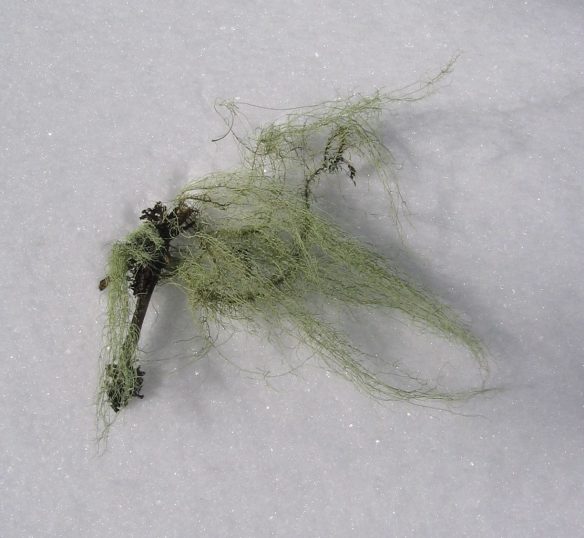
Black feather from crow
Green lichen resting on snow
Lift my heavy heart


Green scenes around the Neighbourhood

Frogs, Blobs and Lily Pads

L’il Pond is home to many green things. Aquatic plants thrive on the muddy bottom and provide shelter and food to the many invertebrates and amphibians who call the pond home. I’ve written several frog blogs, including Frogs, Globs, and Pollywogs and Swimming with Frogs, but a Green Blog would not be complete without a Green Frog – the biggest and loudest frog of all. Many species of frogs lay their eggs in the pond. Algae feed the larvae and give the eggs their green colour.
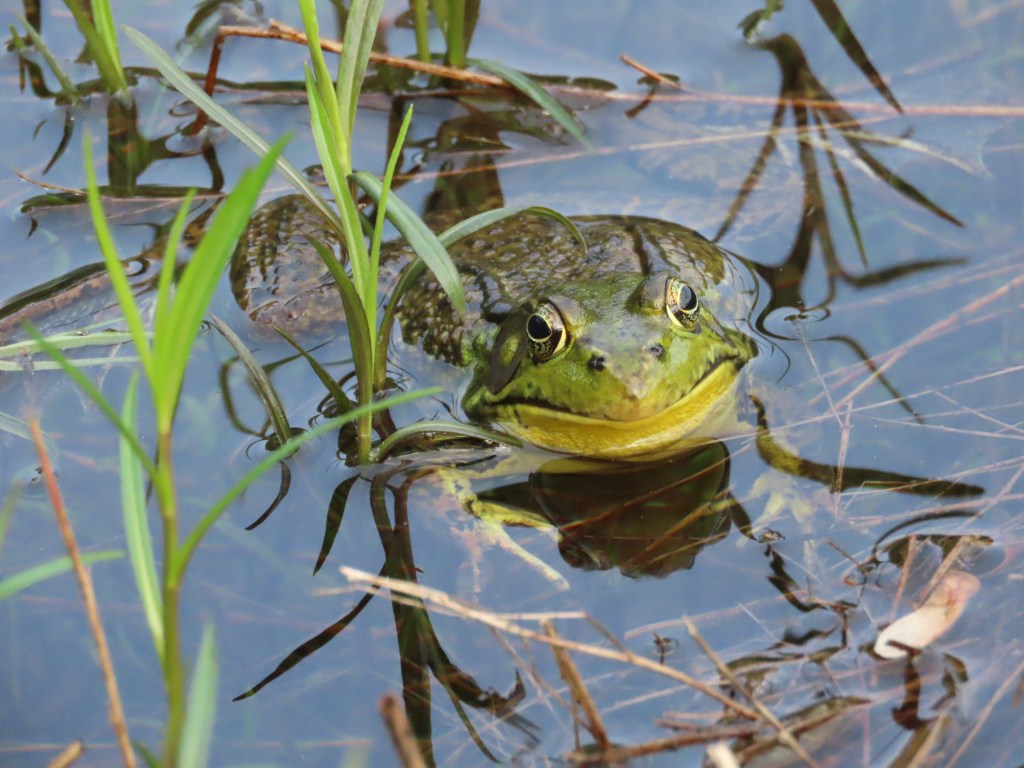
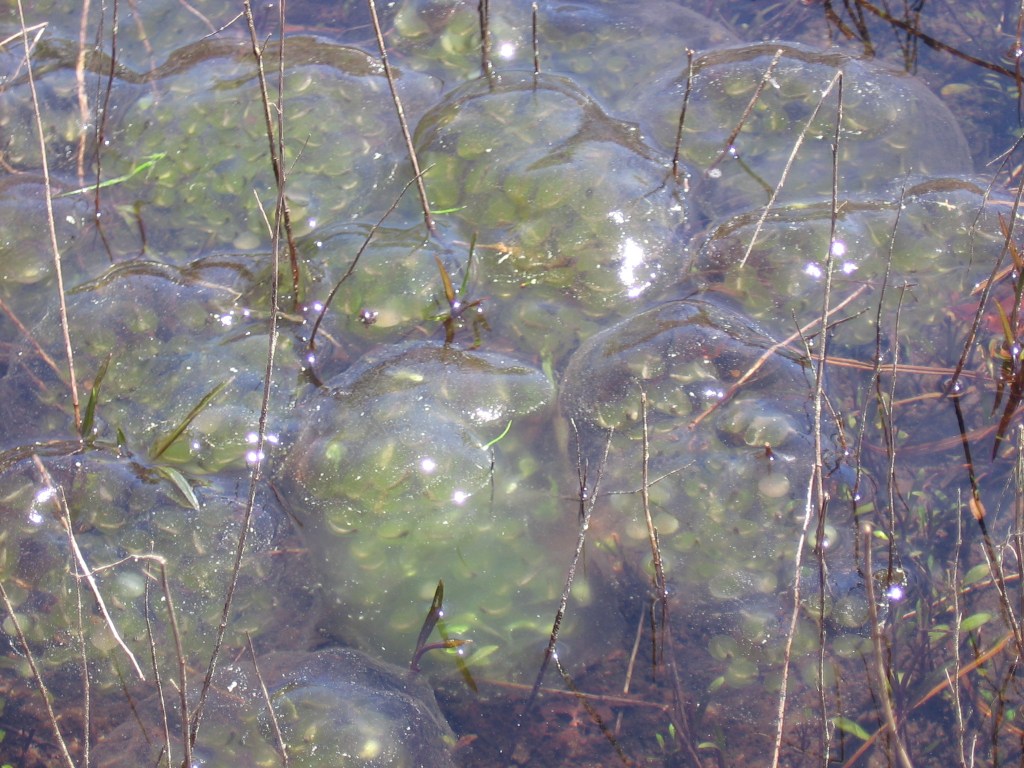
L’il Pond gets its name from the yellow lilies that grow there. The lilies grow up and the pond drops down until green lily pads cover the surface, providing shade and cover. For more on pond lilies see Ups and Downs in the Holler. Meanwhile, the banks of the pond are lush with shrubs, grasses, ferns, and wildflowers from spring though to fall.
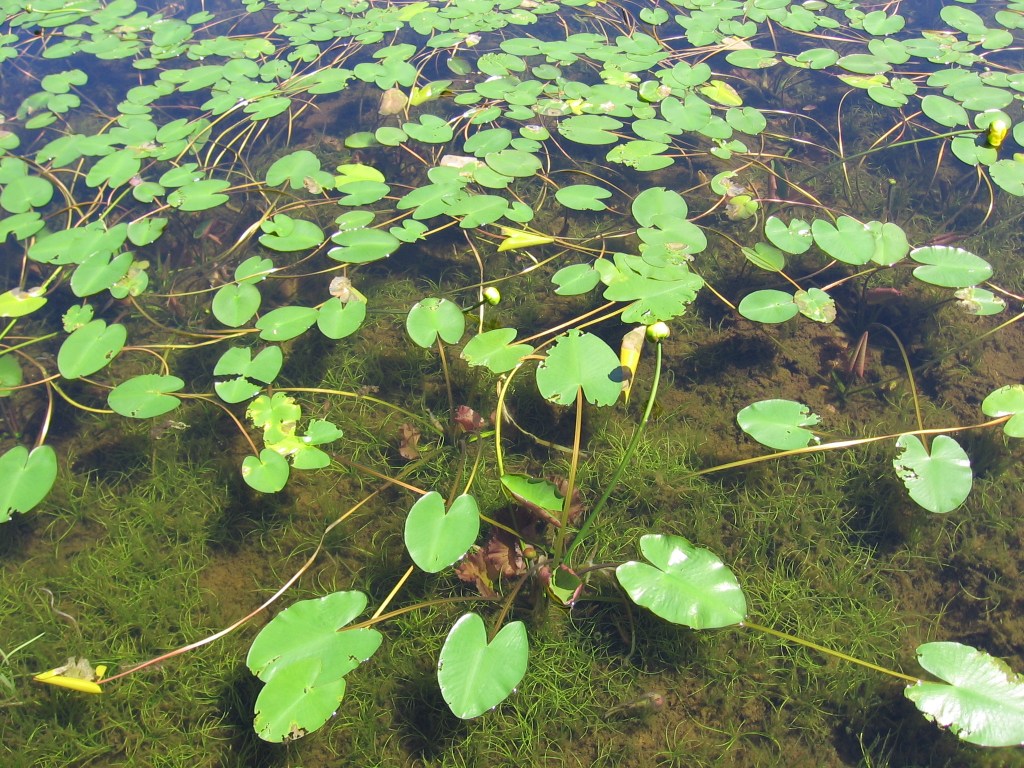
Lily pads and aquatic plants add greenery to the pond.
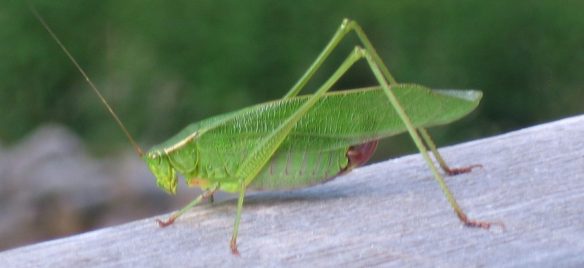
Katydid! Or didn’t she? Frogs and hummingbirds aren’t the only green critters in the Holler.

Sea Green

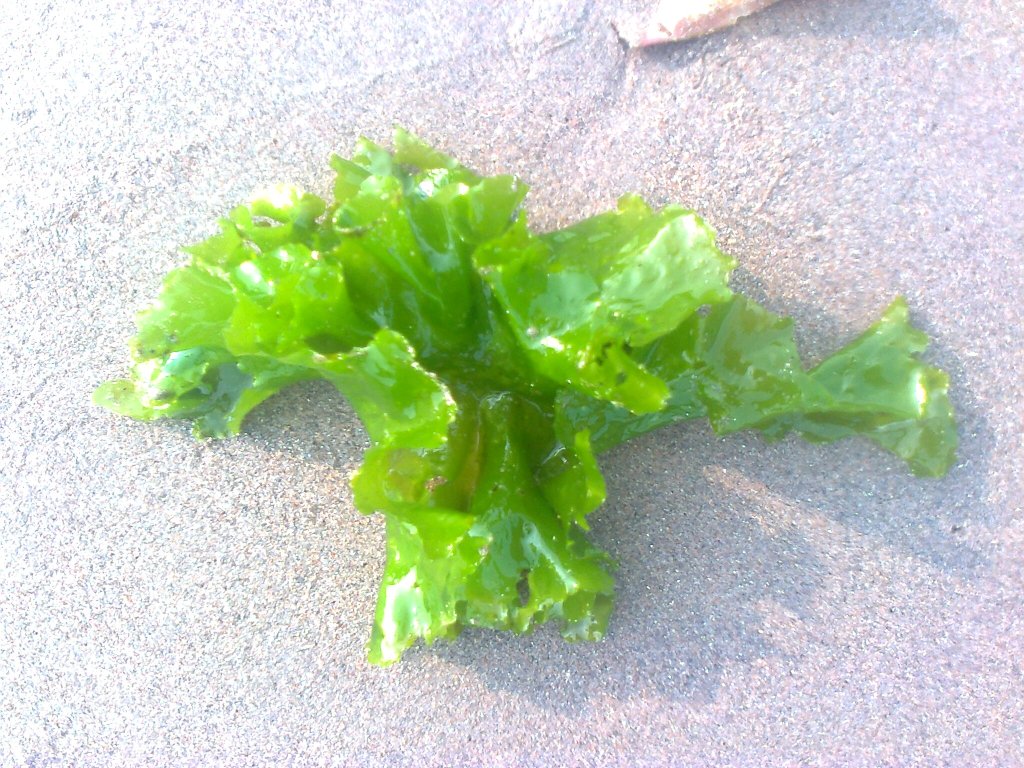
Green is not the most ubiquitous colour at the shore, but it does show up in a variety of forms. Seaweeds are actually multicellular algae rather than plants. But like plants, these marine algae contain chlorophyll and use photosynthesis to convert sunlight into sugar, and some species are edible. I like to nibble on living sea lettuce at the shore, but when it comes to kelp, I have to simmer it a long time before it’s tender enough to eat.
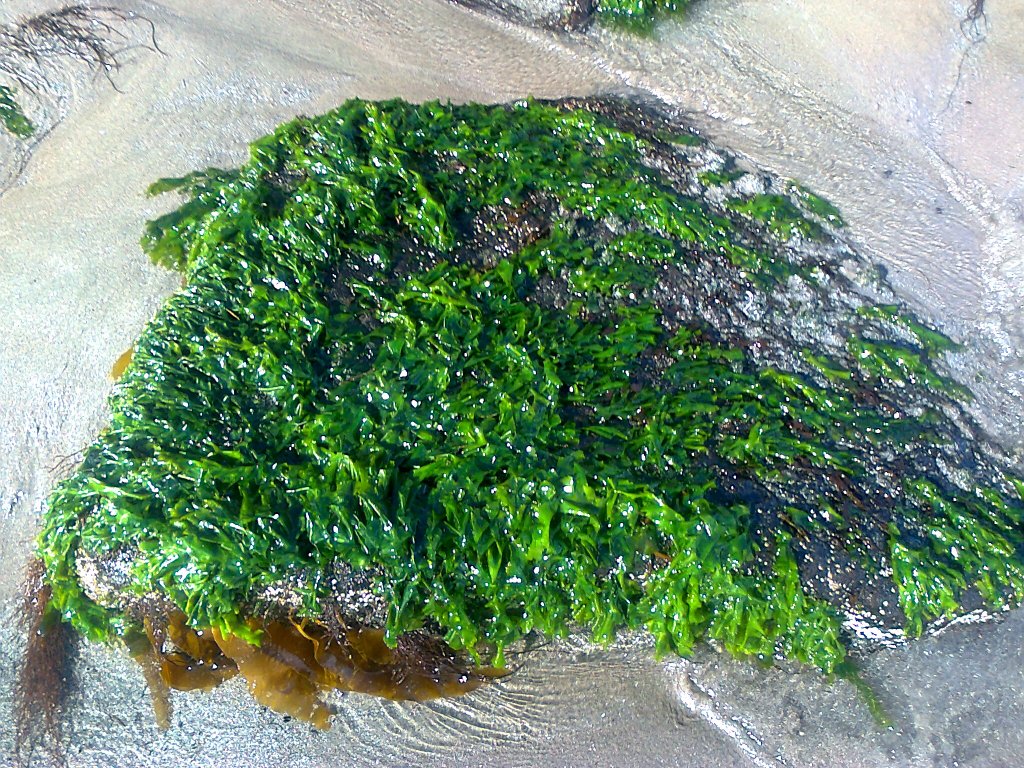
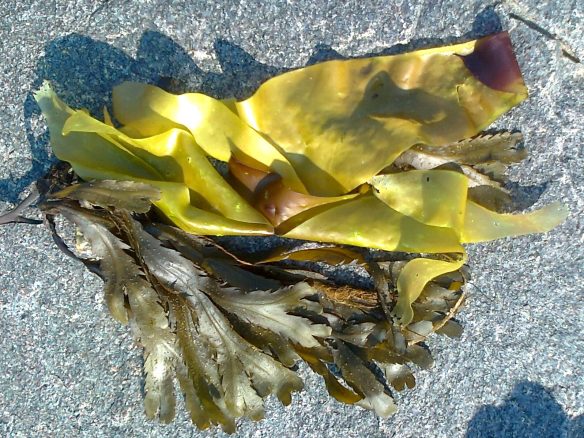
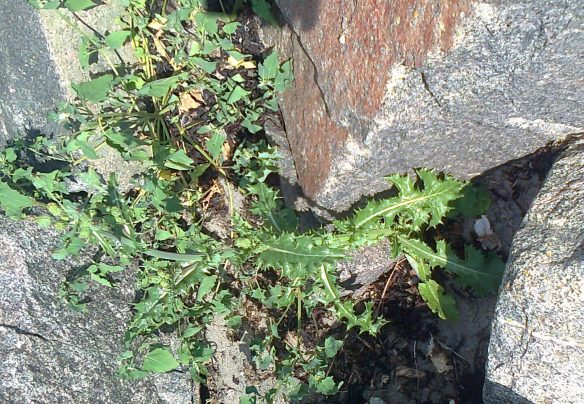
Seaweed and beach grasses are expected at the beach, but plants are such persistent opportunists that some landlubbers managed to take root in a tiny bit of organic material amongst the boulders of the breakwater. Never underestimate the power of plants!
There is a vast assortment of wonderful rocks at the shore, as I mentioned in Stones I have Known. I am always drawn to green rocks and many come home with me. I was a geophysicist, not a geologist, and I didn’t take any courses in hard-rock geology, so my igneous identification skills are a bit sketchy. Comments and corrections are welcome.
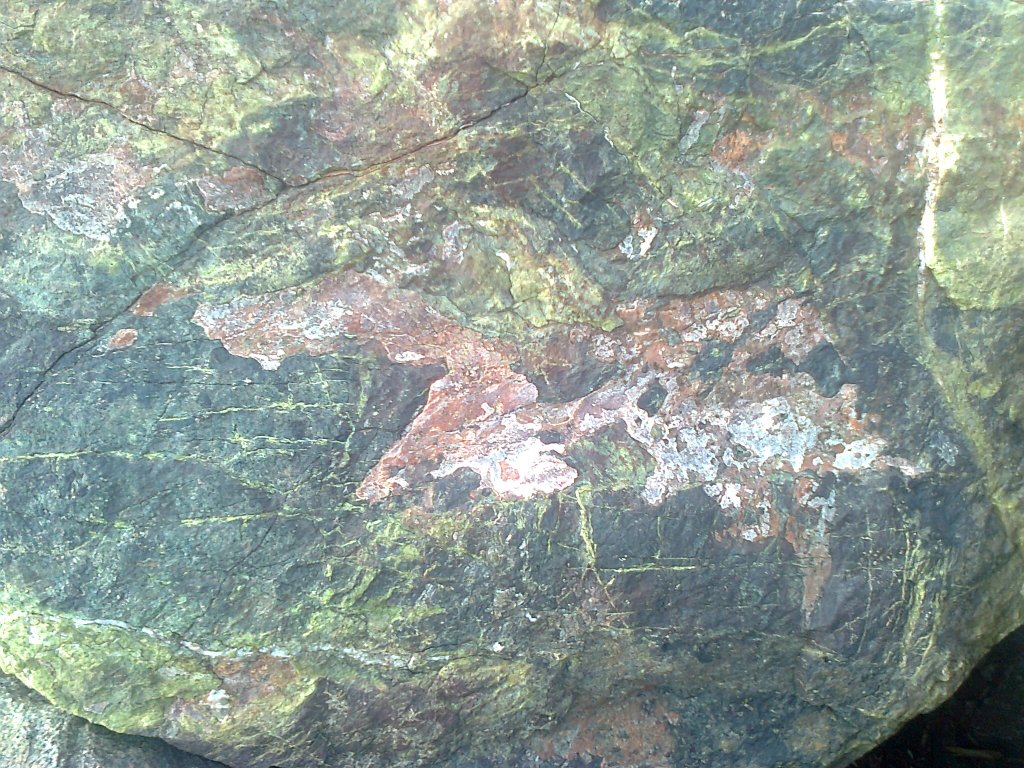
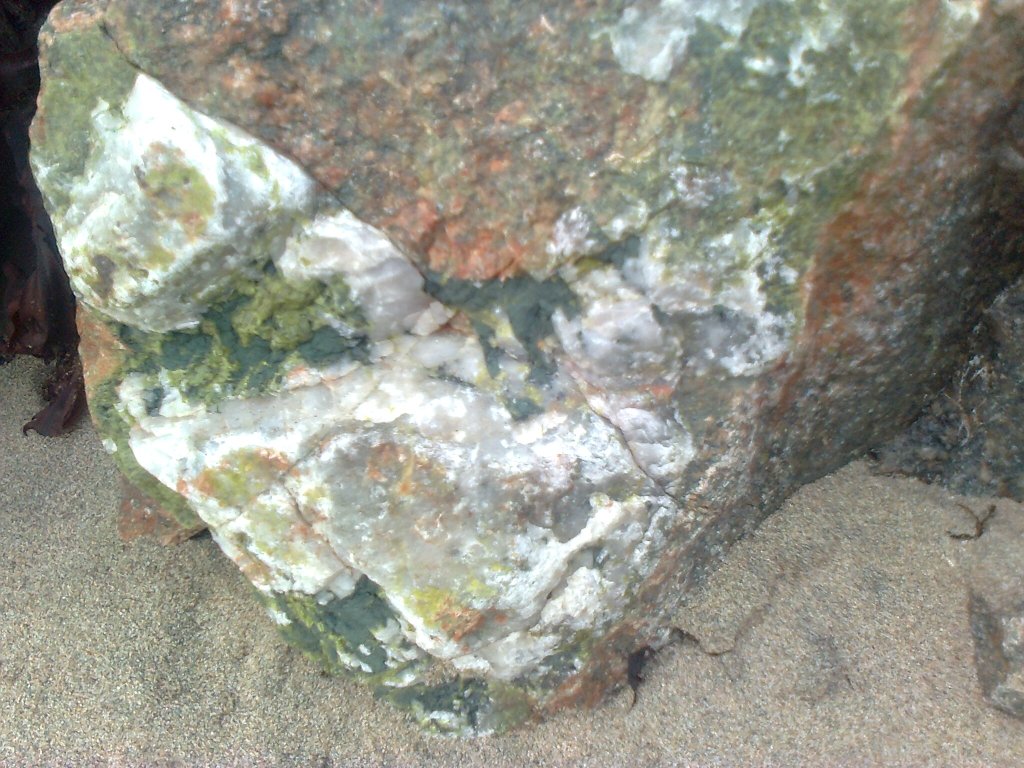
Forest Green

I could fill many blogs with photos of trees, and I did feature a few in Which Way is Up? and The Humbled Hiker. But in a sylvan world I’m also impressed by the way mosses, ferns, lichens, and fungi transform inanimate boulders and dead trees into lively green things.
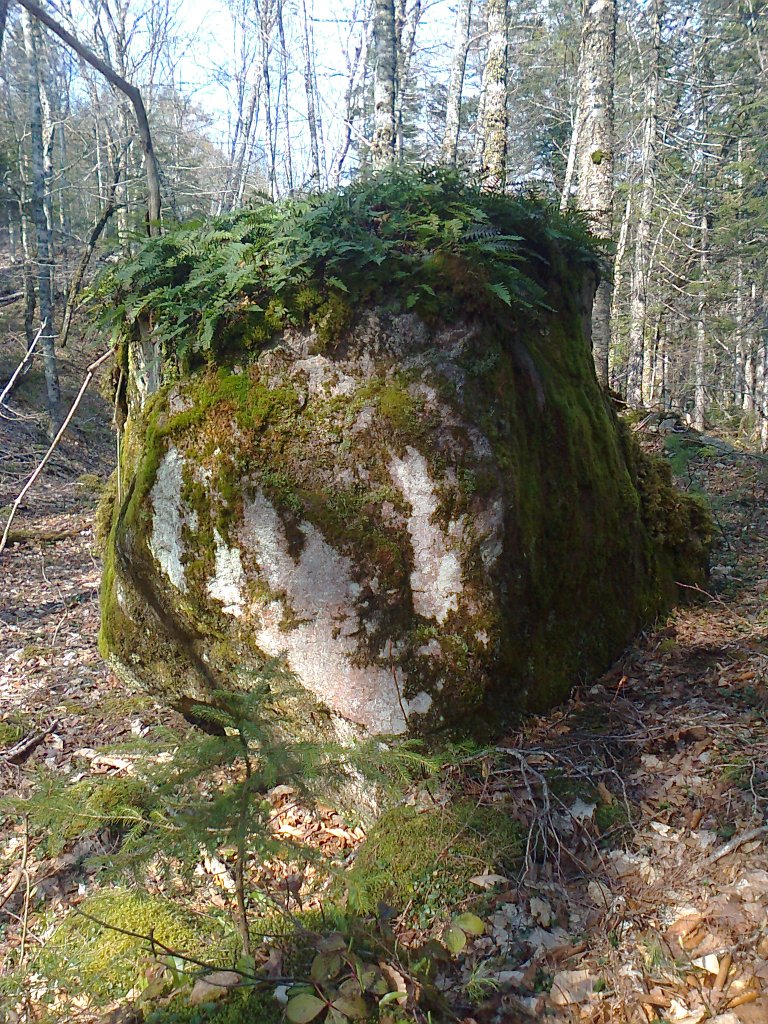
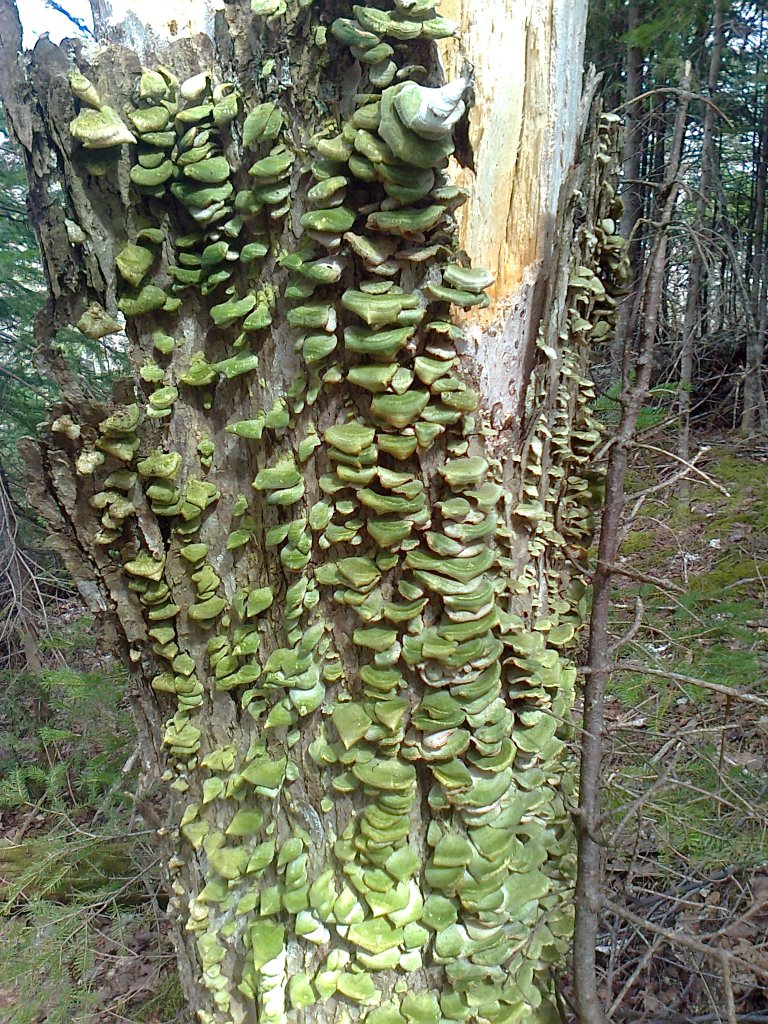
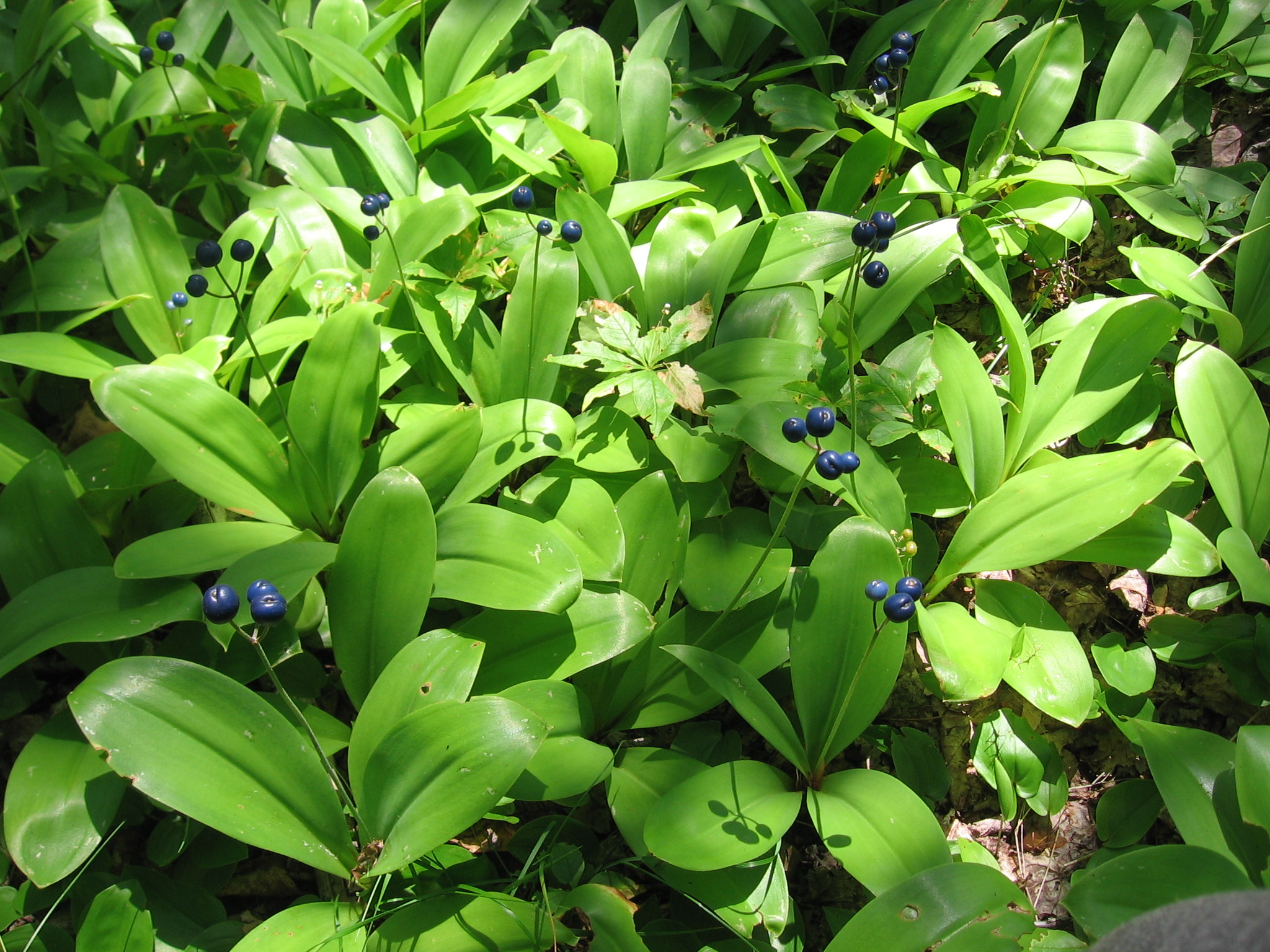
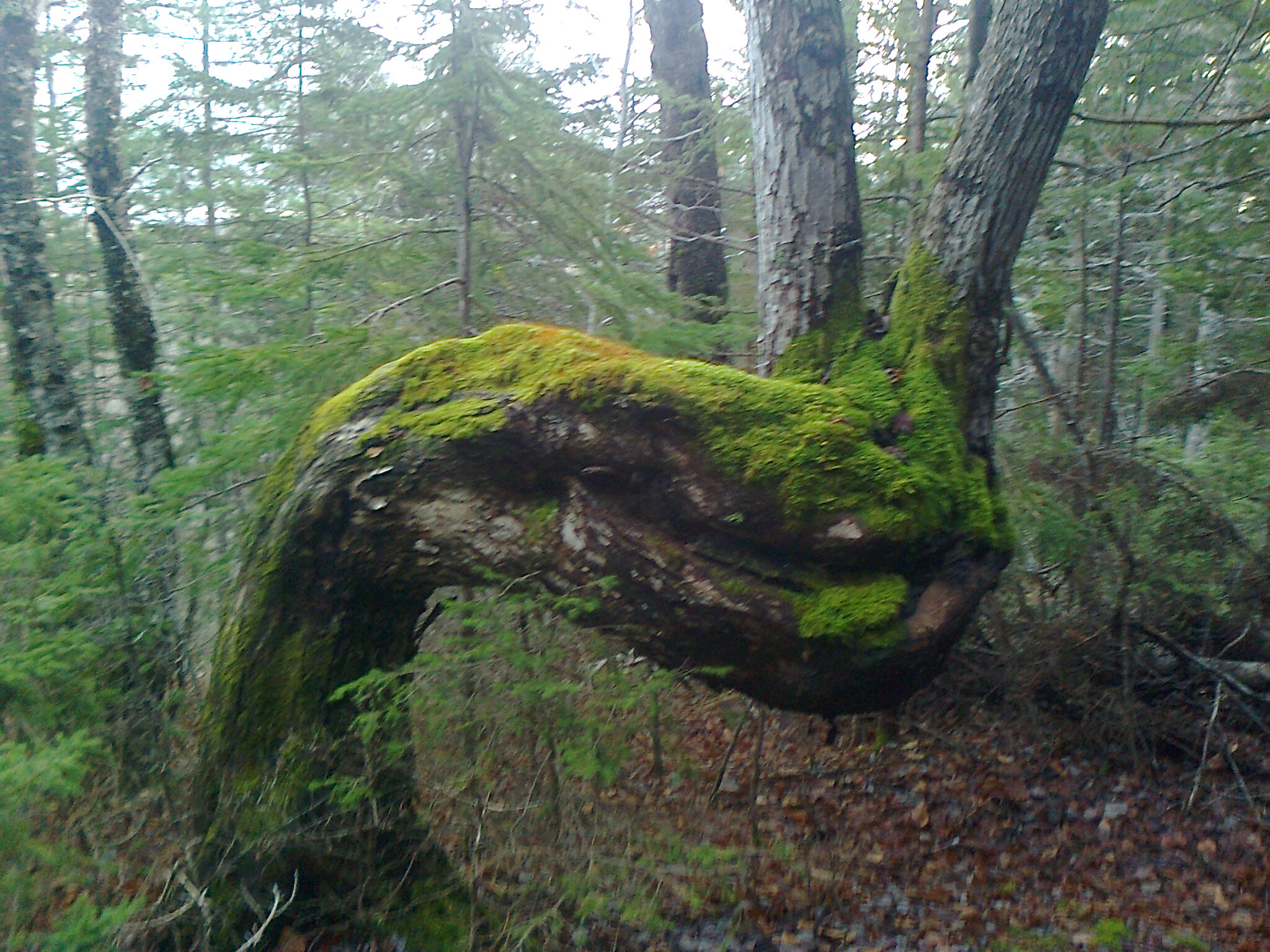
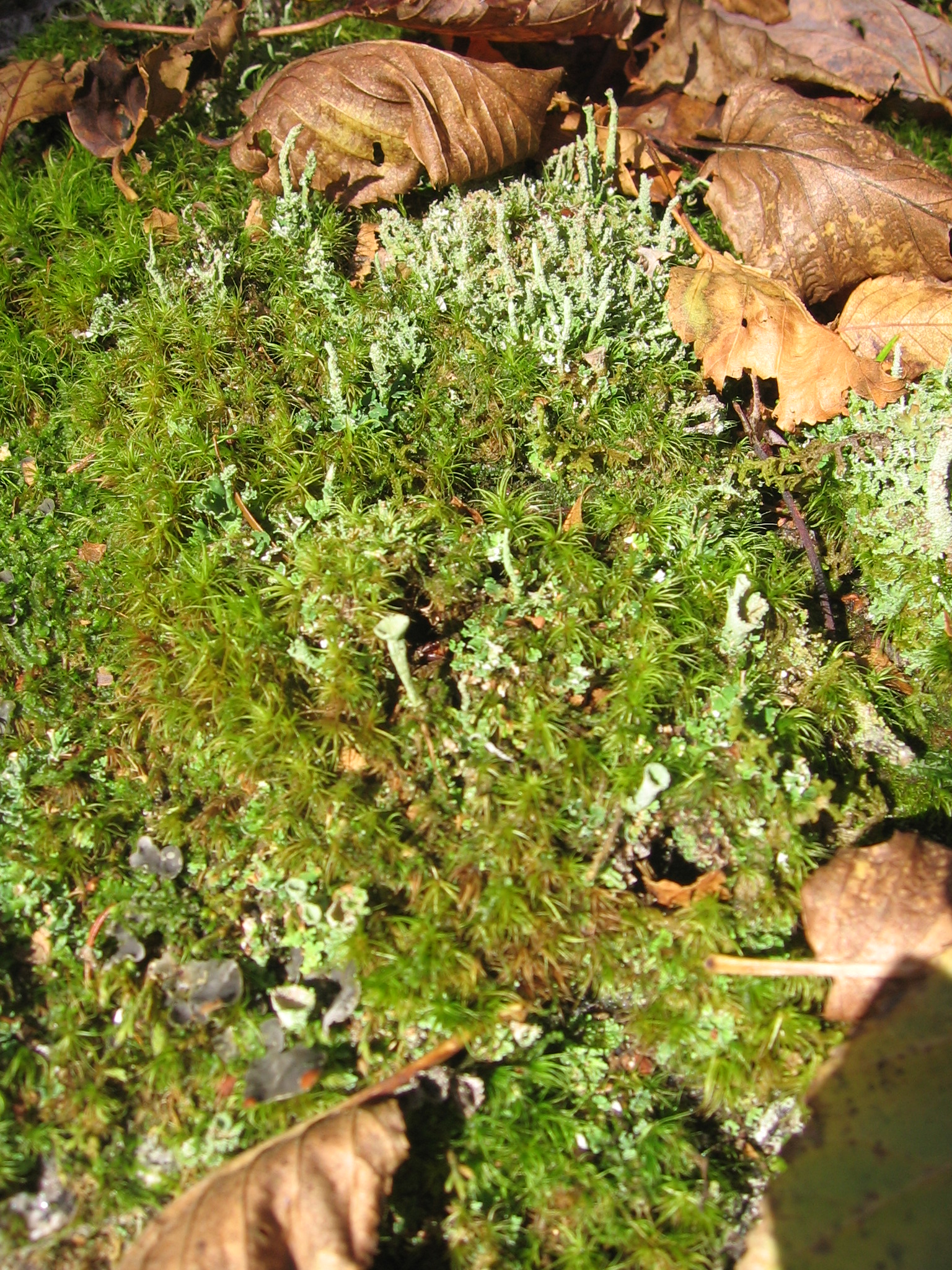
From blue bead lily (Clintonia) carpeting the forest floor to an inviting mossy recliner on an old tree, there are many shades of green in the forest. Moss and lichens liven up the dead.
The Many Meanings of Green

Green means GO! If you get the green light, go full steam ahead. Green is the colour of ecology and our environment, from Greenpeace to green energy. Green is seen as good for the earth and us – unless it’s just greenwashing. The Green Revolution of the mid-20th century greatly increased global food production but also ramped up the use of pesticides, fertilizers, and irrigation, so perhaps not so green.

Green isn’t always good. I might look green around the gills if I ate something that was green with mould, or meat that was turning green. Or I might be green with envy if someone is rolling in the green, because green is the colour of money. If I’m a rookie, I might be called a greenhorn. Green is immature and unready, like unripened fruit.
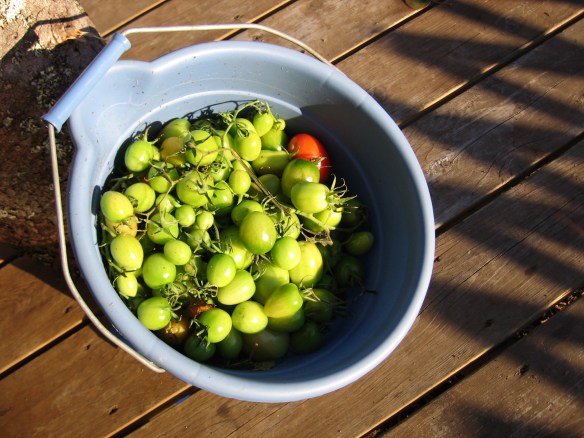
Green is right smack-dab in the middle of the ROYGBIV rainbow spectrum. As I mentioned in Mellow Yellow, painters mix the primaries on either side, yellow and blue, to create an array of greens. One of my friends, a former colleague and fellow science geek, was surprised that I named yellow, along with red and blue, as a primary colour. As an electrical engineer, he knew that green, red, and blue are the primary colours. What gives?

Both are true, depending on context. In painting, yellow is primary while green, mixed from yellow and blue, is secondary. But the primary colours of light (including on the screen you are looking at) are green, red, and blue. Add all three to get white light, or subtract one to get the secondary colours yellow, cyan and magenta, the colours that your printer uses.

Green Beings

Green is a popular colour for fictional characters. There are ‘little green men’ from outer space (one is called Yoda), Jiminy Cricket, Gumby, and the Jolly Green Giant. Kermit the frog sang ‘It’s not Easy being Green’. (Maybe he should move to my pond – the green frogs here have it pretty easy, lounging in the lilies.) I was doing a NYT crossword the other day and discovered that Yoshi is Mario’s flying green steed in a video game. Super Mario and Teenage Mutant Ninja Turtles were for my son’s generation, but as a child I loved Beany and Cecil, a cartoon about a boy and his green buddy Cecil, the ‘Seasick Sea Serpent’.

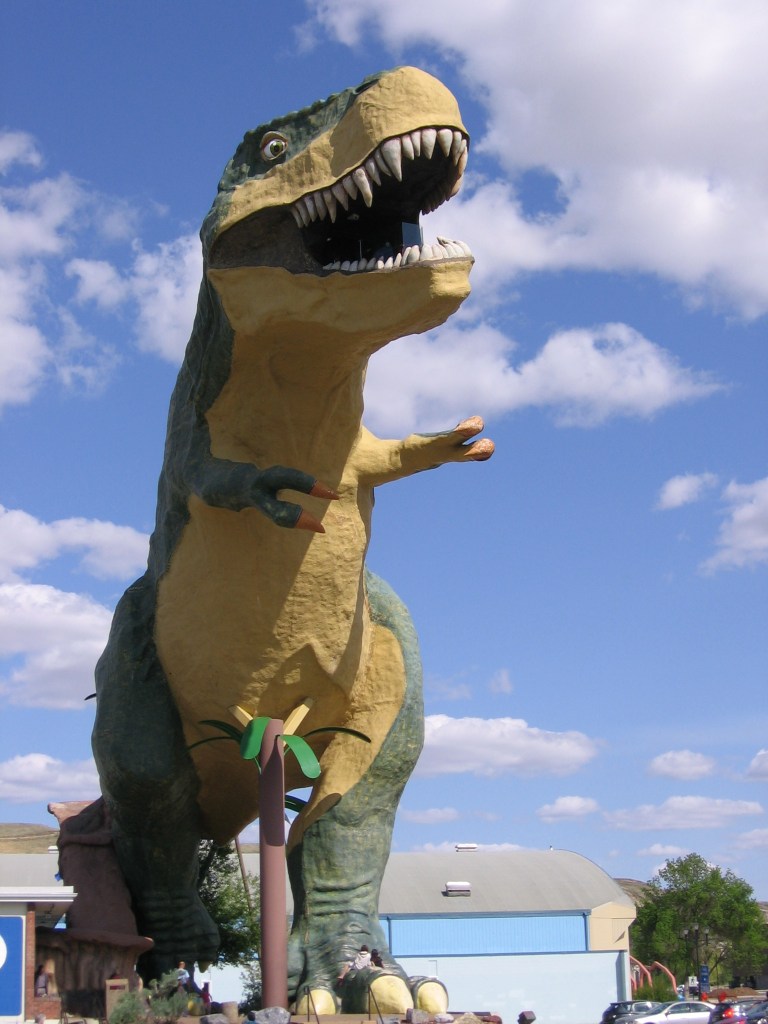
Some green beings are monstrous. Envy is ‘the green-eyed monster’ according to Iago in Shakespeare’s Othello. The Grinch is mean and green, Shrek is a green ogre, and The Wicked Witch of the East was Technicolor green. Frankenstein’s Monster and the Creature from the Black Lagoon were green on the big screen. T Rex may not have been green in life, but he often gets the green monster treatment. And watch out when Bruce Bannister gets mad and transforms into the Hulk!
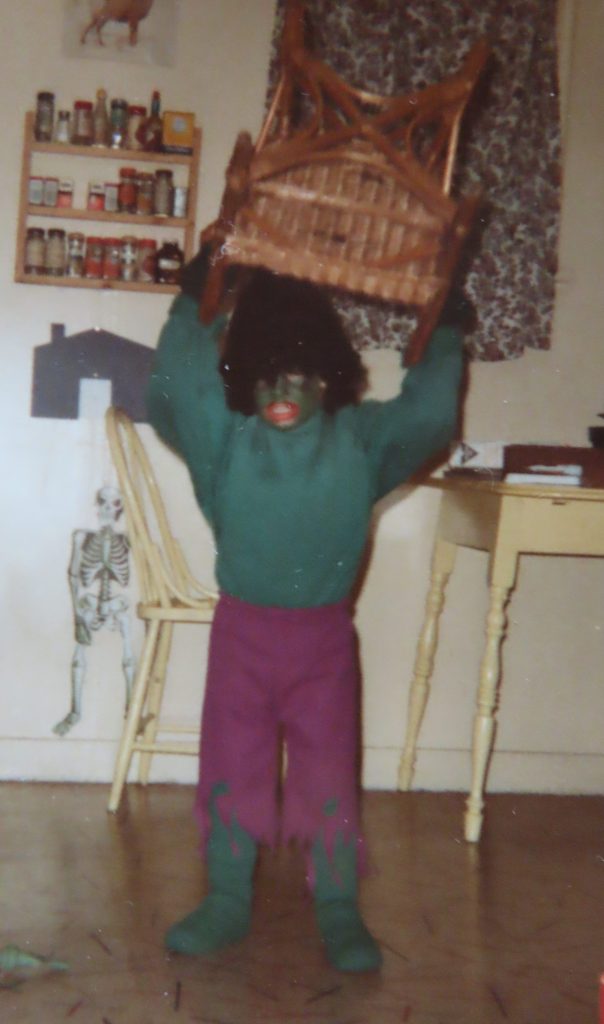
When I was young, I listened to Gordon Lightfoot sing Bitter Green, and in school we sang Green Grow the Rushes, O. I sometimes watched Green Acres on TV but I never read Anne of Green Gables – even though she was a fellow redhead – because it sounded too girly for this tomboy. Back in those days you could buy ‘avocado green’ appliances. My mum had an avocado green electric frying pan that she passed along to me, but it didn’t survive the purge when I left Calgary (Travels with Tundra and Spot).

A Few of My Favourite Green Things

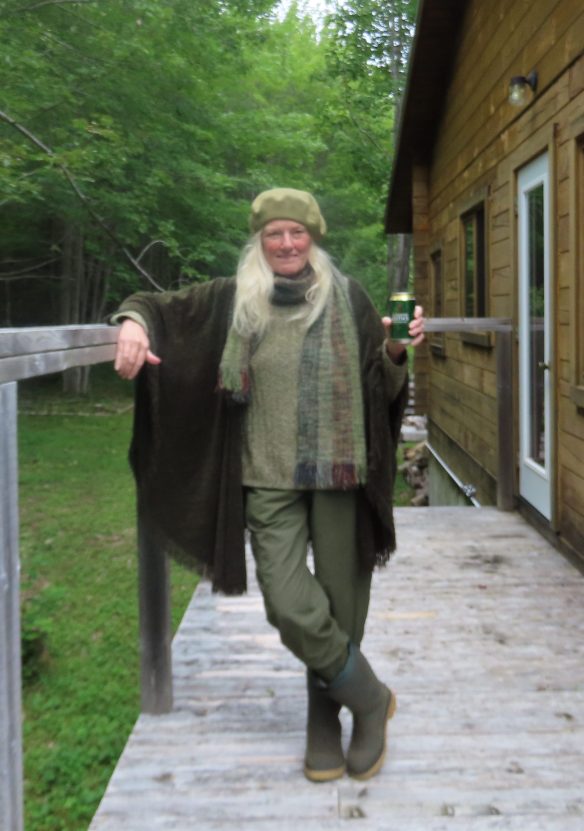
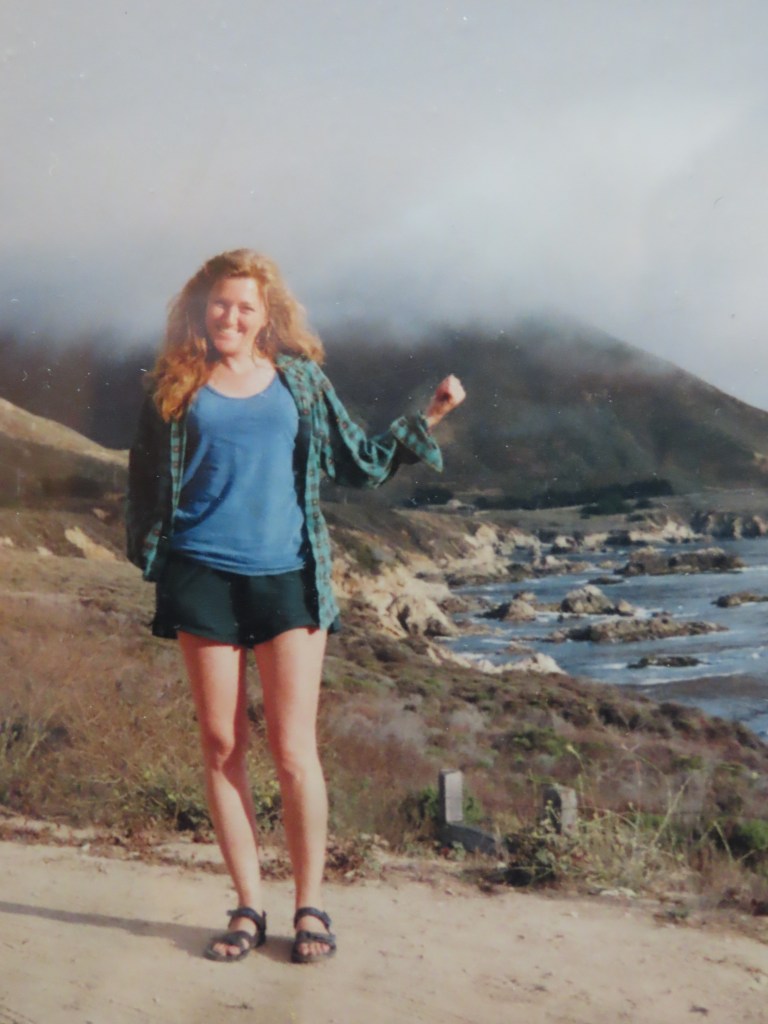
I’m partial to many shades of green, as one peek at my wardrobe would reveal. I had trouble finding anything yellow to wear for my Mellow Yellow blog, but I could fill a whole ‘zine of me in green. Green is the colour of Ireland, and I can confirm that Eire is indeed the Emerald Isle. I brought some of that green home with me, like the shawl and scarf I’m wearing in the photo on the left. My younger self is wearing a blue tank top, but the shorts and the green plaid shirt fit the colour scheme. (I’m pretending to hold a can of beer in my left hand – a photo tradition.)
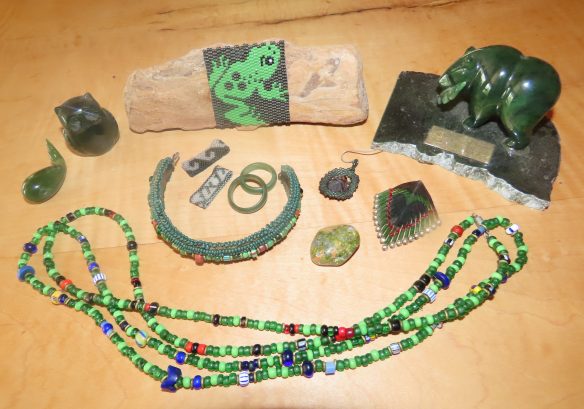
When it comes to jewellery I prefer jade to rubies or diamonds. Below are jade rings, green beaded jewellery, and green critters: a whale, an owl, a frog, and a bear biting a salmon.
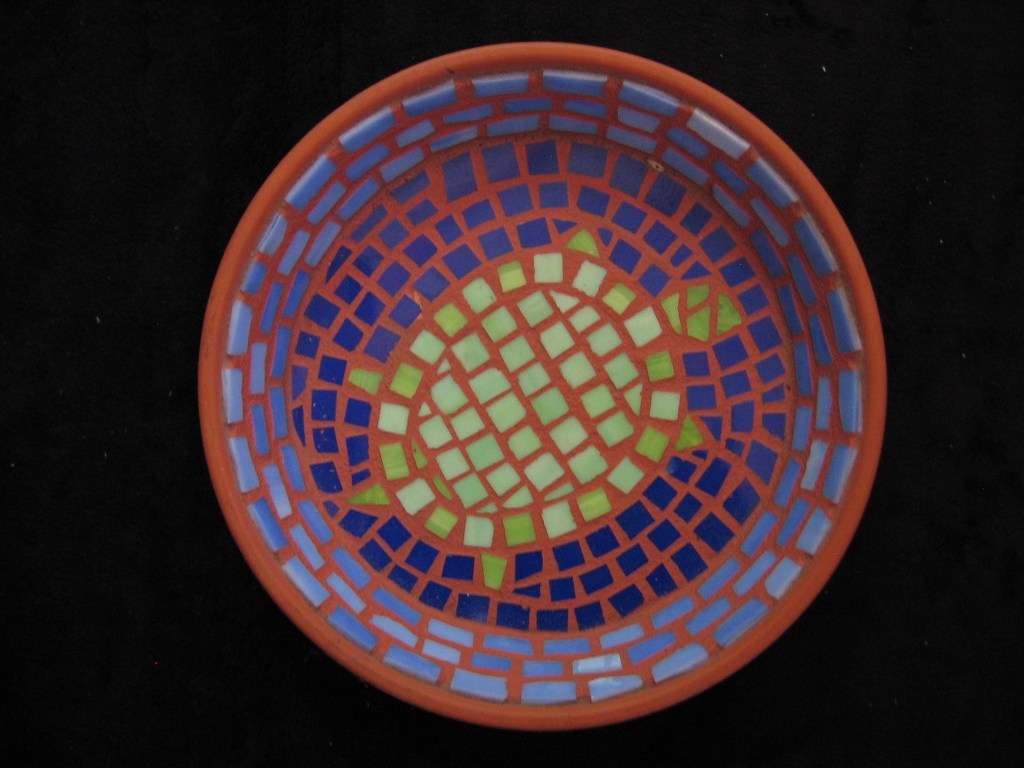
Tiny green turtles were popular pets when I was growing up. My brother and I had turtle races on the dining room table and my best friend and I held a funeral for her turtle. One turtle went on the lam and vanished. I found him weeks later, down a flight of stairs and covered in dust. He must have had gone into a state of torpor, because we put him in a bowel of water and he came back to life. I still have a soft spot for turtles in their hard shells, those that live on land and those that swim in the sea.

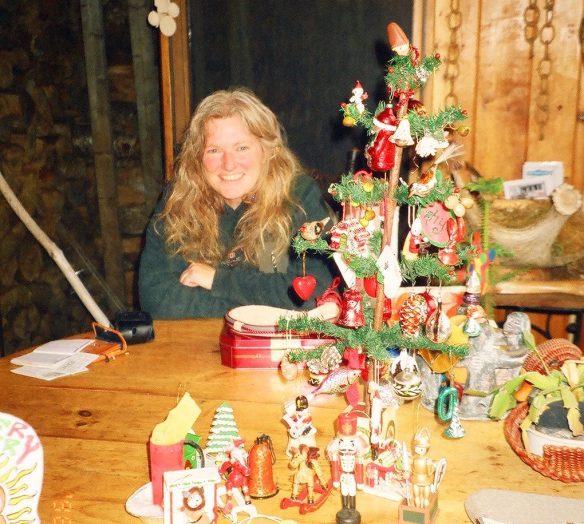
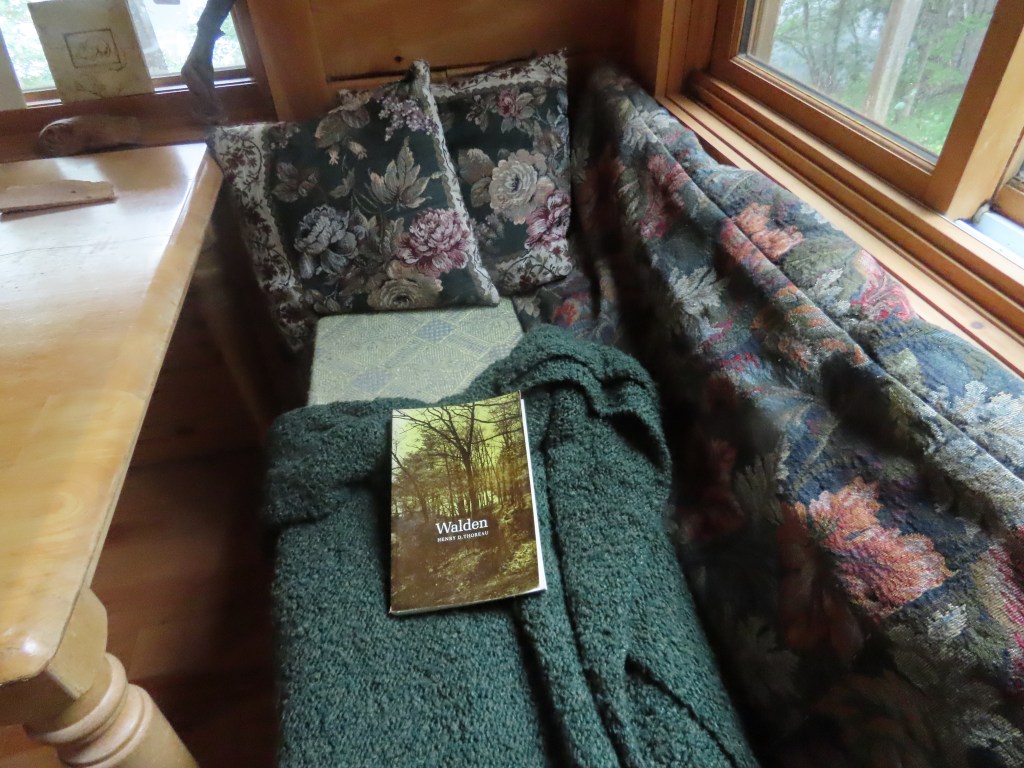
I wrote about ‘The Little Christmas Tree’ in Cape Breton’s Christmas, Book 9 (Short Stories). This photo of the little tree is from Christmas 2006, when my son and daughter-in-law were housesitting down north. And surprise! I’m wearing green. Here in Holler House, I can curl up in this cozy green corner under a blanket knitted by my daughter-in-law and read Walden.
Eat Yer Greens!

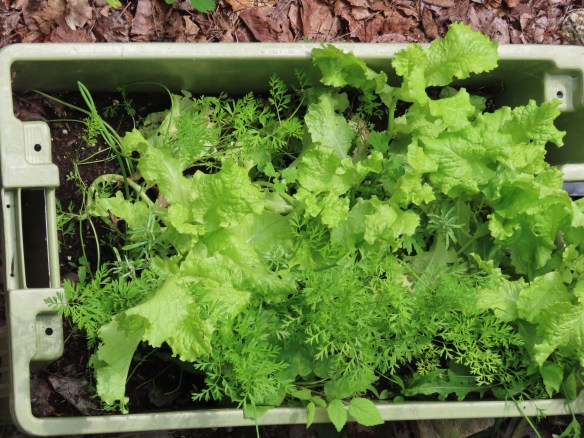
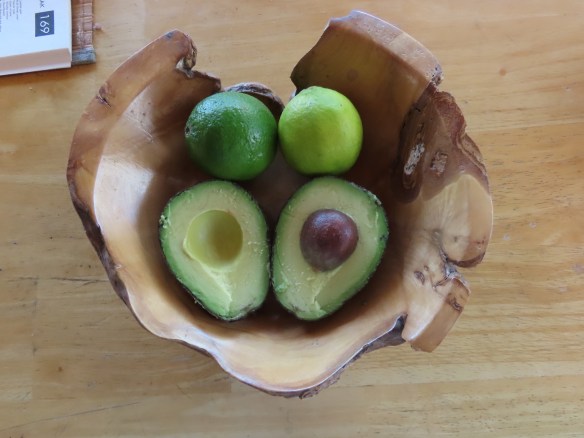
There are salad greens galore, and you can grow those and more in greenhouses. Some of my favourite foods are also green: asparagus, artichoke, avocado, and limes. Green peas, green beans, green olives, green peppers, and green onions are all good grub.
Drink yer Greens?

I’ve had my share of green beer on St. Paddy’s Day, and while Keith’s beer isn’t green, it does come in a green can. I rooted around in the cellar and dusted off a variety of drinks in green vessels. Sadly, no Tanqueray Gin on hand to round out the selection. The scarf on the railing is the McKay tartan from my mother’s side of the family. A lovely blend of blue, green and black.
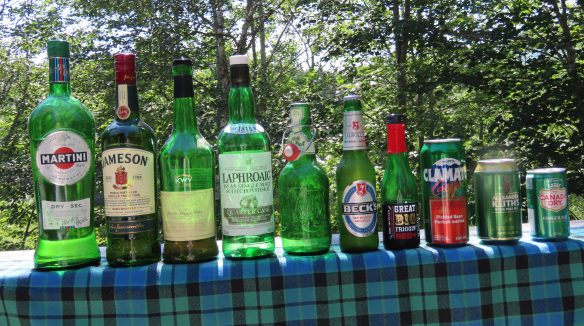
This photo might be tilted but not because I was sampling the wares.

Green Machines

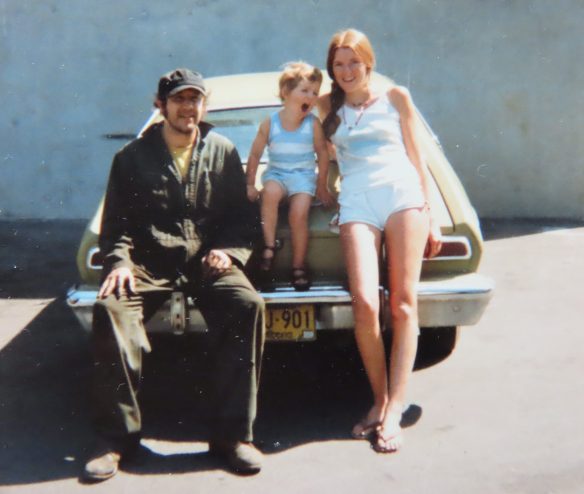
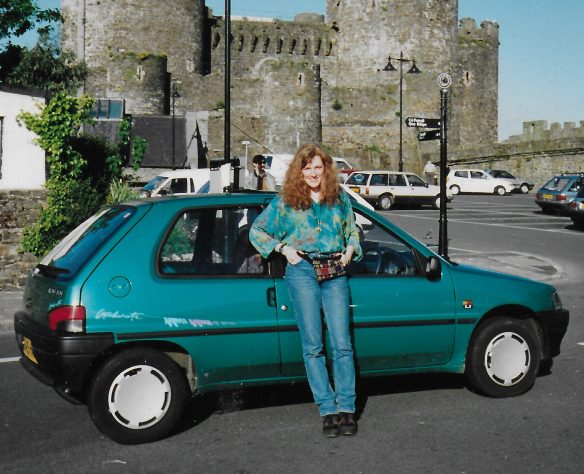
I’ve never had a new vehicle, so I get whatever colour I get. I called my first car The Limon, since the little green Pinto was a real lemon. You can see a bit of it below. That sweet little Fiat on the right was a rental that I drove in Scotland, England, and Wales. What fun, driving a stick-shift on the left side of narrow roads while trying to navigate! That’s me in Conwy, Wales, where my son’s father and his family come from – a beautiful fishing village with a wall and a castle.

Is the rental car green or blue? Green and blue adjoin on the colour spectrum and the car is clearly a blend of both, as is my batik shirt. But bluish greens can look bluer on a screen than in real life. As I recall, this car was bright teal, so I’m including it here with the green machines.
My beloved childhood bicycle was about the same colour as this old glass ornament from the little Christmas tree. It was the only one of that colour in the neighbourhood – a touch greener than the plentiful turquoise bikes. I don’t have any photos, but I do have many happy memories of riding that bicycle all over the place. Our bikes gave us a sense of freedom and independence.
The colour of my childhood bicycle.

My favourite vehicle ever was Gumby, named after the claymation character. This little rig took Tundra, my son, and myself from Calgary to California and back in 1997. Twenty five years ago Tundra and I did an epic road trip in Gumby, from the west coast of Vancouver Island to the east coast of Newfoundland and north to the Yukon in the course of a year. It was my first trip to Cape Breton and we drove all over the island. Gumby was my house on wheels for many road trips and camping trips. I still miss my Gumby. And my Tundra.
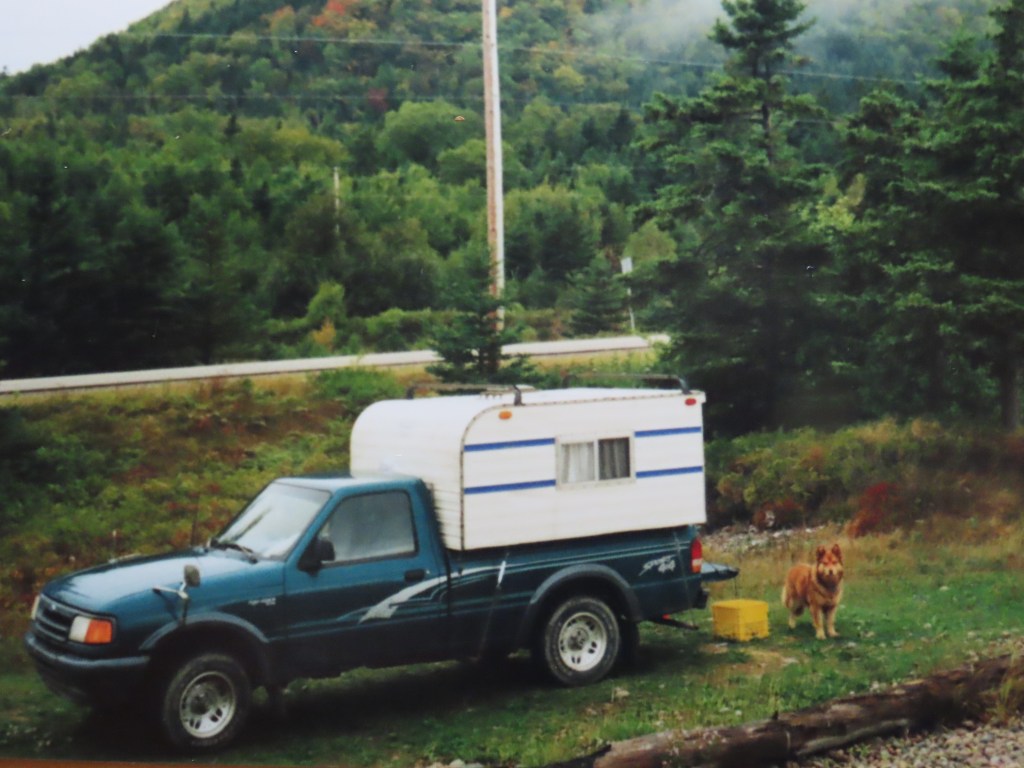
Gumby and Tundra in September, 2001. We camped overnight in River Bennet on my very first visit to the North Shore. Again, Gumby looks a bit bluer on the screen than in life.

Living a Green Life

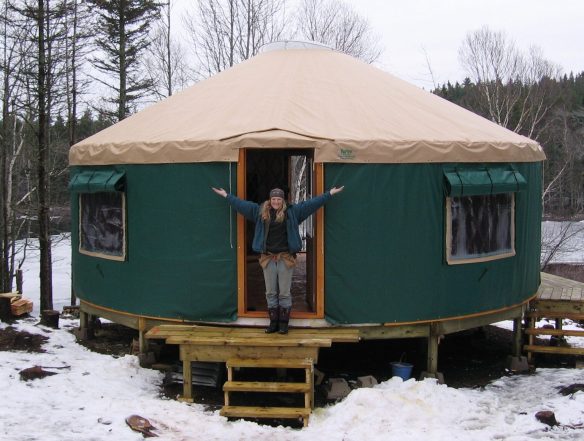
Those who know me know that I am notoriously indecisive, but one decision that was easy for me was picking the colour of the yurt. I chose green with a tan roof, colours that blend into the forest in the summer, as shown in the summer photo earlier. And this green turtle-like shape just had to be named Yurtle. Even my jacket is teal green in this photo from late 2005, taken as we were putting the final touches on the place I would call home for the next eight years.
‘ What else can I say? I really love green!’

Sue McKay Miller
September 10th, 2026
Travels with Tundra and Spot

This year, 2025, marks twenty years since I was back on the road with Tundra, driving from my new Cape Breton home to Calgary and back again. I’d already done that road trip five times, so I was an old hand at long days on the road, finding free overnight stops, and the best backroads. My first big cross-country trip was in 2001, when I spent a year on the road with Tundra. We visited all ten provinces and Yukon territory, but Cape Breton captured my heart.

I moved to Cape Breton in 2004, with my travel trailer in tow and Tundra riding shotgun, as described in Twenty Years in the Holler. But I still had one foot – and a house – in Alberta. It was time to head back to wrap up loose ends and cut ties with my home province. I had a house to empty out and sell up, and family and friends to visit. So in August of 2005 I drove back to Alberta, Tundra by my side, to complete the relocation from Calgary to Cape Breton.

Settled in our new home in Cape Breton and lovin’ it!

I’d rented my Calgary house out in 2001, the year of the big road trip. Now my tenants had given notice and it seemed best to just sell up. But first I had to empty the place out. Most of the furniture had to go, and my son and I had to sort through piles of stuff we’d accumulated over the years.

It just so happened that my son and his partner were renting a place three doors down, so we had a fun summer being neighbours. I could walk over in my slippers to enjoy a BBQ on their balcony; my son could drop Tundra off on his way to work. Meanwhile, we picked away at the pile of stuff. It was a bit of a job, with a lot of memories to sort through.

My son donated his stash of childhood action figures to charity. Who knew they would turn into valuable collectors’ items? But it also turns out there’s a whole lot of stuff you can’t give away – no one wants it. In the end, I had to hire a one-ton truck to haul a load of rubbish to the dump, which deeply pained my frugal soul.

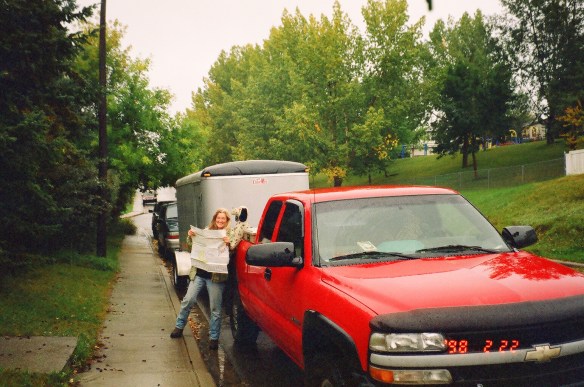
Speaking of frugal, I decided to try selling the house online myself to save thousands in real-estate agent fees. It was a small bungalow, built on a hillside above the Bow River with lots of privacy and a lovely view out back. But the front was below street level and totally lacked curb appeal. I was standing on the road taking a photo when a man pulled up beside me and rolled down his window. Hippie guy, long dark ponytail and beard.

“Hi. Do you know of any houses for sale in this area?” Seriously?
“… Uh … yeah. This one,” I replied.

He and his wife were teachers in the Yukon but were moving to Calgary in a year. He was on a quick trip to buy them a house before prices went up (same reason my tenants had given notice – they bought a house). He liked Montgomery, an old neighbourhood nestled into a meander of the Bow River, so he’d been driving around looking for ‘For Sale’ signs when he happened upon me standing in the road with my camera. What are the odds?

He came inside, took a look around, and asked, ‘How much do you really want for it?’ I liked him, this long-haired teacher from the Yukon, and I opted to be upfront. I named the price I had decided as my bottom price, one that was reasonable at the time. He agreed. I called the lawyer who’d done the paperwork when I bought the house. It was late Friday afternoon, but his office was nearby and he agreed to see us. We scooted over and signed the paperwork. I paid the lawyer and the deal was done – just like that.

And what a deal! Both the buyer and my tenants were a whole lot more savvy than me. Calgary house prices went through the roof the following year and kept on skyrocketing. That little bungalow had almost doubled in price two years after I sold it. C’est la vie.

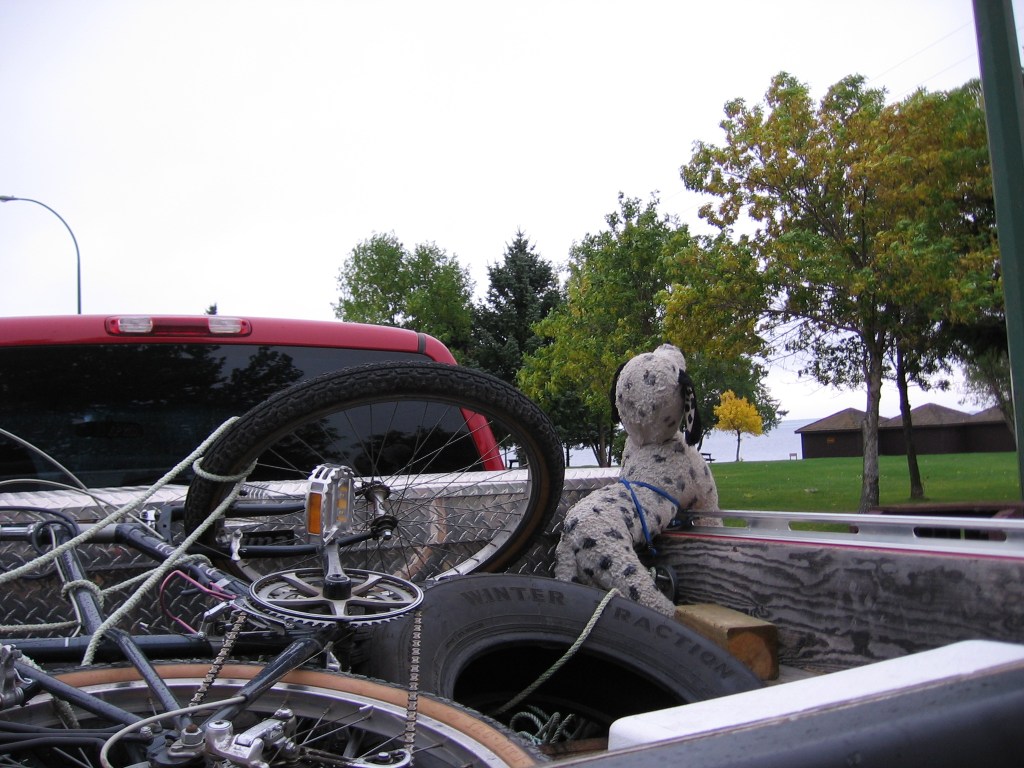
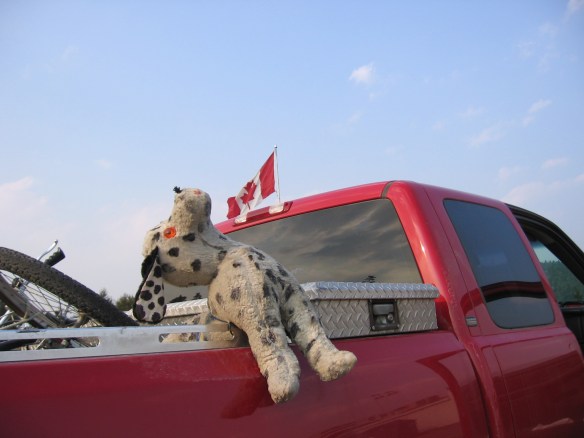
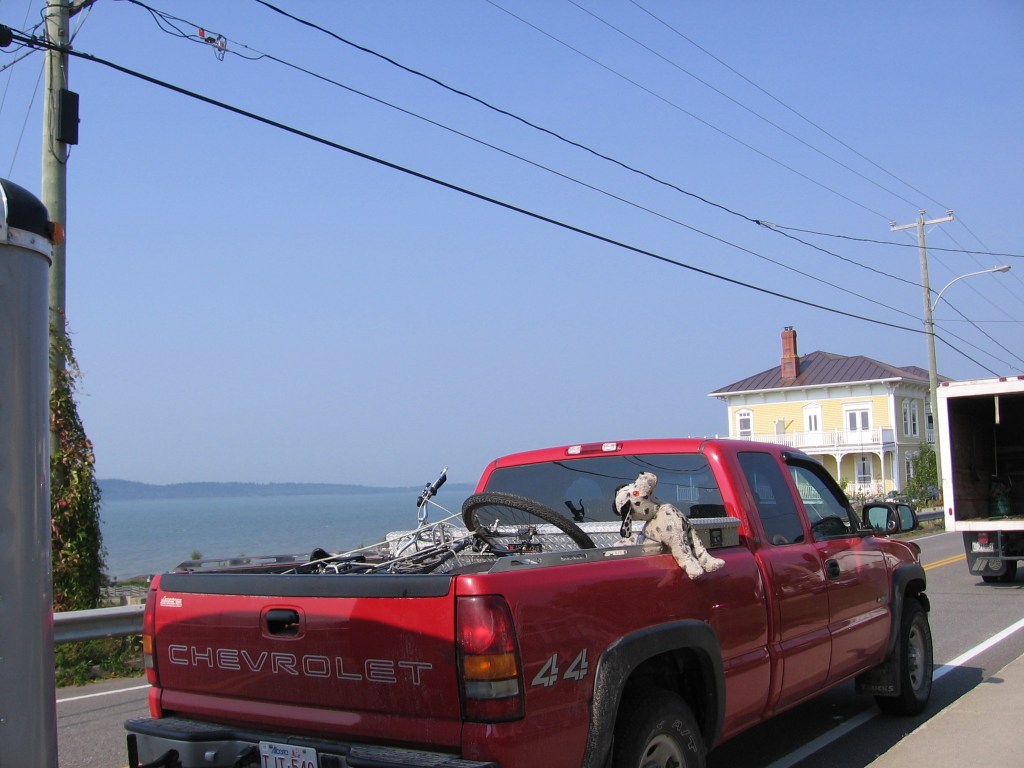
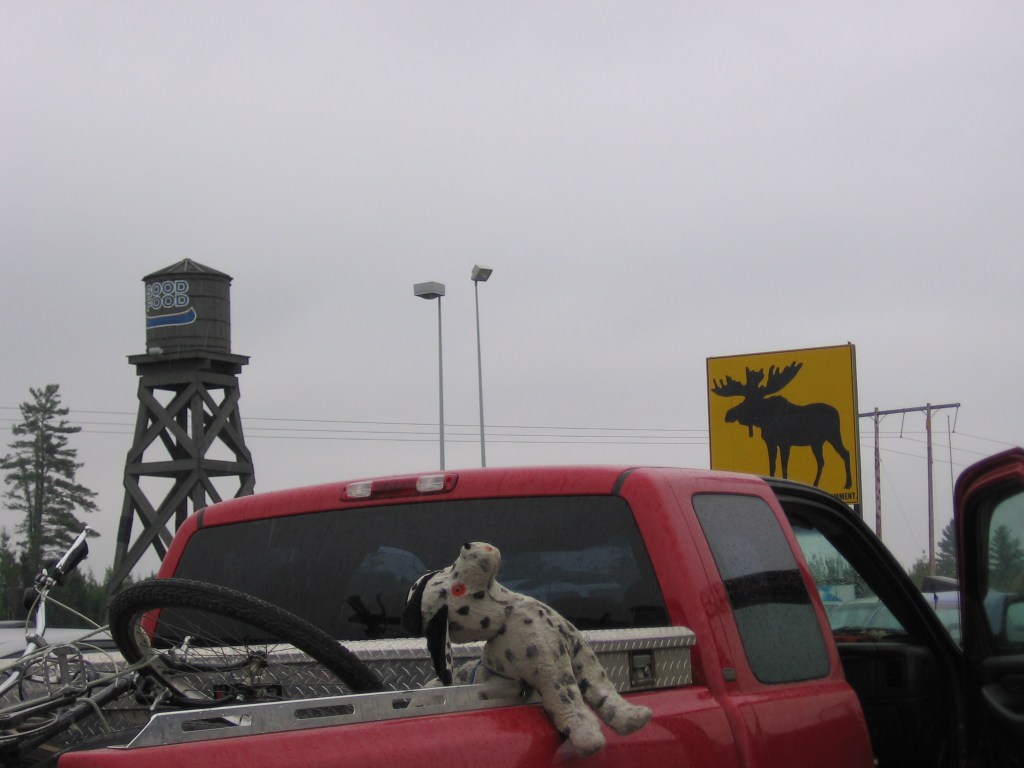
Possession date loomed and I was under the gun to finish purging and packing. I bought a 6’x12′ cargo trailer to haul and store items that made the final cut: tools, camping gear, art work, art supplies, musical instruments, bags of clothes and bins of books, and my beloved rocking chair. I filled the cargo trailer to the roof and piled rubber totes into the truck bed, strapping my trusty bicycle on top. And then I bungeed Spot in.

The cargo trailer is hooked up to Roadeo and Spot is ready to roll. Now, which way to Cape Breton?

Spot? A very original name for the big stuffed dalmatian that my mum won at the Stampede and gave to my brother and me when we were children. He was life-sized and I adored him. Dolls? Meh, not my thing. But I loved Spot and all my other stuffies. To me they were alive, my beloved friends and playmates. And there I was, 49 years old, and faced with letting them go. Too old and grubby to donate, too precious to trash.

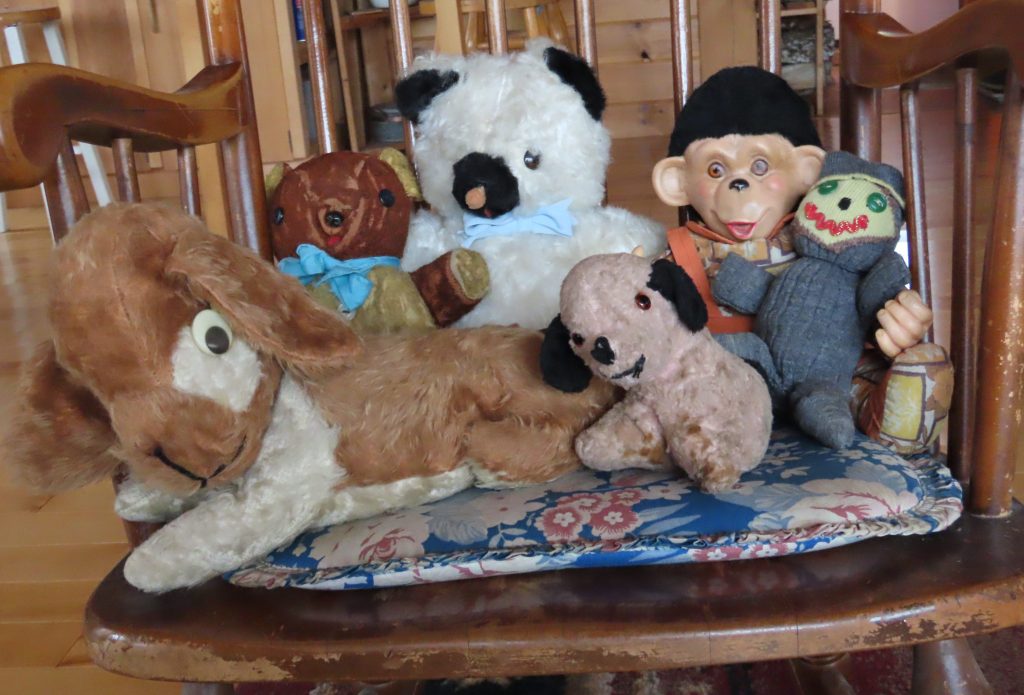
Survivors of the purge, including Shaggy and Pinky, in my old rocking chair.

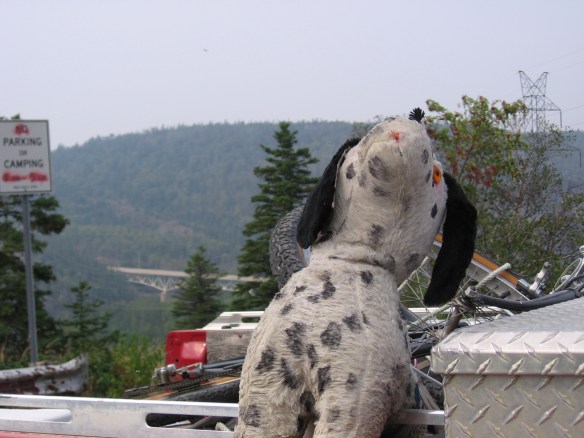
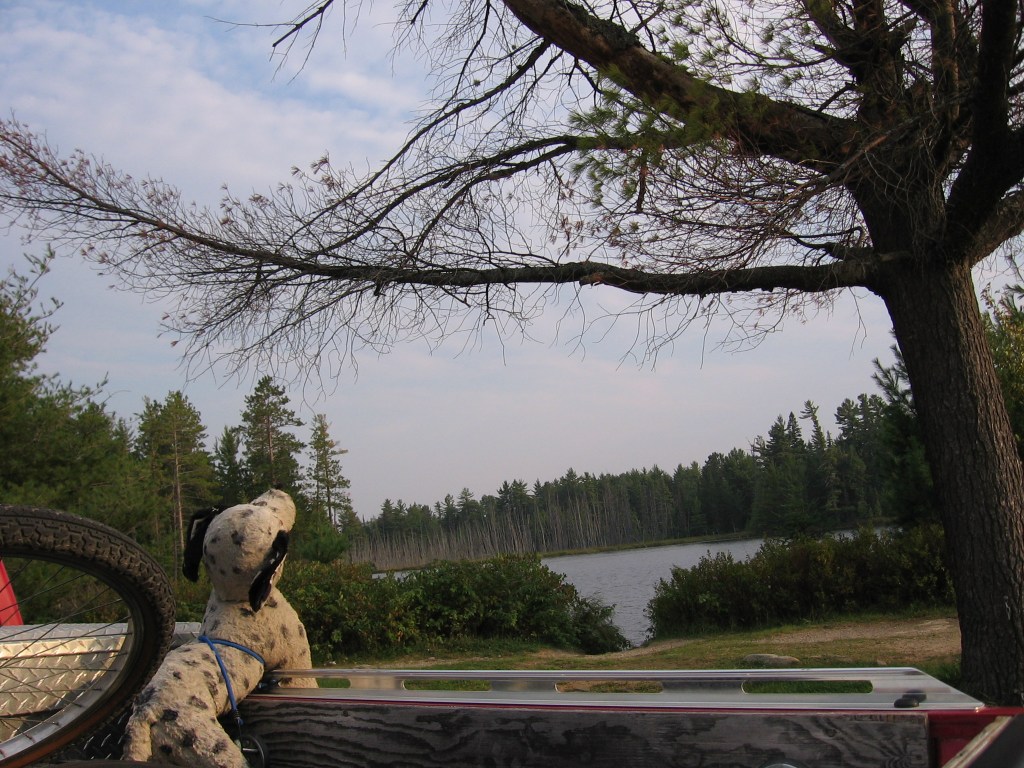
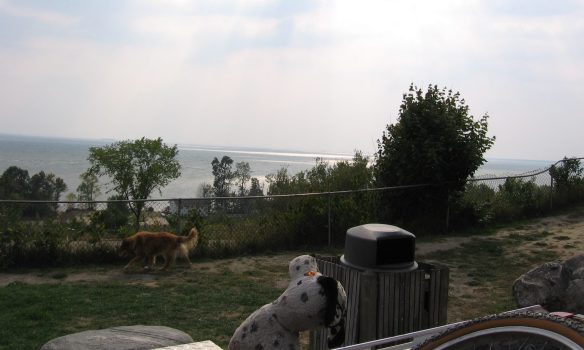
I picked the oldest and dearest and packed them in the cargo trailer, but Spot rode where all dogs used to ride, in the back of my pickup truck. Tundra lounged in the lap of luxury, on the bench seat beside me.

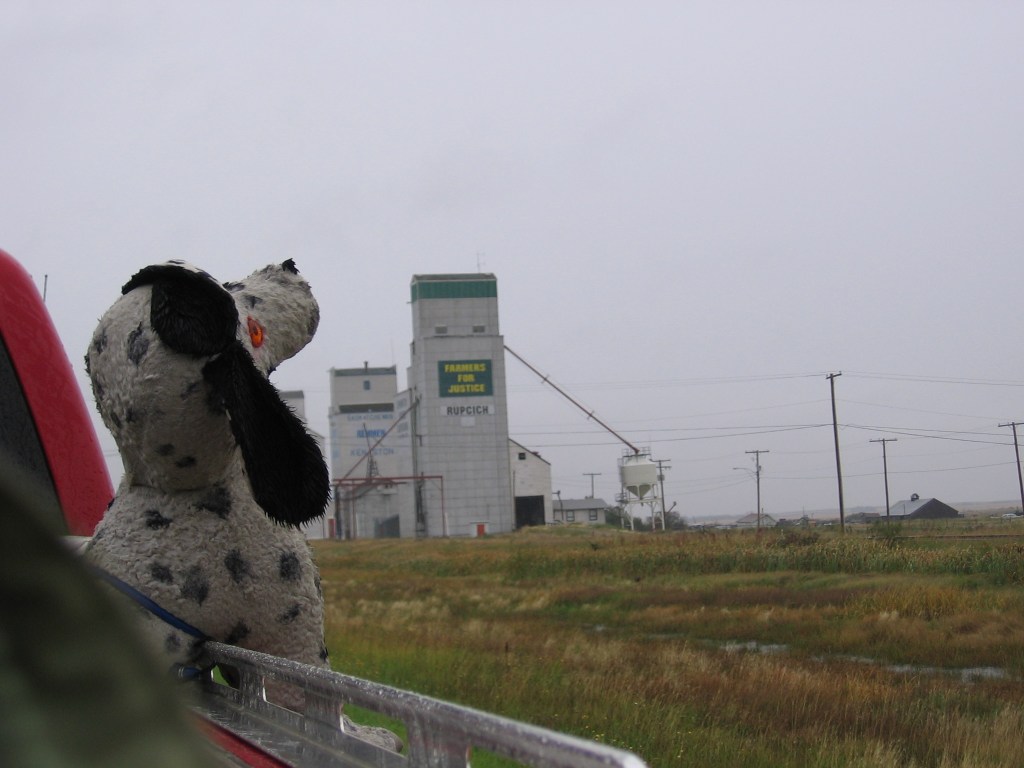
I left Calgary on September 9th, 2005, four years and one day after I left on my epic 2001 trip. As always, I lined up Truckin’ by the Grateful Dead on the tape deck, and, as always, I took the prairie backroads, which, according to my journal, varied between ‘the good, the bad, and the ugly.‘ It was getting dark when I stopped in some small prairie town for ice. I’d just passed an older fellow with a long white beard on a bicycle, and now he passed me and called out, “I like your dog!” “Thanks!” I called back, confused. Tundra was curled up on the passenger seat – no way he could have seen her. Then I realized he meant Spot. Cool.

We rode out a wicked scary thunderstorm overnight in the Qu’Appelle Valley in Saskatchewan. The next day I had to pull over when we hit a black wall of rain so thick I couldn’t see a thing. It finally cleared and I stopped at a little cafe in a small town, well off the beaten track. All the regular fellas sitting at the formica counter turned to stare. I ordered a grilled cheese sandwich and the guy behind the counter got it started on the grill. Then he leaned back and looked at me.

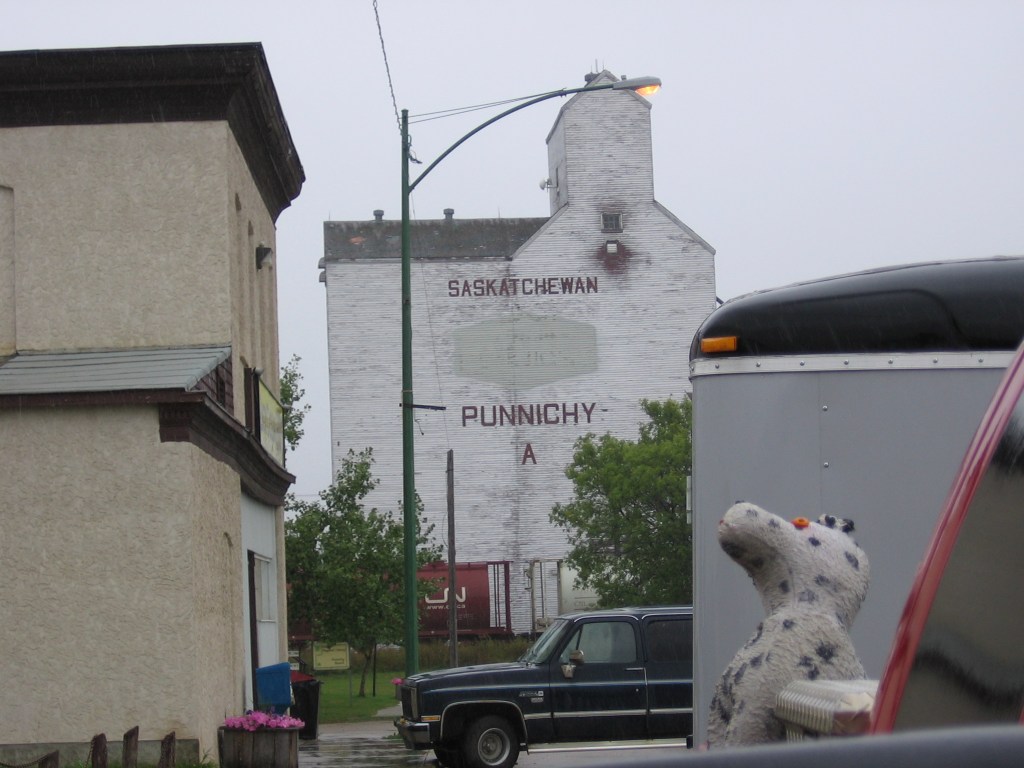
“So what the hell are you doing in Punnichy anyhow?” he asked.
I laughed. Good question.
“Driving to Nova Scotia,” I replied. I mean, why else would I be driving along some lonely gravel road 120 kms north of the TransCanada Highway? I guess they don’t get a lot of strangers in Punnichy. And that’s what I love about taking the backroads.

Punnichy – stop here if you want a good grilled cheese sandwich at the local cafe.

The other great thing about the prairies are the skyscapes. Land of Living Skies is an apt license plate for Saskatchewan and is true of all the prairies. But the most stunning skyscape happened on the second night of our journey east, just past Winnipeg. I’ve seen the northern lights quite a few times, but nothing like these. I found a turnout and pulled over. Here’s what my journal has to say about what happened after I stepped out of my truck.

Aaaaahhh! I scream – in surprise and delight and astonishment at the heavenly dance overhead. Then – aaahhh! – red and blue and white shards of light splinter dance swirl – I am in a magic world both ecstatic and a bit frightening in its intensity, its beauty. It’s awesome – in the the true sense.

True awe. It’s not just a sense of wonder, but wonder tinged with fear, with a feeling of being overwhelmed. Of being very tiny in the vastness of the universe. I can understand why indigenous people have a spiritual connection to the aurora borealis. It’s so much more than a celestial light show.

We spent the night in the parking lot of the Welcome Centre at the Manitoba/Ontario border. The next day I drove off to the music of Little Feat, feeling infused with spectral energy. When I stopped for gas, a woman came up to the pumps, laughing. I’d forgotten about Spot.

People warned me, the first time I set off to drive across the country, that I would spent half my trip driving though Ontario. They weren’t wrong. Unlike the east/west roads of the prairies, there is a lot of driving northeast then southeast, rounding the Great Lakes. Every sign says the next city is 600 kms away. It’s beautiful country around Lake Superior, but on this trip the skies were hazy all the way. Plus it was much too hot for September.

Sault Ste. Marie is the half-way point between Calgary and Cape Breton. I called my son from a pay phone and greeted him by saying, “This is Sue, calling from the Soo.” After a nice chat I kept on driving. And driving. There were way too many big trucks after dark so I opted to stop for the night. My journal laments the unseasonable warmth.

“I duck into a picnic spot and try to sleep in the godawful heat – sweating in the stuffy back seat – no breeze – in mid Sept!! I hate Ont., I’m thinking as I lay there. Finally, 3ish, I sleep until 8ish then up and off in the haze and it’s warm already.”

Well. So much for the joys of being on the road again. It ain’t all roses.

Finally out of the haze, as glorious ‘God rays’ shine on Lake Nippising. Tundra is by the fence.

My favourite road song is ‘Truckin’ by the Grateful Dead. I think of the chorus as a refection on life, but on this road trip these lyrics were literally true.

Sometimes the light’s all shinin’ on me …
Other times I can barely see …
Lately it occurs to me –
What a long, strange trip it’s been.

If Ontario was long (and hot and hazy), Montreal was terrifying. I hear there’s a ring road now – not to mention GPS if one has a smart phone – but back then I was driving a big pickup and hauling a trailer while trying to navigate roads and construction detours, surrounded on all sides by insane Quebecois driving as if they’re racing in the Grand Prix. No matter my careful plans, my attempts to memorize the simplest route, it was always a nightmare and 2005 was no exception. I decided to go at night – less traffic. It turns out that’s when they do even more construction so it was ALL detours. I got totally lost and discombobulated. Arghhh!

But somehow we made it through intact and I pulled into the first rest stop. I’d never see one so crammed with big rigs. I figured they all went through Montreal at night and then rested. I slept in the back seat, relieved to have the worst behind me. The next day we took a peaceful road that parallels the highway along the St. Lawrence. We stopped in the beautiful village of Kamouraska, made famous by the Quebec writer Anne Hebert.

I turned off at Riviere du Loup, saving the rest of the Gaspe for another day. Then across country to New Brunswick. Six days on the road and we’re finally in the Maritimes – ‘yahoo!‘ my journal says. But it still wasn’t a cakewalk. I ended up driving at night, worrying about bright headlights and dumb moose, then almost ran out of gas and had a hard time finding an all-night gas station. Near Fredericton I forked out $65 for the luxury of a good night’s sleep in a motel.

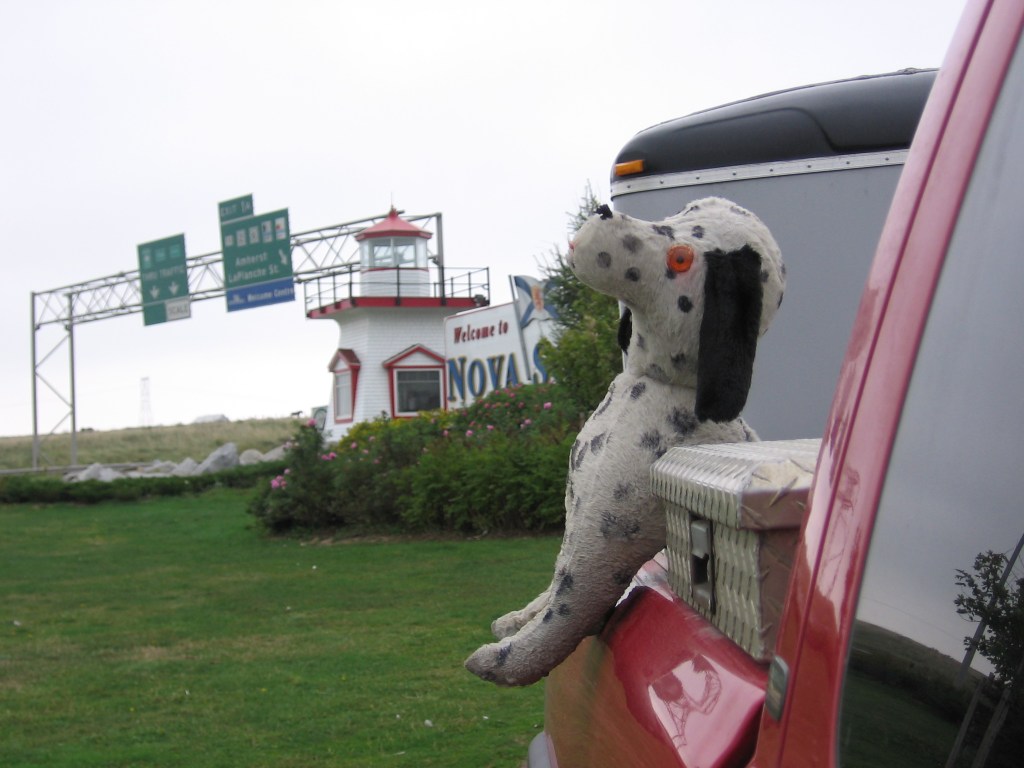
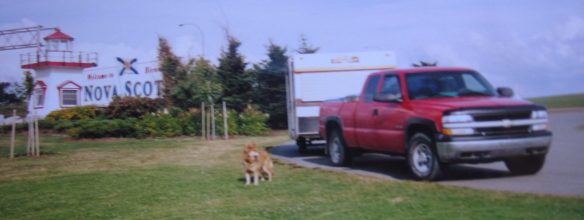
After all that heat and haze in central Canada it was wet and rainy in the Maritimes. We scooted through New Brunswick and made it to Nova Scotia. That got an all-caps YAHOO! in my journal. Had to stop for the obligatory photo at the lighthouse sign to add to my collection from previous trips. It was ‘very cold and windy‘ and I got my photo and got back into the truck just as the heavy rain started. Spot got soaked, but at least he didn’t get that wet dog smell.

Tundra stretches her legs in 2004. Roadeo hauling the travel trailer out to the new land.

It was dark when I crossed the Canso Causeway and I wanted to arrive back in the Holler in the daylight. So I splurged on another night in a motel. My journal has a page of complaints about the woman who tried to overcharge me the next morning and spoiled my happy Cape Breton vibe. But now, twenty years later, I’m over it. In fact, I’d forgotten all about it, so I’ll spare you the details.

I drove past the beautiful Bras D’Or Lakes, blue under a blue sky, and my angry frown flipped into a smile. Stopped at the Gaelic College CAP site to check emails and visited the William Rogers art gallery, then around the loop, “lovely and me happy and feeling good.” Stopped at Piper’s campground for ice (the CAP site, the art gallery, and Piper’s are all gone now). And then … home to the Holler.

Spot gets his first view of Highland Holler, his new home.

I unlocked the gate and “All is well, gate in place, no fires in the firepit since mine, everything is just as I left it.” I pulled into a turnaround to park and unhook the cargo trailer, then went across to the neighbours’, where I’d left my travel trailer, and received a warm welcome. I hooked up my travel trailer, hauled it back, got it turned around and maneuvered into place and unhitched it from the truck. “Roadeo is free again!” I wrote.

I was all set up and ready for the remnants of Hurricane Ophelia to welcome me home. “I felt so happy and content to be home,” my journal says. “Gotta get used to saying that – home.” It’s been twenty years since I wrote that. And I am still ‘happy and content’ and very used to calling Highland Holler home.

Sue McKay Miller
December 28, 2025

Twenty Years in the Holler

It was twenty years ago today
That I moved onto this land to stay

Ahem … my apologies to the Beatles. It was actually twenty years ago this year that I moved onto this land to stay. In 2004 I drove from Calgary to Cape Breton with an old travel trailer in tow and Tundra riding shotgun. I’d quit my job in April, but a car accident and subsequent complications delayed our departure. I finally hit the road in August and left the bright lights of the big city behind, driving over 5000 kms to the new land.

It was a big move: from Calgary to Cape Breton, from west to east, from city to country, from my old familiar hometown to my brand new land. So I’m going to do something a bit different with this blog and celebrate this anniversary with an overview of my first twenty years here in Highland Holler. It was so long ago that some of these photos are photos of snapshots, so please excuse the fuzzies. And click on the small pics to see full size.

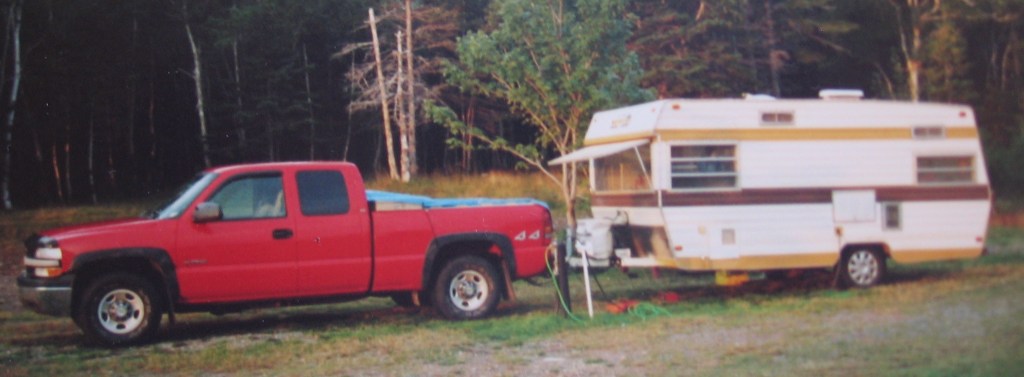
My Chevy Silverado ‘Roadeo’ and the travel trailer I hauled from Calgary to Cape Breton.

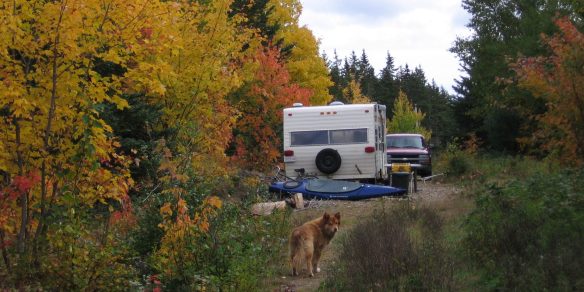
Tundra and I made our first home in the 15′ foot travel trailer I’d hauled out from Calgary. It was small but cozy and portable. The new land was on a back road with easy access to a gated field, so that’s where I first set up camp. My neighbours were kind and welcoming, but curious as to why I locked the field gate behind me every time I went anywhere. It took a while for this city kid a while to realize I could leave that gate wide open.

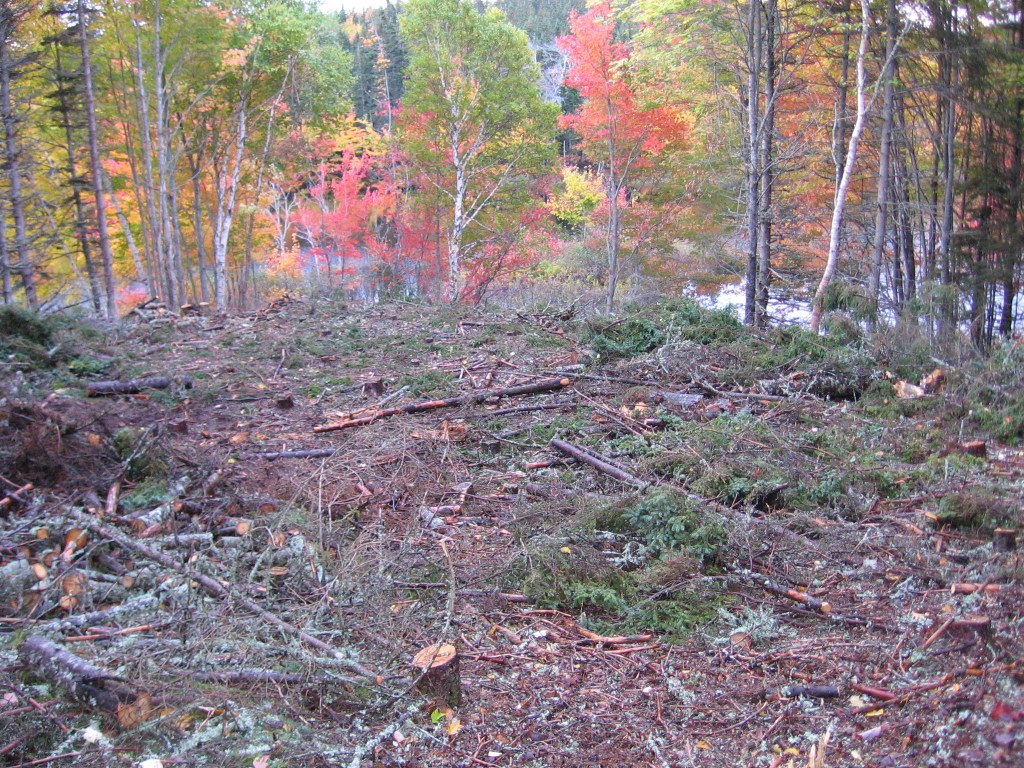
I bought myself a chainsaw and – very slowly but without losing any limbs – opened up a wood road blocked by piles of felled spruce meant to keep vehicles out. Then I shifted my trailer onto that road, moving deeper into the woods and closer to the pond.

Our travel trailer home after I moved it onto the old wood road. That’s my blue kayak in front.

It was a bit scary, giving up my comfortable, secure life to move so far away and into the unknown, but I recall some of the magic moments while we lived in that trailer. The thrill of seeing a young bull moose amble past my truck, or of glimpsing a coyote race past the trailer and, seconds later, a second coyote in hot pursuit. Of sitting out by my campfire and realizing that what sounded like a steady stream of traffic in the distance was actually the roll of the ocean, a mile away. Another night I was sitting outside after Tundra had gone to bed when I heard something large moving around in the forest right behind me. Yikes! I made a quick retreat into the trailer – visions of bears and bull moose prowling in my head.

Looking west to the highlands, where Tundra and I loved to explore.

When it rained for two days and two nights I sat at the table in the trailer and painted beach rocks – before that was a thing. The rain finally stopped and I emerged into a world transformed. The pond had risen into a vast lake and water was pouring in from a myriad of streams and freshets. This transformation has never ceased to thrill and amaze me.

The trailer wasn’t winterized, so come November 2004 I hooked it back up to Roadeo and Tundra and I headed down north, back to the hand-built house where I’d spent the winter of 2001/02 house and dog-sitting. I’d been on a year-long cross-country road trip, visiting all ten provinces and the Yukon. But that winter on Meat Cove Road was transformative. Cape Breton and her people captured my heart and my imagination. After I returned to Calgary I bought the piece of land I’d checked out a few times during my stay here. So while I had another great winter down north, reconnecting with old friends and making new ones, there was a tug on my heartstrings – Highland Holler was calling me.

That winter I spent endless hours sketching house plans: funky off-grid hippie houses with rainwater cisterns and wood-fired saunas. But how big? One story or two? Basement foundation or slab or frost wall or sonotubes? Conventional frame or logs or cob (straw and mud) or cordwood? And where to put it? There was lots of land, plenty of options. In fact, there were altogether too many options. So I began to think about a yurt, a portable tent-like dwelling that would go up quickly and could be moved later if need be. It wouldn’t be cheap, but a yurt would allow me to live full-time on my land sooner rather than later. And it would buy me time to decide what and where to build.

In May 2005 I hitched up the trailer and hauled it back up and over Cape Smokey and parked it in the Holler. That summer I drove back to Calgary with Tundra, sold my house, bought a cargo trailer, and loaded up the last of my stuff. I also spent time with my son and his lady and told them about my plan to live in a yurt. “For how long?” my son asked. “Oh, one to five years,” I said, as if it were a prison sentence. In fact, it would turn out to be eight. Eight years in a yurt.

The truck, the cargo trailer, and ‘Spot’ on board, getting ready to leave Calgary and drive back with the rest of my stuff. ‘Which way is Cape Breton again?’

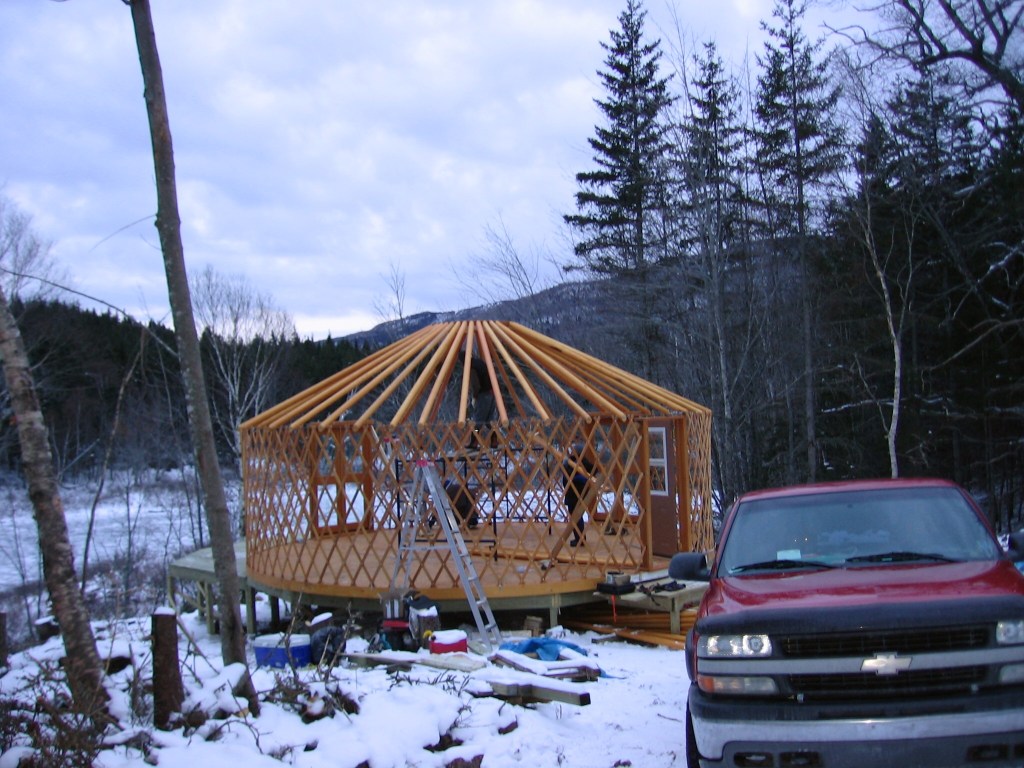
So back we came, Tundra and I, from Calgary to Cape Breton again, this time with a cargo trailer in tow. I shifted our travel trailer home off the driveway and work began. I’d found an ideal site for the yurt but there were trees to be cut and cleared, brush to burn, a platform to build. I hired a local carpenter to build the platform and assisted with my trusty power drill, dreamy visions of yurt life dancing in my head. The yurt kit was due to arrive from Vancouver in September. It did not. The temperatures dropped and I gratefully accepted an offer to housesit down the road while I waited.

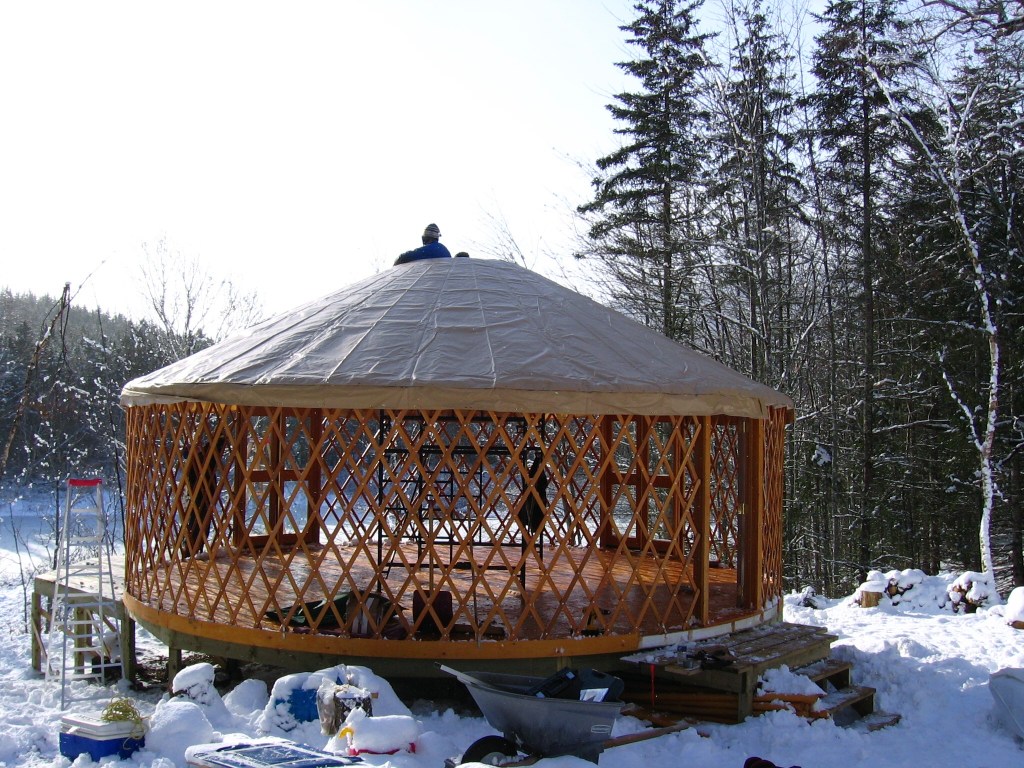
In the end it was snowing and blowing when friends and neighbours joined the carpenter and I in setting up the yurt. It was pretty deluxe – a 24′ diameter yurt with reflective insulation, canvas liner and a polyvinyl covering to keep the rain out. It had a 5′ diameter dome overhead for star gazing, moonbeam bathing, and cloud watching. I bought a wood-cook stove and a clever neighbour figured out how to attach the chimney to the soft-sided, vinyl-walled structure.

Yahoo! Me and Yurtle. Lots left to do but she’s up!

I finally moved in on December 28, 2005 and celebrated my 50th birthday in the yurt a couple of months later. Yurtle would be home for the next eight years, until February 7th, 2014.

Living in the yurt was like camping out in a big, luxurious tent. I was off-grid with no running water. I heated with wood and lit with kerosene lamps. I was too far back from the road to be plowed out, so I snowshoed in and out in winter, hauling in food and water. The yurt was easy enough to heat with the big wood-cook stove; but it didn’t hold the heat so it was bitterly cold on winter mornings. How cold? One morning my bedside water bottle was frozen solid. It was -10C inside. I learned to put the coffee water in the kettle the night before, since the spigot on the water jug would freeze overnight.

Tundra adored the yurt. It was just the right size and only one room so she could always keep an eye on me. It had three doors (the French doors did double-duty as windows) that opened onto a surrounding deck. She liked to ask me to let her out one door, then race around the deck to the door on the opposite side and ask to be let back in. Very funny, Tundra. She swam in the pond, explored the forest with me, romped in the snow, and rode alongside wherever I went. Tundra had a great few years here, but she was getting old and winding down. She died at age 16, a very ripe old age for a dog her size, but a hard loss for me.

Tundra’s cairn, usually well above the water line, but seen here with the pond in flood.

When I lived in the trailer, I dreamt of living in a yurt. While I lived in the yurt, I began dreaming of living in a cabin. I continued making sketches of my dreamhouse over the years, informed by my experiences in the yurt. The location shifted farther east, bit by bit. The funky hippie houses became more conventional as I accepted my own limitations. To wit, I am entirely useless at building anything. At all. I cannot build a bookshelf, let alone a house. So I would be paying someone else to build my house, and funky costs more.

The trailer, the yurt, a baseball dugout-turned-woodshed – and a whole mess of tarps!

But I knew that I liked one-room living and I loved living by the pond, in spite of the winter inconvenience. I also liked the simplicity of building from a kit, with all the materials and plans included. I finally settled on plan. What to build, where to build it, what material to build it from. A log-cabin kit on a basement foundation, above the high-water mark of the pond, facing south for winter sun, and a stone’s throw from the yurt.

Someone told me it would cost twice as much and take three times as long to build as I expected. ‘Hah! Not for me,’ I scoffed to myself. Well … it cost twice as much and took three times as long as I expected. There were obstacles, there were delays. I made decisions that added to the delays. I almost lost my mind over septic permits. I’d planned to stay off-grid but changed my mind and had to jump through endless hoops to bring power this far back into the woods. I almost froze after my big stove went into the house and my new small stove wasn’t sufficient to heat the yurt. But finally, on Feb. 7, 2014, I moved into my little log home.

The first few months I was startled by loud rifle-cracks in the night as the logs dried and checked (cracked) in the dry heat from the wood stove. For the first few years there were bolts to be tightened as the logs shrunk and settled. There was still lots of work to be done after I moved in, but it got done bit by bit over the years, and now, ten years later, the house is (mostly!) finished. It is a lovely abode in a marvelous location. It took a long time to make all those decisions, but I’m happy with my choices. I feel very lucky to live here, in this home, in this community, on this island.

I finally moved into my Home Sweet Home in Highland Holler!

This year, 2024, marks twenty years since I moved to Cape Breton and ten years since I moved into my log home. It’s been an amazing adventure so far, and now, on the cusp of the new year, I look back over those twenty years with gratitude. I don’t know how many more years I have ahead in this home or in this life, but every day is a gift.

Sue McKay Miller
December 30th, 2024

Happy New Year from Highland Holler!