Keen on Green

Summer is winding down and the fall equinox is just around the corner. So in this, the second in a series of colour blogs, I pay tribute to our brief but beautiful summer by going GREEN. Green is the colour of life. The cells of plants and algae contain chlorophyll, a pigment that absorbs red and blue light, reflecting green back to our eyes. This wonder molecule eats sunlight and converts it into sugars via photosynthesis. All the rest of us, from mushrooms to moose, feed higher up the food chain and owe our existence to this green energy.

Seasonal Greens

Spring Greens

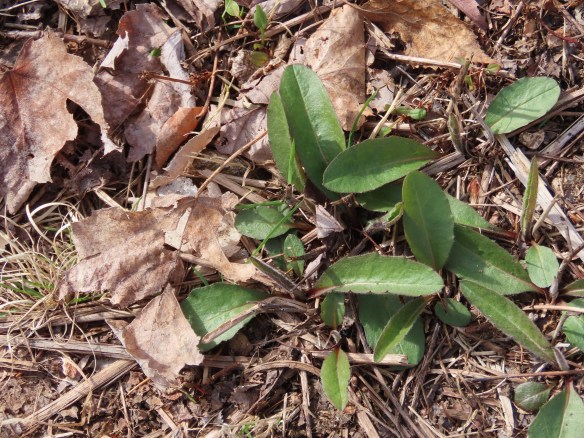
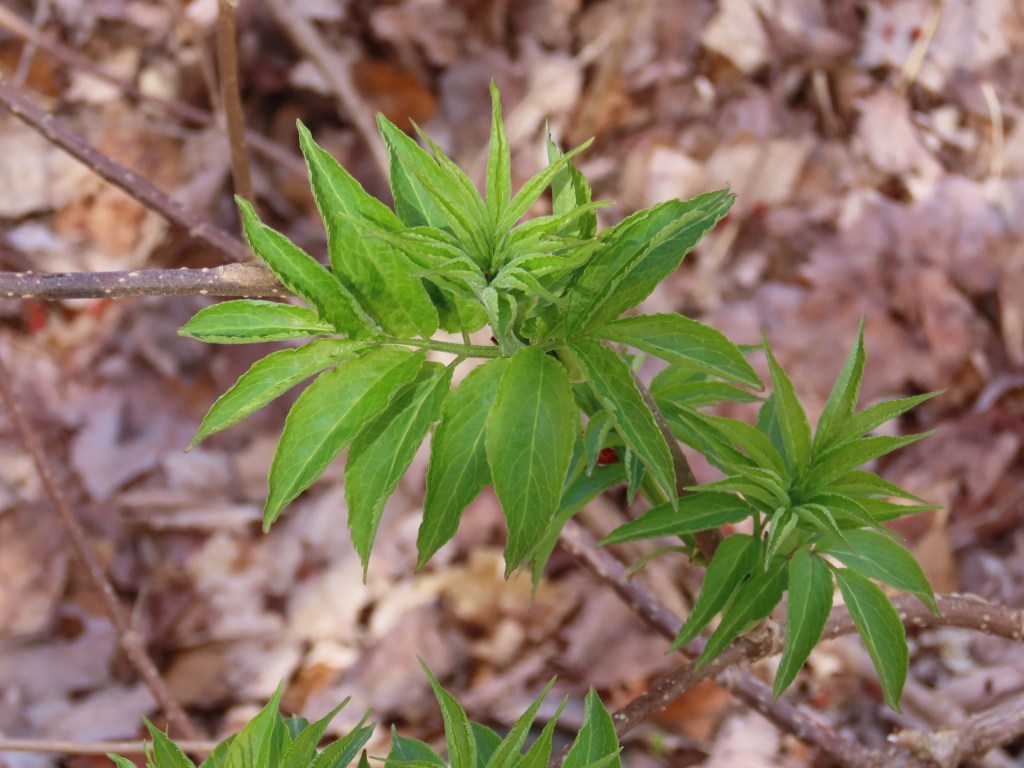
Green is the colour of new life after winter’s long sleep. Spring tends to be cool here in Cape Breton, and green things are slow to show. My first colour blog, Mellow Yellow, featured yellow as the colour of spring since it is the colour of some early-blooming flowers. Those sunny hues are soon followed by the first green plants to push up through the drab leaf litter. Wild strawberries, bunchberry and the dreaded ubiquitous hawkweed all arrive in mid-May. Shrubs like elderberry and raspberry also leaf out early.
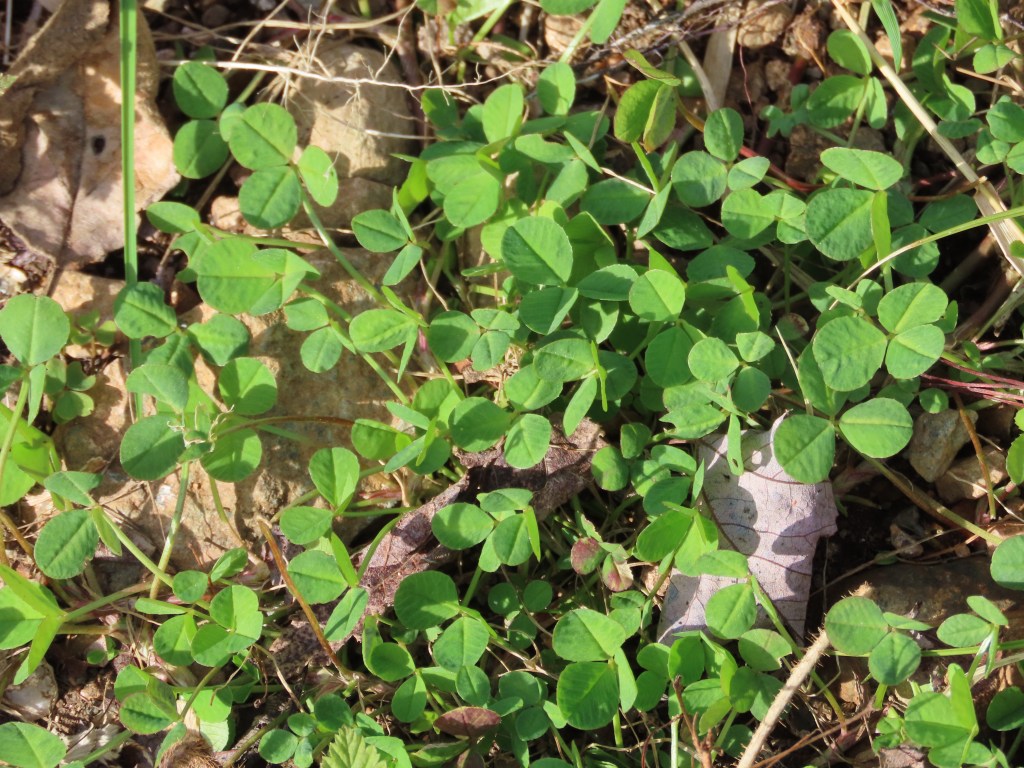
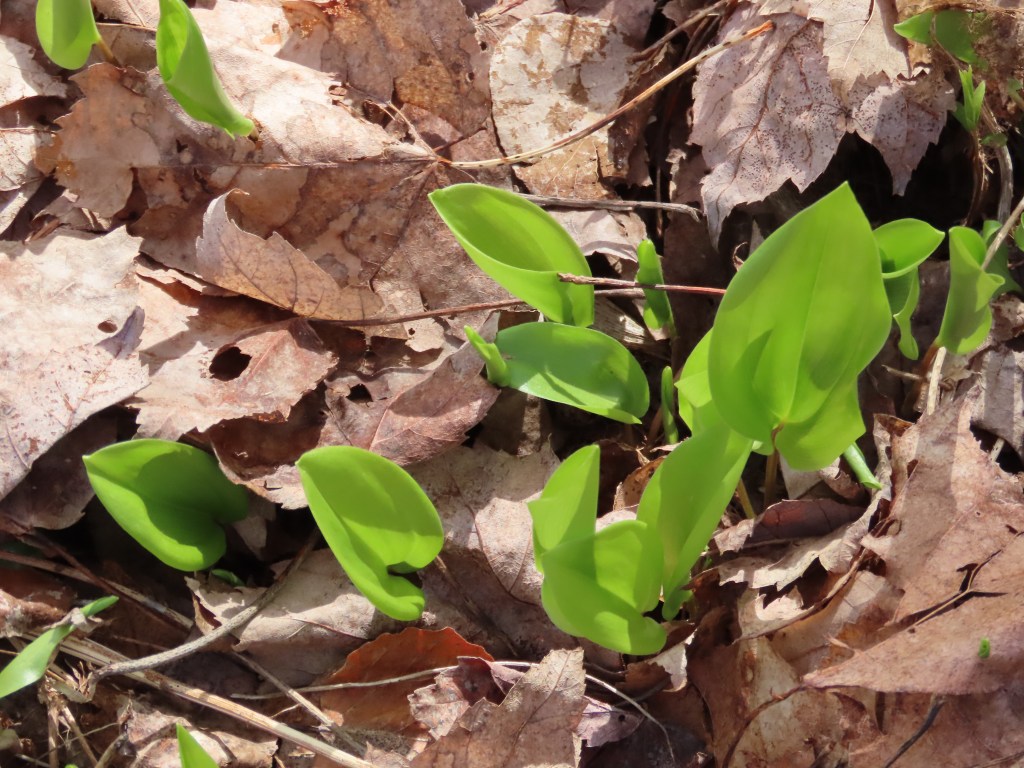
This past spring was cooler than ususal, and the deciduous trees were even later to leaf out. Bright green leaves didn’t appear until the end of May, but by mid-June the Holler was finally greening up.
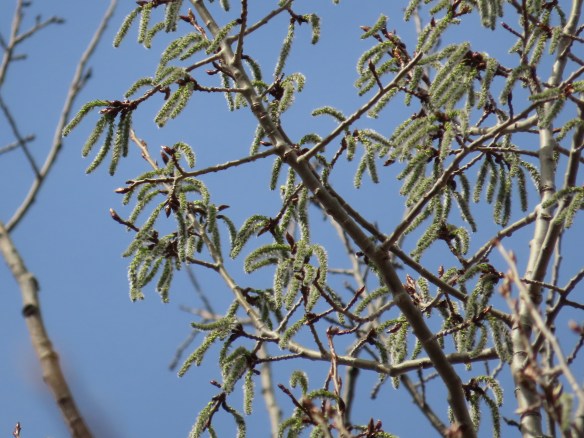
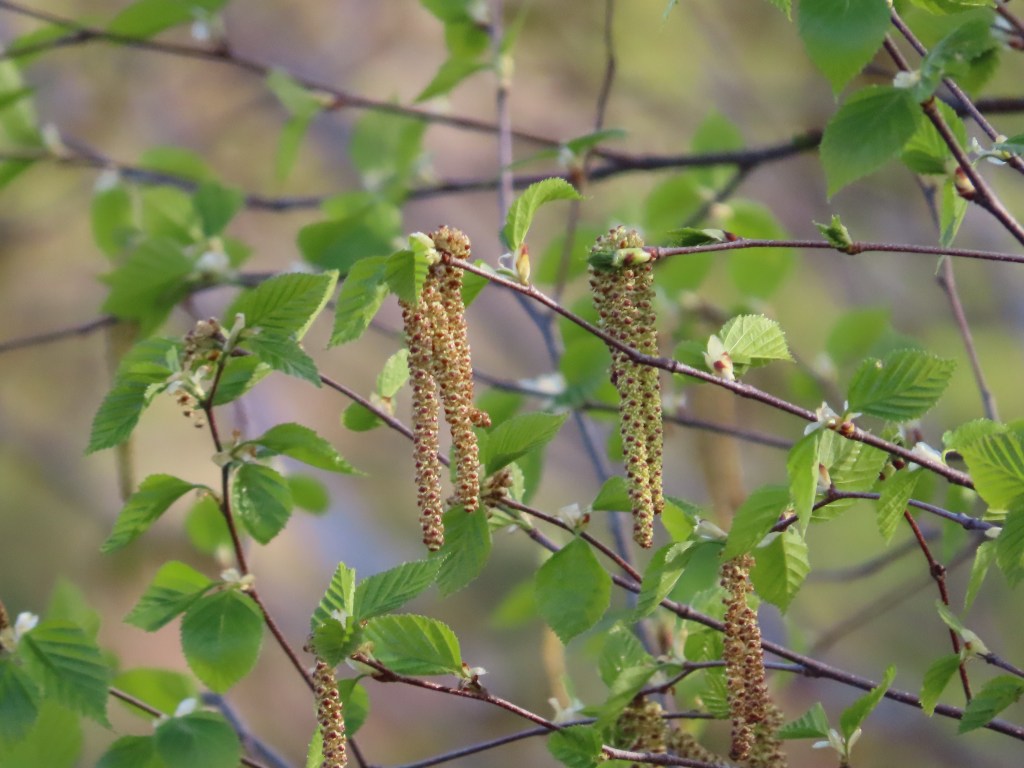
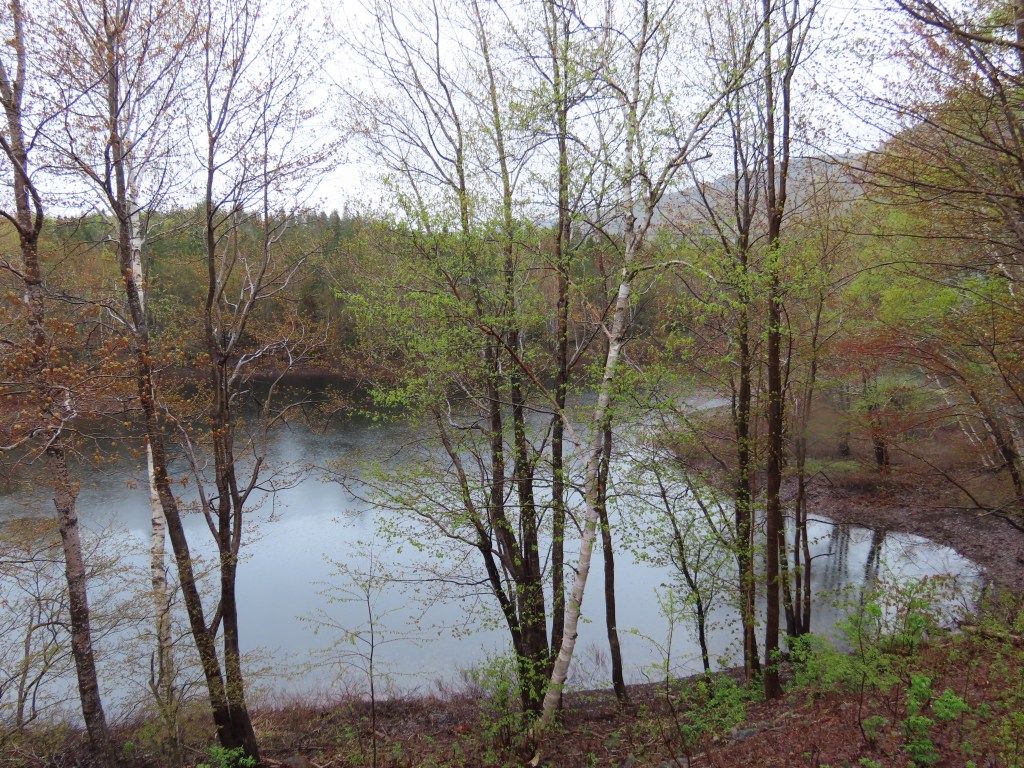
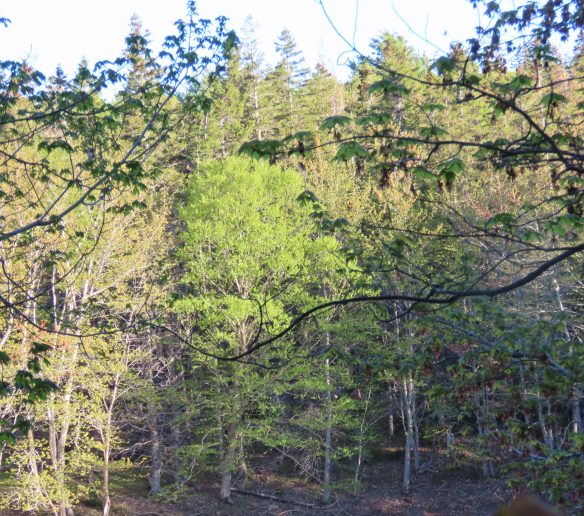
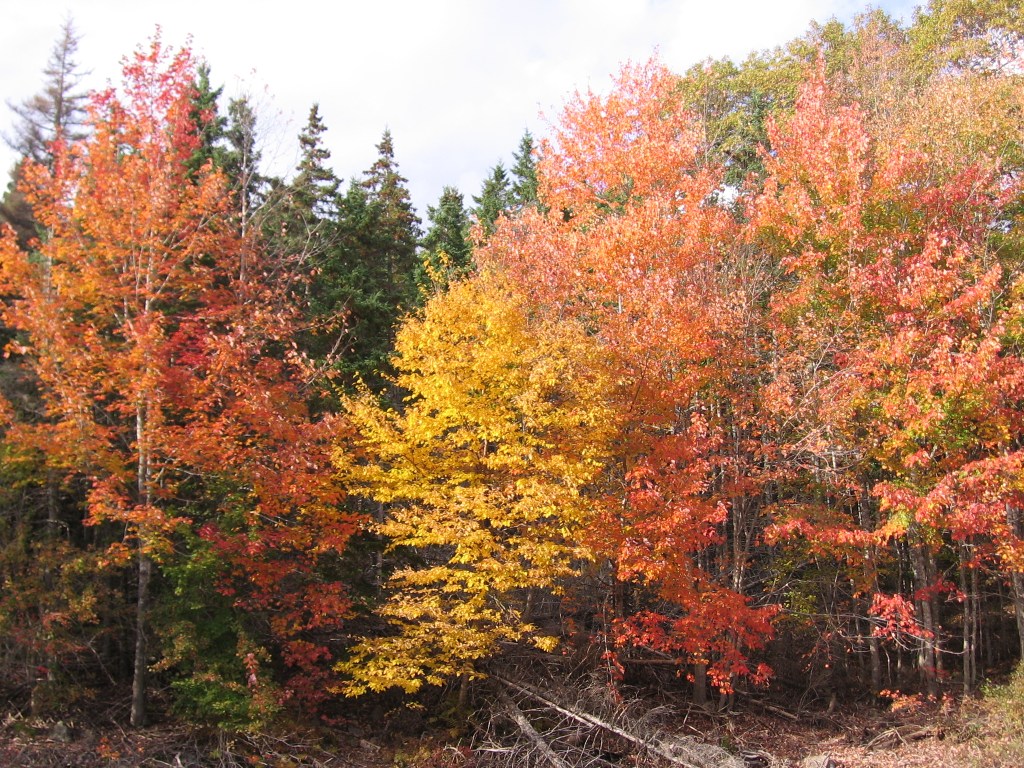
Young leaves give us a clue to their true colour. Early maple leaves tend to be tawny, their red hues mixing with green pigment. This yellow birch (below left) was bright green while its maple neighbours were still russet in late spring. This birch is one of my favourite trees and was also featured in Mellow Yellow, decked out in gold amidst the red maples (below right). It is an outstanding tree!
Summer Greens

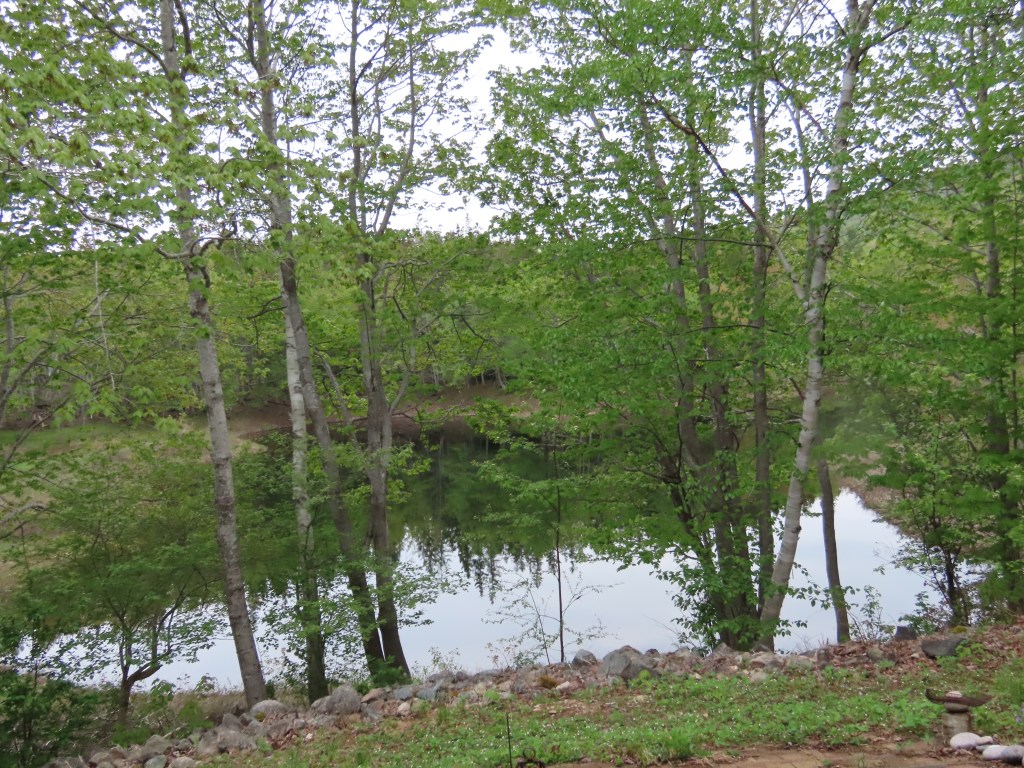
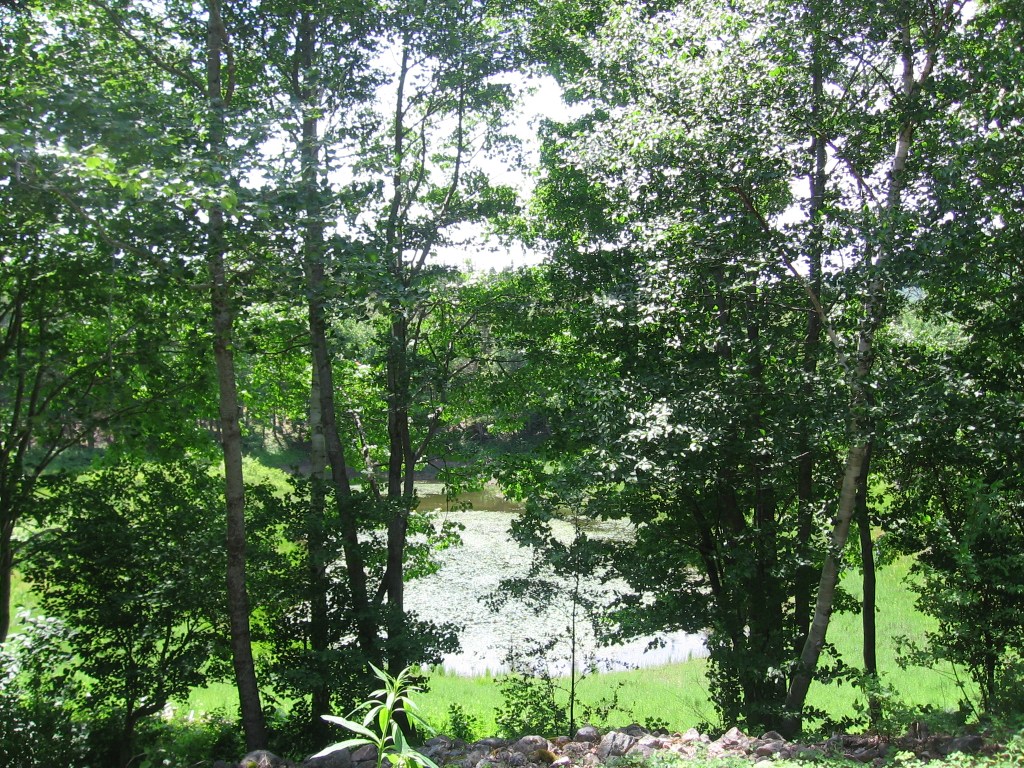
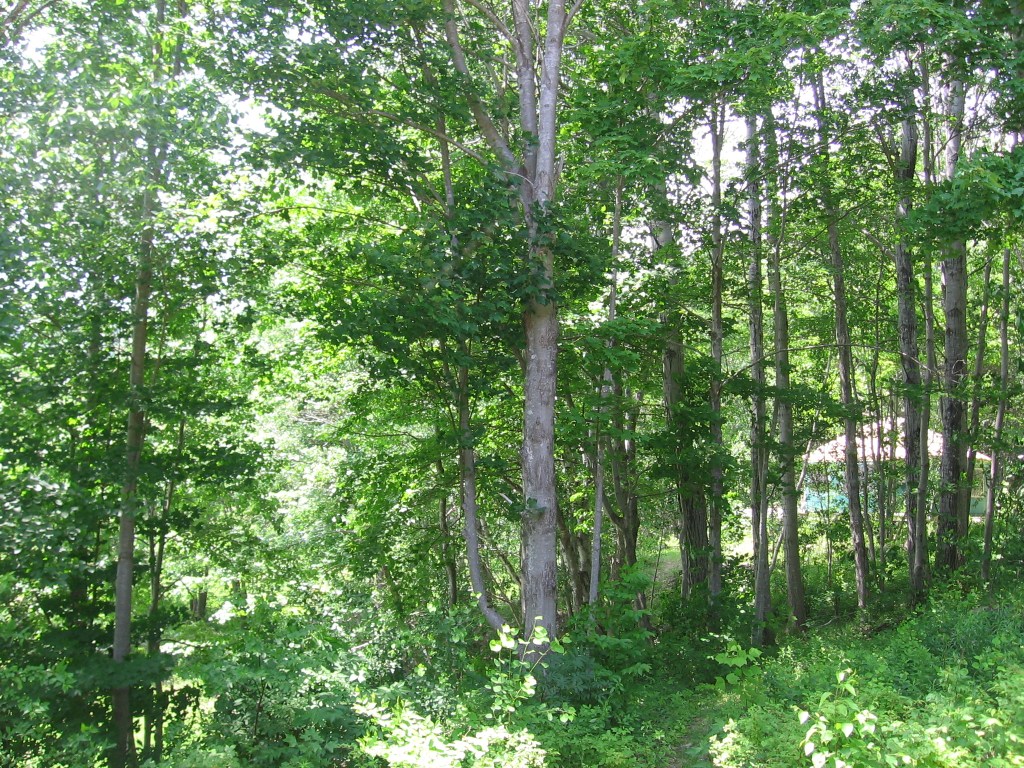
By summertime all the deciduous trees and shrubs are in full leaf. The greens become richer and deeper as the chlorophyll concentrates. Here in the Holler I am surrounded by curtains of green foliage and look down upon a carpet of green. The trees veil my view of the highlands and parts of the pond, but the shady canopy offers welcome relief in the heat of summer. In time the surface of the pond is green with lily pads.
Falling for Green

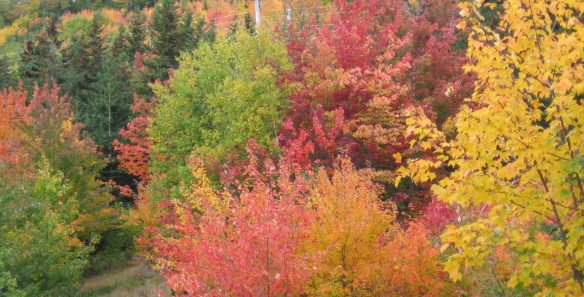
Autumn is the season of spectacular fiery shades of red, orange and yellow here in Cape Breton, but I’ll put in a plug for green. I prefer the fall foliage just before ‘peak colour’, that is, while some leafy trees are still green. I find the greens offset the complementary reds, creating a stunning contrast.

Winter Green

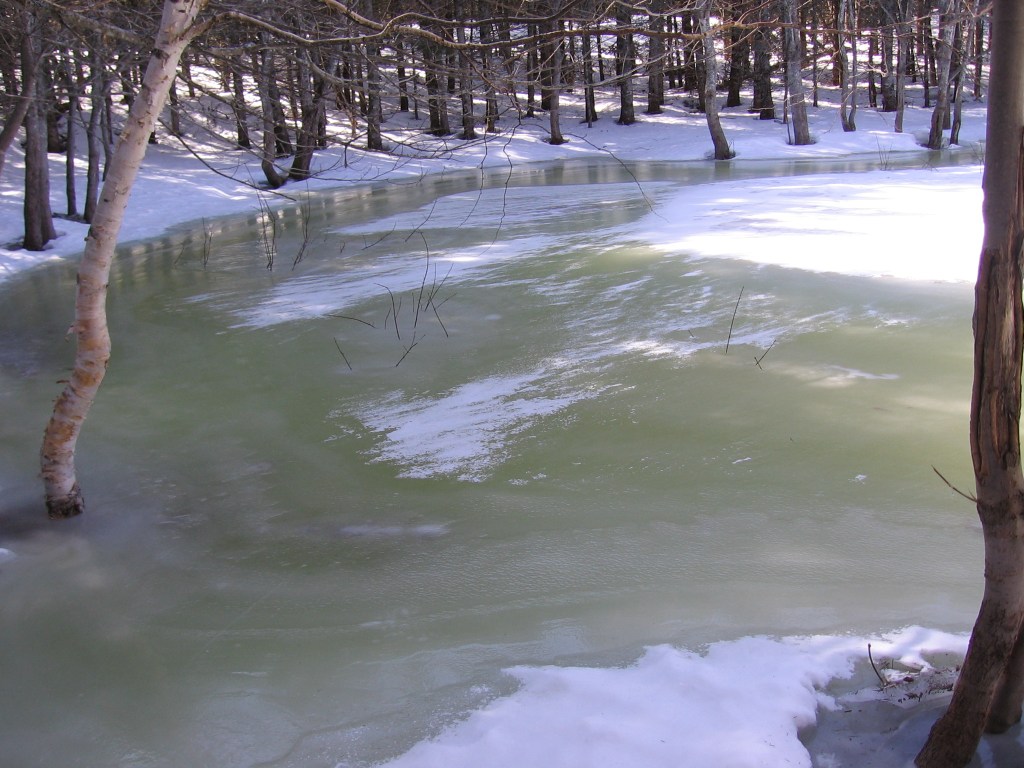
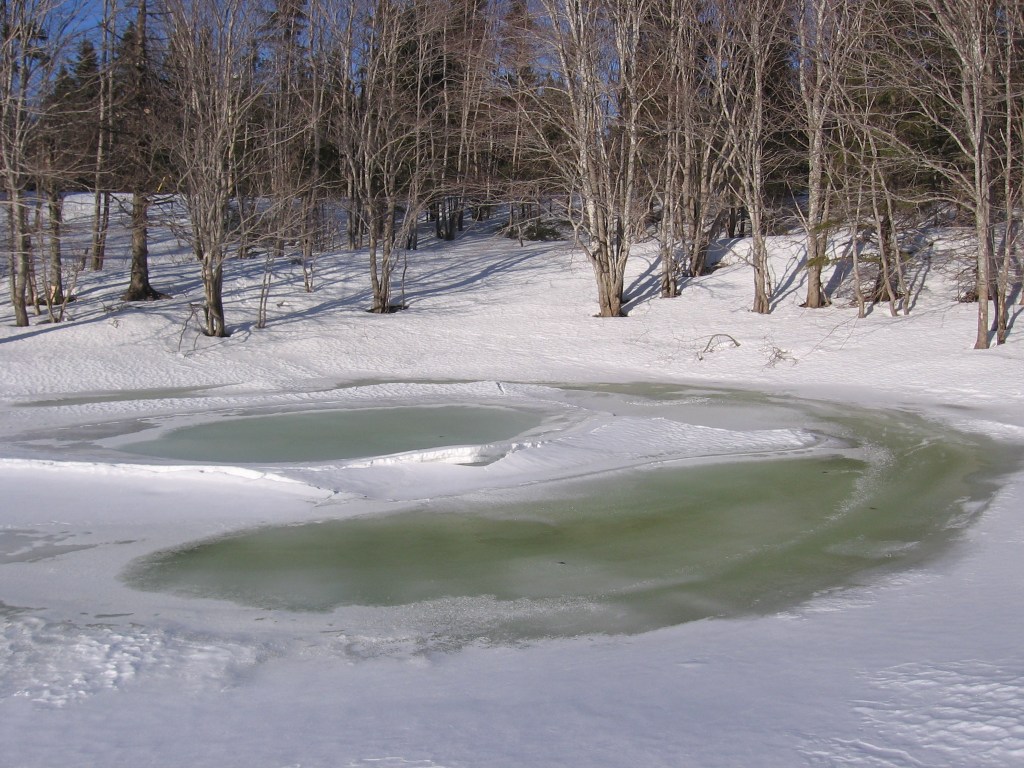
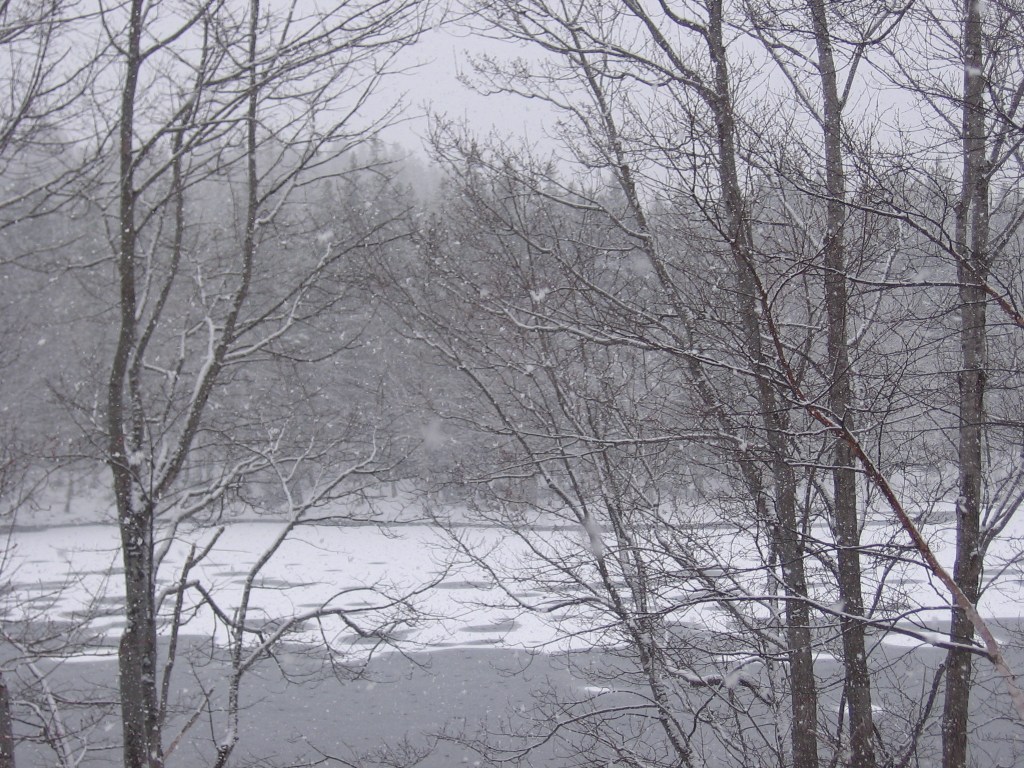
The Colours of Winter featured some winter greenery and I’m reposting some of those photos. In my diary I use a number of adjectives to describe these shades of green, such as jade, emerald, mint, peridot, sage, moss, and olive. Why is the water so green? My guess is that the colour comes from microscopic algae suspended in the pond water and then captured in the ice lattice, but I welcome your ideas and input.
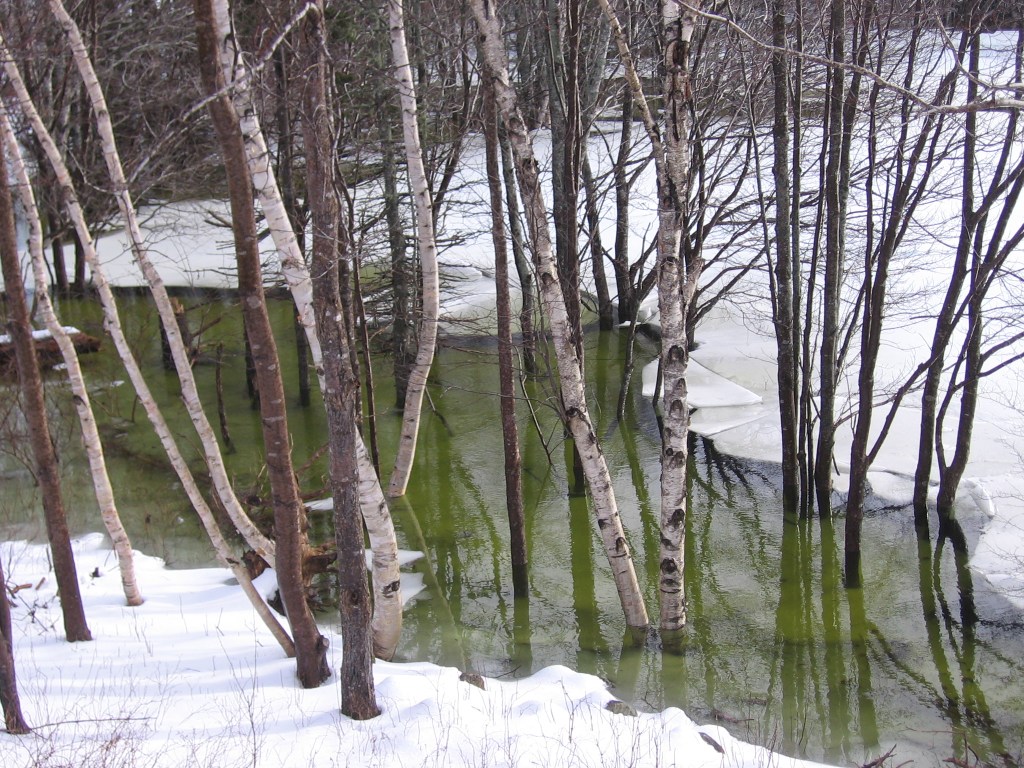
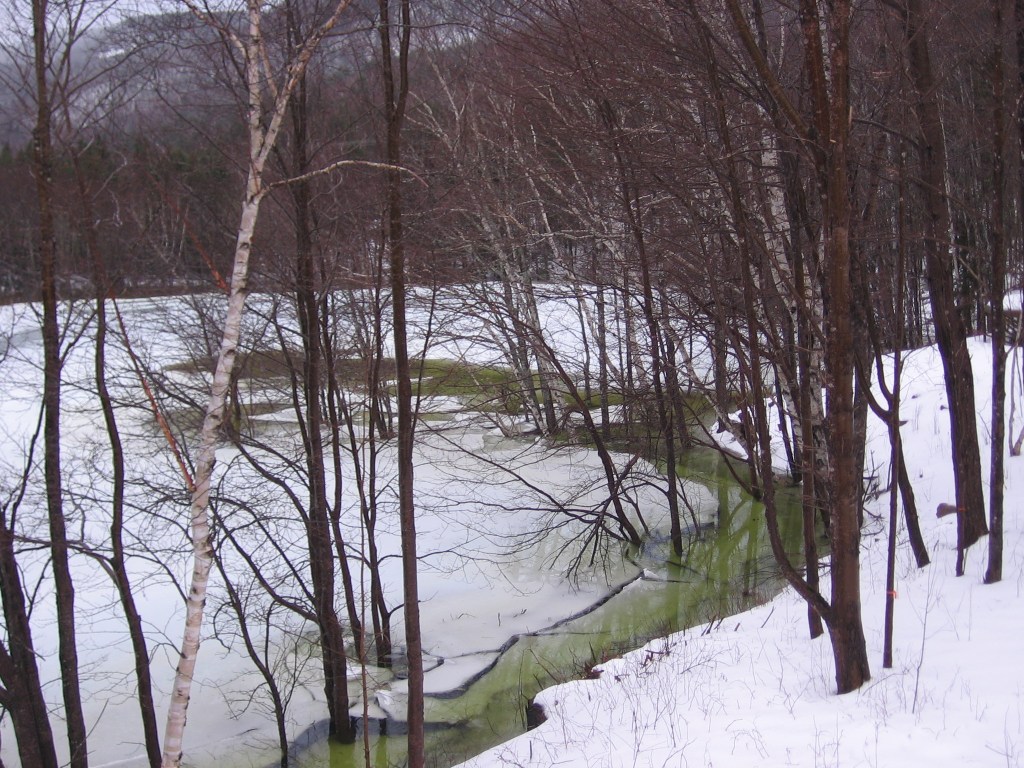
I live in a mixed forest so I see evergreens all year round. In the darkest days of December, we bring evergreens inside, putting up Christmas trees as we deck the halls with boughs of holly. A few final words on winter green. This haiku came to me while snowshoeing through the woods during a difficult time a couple of years ago. Little forest treasures can bring unexpected joy.
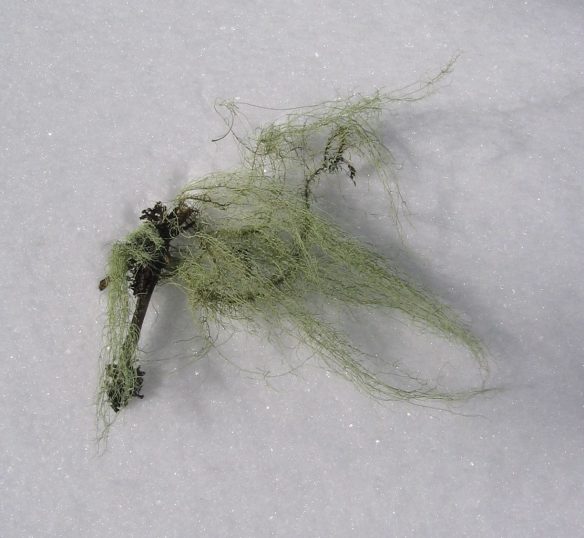
Black feather from crow
Green lichen resting on snow
Lift my heavy heart


Green scenes around the Neighbourhood

Frogs, Blobs and Lily Pads

L’il Pond is home to many green things. Aquatic plants thrive on the muddy bottom and provide shelter and food to the many invertebrates and amphibians who call the pond home. I’ve written several frog blogs, including Frogs, Globs, and Pollywogs and Swimming with Frogs, but a Green Blog would not be complete without a Green Frog – the biggest and loudest frog of all. Many species of frogs lay their eggs in the pond. Algae feed the larvae and give the eggs their green colour.
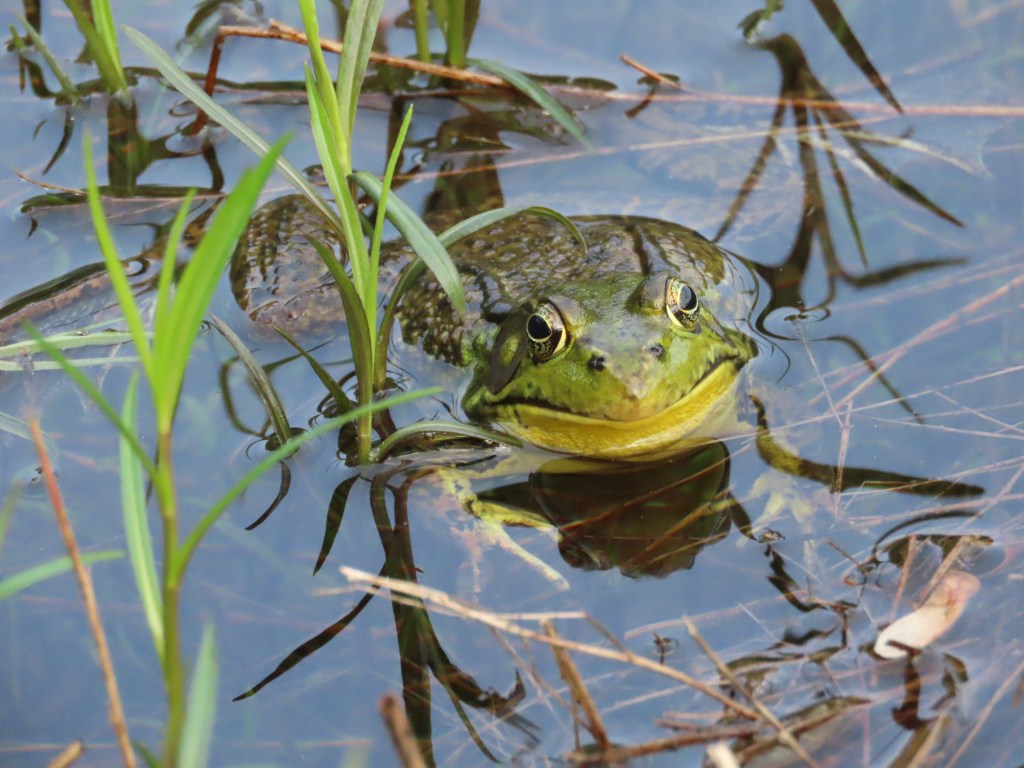
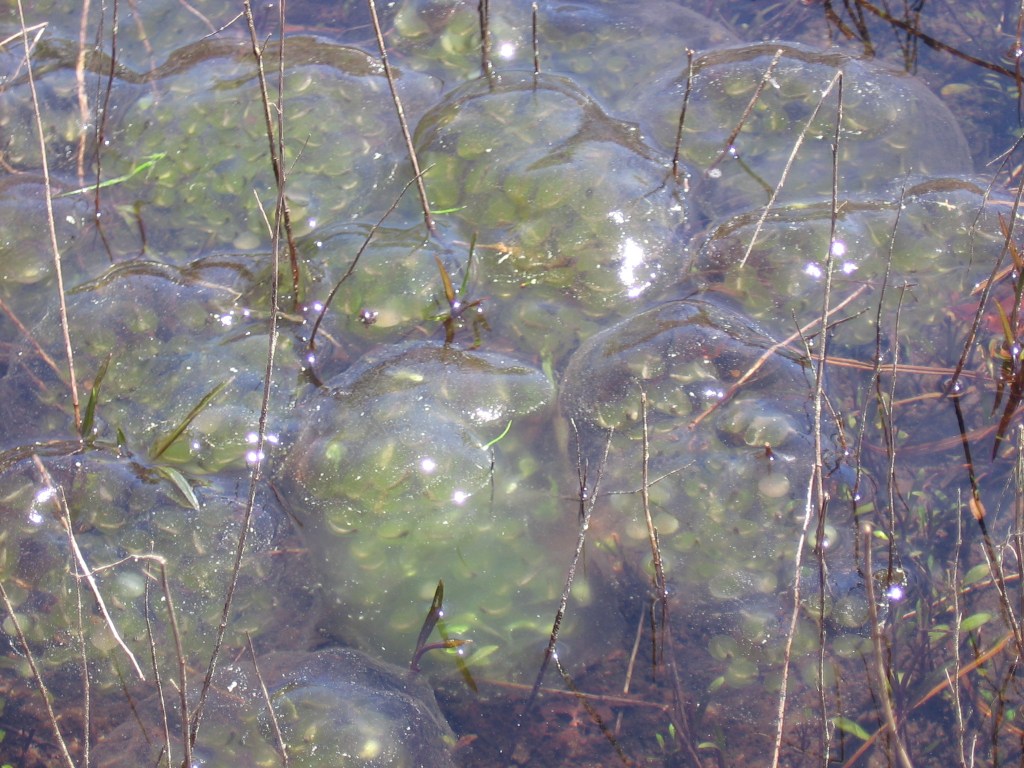
L’il Pond gets its name from the yellow lilies that grow there. The lilies grow up and the pond drops down until green lily pads cover the surface, providing shade and cover. For more on pond lilies see Ups and Downs in the Holler. Meanwhile, the banks of the pond are lush with shrubs, grasses, ferns, and wildflowers from spring though to fall.
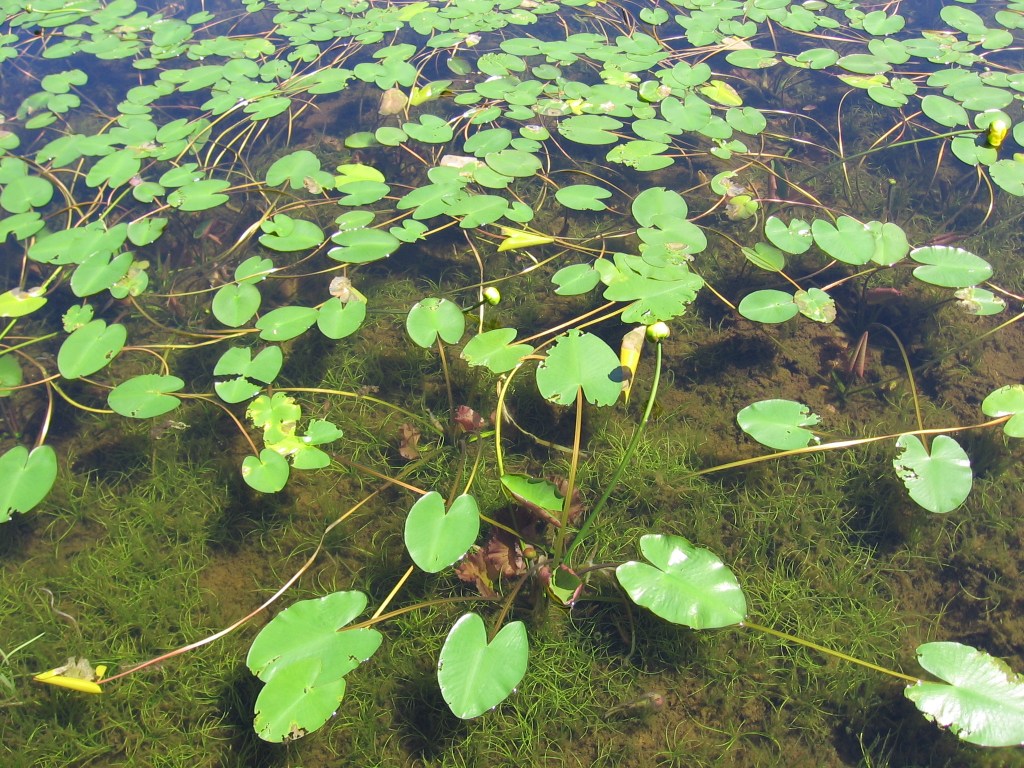
Lily pads and aquatic plants add greenery to the pond.
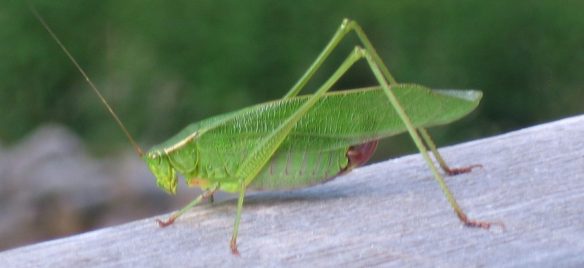
Katydid! Or didn’t she? Frogs and hummingbirds aren’t the only green critters in the Holler.

Sea Green

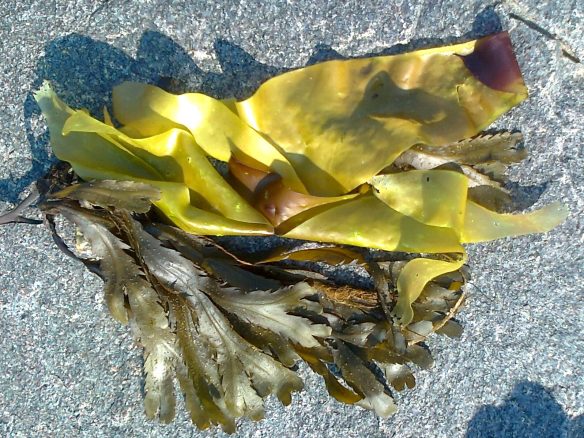
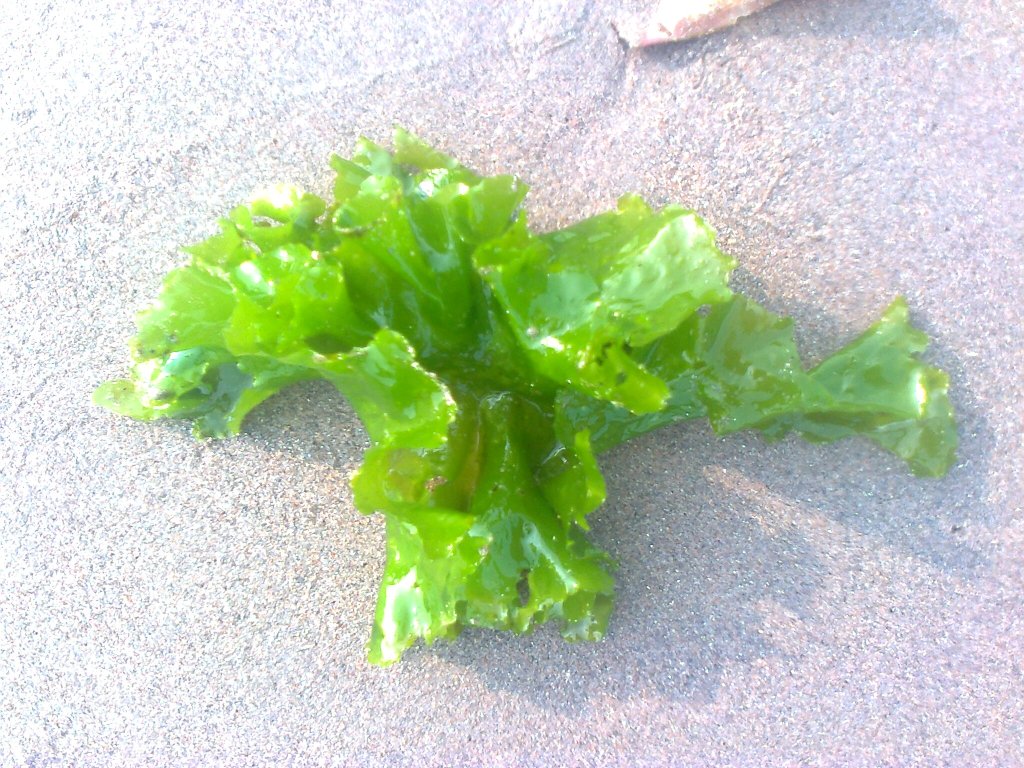
Green is not the most ubiquitous colour at the shore, but it does show up in a variety of forms. Seaweeds are actually multicellular algae rather than plants. But like plants, these marine algae contain chlorophyll and use photosynthesis to convert sunlight into sugar, and some species are edible. I like to nibble on living sea lettuce at the shore, but when it comes to kelp, I have to simmer it a long time before it’s tender enough to eat.
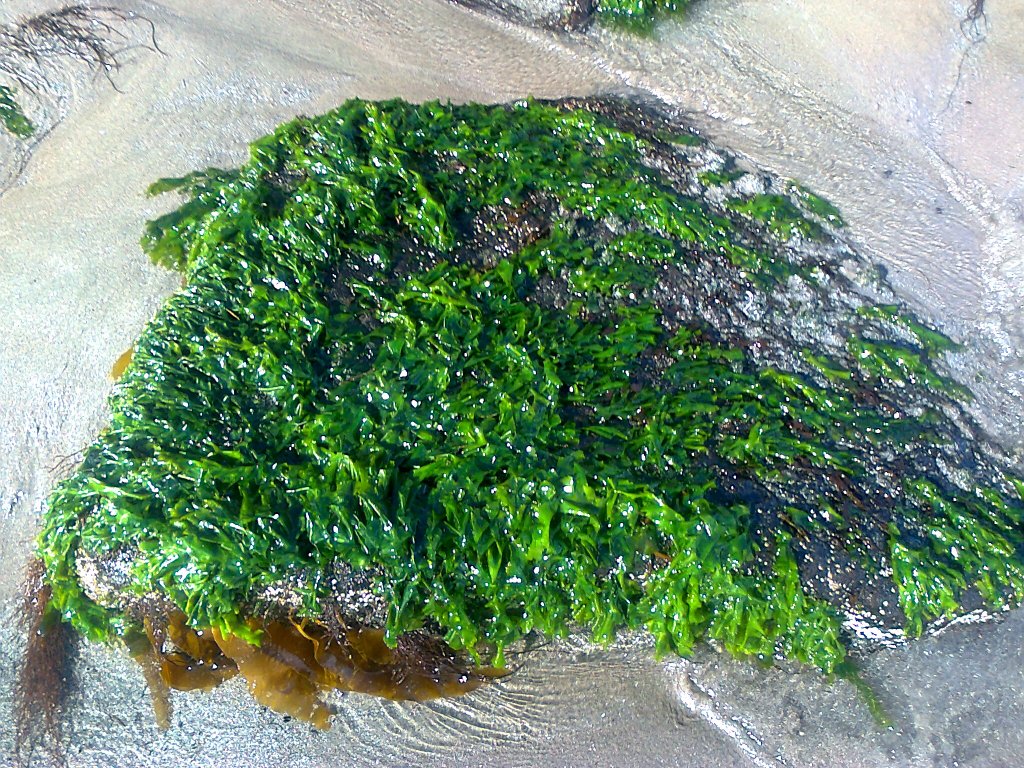
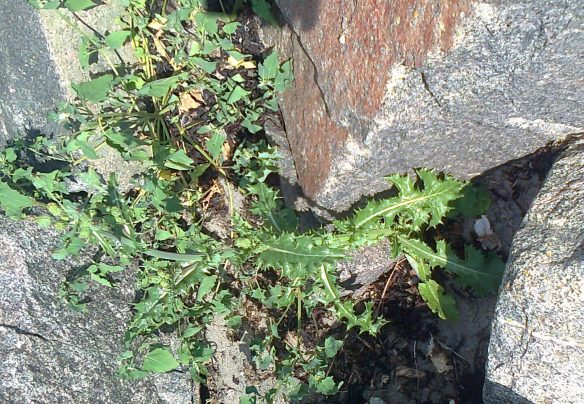
Seaweed and beach grasses are expected at the beach, but plants are such persistent opportunists that some landlubbers managed to take root in a tiny bit of organic material amongst the boulders of the breakwater. Never underestimate the power of plants!
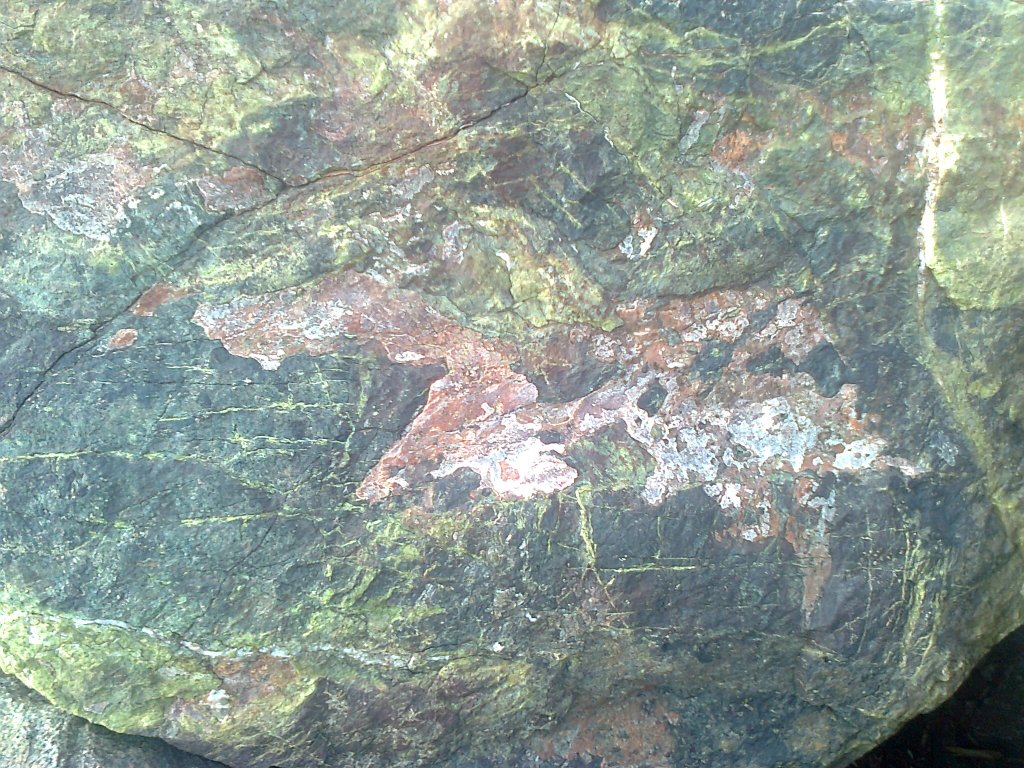
There is a vast assortment of wonderful rocks at the shore, as I mentioned in Stones I have Known. I am always drawn to green rocks and many come home with me. I was a geophysicist, not a geologist, and I didn’t take any courses in hard-rock geology, so my igneous identification skills are a bit sketchy. Comments and corrections are welcome.
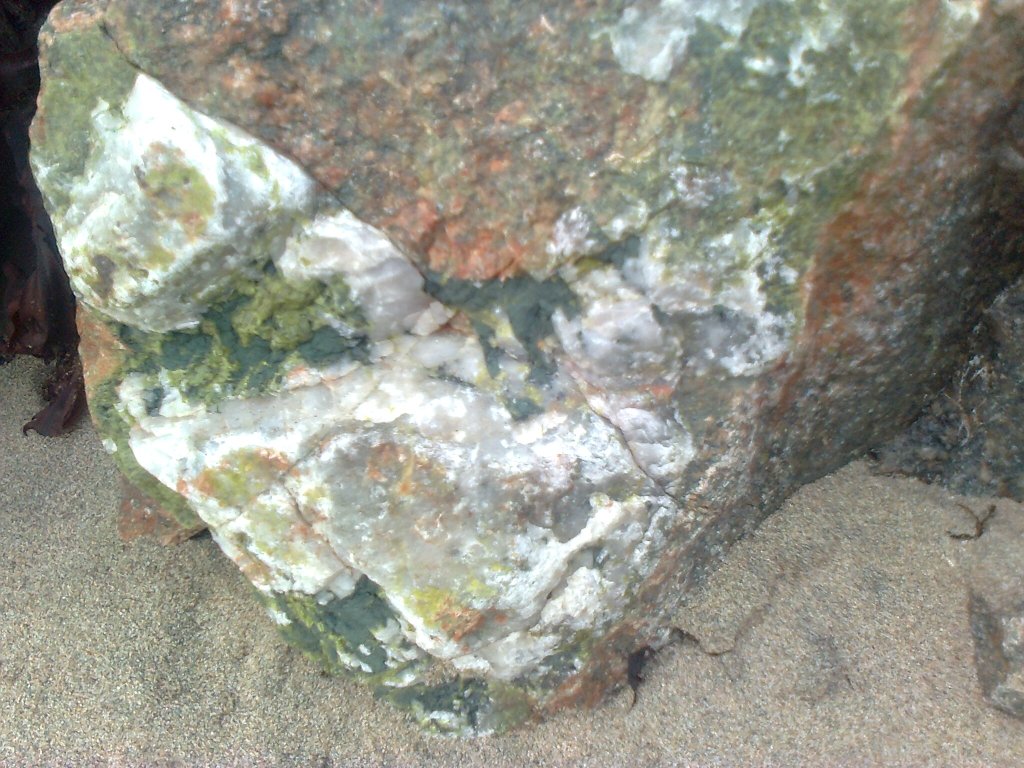
Forest Green

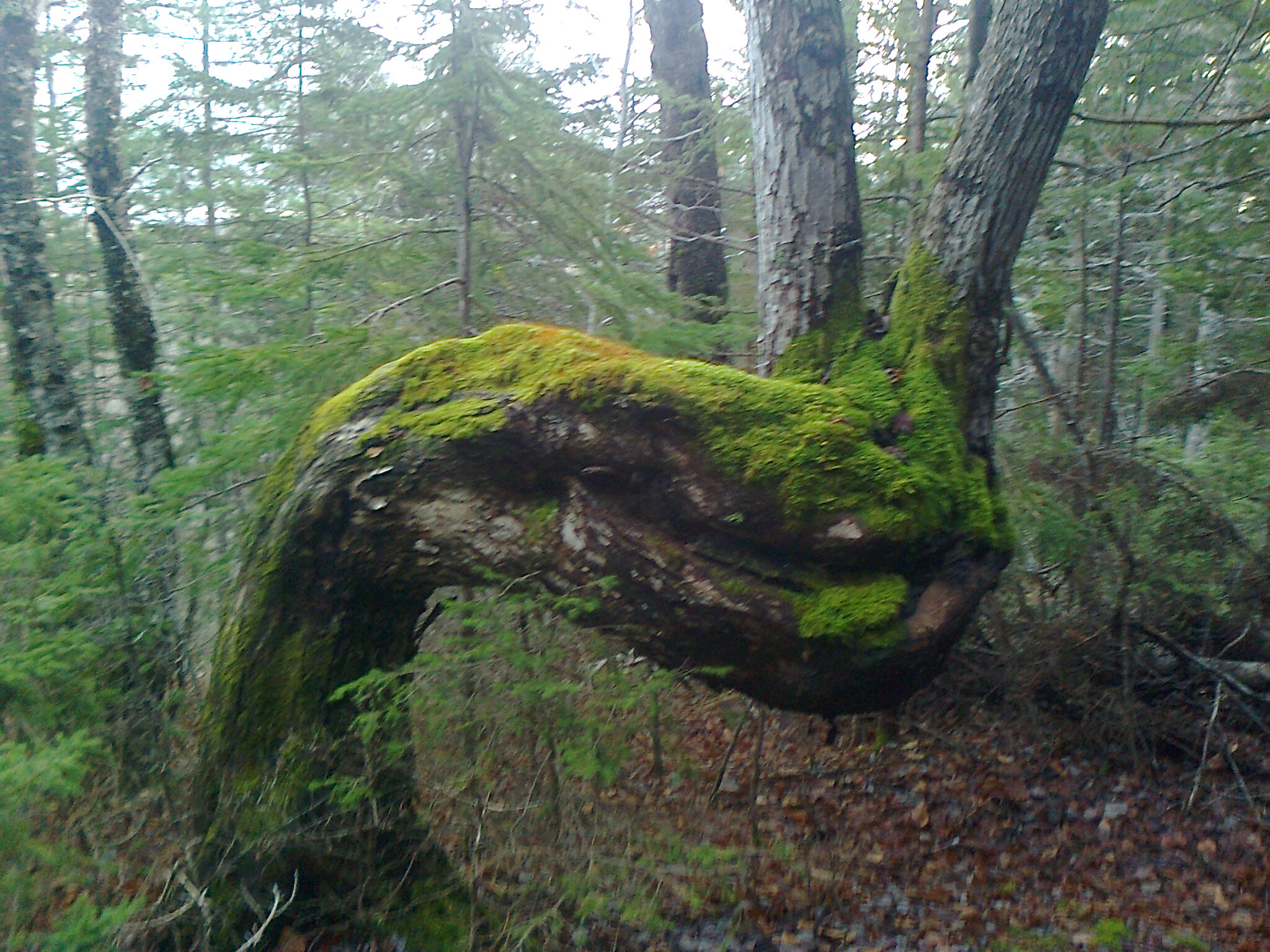
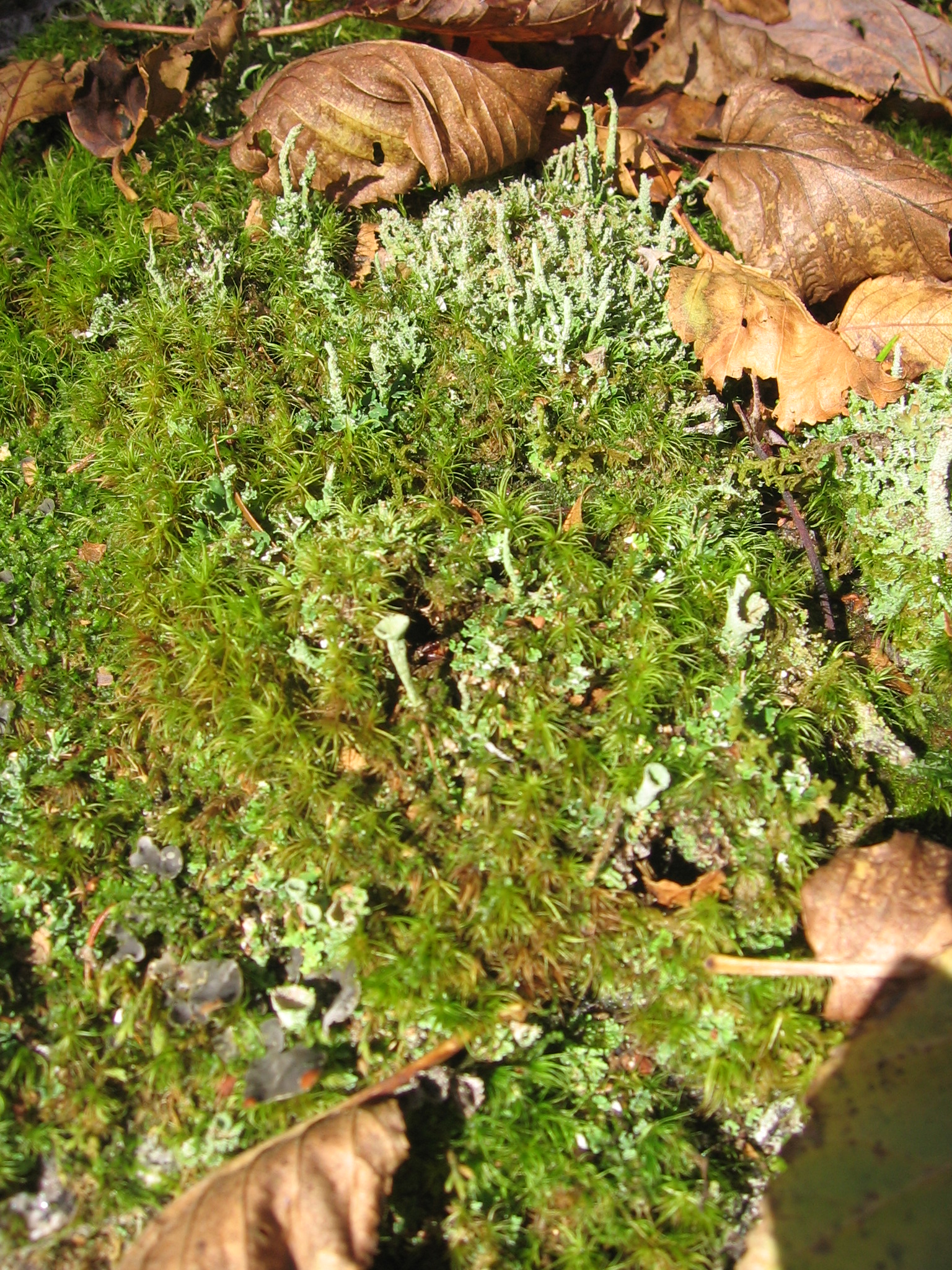
I could fill many blogs with photos of trees, and I did feature a few in Which Way is Up? and The Humbled Hiker. But in a sylvan world I’m also impressed by the way mosses, ferns, lichens, and fungi transform inanimate boulders and dead trees into lively green things.
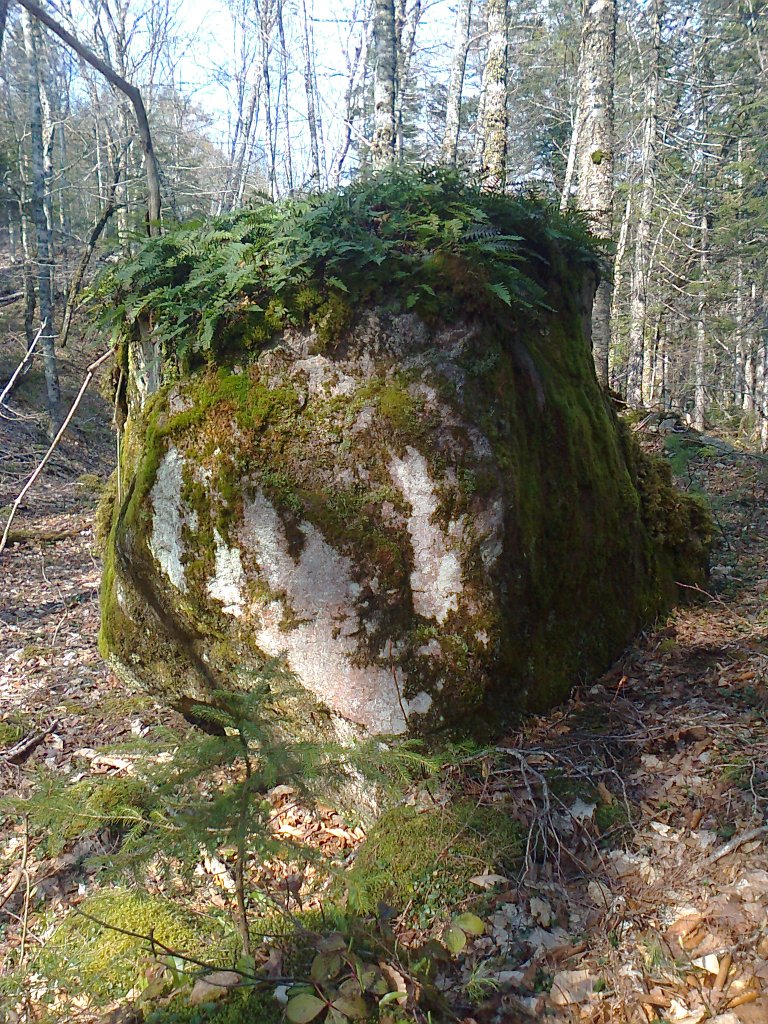
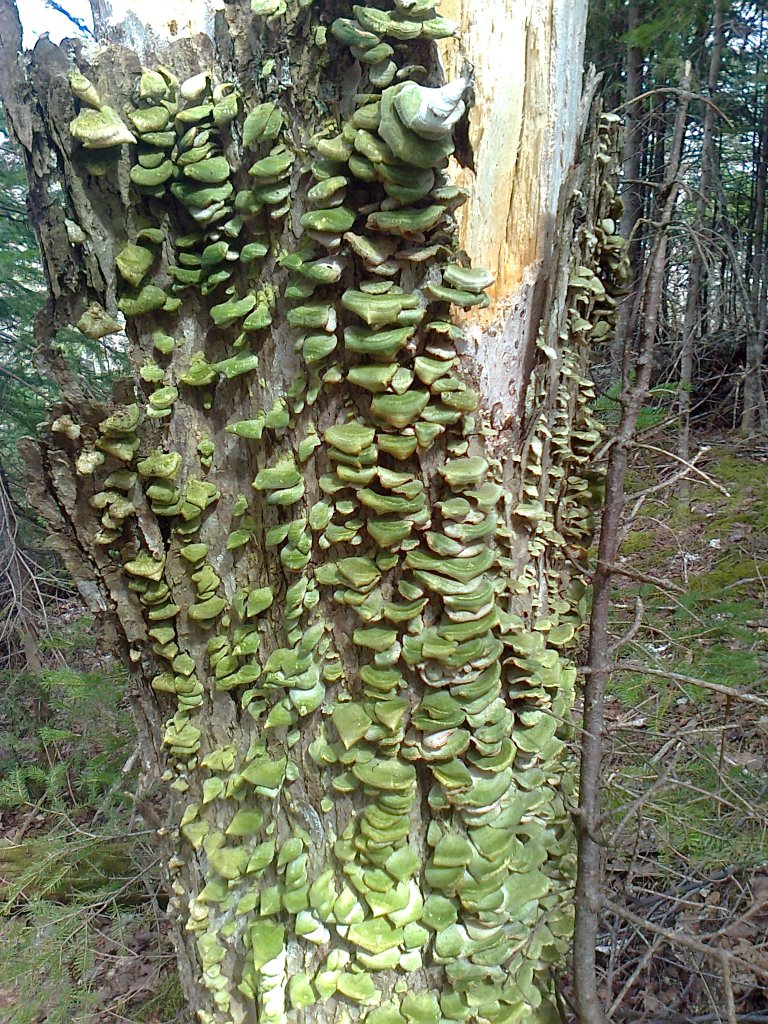
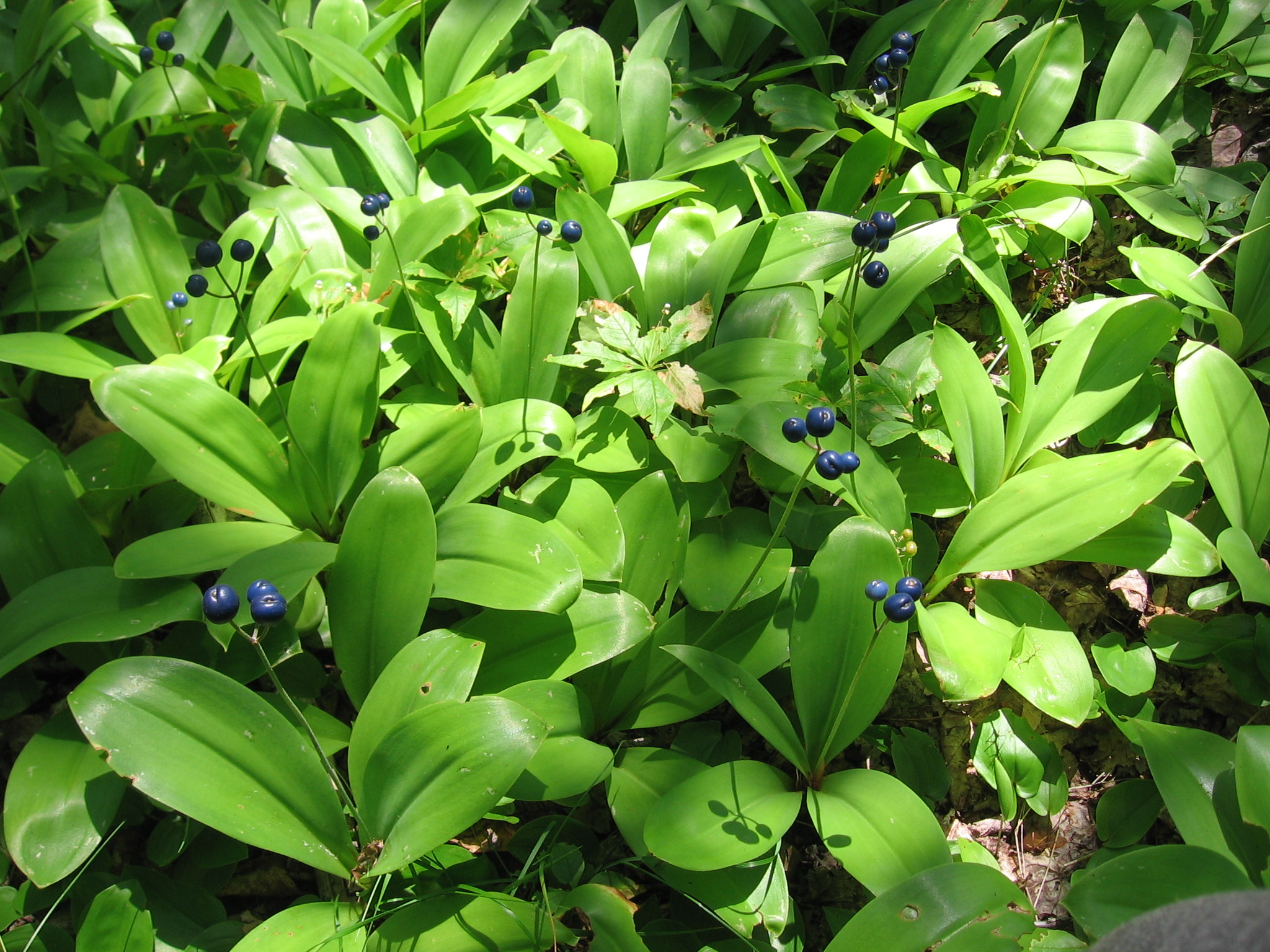
From blue bead lily (Clintonia) carpeting the forest floor to an inviting mossy recliner on an old tree, there are many shades of green in the forest. Moss and lichens liven up the dead.
The Many Meanings of Green

Green means GO! If you get the green light, go full steam ahead. Green is the colour of ecology and our environment, from Greenpeace to green energy. Green is seen as good for the earth and us – unless it’s just greenwashing. The Green Revolution of the mid-20th century greatly increased global food production but also ramped up the use of pesticides, fertilizers, and irrigation, so perhaps not so green.

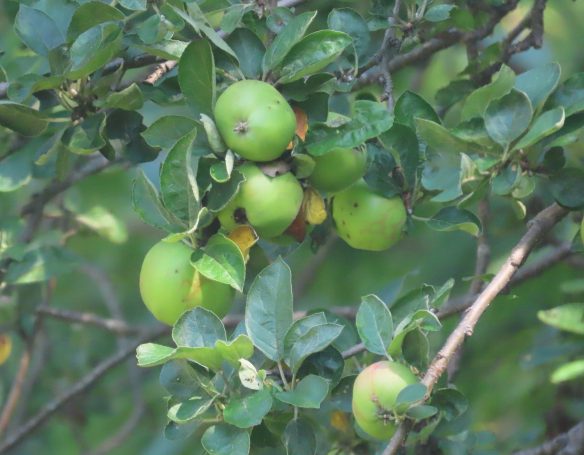
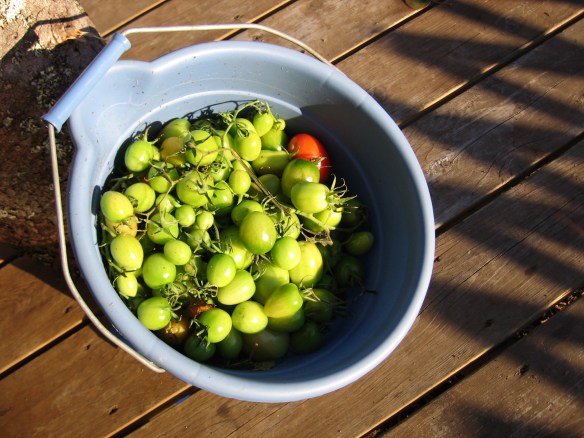
Green isn’t always good. I might look green around the gills if I ate something that was green with mould, or meat that was turning green. Or I might be green with envy if someone is rolling in the green, because green is the colour of money. If I’m a rookie, I might be called a greenhorn. Green is immature and unready, like unripened fruit.
Green is right smack-dab in the middle of the ROYGBIV rainbow spectrum. As I mentioned in Mellow Yellow, painters mix the primaries on either side, yellow and blue, to create an array of greens. One of my friends, a former colleague and fellow science geek, was surprised that I named yellow, along with red and blue, as a primary colour. As an electrical engineer, he knew that green, red, and blue are the primary colours. What gives?

Both are true, depending on context. In painting, yellow is primary while green, mixed from yellow and blue, is secondary. But the primary colours of light (including on the screen you are looking at) are green, red, and blue. Add all three to get white light, or subtract one to get the secondary colours yellow, cyan and magenta, the colours that your printer uses.

Green Beings

Green is a popular colour for fictional characters. There are ‘little green men’ from outer space (one is called Yoda), Jiminy Cricket, Gumby, and the Jolly Green Giant. Kermit the frog sang ‘It’s not Easy being Green’. (Maybe he should move to my pond – the green frogs here have it pretty easy, lounging in the lilies.) I was doing a NYT crossword the other day and discovered that Yoshi is Mario’s flying green steed in a video game. Super Mario and Teenage Mutant Ninja Turtles were for my son’s generation, but as a child I loved Beany and Cecil, a cartoon about a boy and his green buddy Cecil, the ‘Seasick Sea Serpent’.

Some green beings are monstrous. Envy is ‘the green-eyed monster’ according to Iago in Shakespeare’s Othello. The Grinch is mean and green, Shrek is a green ogre, and The Wicked Witch of the East was Technicolor green. Frankenstein’s Monster and the Creature from the Black Lagoon were green on the big screen. T Rex may not have been green in life, but he often gets the green monster treatment. And watch out when Bruce Bannister gets mad and transforms into the Hulk!
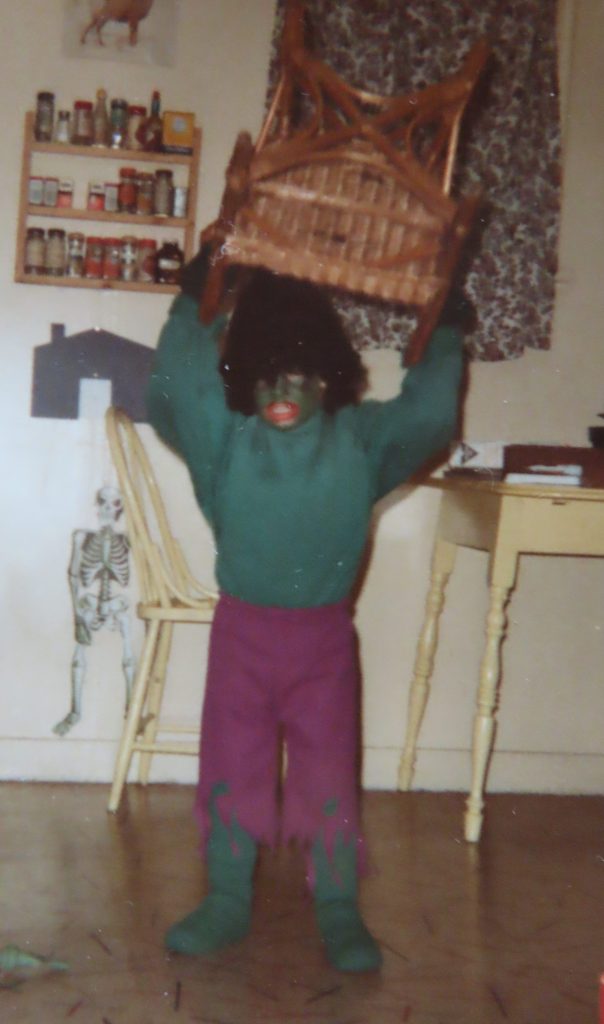
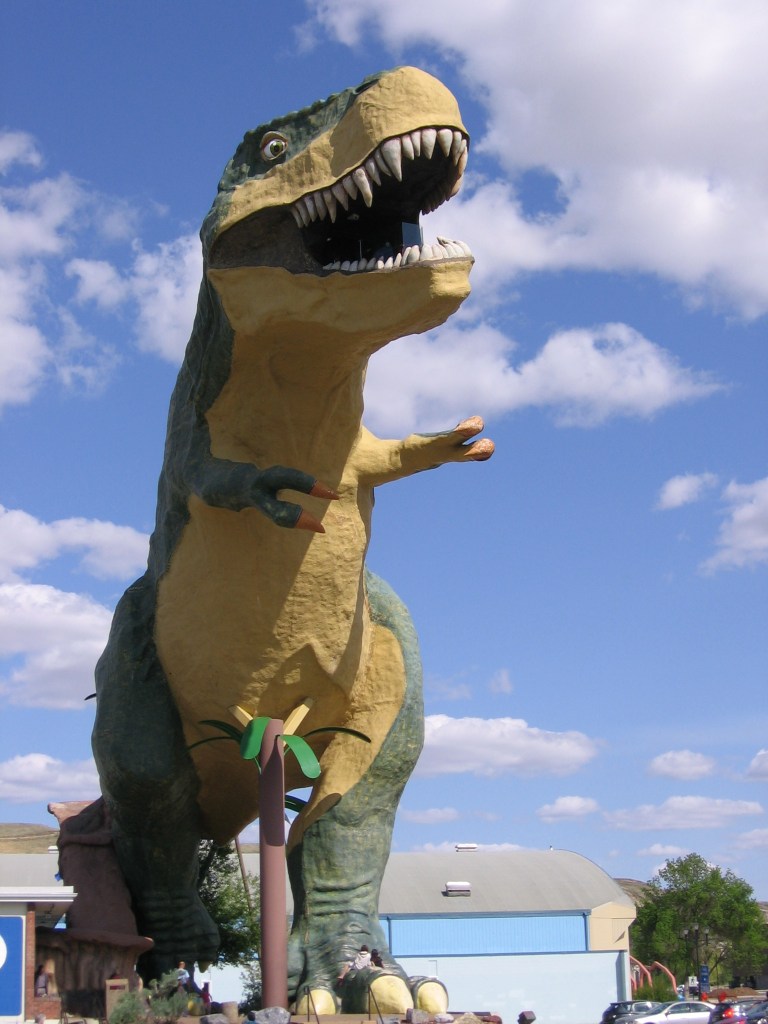
When I was young, I listened to Gordon Lightfoot sing Bitter Green, and in school we sang Green Grow the Rushes, O. I sometimes watched Green Acres on TV but I never read Anne of Green Gables – even though she was a fellow redhead – because it sounded too girly for this tomboy. Back in those days you could buy ‘avocado green’ appliances. My mum had an avocado green electric frying pan that she passed along to me, but it didn’t survive the purge when I left Calgary (Travels with Tundra and Spot).

A Few of My Favourite Green Things

I’m partial to many shades of green, as one peek at my wardrobe would reveal. I had trouble finding anything yellow to wear for my Mellow Yellow blog, but I could fill a whole ‘zine of me in green. Green is the colour of Ireland, and I can confirm that Eire is indeed the Emerald Isle. I brought some of that green home with me, like the shawl and scarf I’m wearing in the photo on the left. My younger self is wearing a blue tank top, but the shorts and the green plaid shirt fit the colour scheme. (I’m pretending to hold a can of beer in my left hand – a photo tradition.)
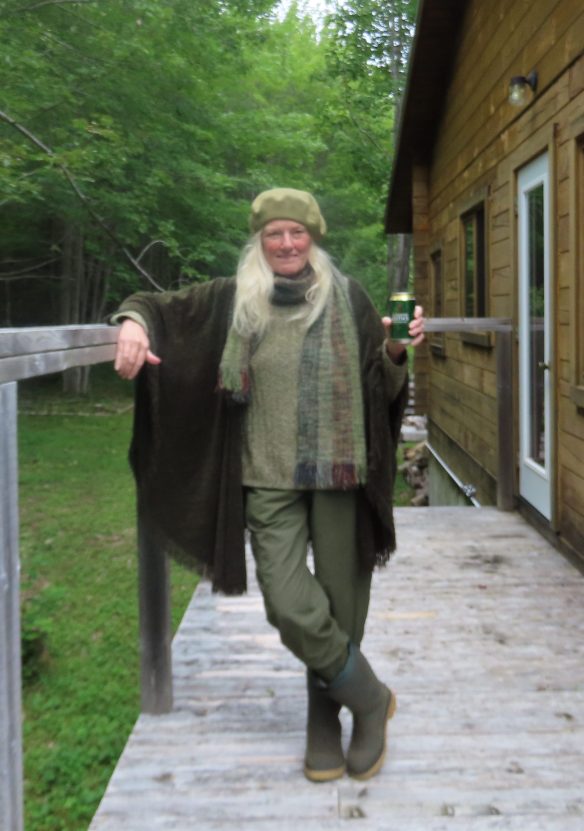
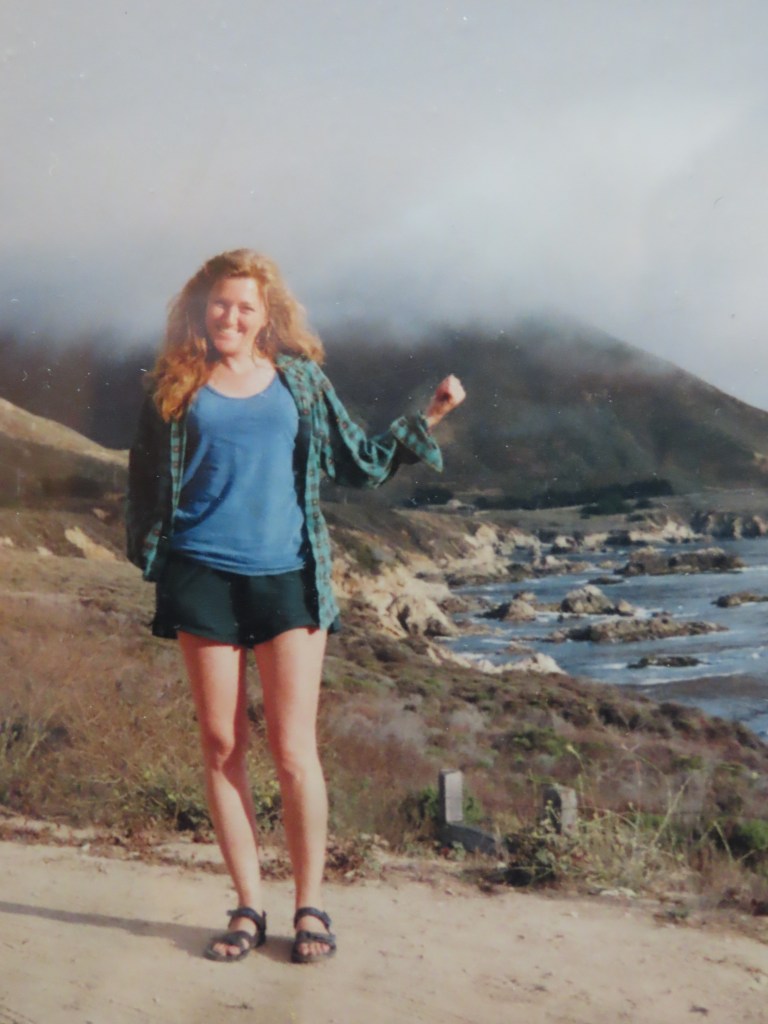
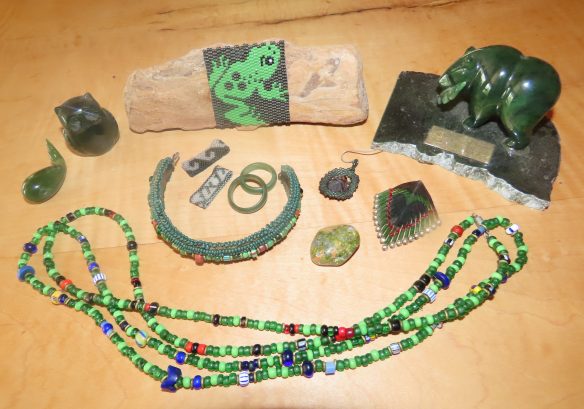
When it comes to jewellery I prefer jade to rubies or diamonds. Below are jade rings, green beaded jewellery, and green critters: a whale, an owl, a frog, and a bear biting a salmon.
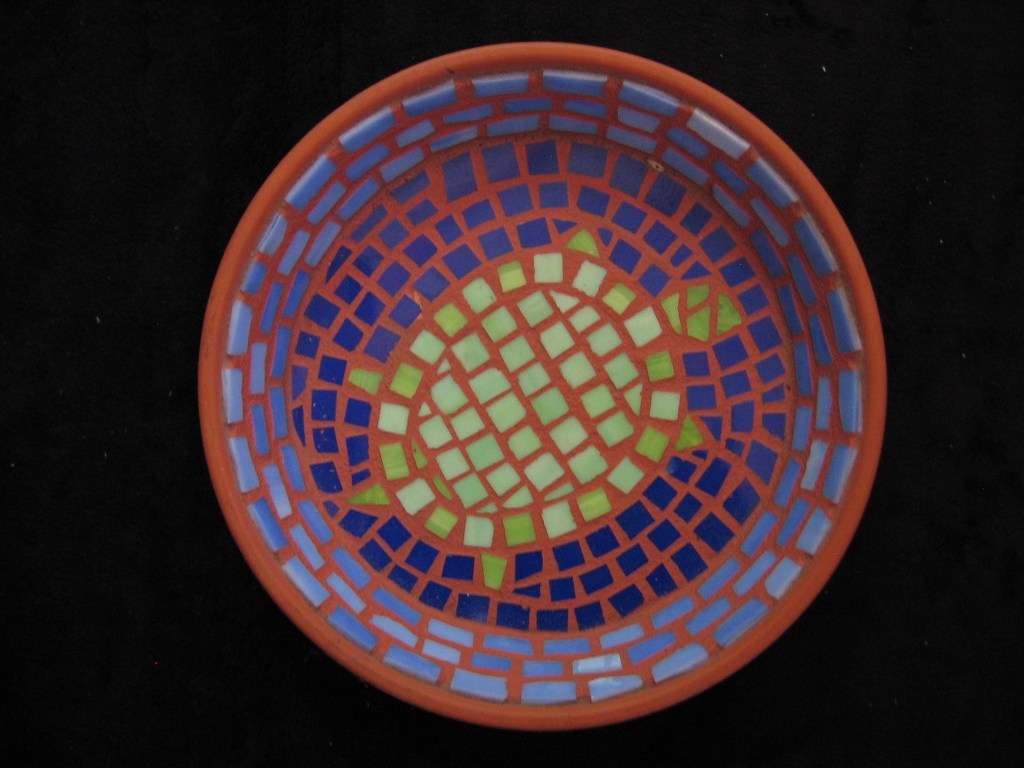
Tiny green turtles were popular pets when I was growing up. My brother and I had turtle races on the dining room table and my best friend and I held a funeral for her turtle. One turtle went on the lam and vanished. I found him weeks later, down a flight of stairs and covered in dust. He must have had gone into a state of torpor, because we put him in a bowel of water and he came back to life. I still have a soft spot for turtles in their hard shells, those that live on land and those that swim in the sea.

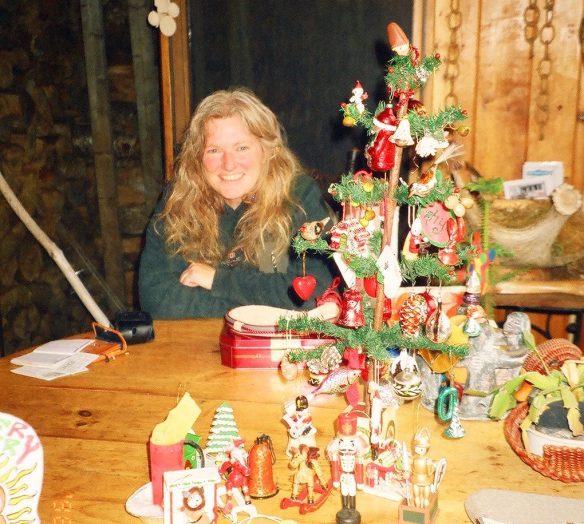
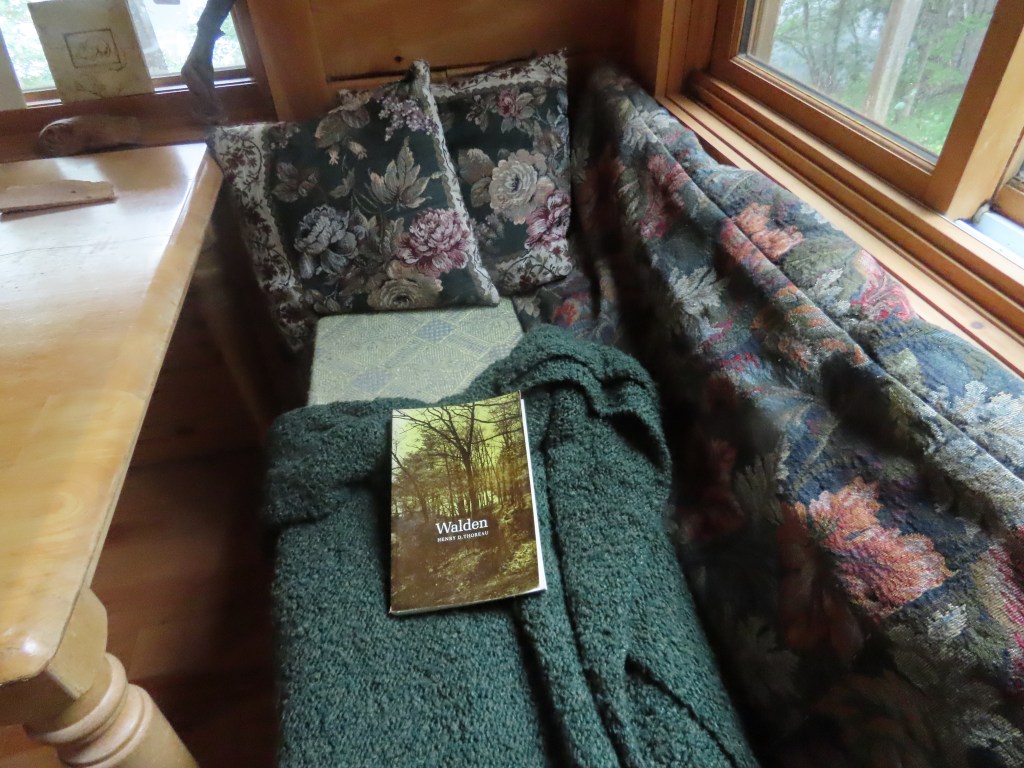
I wrote about ‘The Little Christmas Tree’ in Cape Breton’s Christmas, Book 9 (Short Stories). This photo of the little tree is from Christmas 2006, when my son and daughter-in-law were housesitting down north. And surprise! I’m wearing green. Here in Holler House, I can curl up in this cozy green corner under a blanket knitted by my daughter-in-law and read Walden.
Eat Yer Greens!

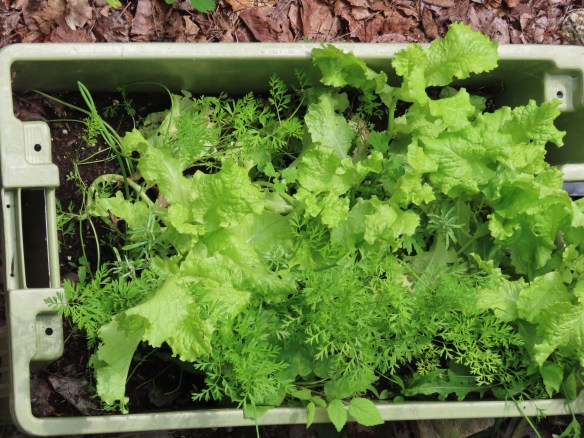
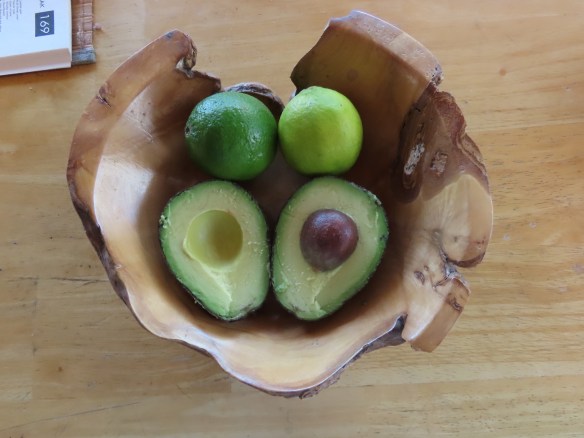
There are salad greens galore, and you can grow those and more in greenhouses. Some of my favourite foods are also green: asparagus, artichoke, avocado, and limes. Green peas, green beans, green olives, green peppers, and green onions are all good grub.
Drink yer Greens?

I’ve had my share of green beer on St. Paddy’s Day, and while Keith’s beer isn’t green, it does come in a green can. I rooted around in the cellar and dusted off a variety of drinks in green vessels. Sadly, no Tanqueray Gin on hand to round out the selection. The scarf on the railing is the McKay tartan from my mother’s side of the family. A lovely blend of blue, green and black.
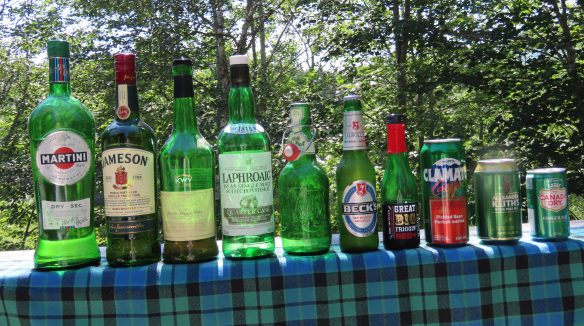
This photo might be tilted but not because I was sampling the wares.

Green Machines

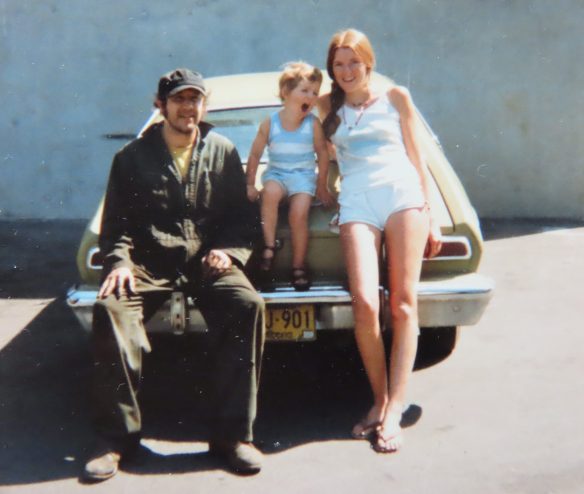
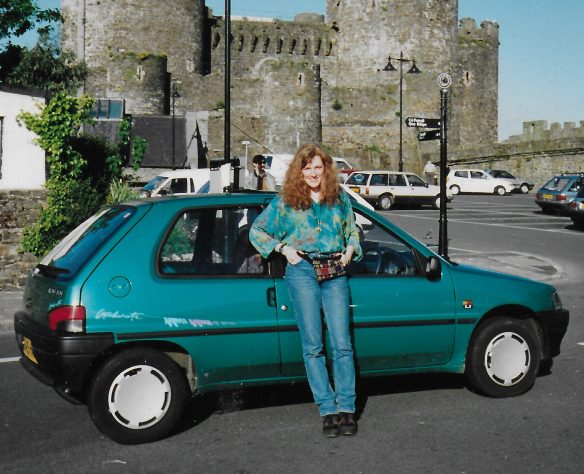
I’ve never had a new vehicle, so I get whatever colour I get. I called my first car The Limon, since the little green Pinto was a real lemon. You can see a bit of it below. That sweet little Fiat on the right was a rental that I drove in Scotland, England, and Wales. What fun, driving a stick-shift on the left side of narrow roads while trying to navigate! That’s me in Conwy, Wales, where my son’s father and his family come from – a beautiful fishing village with a wall and a castle.

Is the rental car green or blue? Green and blue adjoin on the colour spectrum and the car is clearly a blend of both, as is my batik shirt. But bluish greens can look bluer on a screen than in real life. As I recall, this car was bright teal, so I’m including it here with the green machines.
My beloved childhood bicycle was about the same colour as this old glass ornament from the little Christmas tree. It was the only one of that colour in the neighbourhood – a touch greener than the plentiful turquoise bikes. I don’t have any photos, but I do have many happy memories of riding that bicycle all over the place. Our bikes gave us a sense of freedom and independence.
The colour of my childhood bicycle.

My favourite vehicle ever was Gumby, named after the claymation character. This little rig took Tundra, my son, and myself from Calgary to California and back in 1997. Twenty five years ago Tundra and I did an epic road trip in Gumby, from the west coast of Vancouver Island to the east coast of Newfoundland and north to the Yukon in the course of a year. It was my first trip to Cape Breton and we drove all over the island. Gumby was my house on wheels for many road trips and camping trips. I still miss my Gumby. And my Tundra.
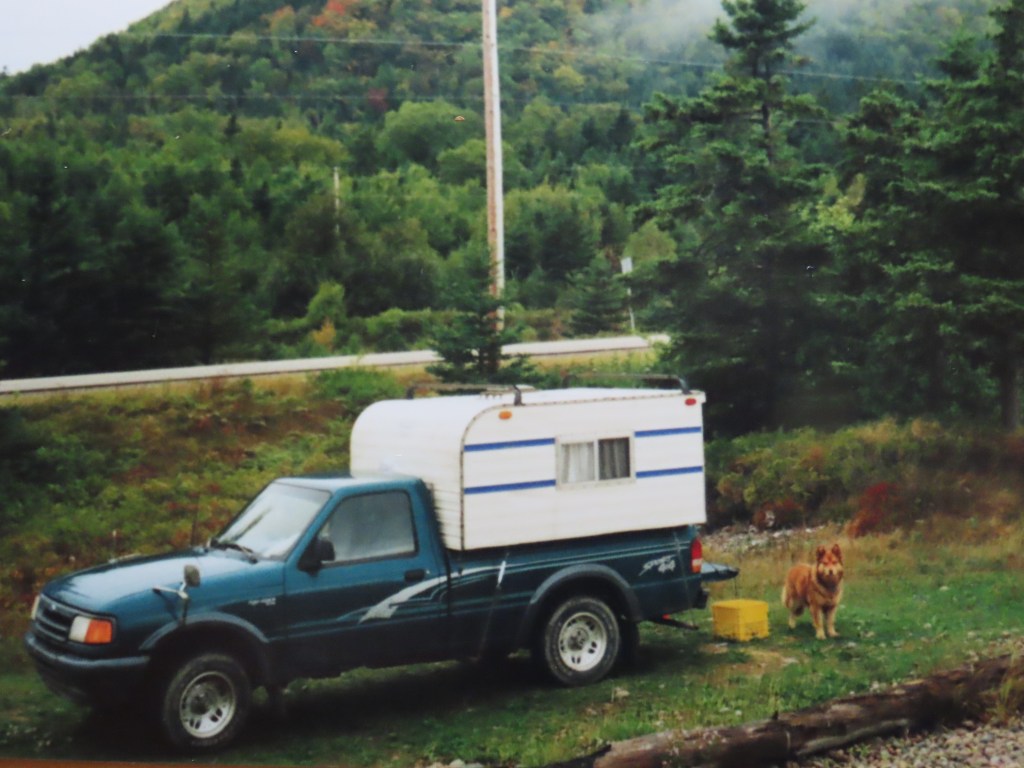
Gumby and Tundra in September, 2001. We camped overnight in River Bennet on my very first visit to the North Shore. Again, Gumby looks a bit bluer on the screen than in life.

Living a Green Life

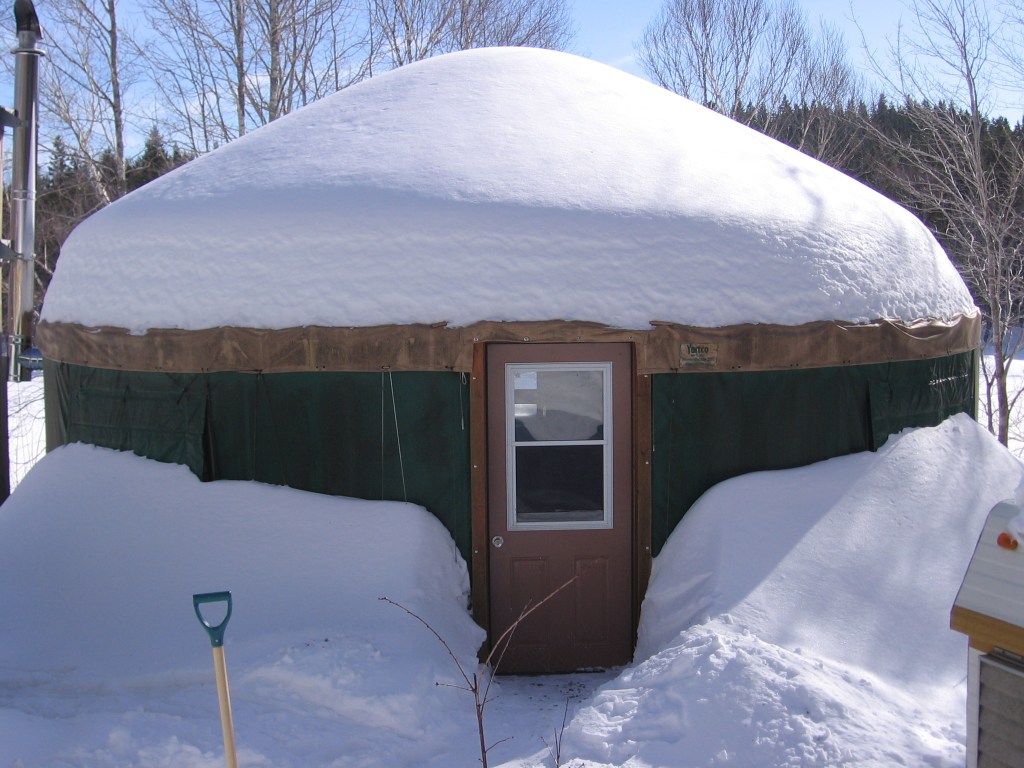
Those who know me know that I am notoriously indecisive, but one decision that was easy for me was picking the colour of the yurt. I chose green with a tan roof, colours that blend into the forest in the summer, as shown in the summer photo earlier. And this green turtle-like shape just had to be named Yurtle. Even my jacket is teal green in this photo from late 2005, taken as we were putting the final touches on the place I would call home for the next eight years.
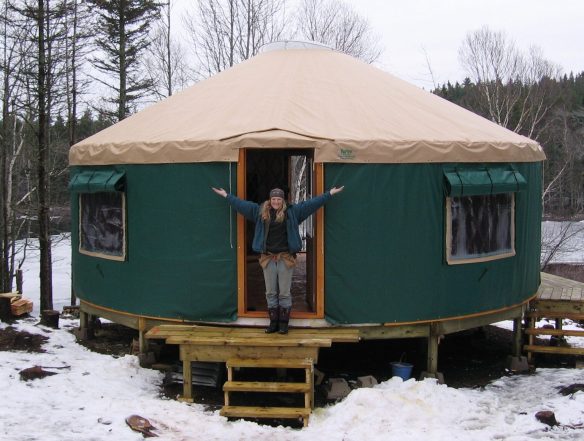
‘ What else can I say? I really love green!’

Sue McKay Miller
September 10th, 2026

One Too Many

No, not that type of one too many. One too many drinks or donuts is never a good thing and usually fits under the category ‘it seemed like a good idea at the time’. No, I mean pushing a season just a bit past its best-before date. In my case, going out just one more time after that perfect hike, swim, or snowshoe at the end of the season.

Snowshoe Season

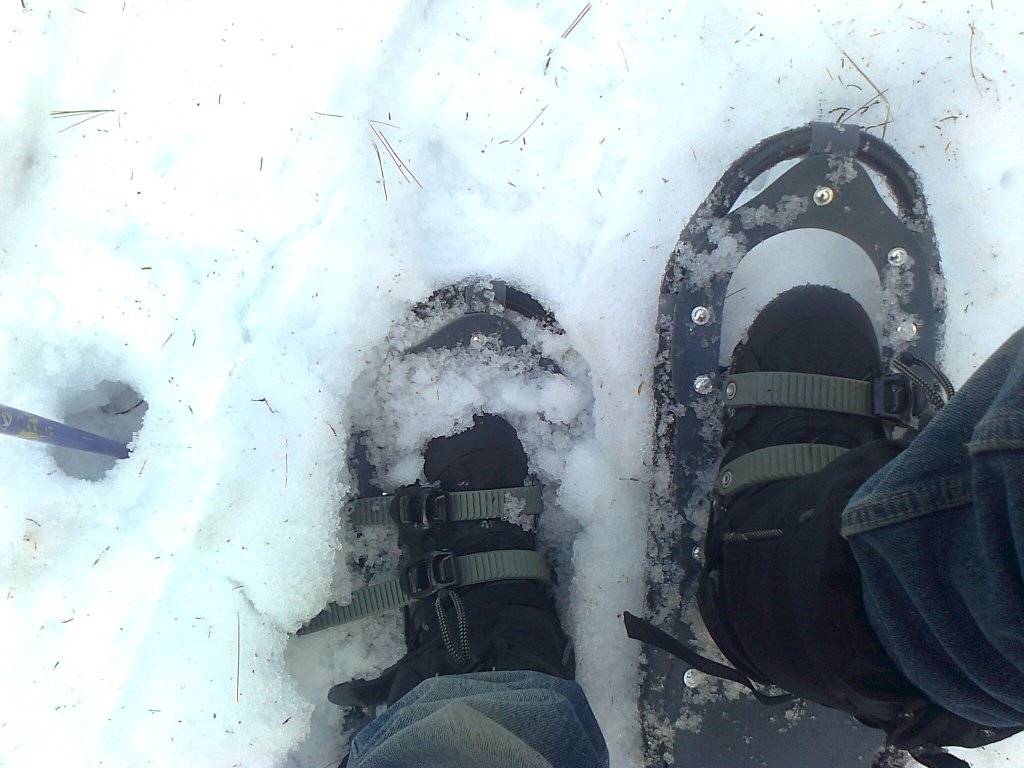
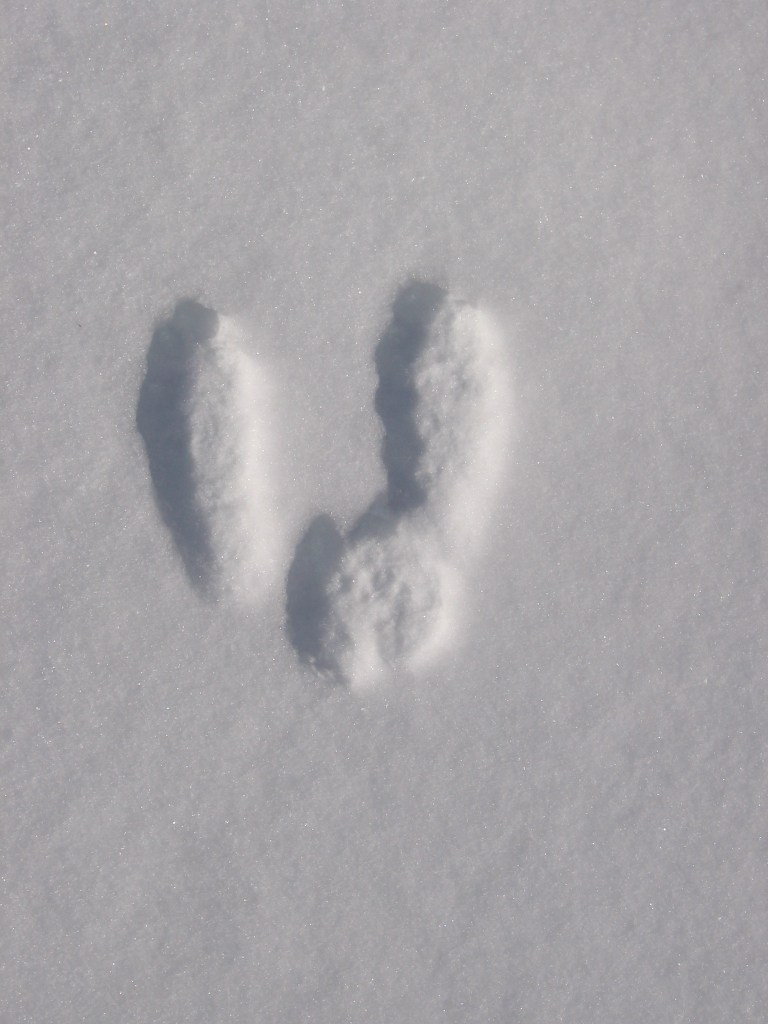
We haven’t had much snow this year, but as I wrote in The Secret Lives of Animals, my winter joy is strapping on my snowshoes and following animal tracks. With warm weather on the way I took advantage of a sunny afternoon in mid-March and went snowshoeing up the hill behind my house along an old wood road. I hadn’t gone far when I saw fresh tracks – first a pair of coyotes, then a moose. I followed the tracks up until they all fed into a narrow trail I’d cut through new growth blocking the road. I was pretty chuffed that the critters were using my trail, but it was too narrow for snowshoes, so I headed back down, past some grouse tracks. (These photos were taken a couple of days later, hence not-so-fresh or clear, and with human tracks alongside. They’re a bit better full size.)

Ruffed grouse (aka partridge) tracks in the snow.

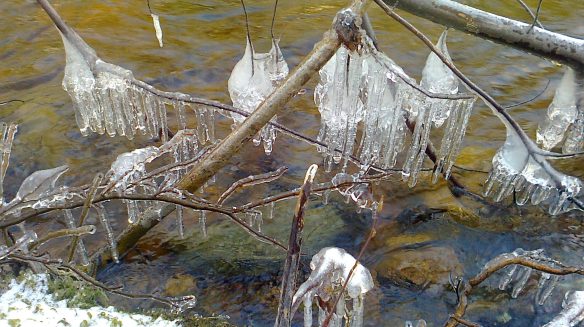
I crossed the slope over to a trail, then went down, down, down to Little River. The river was beautiful. The boulders wore icy skullcaps and stranded branches were festooned with fairy goblets and lacy necklaces of glittering ice. I paused to admire Winter’s Art Gallery, then snowshoed downstream. Before long I spotted small tracks emerging from the open water, up a steep slope, and along the riverbank. It was a mink, I think. Next came the tracks of a coyote who’d crossed the river, and, farther along, a second coyote who’d crossed over.

By chance I found myself following in the footsteps, so to speak, of these two coyotes on my way back home. We all took the same route away from the river and through the woods, but I parted ways when their tracks went straight up a very steep slope. I was almost home when I crossed their paths again. The coyote tracks went up the hill through the forest – and then out onto the old wood road above my house. This was the same coyote pair I’d started tracking when I first set out. I’d come full circle. Perfect! It was the best snowshoe I’d had in a couple of winters.

Little River ice art.

One Too Many Snowshoes

What a great way to finish up the season, right? Wrong. Of course I had to try to squeeze in just one more snowshoe before the snow disappeared. A couple of days later I set off with hope in my heart, detouring to take the track photos before heading off in the opposite direction, away from the river. It wasn’t a complete loss. I did see the tracks of a mother moose with her yearling, and a depression left by a sleeping moose. But I also had to snowshoe across moss and grass, jump over streams of snow-melt, and detour around puddles to get back onto the icy snow crust. April and the Albedo Effect was in full swing, even though it was only mid-March. It was my one-too-many snowshoe hike.

Dark late-day photo, but Moose had a snooze here.

I’ve done ‘one-too-many’ snowshoe hikes so often that it has become a Rite of Spring. A fantastic snowshoe must be followed by a rotten one. Sometime literally. When deep snow rots from below, I might break through up to my knees, as described in April – Awful or Awesome?

So why do it? Why not end on that perfect note, that ideal snowshoe? I can trace the whole one-too-many business back to 2019. I had a sublime snowshoe one brilliant blue-sky afternoon at the end of March. I’d seen lots of animal signs and enjoyed views of two waterfalls. I paused on a hilltop and looked back across the expanse of pristine white snow, shining under the sun and stretching to the next hill. I felt a deep sense of belonging, of being in the exact right time and place in the universe.

The snow had started to rot in the woods, but I couldn’t resist going again the next day, trying for just one more day of bliss. Hardly bliss. The conditions were atrocious. I tried an old wood road to the ocean, I tried through the woods to the river, but everywhere I went I kept breaking through the rotting snow. It was all frustration and no fun. I cursed myself for not having the sense to finish the season on a high note. But later I realized that ending on a sour note wasn’t all bad. It meant that I had pushed the season to its limit and a bit beyond. There was no second-guessing if I coulda/woulda/shoulda gone out one more time. And the one-too-many didn’t tarnish my memory of that perfect, penultimate snowshoe.

After my one-too-many snowshoe this year, I washed the mud off my snowshoes (no lie!) and stored them away. Why so reluctant to call it quits? Partly because now there is a pause. There is too little snow to snowshoe, but too much to bushwhack through the forest. So now I wait. And wait. Until the snow melts enough to swing into – spring hiking!

Spring Hiking Season

I don’t really ‘hike’ so much as mosey through the forest, bushwhacking up and down the highland slopes. I follow freshets and brooks flowing from the highland plateau, linger in hemlock stands, and watch waterfalls tumble down. I explore new places and revisit to my special spots, as described in The Humbled Hiker.

I head for the hills as soon as the snow melts. I live and play in a mixed forest, so there is a time before the trees leaf out at the end of May that is ideal for exploring. The lack of leaves allows for more open vistas, better ocean views, and easier route-finding. But before the veil of leaves appears, a spring scourge drops the curtain on my spring hikes. I jotted down these notes a few years ago:

One Too Many Spring Hikes

“I went on ‘one too many’ hikes the other day. I realized it as I was beating off black flies during one of my Highland explorations. The black flies won this bout, and even the dreadful DEET didn’t stop their frenzy. The plan had been to climb part way up a ridge to a hemlock stand, and see how far I could traverse along that slope. I aborted my plan once I reached the hemlock stand. I just wasn’t having fun anymore.

I enjoyed the ocean view – briefly – and the towering hemlocks – briefly – and then made my way down slope and out onto the cutline where the gusty southwest winds kept the little buggers at bay. I set out on this walk somewhat tentatively. The flies had exploded a week earlier and were annoying on a couple of previous treks, but not enough to spoil the walk.

In fact, my previous walk to a waterfall had been delightful. There were flies, here and there, and it wasn’t a good time to linger by the water, but it was worthwhile. So why not end on that high note? Because fomo. Fear of missing out on one more wonderful walk in the woods. I didn’t regret my last bushwhack, even though I had to flee from the blackflies. That one-too-many hike confirmed what I had suspected: Time to stash away the hiking gear.”

So there you have it. If a lack of snow marks the end of snowshoe season, an abundance of black flies has me fleeing the forest each spring. They breed in fresh running water – abundant on the highland slopes – and usually emerge in mid-May. I find the wee pests so distracting that it’s hard to focus on my footing, which is dangerous as well as frustrating. As my notes suggest, I’d had a wonderful walk to a waterfall that would have made for a grand finale, but I just had to push my luck.

As with the end of snowshoe season, there is a hiatus after spring hiking. The black flies are biting but the ocean is still frigid – and it takes a long, long time to warm up. So I must bide my time before I can dive into …. swim season!

Swim Season

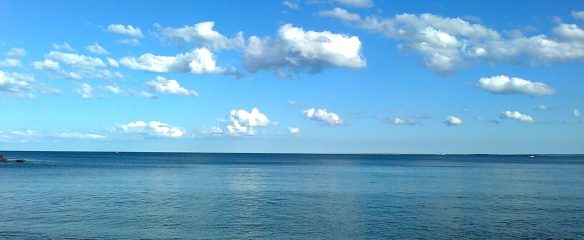
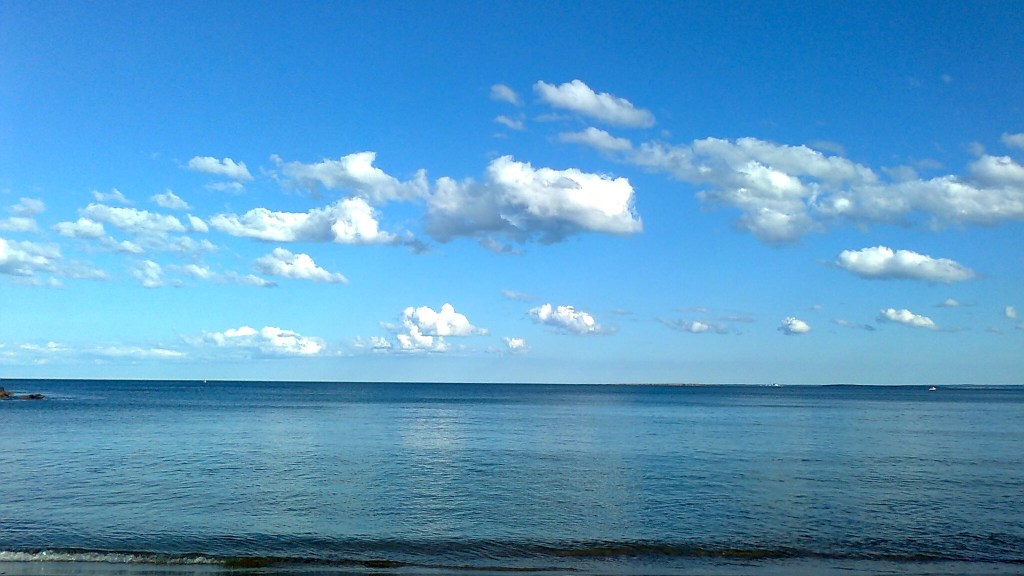
Ah, summer in Cape Breton. We are blessed with an abundance of places to swim: lakes, rivers, and ponds galore – including my own L’il Pond (Swimming with Frogs). But my favourite place to swim is the ocean. And by ‘swim’ I mean being immersed in water. I might swim a few strokes, then roll over and float on my back and gaze at the clouds bobbing by above. Or I might do a little bobbing myself, gently rocked by the waves while I watch the terns and gulls and gannets. I’m a prairie girl who fell in love with the ocean and I feel happiest when I’m held in her briny embrace.

Dive into blue bliss!

Summer is sun, suds, sand, swimming in the salty sea, and a smiling Sue. The perfect beach day is hanging out with friends, going for a swim, drying off in the hot sun with a cold drink, then diving back into water. Repeat.

One Too Many Swims

Unlike snowshoeing or hiking, there can be one-too-many swims in a single day as well as a season. The water is so tempting and the air so warm, but that last swim of the day can be a bit risky. The air temperature drops abruptly when the sun drops behind the highlands. One swim too many and I might get … the dreaded chill. Cold that gets so deep into my bones that there’s only one cure. I have to go home and get immersed again – in a nice hot bath.

Swim season in Cape Breton is sweet but vanishingly short, which is why I try to get in the water every day that the weather allows. That’s also why I push the season and end up diving in one-too-many (or even two-too-many or three-too-many) times, because it’s a long while before beach season rolls back around. Here’s a (lightly-edited) passage from my diary dated Sept. 15th, 2023. (Mervi is my beach buddy (pictured above) who is a glass blower, which is very hot work.)

“Went for a beach walk and to see waves ahead of (tropical storm) Lee. Wore tights and a cotton shirt but threw in my swimsuit and towel in at last minute. After walking in the tidal wash I felt quite warm and a couple of tourists were in the waves. It was cloudy but warm and humid. Tourists said they felt fine getting out, so after they left I put on my swimsuit – still damp from previous swim – and immediately felt chilly. Considered putting clothes back on but opted to wait for Mervi. She was hot from glass blowing and went right in. I waded out but a biggish wave soaked me almost to my neck so, after hesitating, I dove under and floated a bit cuz probably final swim.

Got out and brrr – cold. Needed to get out of wet swimsuit. Tried to wrap a towel around and change back into dry clothes but skin so clammy I couldn’t really get really dry … everything sticking and icky … I felt all chilly and clammy and sticky. Yuck! Wished I hadn’t gone in. But it was okay, I told Mervi, because this had been my one-too-many swim.”

Swim season is the hardest one of all for me to let go. And sometimes we do get a surprise blast of heat late in the season. But there comes a time when the heat has gone out of the air and the ocean is cooling down. A time to rinse out of all my beach gear and store it away, to accept that swim season is over for another year.

Just as a day at the beach must end, so swim season must come to an end.

The consolation is that there isn’t any waiting around for the next fun activity to begin. Just as the ocean turns grey and cold, the forest begins to glow with red, gold, yellow, and orange. The autumn woods are warm and welcoming, blazing with colour and fecund with fungi. Fall hiking season begins when swim season ends, and carries on through November, as I wrote in my very first (and very short) blog Bared Trees and Barred Owls. But one day the snow will fall and stay put, hiding all the hazards underfoot. Then it’s that in-between time again – too much snow to bushwhack but not enough to form a good base for snowshoeing. It’s time to wait for more snow so the seasonal cycle can start all over again.

One Too Many and Me

This one-too-many thing is a sign of my reluctance to switch gears. Even if that means shifting into neutral and idling until I can start my next fun outdoor activity. But doing something one-too-many times is also a strategy of sorts. It’s a way of forcing me to face the facts, ma’am – this season is over.

If the ideal snowshoe, hike, or beach day is a perfectly-crafted sentence, the one-too-many day is the period that ends the sentence and closes out that chapter. For me, one too many is just about right. Happy April everyone!

Sue McKay Miller
April 6th, 2025

Winter Wonderland in April. We’ve had three-too-many of these this past week!

Fabulous February

Okay, I’m biased. February is my birth month. I liked being a February baby, maybe because it’s an oddball, quirky month and I was an oddball quirky kid – a left-handed, redheaded tomboy. It’s a short month that gets the longest mention in that familiar rhyme.

Thirty days has September,
April, June, and November,
All the rest have thirty one
Save February at twenty eight
But leap year, coming once in four
February then has one day more.

‘I am a groundhog. Hear me squeak.’

And guess what? 2024 is a Leap Year, so we get to enjoy a whole extra day of this fabulous month. My birth month takes a lot of flack. People complain because it’s cold and snowy. They even complain about its name. Granted, it is a bit awkward. Feb-RU-ary? The hosts of ‘As It Happens’ on CBC always make fun of the ‘RU’ part. And I always mean to write a letter explaining that, according to Webster, Feb-yoo-wary is also an acceptable pronunciation. Me? I usually blend it together and mumble something like Feb-oo-ary.

Given how many times I’ve hear people dis February, I am dedicating this blog to celebrating February – however you say it. I usually try to use my own photos, but I’m making an exception for this exceptional month. Credits at the end of the blog.

Groundhog Day. What other month boasts such a silly ritual? It makes no sense. Especially in Canada where, except on the west coast, the idea of only six more weeks of winter in February is as hilarious as the idea that a rodent’s shadow can forecast the weather. And now it’s a movie. A movie that repeats. And repeats. Every Groundhog Day.

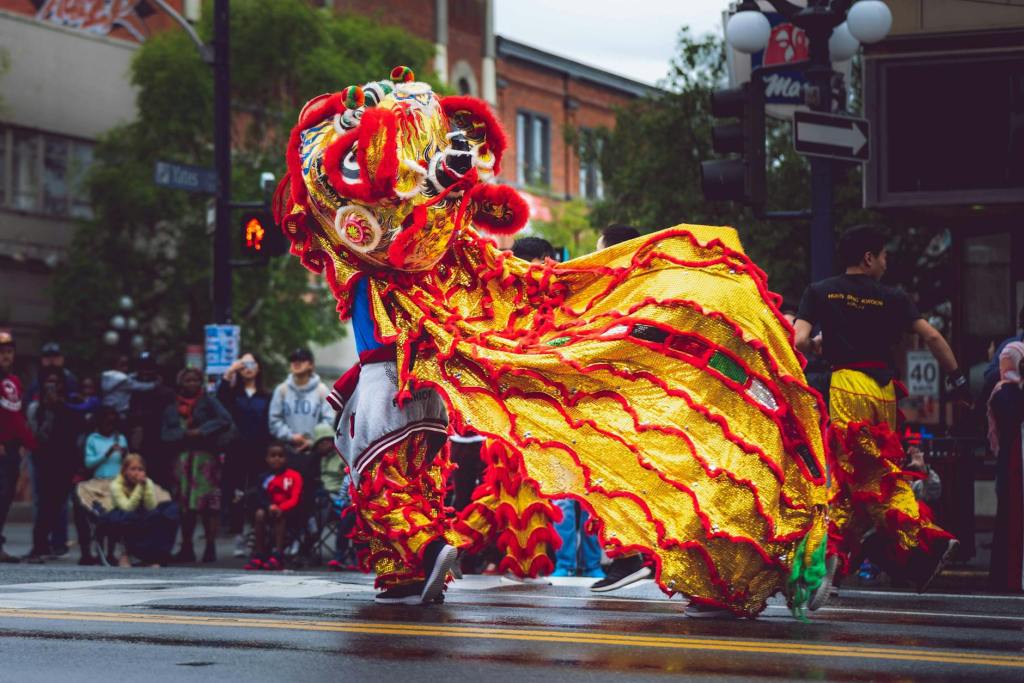
Chinese New Year is based on the lunar calendar and shifts around, but in 2024 it’s on February 10th. This is the Year of the Dragon and should be a colourful celebration. My son has Welsh blood, and the Welsh are also big on dragons. In fact, they like them so much they put one on their flag.

February is the month for the Winter Olympics. No Winter Olympics this year, but Calgary hosted the 1988 Winter Olympics and it was a whole lotta fun. My young son and I went to see the ski jumping and witnessed the debut of Eddie the Eagle. No one could appreciate the true distance these athletes flew until Eddie from England landed so far short that we were all astonished. Then we applauded and cheered. Eddie was dubbed ‘the Eagle’ and became a popular favourite. We admire winners, but we love underdogs. And speaking of underdogs, that was also the year of the Jamaican Bobsleigh team. Another February movie was born.

This is not Eddie the Eagle.

In 1990 Alberta became the first province to declare a statutory holiday in February. And it just so happened that it fell on my birthday that year. I was pretty chuffed. Don’t we all feel like we should have a holiday on our birthday? Since then many other provinces have followed suit. Now we have Heritage Day in Nova Scotia, and, as it happens, it falls on my birthday this year. Somehow it’s not quite as exciting now that I’m retired.

Celebrating my 50th in the yurt, complete with fiddlers, step dancers and (maybe a bit too much) Irish whiskey. That’s Tundra in the bottom left.

Valentine’s Day, on February 14th, is also less exciting for me now, at least in terms of getting cards and flowers and such. (Ah, there was a day …) But this day is very special for another reason – it’s the anniversary of my two favourite people. This day of love marks the years of love between them. And as anniversaries go, it’s an easy one to remember.

February has a few other anniversaries that are personally meaningful. Back in 2003, after a few months of negotiation, I finally bought my land in Cape Breton. By chance, the deal closed on my birthday – and what a fantastic birthday present it was! I moved onto the land in the summer of 2004. Ten years later, on Feb 7, 2014, I moved from my yurt into my comfy log home. Hard to believe that 2024 marks 10 years in my cozy cabin.

For winter haters, February can be abysmal. It can be the coldest and snowiest month of the year. But for winter lovers, February is the time to enjoy skiing, skating, sledding or snowshoeing, followed by a warm drink by a cozy fire. My favourite winter activity is tracking animals on snowshoes. I wrote about this in The Secret Lives of Animals. The snow reveals who is out and about. Snowshoes allow me to bushwhack through the forest following those tracks and find out where those animals came from and where they are going.

Like most children, I loved winter and had tons of fun in the snow. I also had the great good fortune to grow up skiing. My English father took up the sport and took my older brother and me skiing in the Rocky Mountains every Sunday, from opening day until the last of the spring skiing. Other kids had to go to church, we worshiped at the alter of the mountains. The highlight of the ski season was in February, when schools closed for Teachers Convention, giving us a four-day break. We’d meet up with my dad’s friend and his daughter and spend all four days skiing. We’d start in Kimberley, BC, and then drive down to Whitefish, Montana, to ski amongst the towering snow ghosts on Big White. In the evenings my friend Ann and I felt very sophisticated as we sipped our Shirley Temples.

The Miller family at Sunshine Village in Banff National Park, in the mid-’60’s. We weren’t quite as fuzzy and faded as this old photo suggests.

But winter isn’t all fun and games. It can be difficult and challenging. When the third nor’easter in a week dumps a load of wet heavy snow, when we get weary of toting firewood to keep the stove going, when vehicles are buried and roads are treacherous. And then there’s the short days and those long nights. That’s where February, while it may be cold and snowy, has a special pick-me-up for winter-weary folk – we reach the midpoint between winter solstice and spring equinox.

The Gaels celebrate this occasion on February 1st with the traditional festival of Imbolc, also known as St. Brigid’s Day. In 2024 the midpoint falls on February 3rd. And while it’s true that the days start getting a wee bit longer after winter solstice, it’s in February that I really notice the days stretching out and the sun getting higher. In my yurt I would mark the day when the sun would get high enough to shine through the overhead dome. The yurt was like a mini Stonehenge, marking seasonal changes within its circle. I still track the northward progression of the sun by watching where it sets behind the highlands. This photo was taken the eve of February 1st.

The sun sets a little farther north each day as we head towards the spring equinox.

On clear nights in February I see the winter constellation Orion heading for the hills in the west as Leo rises in the east, heralding the news that spring, while not here yet, is coming. I once read this phrase about February in the Farmer’s Almanac: ‘Winter’s back is broken‘. That’s how it feels to me. It may be the month of the full Snow Moon, but the days are longer, the sun is higher, and while there is almost certainly a lot more than six weeks of winter to go, it’s time to embrace the winter wonderland knowing that it won’t last forever.

So strap on your snowshoes or skates, or maybe just bundle up for a bracing walk. Then enjoy a hot toddy or hot chocolate by the fire and immerse yourself in that big fat book you’ve been meaning to read. Put on a pot of soup or start a jigsaw puzzle or kiss a groundhog. February is fabulous, but it’s short – so don’t miss a minute!

Sue McKay Miller
February 2nd, 2024

p.s. What did I forget? Let me know a few of your favourite things about February in the comments below.

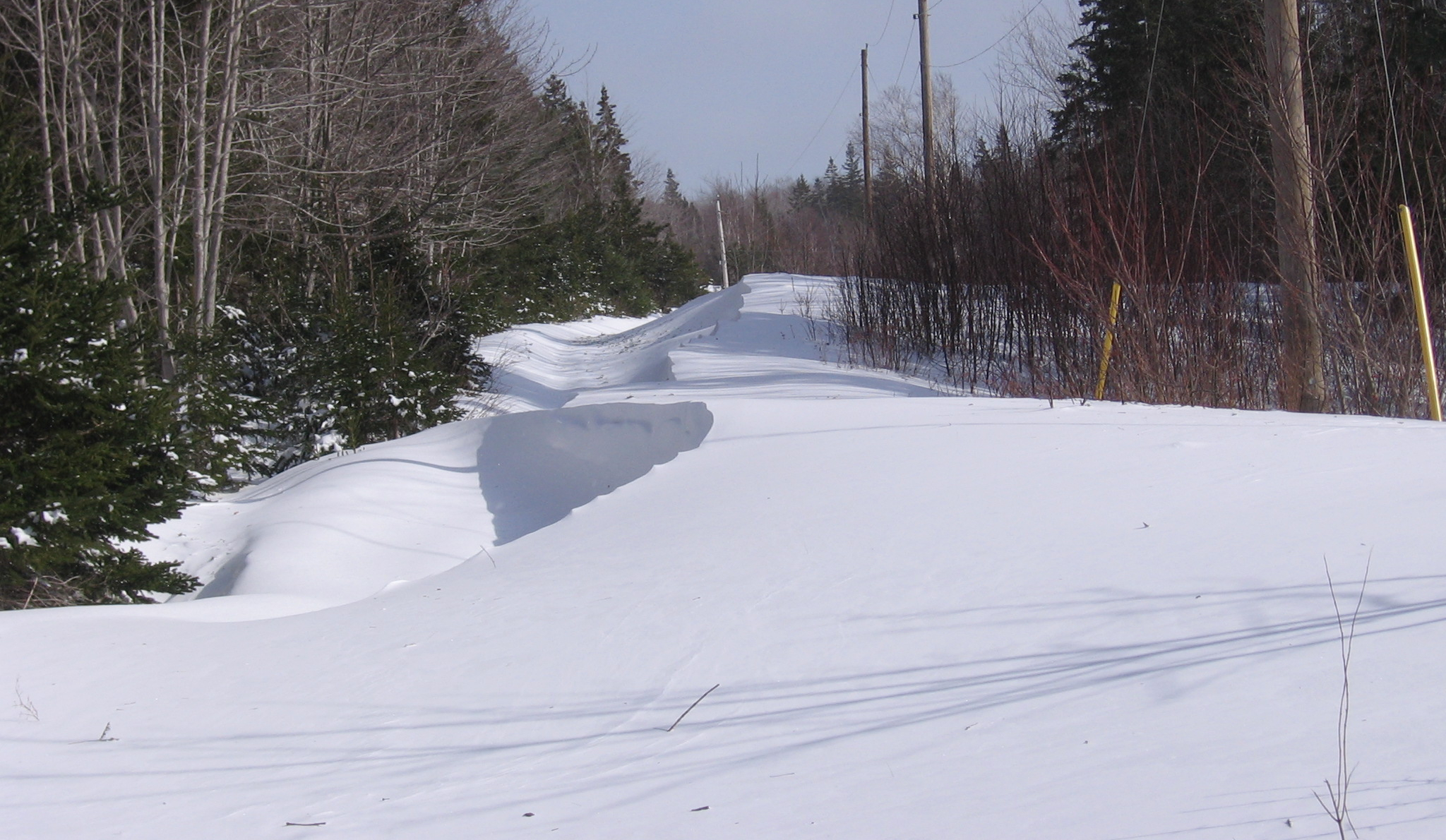
My driveway in February 2019. Sometimes the road looks long, but we’ll get there in the end!

Photos from pixel.com: Groundhog by Oleg Mikhailenko; Chinese dragon by Vlad Vasnetsov; Welsh flag by Lisa Fotios; Ski jumper by Todd Trapani.

Seagull Dreams

During our brief Cape Breton summer I emerge from the forest to spend my days by the sea, a seasonal migration of sorts. The wide open blue horizon replaces leafy green foliage. I trade the still waters of L’il Pond for the dynamic waves and tides of the Atlantic. I love to float, suspended between the endless blue sky and the briny sea. And as I float I watch the seagulls, creatures of sky and sea.

Our local CBC morning show features ‘popcorn’ interviews with local folk of note. One fun question is: ‘If you were an animal, which animal would you be?’ Ignoring the nitpicky quibble that humans are animals, it is intriguing to hear the answers. Cats and dogs rate highly, and eagles are quite popular. Once upon a time I might have said coyote, but I have switched my fantasy animal to the seagull.

Seagull? Who would choose to be a seagull? Like coyotes, rats, and Rodney Dangerfield, these critters don’t get a whole lot of respect. Even the fictional seagull from Richard Bach’s 1970 bestseller Jonathan Livingston Seagull wasn’t overly impressed by his own kind. (I wonder if Jonathon, whose reckless high altitude dives often resulted in catastrophic crashes, wasn’t really a gannet in a gull’s body.) I find it interesting that many of the most despised animals have a lot in common with Homo sapiens: They are clever, opportunistic, and highly adaptable. They thrive in a variety of habitats and will eat just about anything. Sound familiar?

Ta-da! Even this gull in all its glory doesn’t get a whole lot of respect.

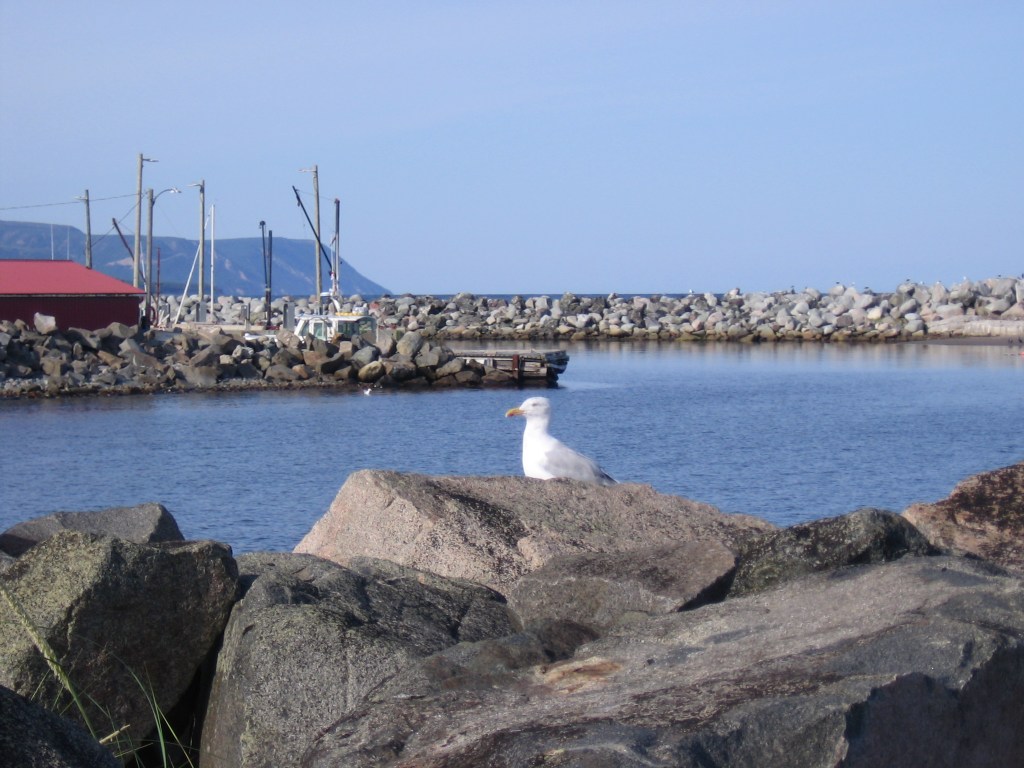
But I don’t want to be a parking lot, french-fry scavenging urban gull. My human-self fled the concrete jungle, so it makes sense that my seagull-self prefers wharves to Walmarts.

The question remains: Why a seagull? Well, since this is an exercise of the imagination, why not fulfill that age-old human fantasy and fly? But none of that flap, flap, flapping of wings to stay aloft, thank you very much. I want to soar, to ride the wind, to swoop and swerve. Many birds, from raptors to ravens, can soar, but seagulls embrace both my elements, air and water. So, with apologies to the Steve Miller Band, I want to fly like a seagull.

Seagulls are adept fliers who seem to relish gusty, windy days when they can hover, zoom, maneuver, circle and soar. They are often out and about on stormy days when air and ocean are turbulent and wild. Gulls are at ease on the roughest seas, phlegmatic floaters on chaotic surf. When a whitecap threatens to engulf a gull, she flaps her wings and flits to the backside of the breaker. Rough seas churn up all kinds of critters, a buffet for gulls and seals alike.

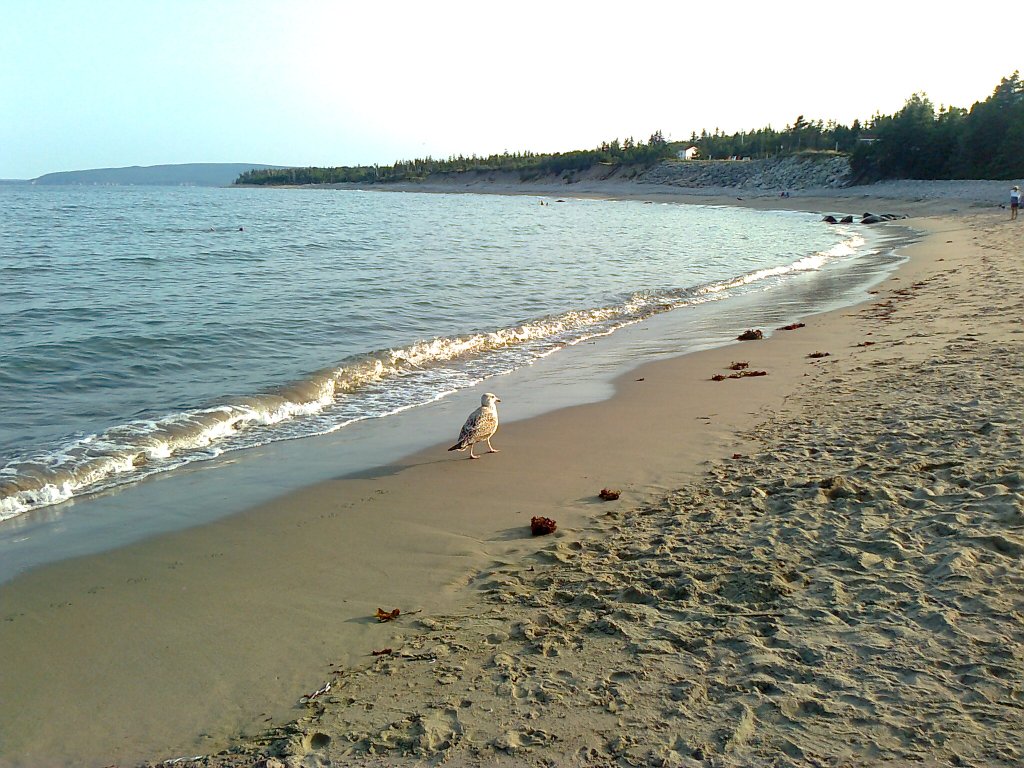
Speaking of buffets, these birds of sea and sky are also pretty nimble on land. After beach-going humans head home for supper the gulls and crows swoop in, scouring the sand for tasty morsels: some spilled chips or cheezies, a bit of a bun, a sandy section of hot dog.

A juvenile black-backed gull goes for an afternoon stroll.
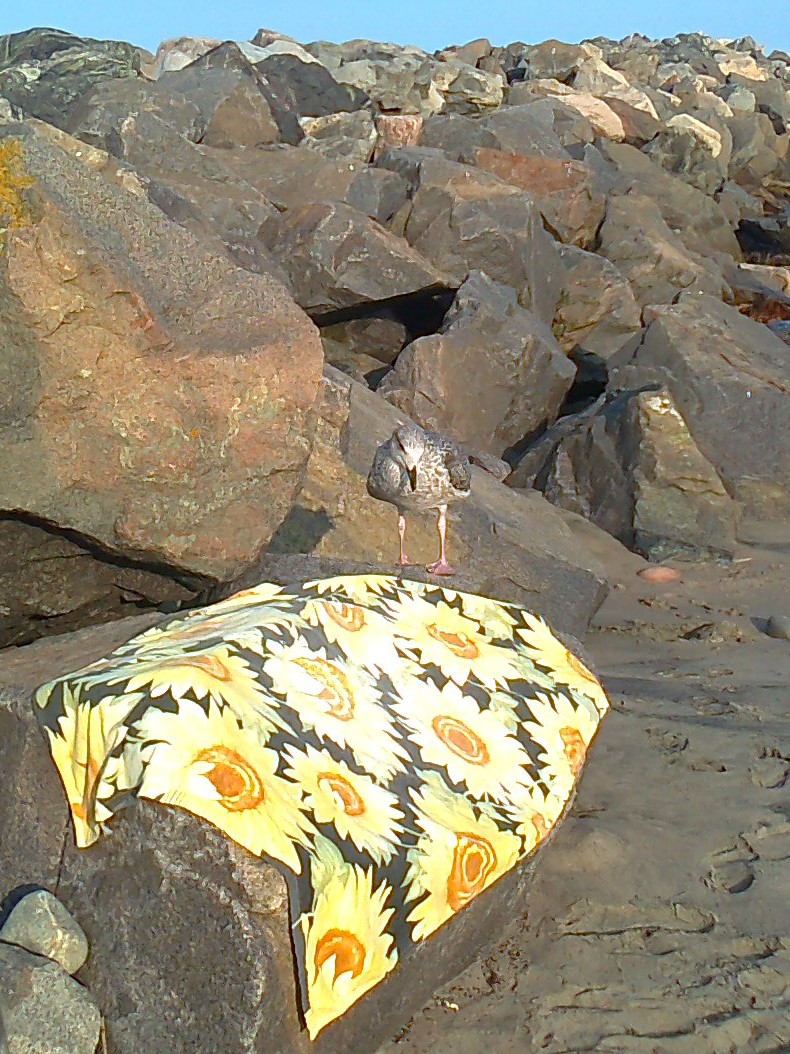
This particular bird is quite a character, acting almost tame.

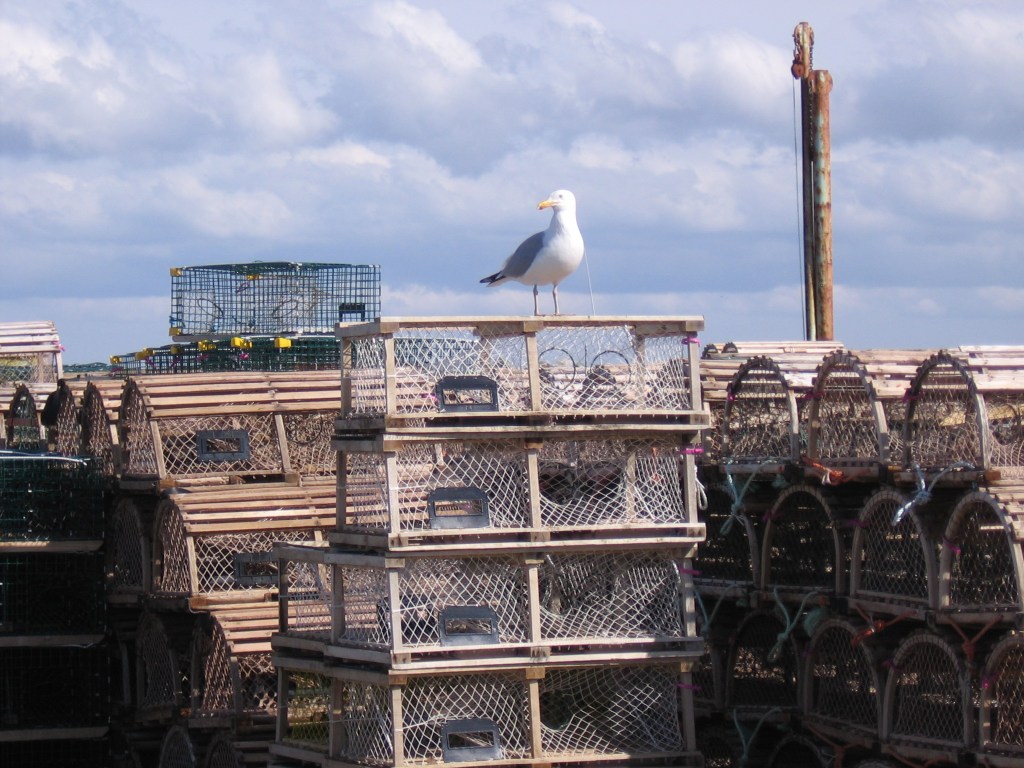
Gulls’ webbed feet are ideal for swimming and work well enough on land, but they are not suited for perching in lofty treetops. No worries! We humans have provided plenty of perching options for gulls. Light standards, telephone poles, and gabled rooftops offer gulls high, safe and comfy perches where they can chill out and look down on us.

Unlike so many animals, gulls (like the aforementioned rats and coyotes) thrive alongside humans. Seagulls flock behind fishing boats, swoop in to swipe food, scavenge our leftovers, and sit atop our structures. They may not be as brainy as corvids or parrots, or have as complex vocalizations, but gulls are no birdbrains. Seagulls are smart and they’re survivors.

I’ve been using the generic word ‘seagull’ here, but bird-nerds may wonder what type of gull. I initially favoured the great black-backed gull, our largest gull with the same wingspan as an osprey. But I’ve switched over to the less sartorial herring gull. They aren’t the prettiest bird, but then gulls don’t need to impress us, just other gulls. He may look as attractive to her in his conservative grey and white plumage as a peacock does to a peahen. And unlike black-backed gulls, herring gulls also live on the west coast, which is where my seagull-self will live.

My human-self loves living in Cape Breton, but my seagull-self prefers the west coast, with its milder winters and protected islands. A Gulf Island Gull. This is fitting, since it was on Vancouver Island where I had my seagull epiphany, some 9 years ago.

I was visiting my son and daughter-in-law in Victoria, BC, in their tiny 4th floor apartment overlooking the Juan de Fuca Strait. There was much to marvel at from that vantage, but I was entranced by the seagulls. It was the first time I’d watched them at flight level rather than looking up from below. I watched these fancy fliers hover in headwinds, adjusting their wings to hold steady in buffets and gusts. I watched as they turned tail and zoomed downwind – Whoosh! – at high speed. I saw them swoop down from the top of the building right in front of the window. Like all wild animals, gulls are always on the lookout for lunch, but we humans aren’t the only animals who play. I couldn’t help but feel that these birds were having fun racing with the wind.

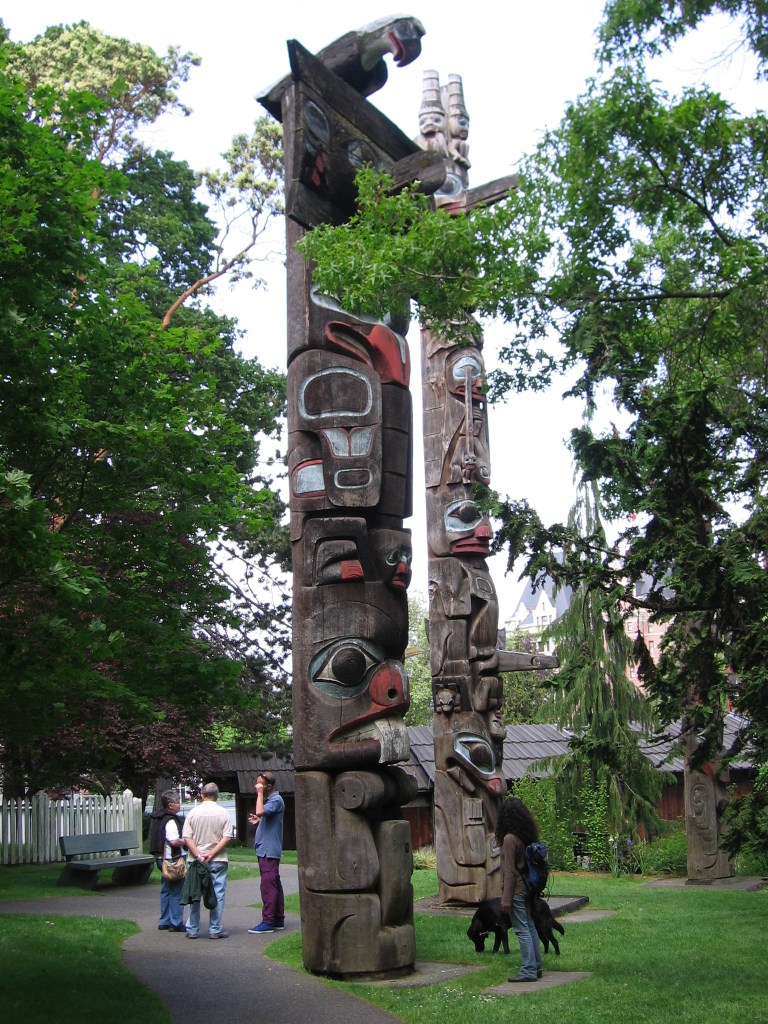
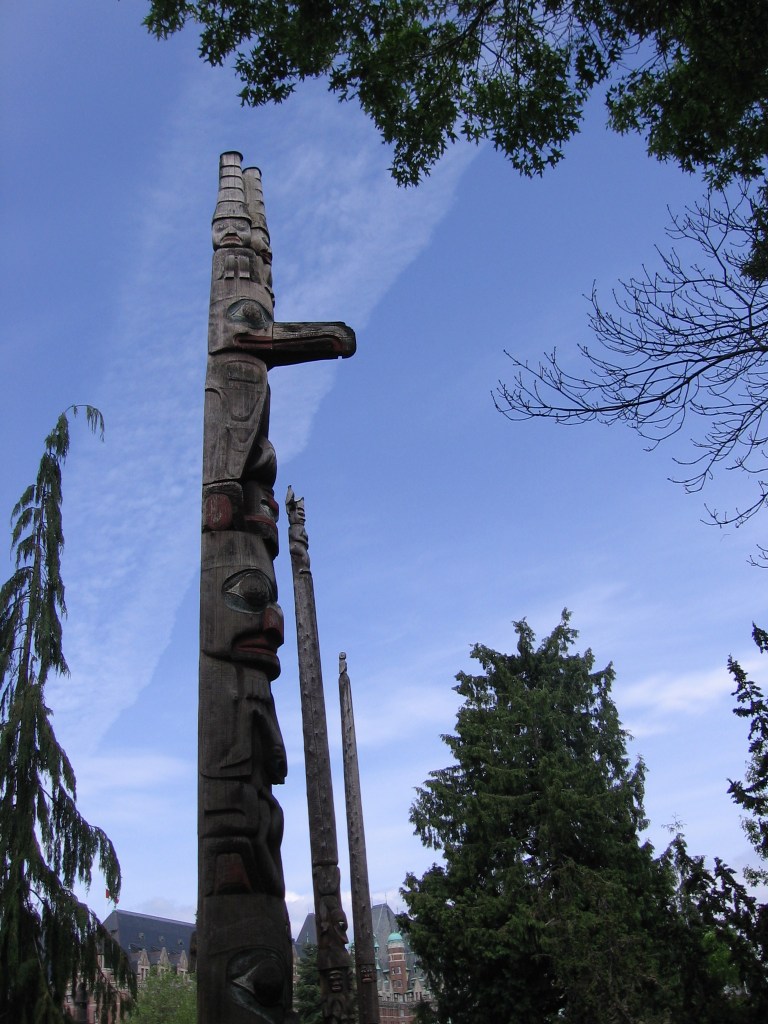
Along with the usual telephone and light poles, west-coast gulls can perch on a far more impressive pole. Thunderbird Park features an array of totem poles. My daughter-in-law and I were looking up, way up, admiring the magnificent carvings, when we burst into laughter. A seagull was perched on the very top of the totem pole, higher than Eagle or Raven or even the mighty Thunderbird, surveying the world below like the lord of all creation.

I also envied the gulls squatting on offshore rocks that only emerged during low tide. Oh to be able to set myself down on some rocky crag, heedless of rising tides or rogue waves. One afternoon we were sitting on a secluded beach, looking across the water at four herring gulls on an offshore rock. After a while three of the birds flew off, but the fourth chose to linger. It struck me that, while these birds of a feather sometimes flock together, they also feel free to do their own thing. My fascination with gulls grew.

Back home in Cape Breton I began paying more attention to our local gulls. One summer I felt a special kinship with a particular herring gull. At the end of the day, after the beach emptied, I would spot this same gull (I presume) perched out on the rocky breakwater, catching the last rays of the sun. I would be sitting onshore, already in the shade, mesmerized by the kaleidoscopic play of the light on the water. Each of us was alone, content in our sunset solitude.

I watched that herring gull swim alongside the breakwater, in search of a seafood supper. Boom, he’d plunge his head underwater and come up with a small crab or lobster in his bill. He’d fly his prize over to the beach and drop the unlucky crustacean onto the wet sand. Then (ugh!) he’d rip its legs off one by one, swallowing them whole, shell and all. This is horrid to watch, as the doomed creature tries to escape on fewer and fewer appendages.

Now I also like to eat shellfish, although I prefer it cooked and served with melted butter and a glass of chilled white wine. And there is currently a fierce debate about whether or not crustaceans, or other invertebrates without a centralized brain, can feel pain. But in a Darwinian world the gull’s technique makes sense – a smart gull doesn’t let his supper run away. I’ve now seen this practice many times and always feel both fascinated and repulsed. Our animal fantasies tend to break down when we blend in too much animal reality.

But hey, in the end this is all just a seagull dream. I suspect we are the only animals who imagine ourselves into other beings and bodies. We become seagulls and superheroes, ancient Egyptians and futuristic space explorers. Humans may not have wings, but in our imaginations? We soar.

Sue McKay Miller
August 31st, 2021