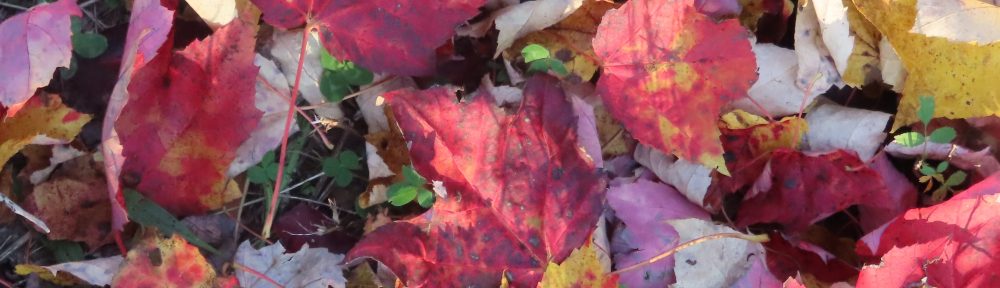
Here in Cape Breton, autumn brings a dazzling display of colour. Our forests don their fall finery of yellow, gold, orange, and red. Most of that red comes from the aptly named red maple, a tree that is abundant in our mixed Acadian forest. The fiery colours are brilliant but brief, and while there are still a few leaves hanging in there, most of their comrades lie on the forest floor. So, in honour of our fallen foliage, my third colour blog is all about RED.
Edible Reds
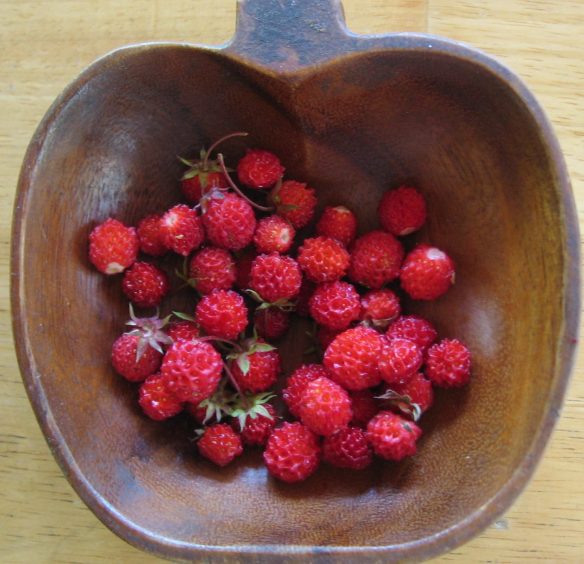
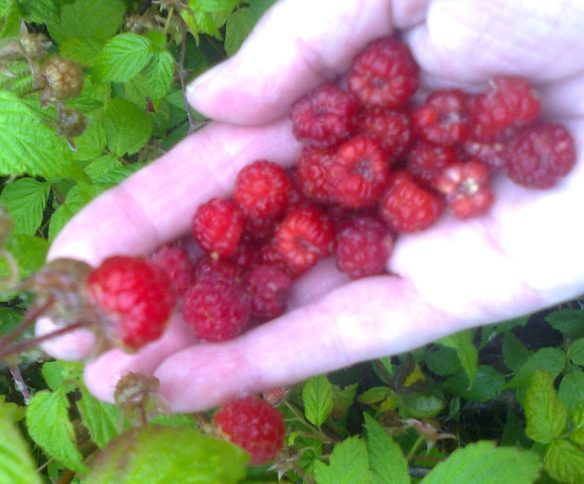
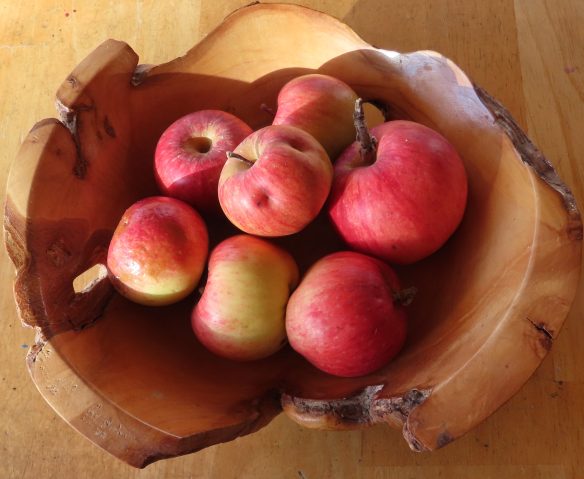
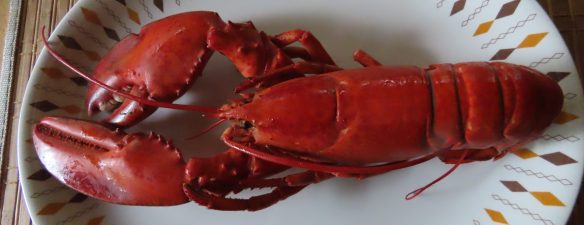
In the summer months red is relatively rare, so it really stands out against the leafy greenery. Many local shrubs and trees grow bright red berries that catch the attention of birds who eat them, fly off, and deposit the seeds in a nice little blob of bird fertilizer. And berries aren’t just for the birds – lots of critters, including me, partake of the berry bounty. Here are a few, but I also have plenty of bunchberries, said to be an antidote to mushroom poisoning. And while they prefer bogs, a shout-out to those tart bursts of flavour – cranberries. Along with the berries are wild rosehips and apple trees gone wild all over the place.
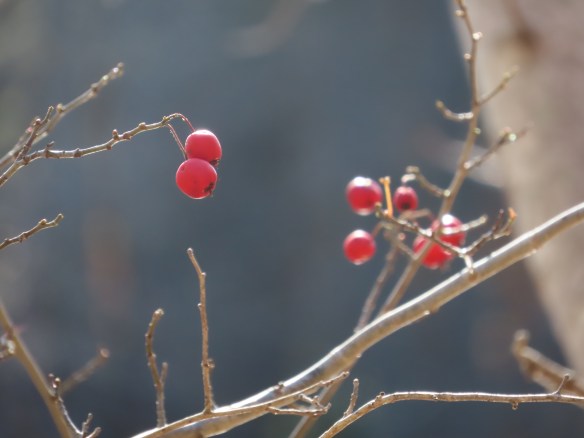
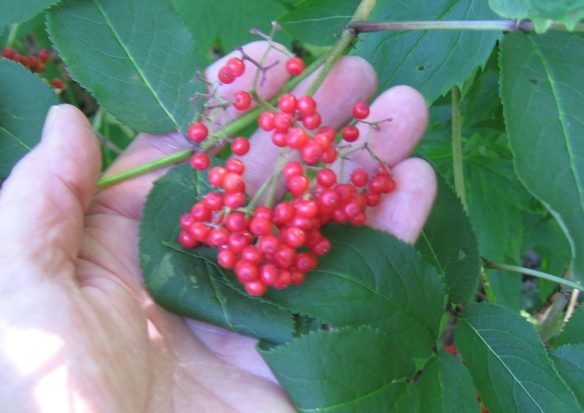
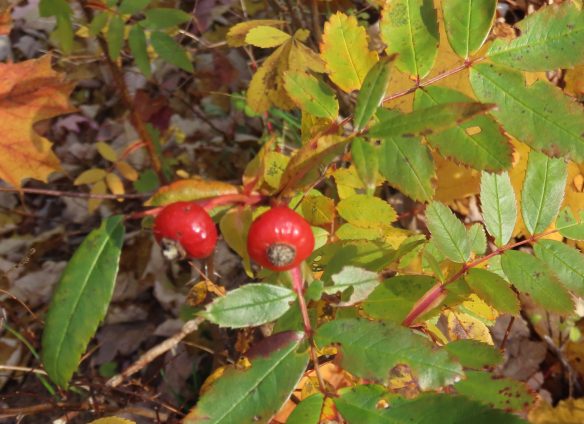
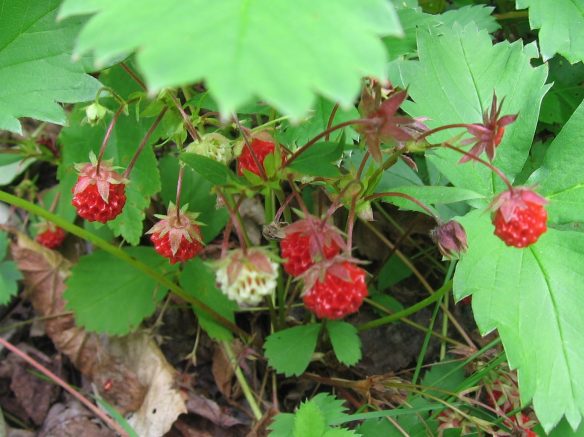
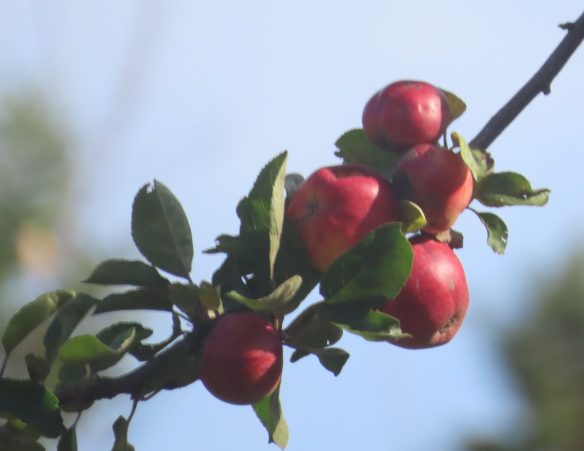
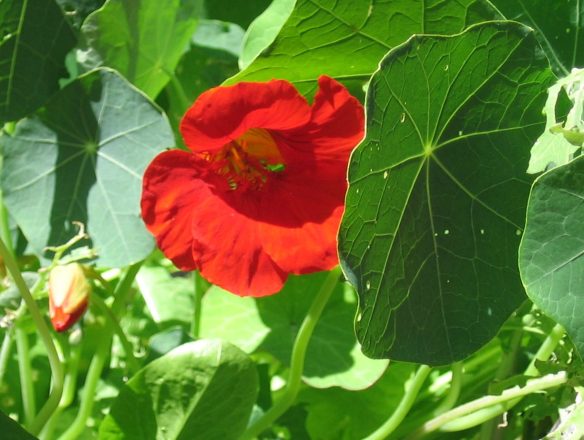
Bottom: wild strawberries, wild apples, and domesticated nasturtiums – all yummy.
Red is the colour of ripeness – be it berries, apples, tomatoes, peppers, and more.
Flaming Fall Foliage
The first hints of the delights to come begin in September, with a few early-turning red maples that always like to be ahead of the pack. Sometimes it’s just one branch, branching out on its own. I include the fuzzy photo on the right because this splash of scarlet pops out early on the far side of the pond each and every year.
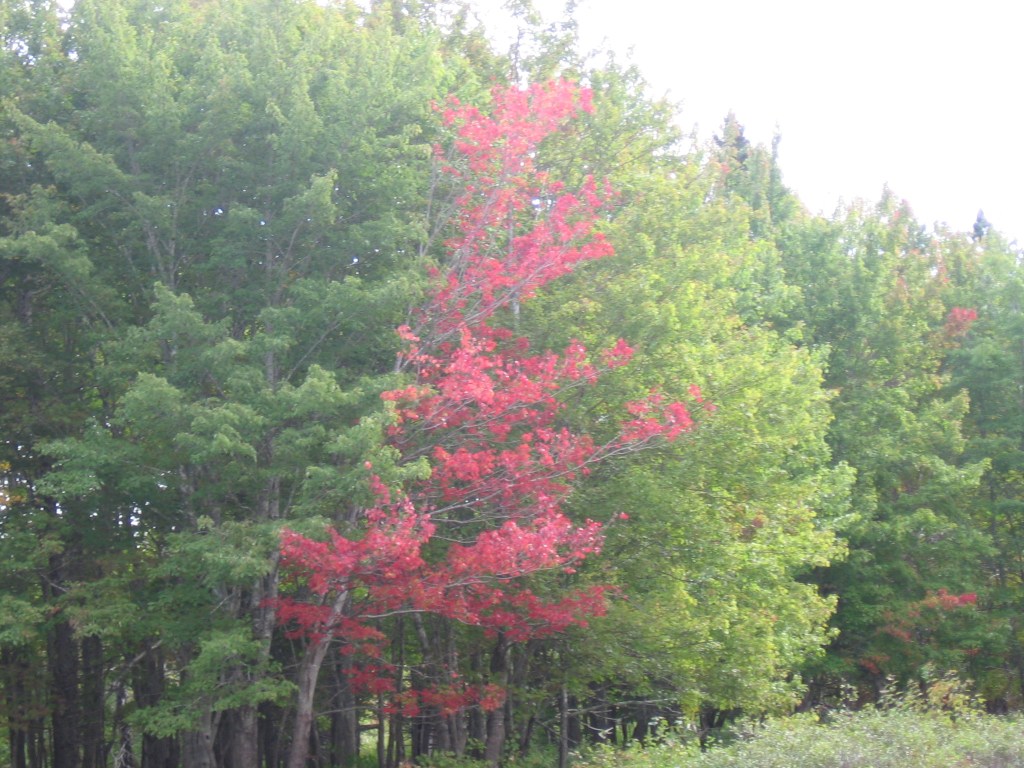
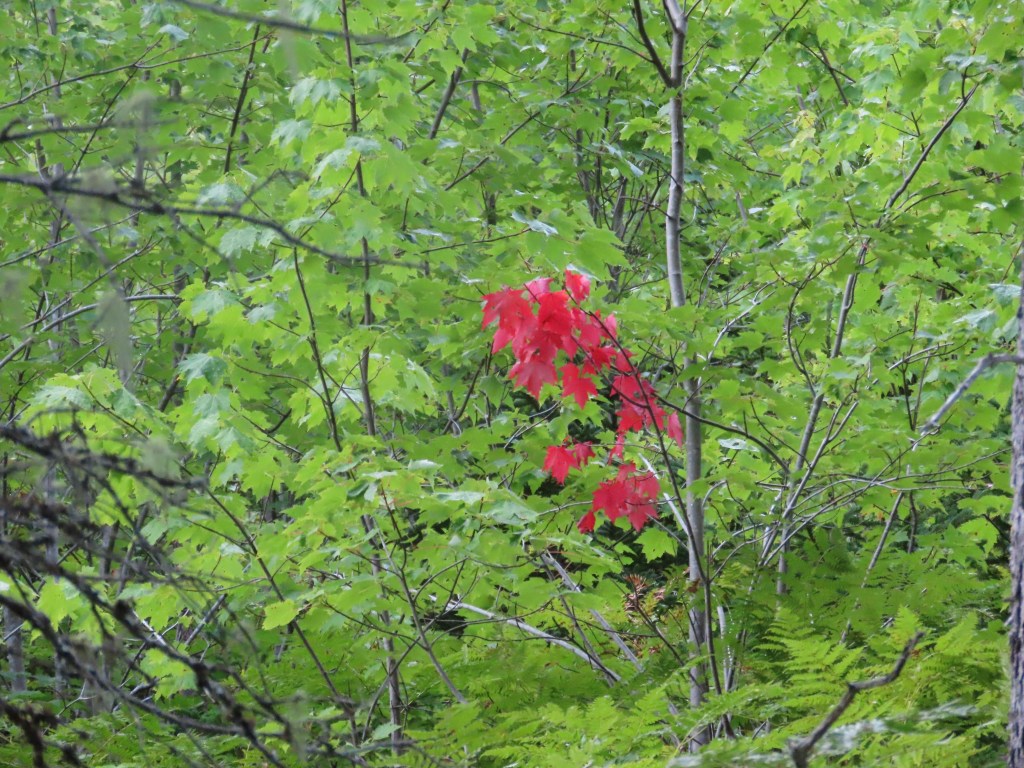
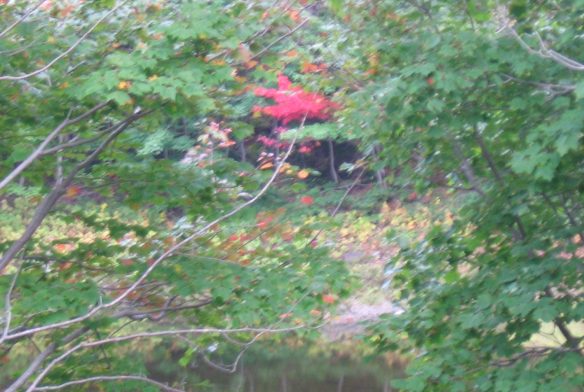
Prior to my 2021-2022 cross-country road trip I had never been east of Saskatchewan within Canada, although I’d traveled a fair bit elsewhere. I left Calgary in September and spotted my very first red maple leaves somewhere in Ontario. The red maple leaf is on our flag. It’s the symbol of our country. But I’d never seen one in real life until that day – and I was gobsmacked. Now I am surrounded by red maples and see them in their many shades of glory. I can never recreate the shock of that first glimpse, but the colours continue to awe and delight. Even as the temperatures drop, the blazing forest feels warm, glowing red and orange and gold, the colours of fire.
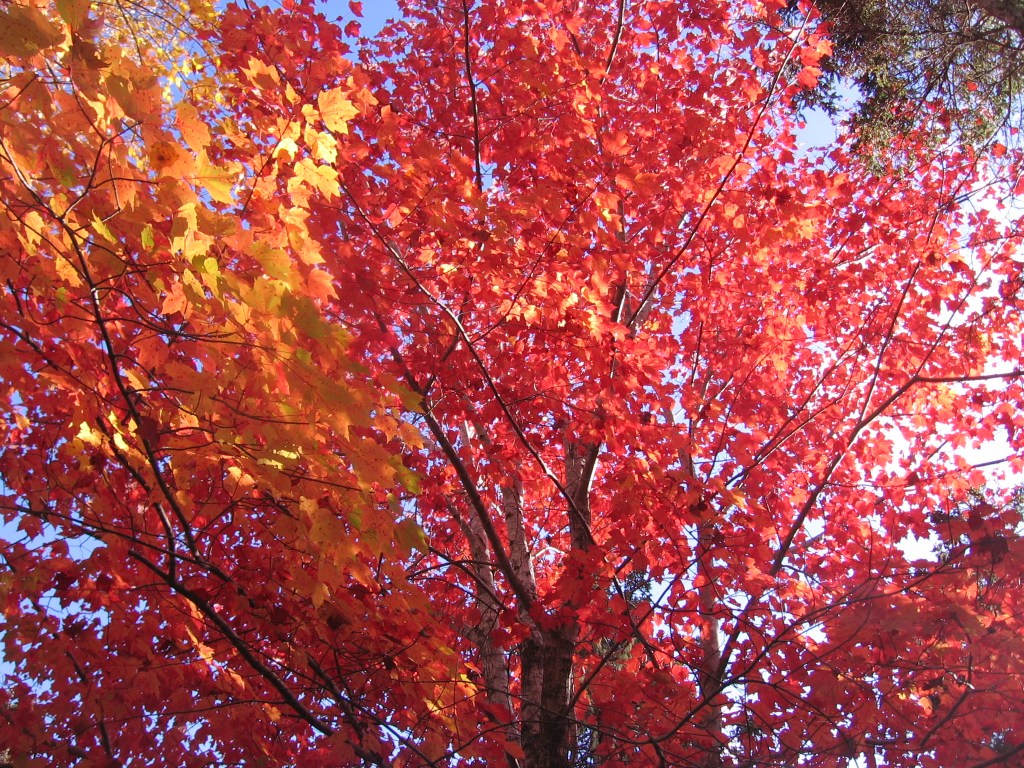
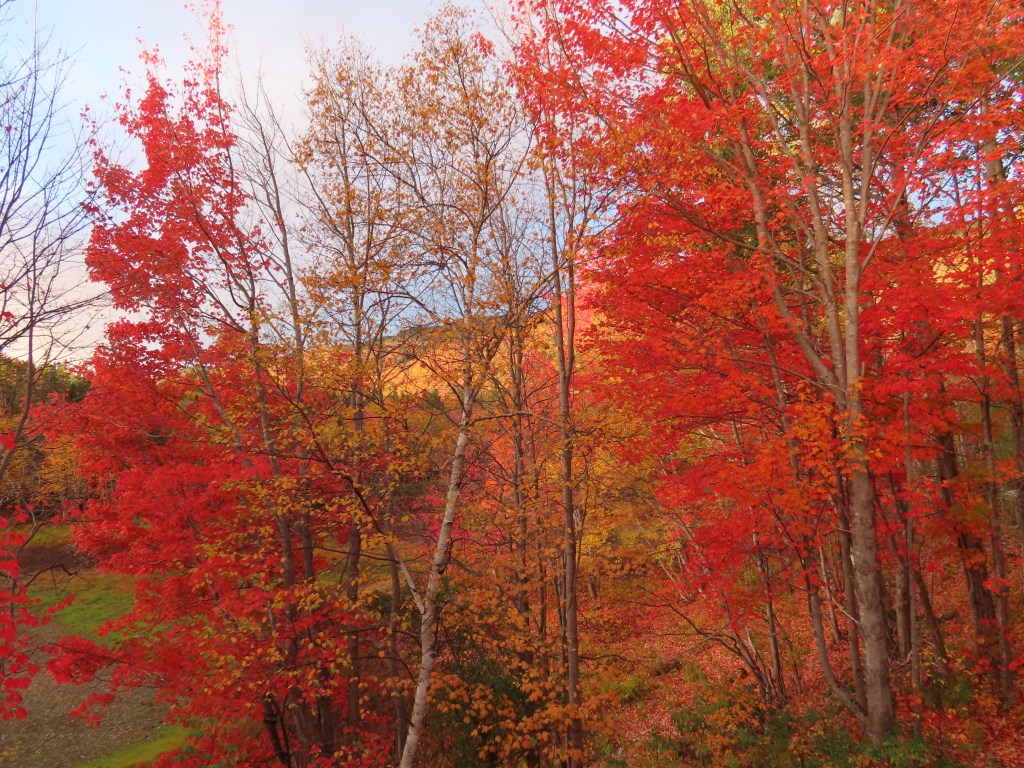
The colours are usually in full bloom by mid-October. There are many shades of red and many words to describe them, like scarlet, crimson, cinnabar, and vermilion. Some maple leaves deepen to shades of burgundy or maroon that flirt with purple. Other go the opposite way on the spectrum, from flaming orange to subtle shades of salmon and coral. The shades are as individual as the trees, and over the years I’ve come to know which tree dons which hue.
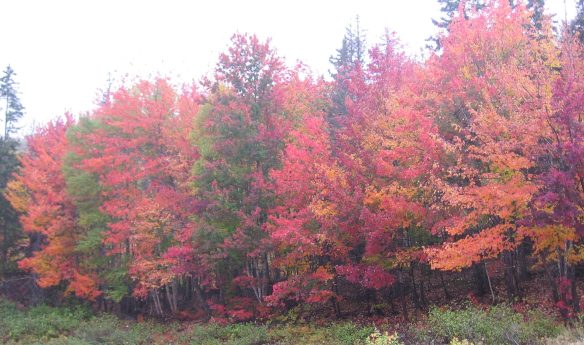
But this year, in some sort of Murphy’s Law of Leaves, things were different. I’m blogging about red in a year when the reds were scarce. In Mellow Yellow I showed the lemony leaves of sugar maples, but this year many red maples turned yellow. I was hard-pressed to tell a red maple from a sugar maple. What gives?
As noted in Keen on Green, leaves look green because of chlorophyll. When it breaks down in the fall, leaves reveal their true colours. Carotenoids are orange and yellow pigments that are there all along, but the red pigment anthocyanin has to be freshly synthesized and depends on environmental conditions, favouring sunny days and cool nights. This past summer was cool, damp, and cloudy, which may be why so many red maples turned yellow. Unless, of course, word got out that I was featuring the colour red …
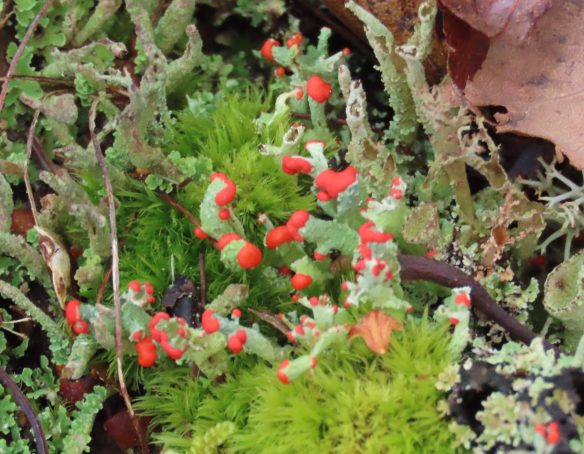
Maples are our most abundant reds, but here are some other reds in the neighbourhood.
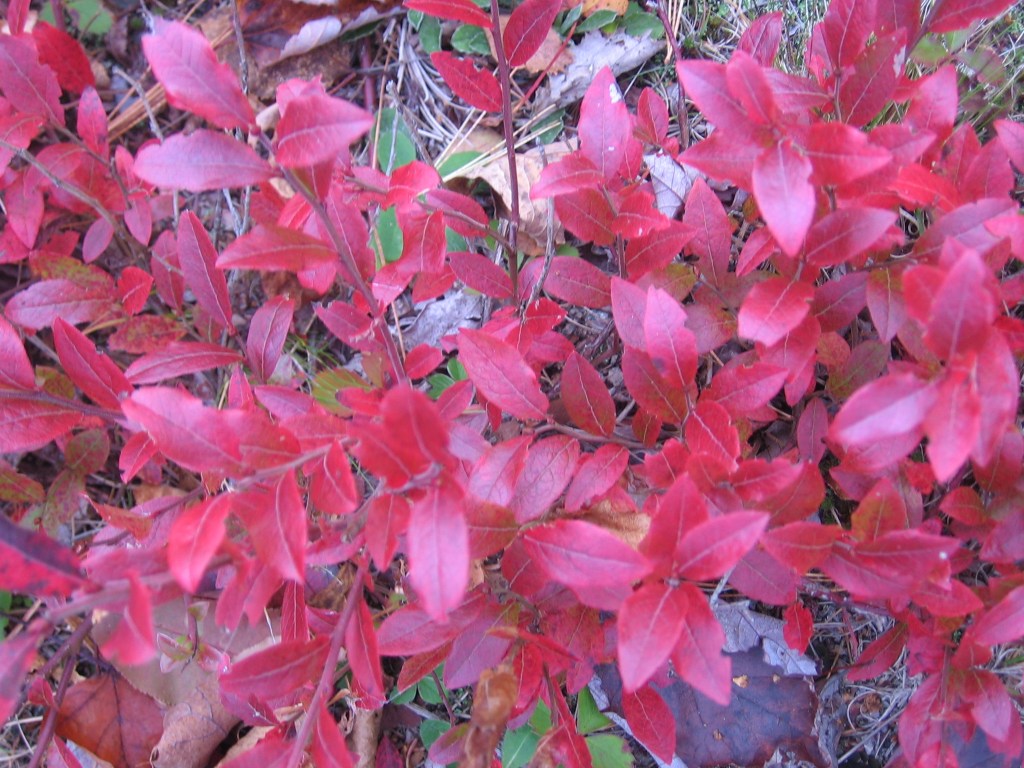
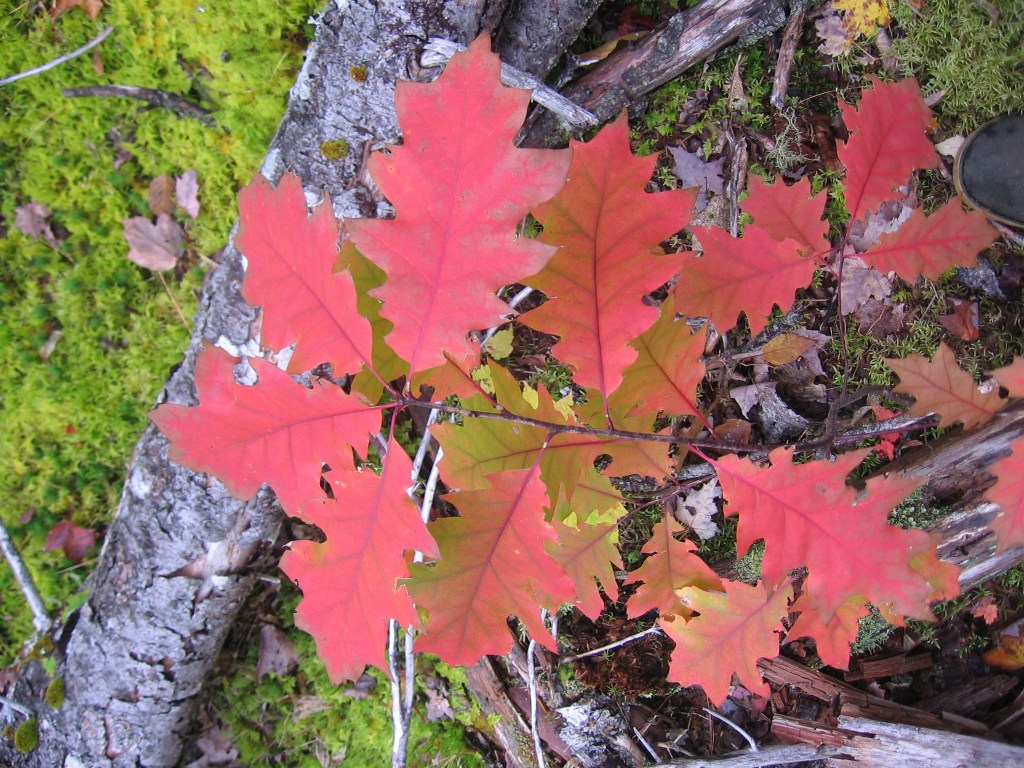
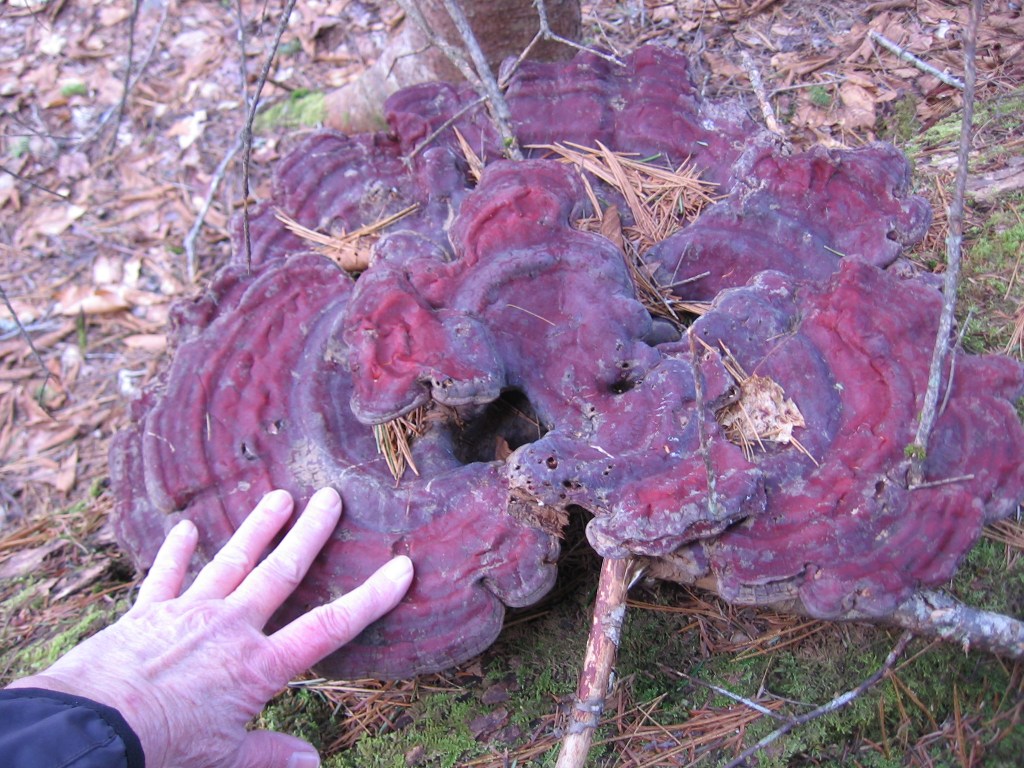
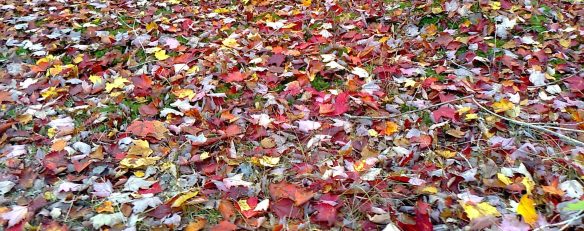
Even as I write, the wind is stripping the last of the leaves off the trees. It’s fun to watch the leaves swirling and dancing in the wind, but bittersweet to see those bared limbs as the season turns. Now that the curtain of foliage is gone with the wind, the highlands are revealed, and the fallen leaves transform the forest floor into a colourful carpet.
Ho Ho Ho!
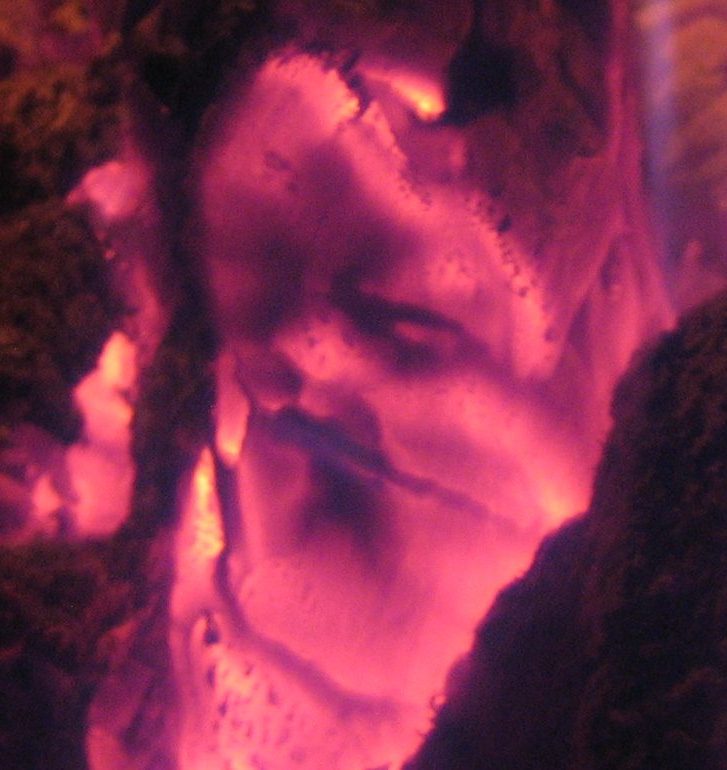
Red is sparse in winter, but we bring it into our homes as one of the colours of Christmas. Green boughs of holly and mistletoe have bright red berries. Santa Claus has rosy-red checks and wears a bright red suit, and Rudolph the Red-nosed Reindeer leads Santa’s sleigh through the night sky. We may don red apparel to celebrate the season. Winter is the time to sit by the fire, watch the dancing flames, and feel the warmth of the glowing red embers.
Red Critters
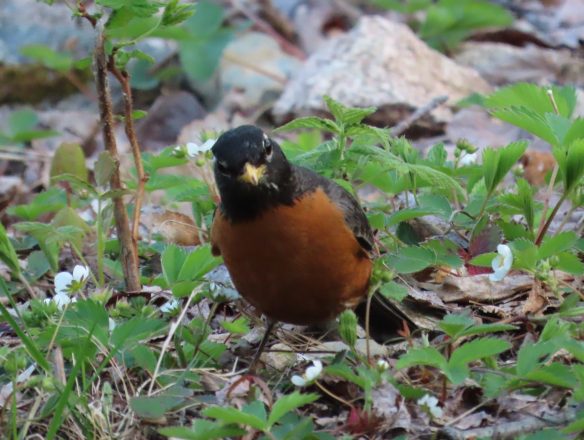
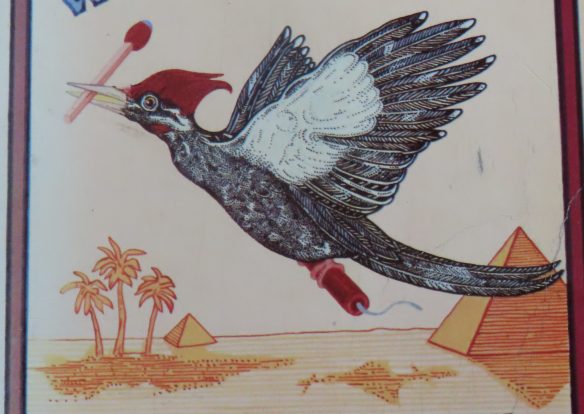
I’ve never seen a cardinal, but many local birds display patches of red, like ruby-throated hummingbirds, pileated woodpeckers, red-winged blackbirds, and that harbinger of spring, robin redbreast. Among birds, red may serve to attract mates, but the red eft, the terrestrial stage of an eastern newt, is sending a different message. These amphibians emit toxins through their skin and red is a warning to would-be predators: ‘Do not eat me!’
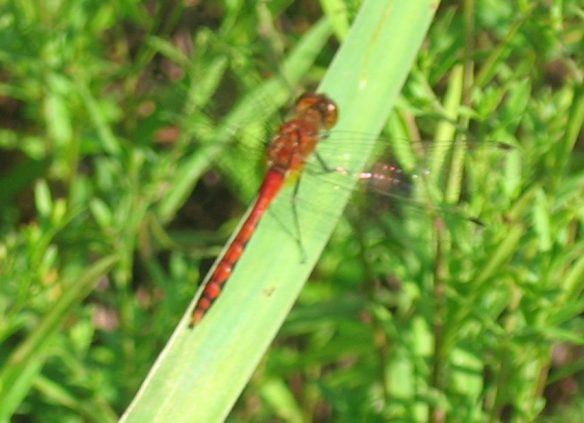
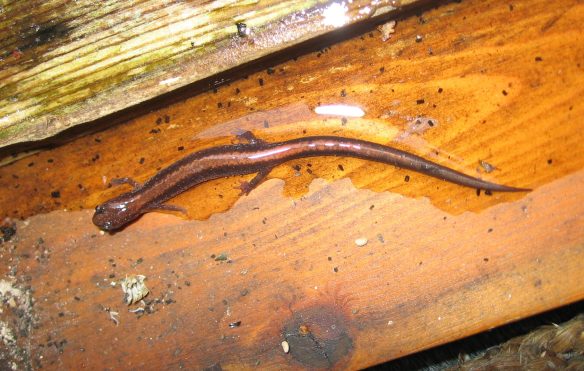
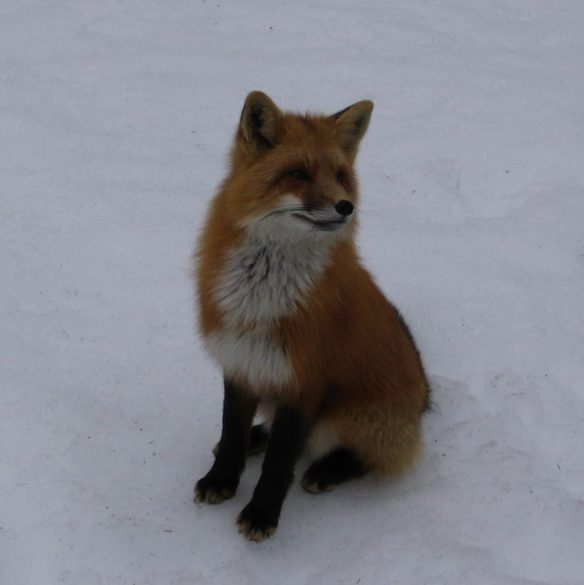
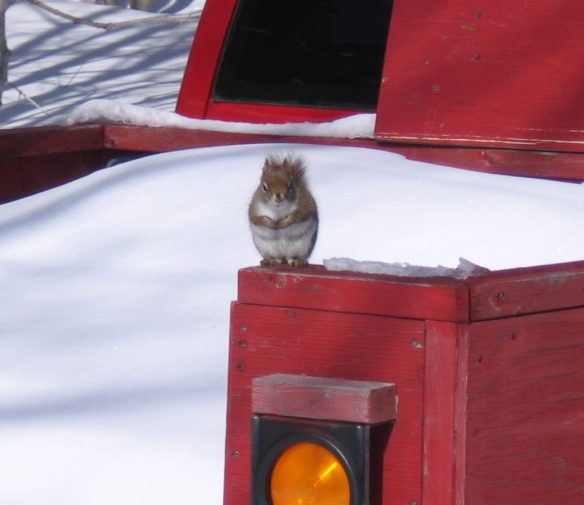
When it comes to we mammals, from fur to hair, the reds are more subtle …
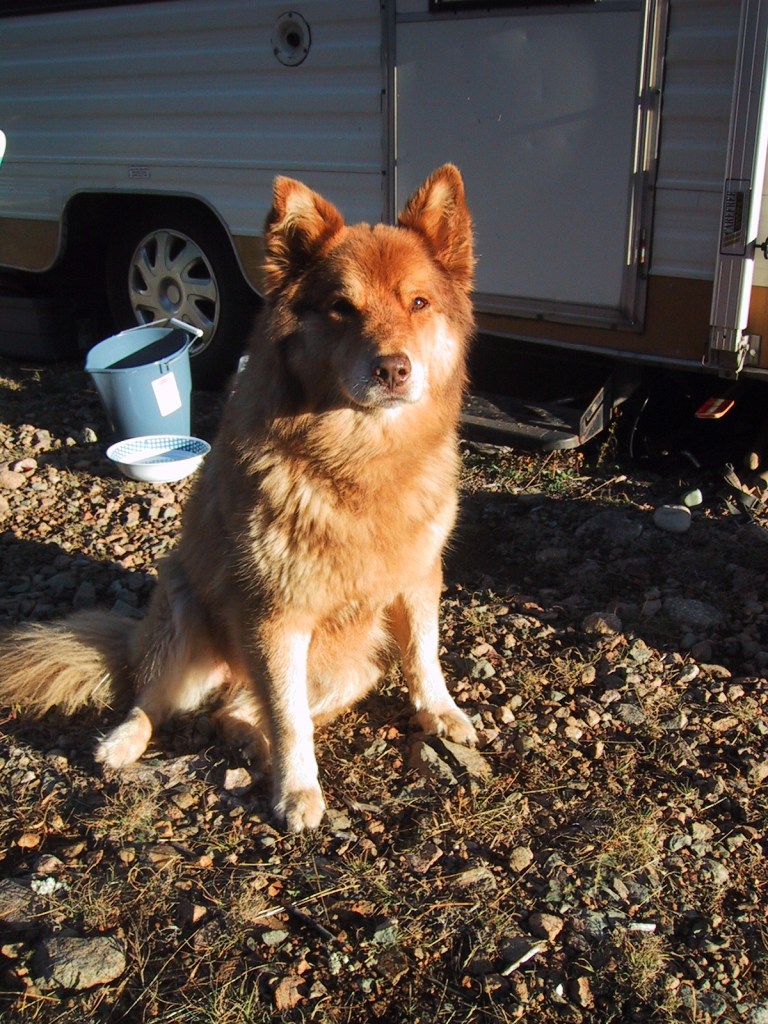
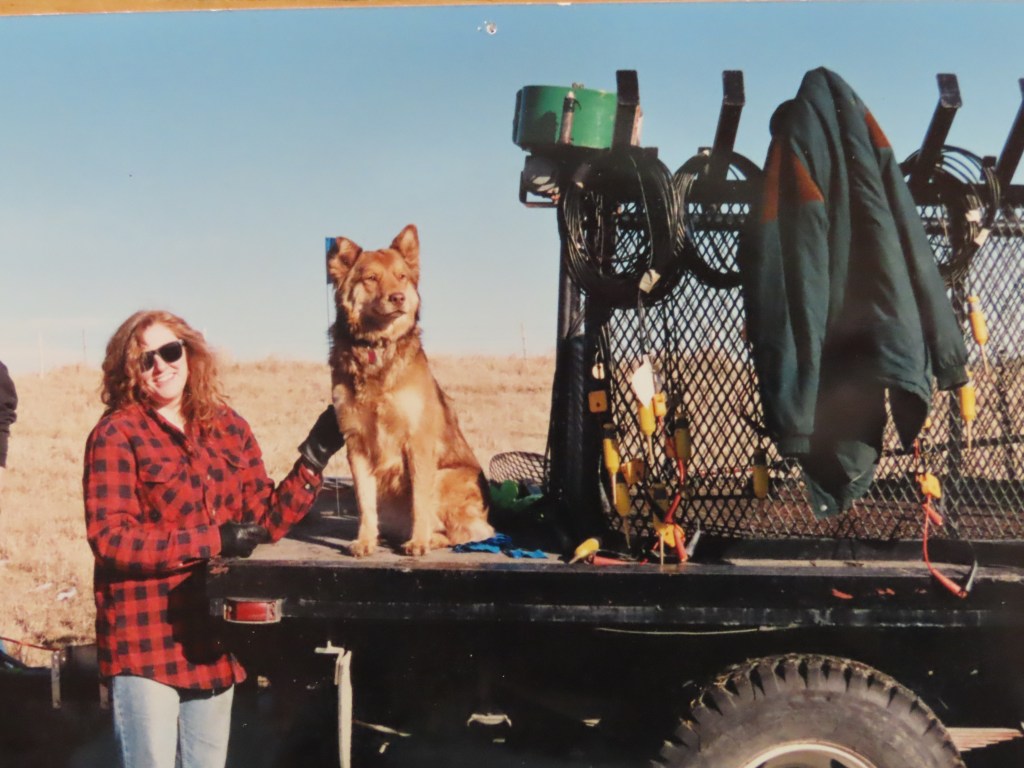
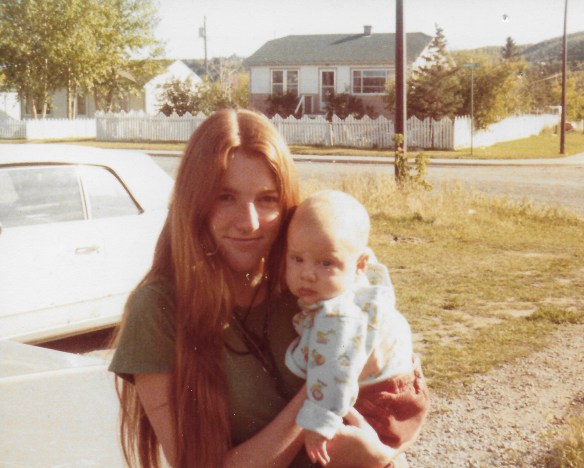
I was a geophysicist in a research group at the University of Calgary. On seismic crews, the person who plants the geophones is called a jughound. Here’s Tundra being a jughound on a line truck while we were doing some field work. And me with my little boy in his rusty-red cords at our old place. His fair hair turned dark brown, but the red shows up in his beard.
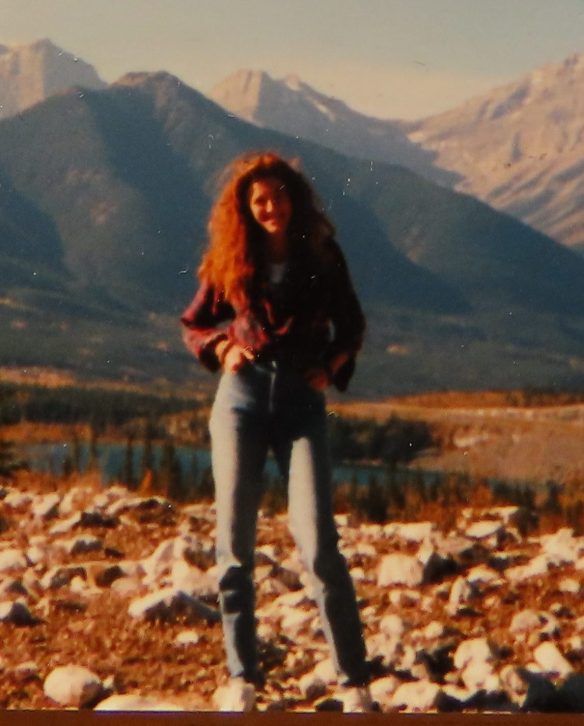
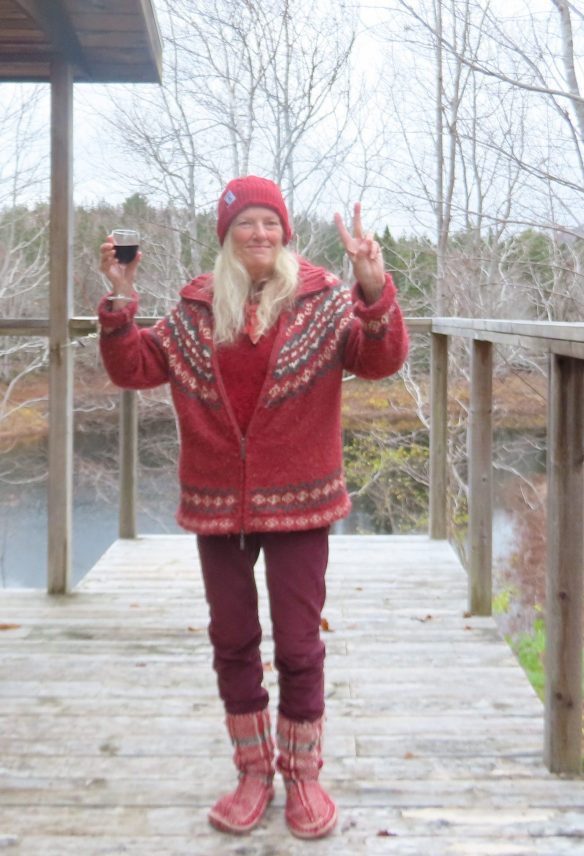
At school I was sternly instructed by some of the girls that I must never, ever wear red. Or burgundy or pink or maroon or any colour remotely near red. Well, I suppose it’s all right now.
The Colour Red
Red is a primary colour – both in art and in light. In paint the primary colours are red, yellow, and blue. Painters blend red with yellow to make orange, and red with blue to make purple. In light – and on your screen – the primary colours are red, green, and blue.
Red is the lowest frequency (i.e. the longest wavelength) colour on the visible light spectrum – the R in ROYGBIV. Infrared light is even lower frequency and below the visible light spectrum. We can’t see it, but we can detect it using infrared devices. The long-wavelength visible colours, red and orange, give us our brilliant sunrises and sunsets. When the sun is low in the sky, the light has to travel through more of our atmosphere than when it’s high overhead. The short-wavelength colours are scattered, leaving the long-wavelength reds and oranges to light up the sky. This is also why the rising full moon can look pink, orange, or even red. Soon after I moved here I saw a blood-red moon rise out of the Atlantic on the Summer Solstice – a magical moment.
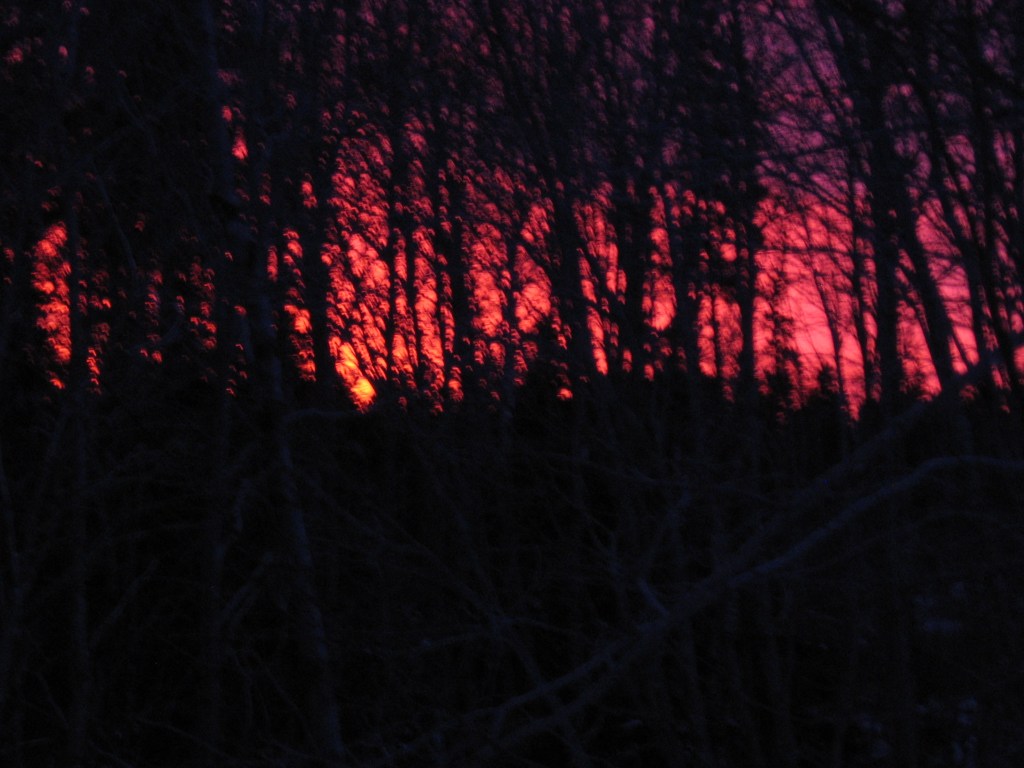
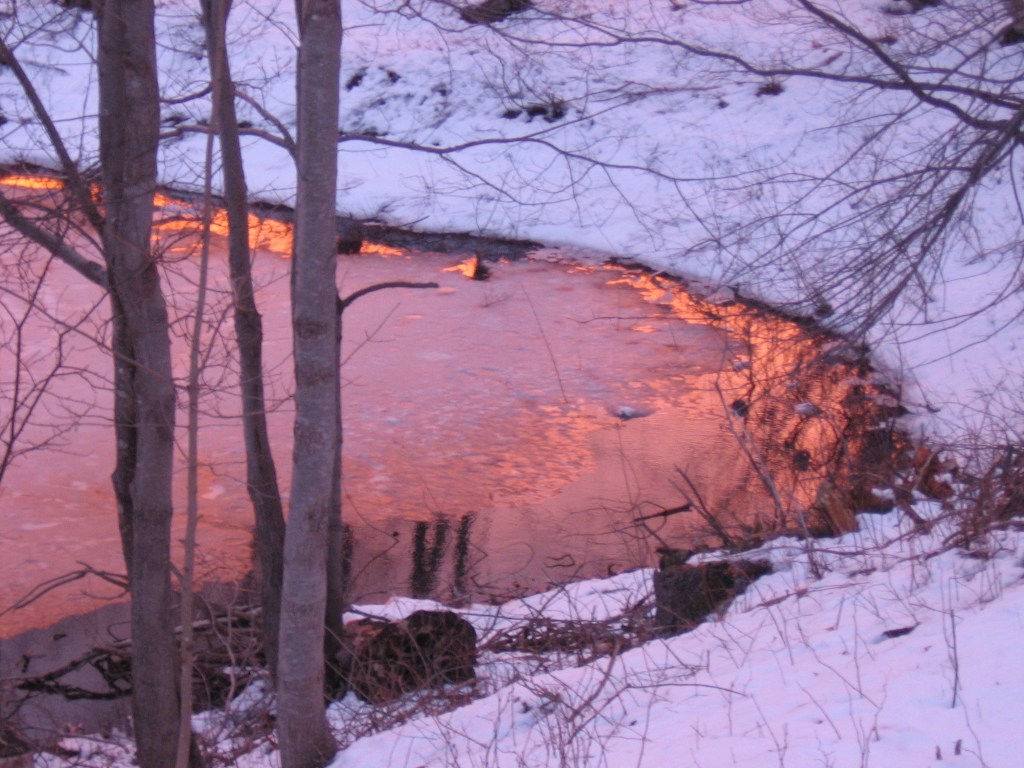
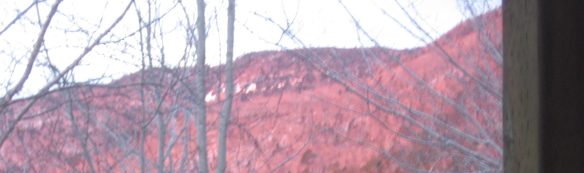
I like to linger at the shore to catch that brief moment when the red rays of the setting sun kiss the cliffs of the Bird Islands and paint them red. I call that moment the Red Shift. It happens here in the Holler too, when the fall foliage briefly flares so brightly that it seems lit from within. In the morning the red shift can turn the Highlands rosy, even when the trees are still bare. This is from my old camera and it’s the photo – not your vision – that’s blurry.
The Many Meanings of Red
Red is the most powerful colour, perhaps because it is the colour of blood. Red is imbued with great symbolism across many cultures, sometimes with meanings that clash and contradict. Red is never humdrum – although it might be REDRUM at the Overlook Hotel.
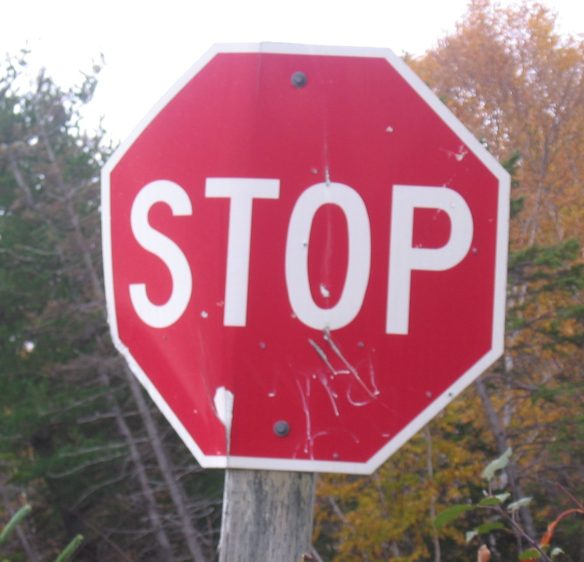
Red means STOP! From traffic lights to stop signs to brake lights, red tells us to stop. Fire trucks are a highly visible fire-engine red, and red flashing lights demand our attention. Red signifies danger. It is the highest alert level for forest-fire or severe-weather risk. Beware if something raises a red flag, or leads you astray with a red herring.
Red is the colour of blood. Tennyson wrote ‘Nature, red in tooth and claw‘ and he wasn’t wrong. Mars, the red planet, is named after the Roman god of war because of its bloody colour. In a similar vein, red is the colour of anger. ‘Seeing red’, or ‘the red mist’ describes a state of overwhelming rage, when your blood is up. However, bulls charging the matador’s cape are not seeing red – they are red-green colourblind. So was my father. He could certainly get angry, but he couldn’t see red.
Red is also the colour of shame. We may turn beet-red or be red-faced if we are caught red-handed. Rosy cheeks suggest good health, but may just be rosacea. Same with a red nose, which is seen as the sign of a sot. A clown’s red nose mimics the nose of a bumbling drunk.
Red is the colour of the Devil, of Hellfire and Brimstone. Red is sinful and lusty – the colour of fallen women, like Hester Prynne in Hawthorne’s The Scarlet Letter. Red-light districts are the abode of the wicked women of the night, and the Moulin Rouge is a bit racy. Red is hot and spicy, like salsa. Metal can literally glow red when heated, but ‘red hot’ means sexy, like red lipstick and red nail polish. Unless, of course, we are talking about the red robes worn by Roman Catholic Cardinals, which are neither sinful nor sexy, but are very red – just like the blood of Christ and the martyrs. So back to blood …
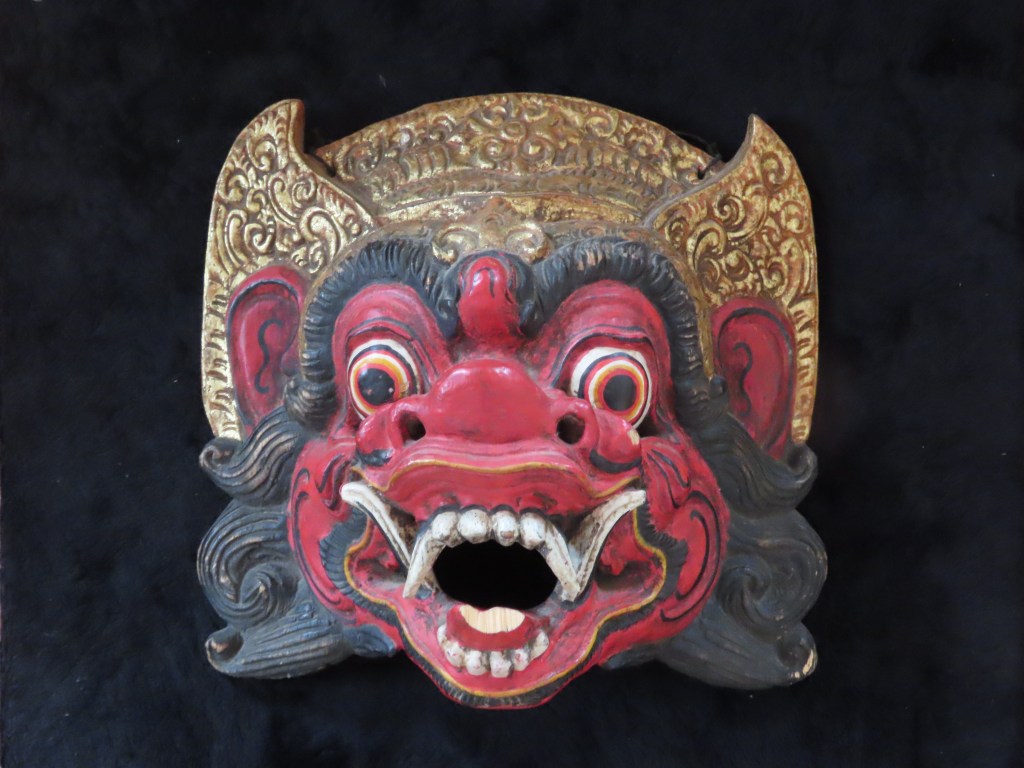
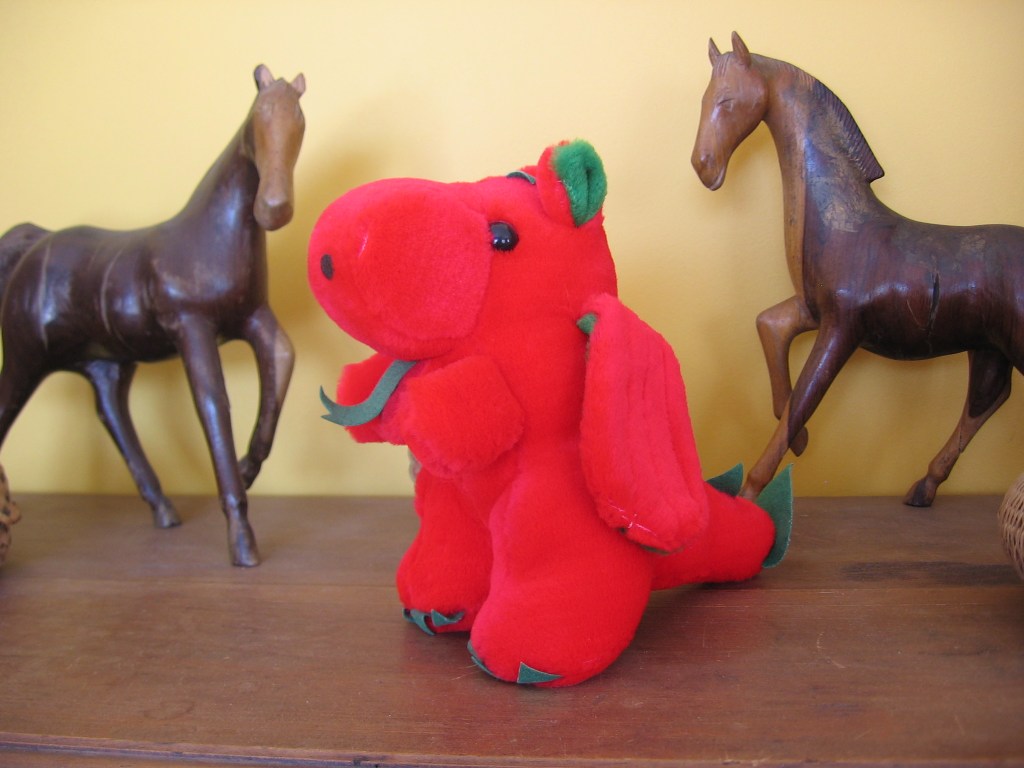

Red is the colour of Communism. During the Russian Revolution the Red Army adopted a red flag, symbolic of the spilled blood of the workers. Lenin’s tomb still resides in Moscow’s Red Square, a name that predates the revolution.
Red was also the colour of the Chinese Communist Revolution, and Mao adopted a red flag. It represents workers’ blood, but is also the most auspicious colour in China, associated with good fortune and joy. Those revolutions led to waves of ‘Red Scares’ in the USA, where being a ‘red-blooded American’ is a good thing, but being a Red is not. Interesting that in Canada, Liberals are red and Conservatives are blue, but in the USA the Democrats are blue and the Republicans are red, even though they are still very touchy about those Red Commies.
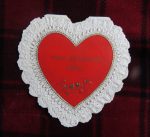
When we celebrate Valentine’s Day in Fabulous February, red takes on a whole new hue. It is the colour of romantic love as red hearts abound. Red roses signify true love and devotion.
Red is also the colour of compassion for the Red Cross and Red Crescent, a sign of aid in times of trouble.
O Canada!
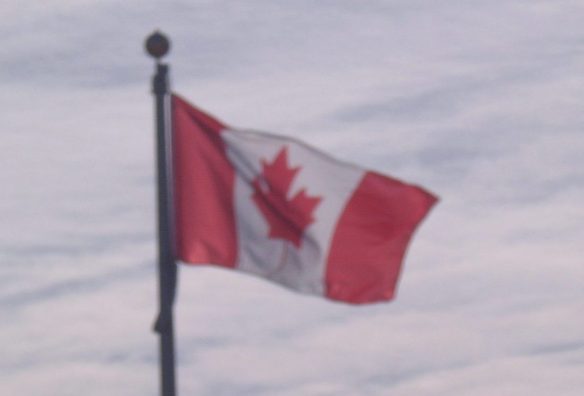
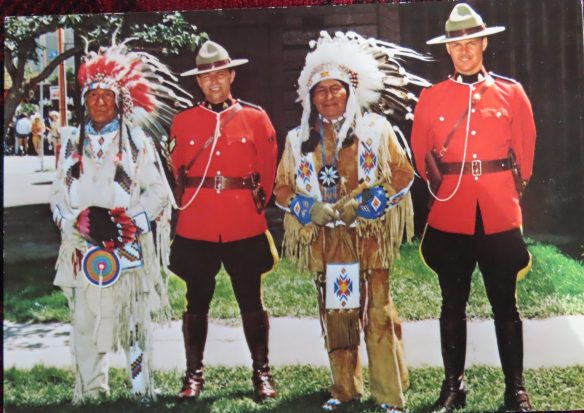
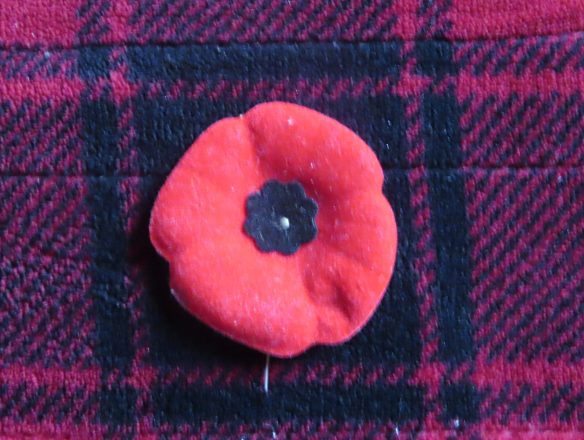
And finally, red is Canada’s colour. The red maple leaf is a symbol of Canada and is featured on our flag. The Mounties are a Canadian icon in their Red Serge dress uniform, which features a scarlet tunic. In November we wear red poppies to honour our war dead and veterans. This symbol was inspired by Canadian John McCrae’s line: ‘In Flanders fields the poppies blow / between the crosses, row on row.‘
Red all Over
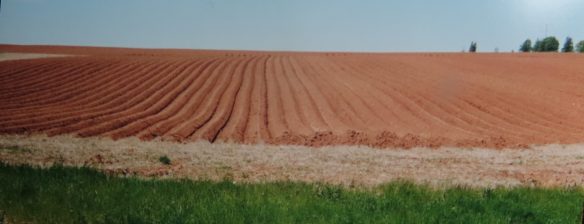
Red appears in popular culture in a number of guises, from Little Red Riding Hood (nice) to the Little Red Devil (naughty). In fiction there are red names, like Scarlett O’Hara and the Scarlet Pimpernel, and redheads, like Little Orphan Annie and Anne of Green Gables, who lived in PEI with its famous red beaches, red soil, and red barns. Real redheads include Vincent Van Gogh, Ginger Baker of Cream, and Willie Nelson, aka the Red-headed Stranger. Elizabeth I may be one of history’s most famous redheads, along with her father Henry VIII. And I must mention Erik the Red since my great-grandmother was Norwegian. Erik is said to have had a fiery temper, a trait often associated with redheads. (This was a handy excuse until my hair turned white.)
Red shows up in many a song. You might hear The Red Shoes reel at the Red Shoe Pub, or Little Red Rooster at a blues bar. Ruby Tuesday is a free spirit, but that other Ruby takes her love to town (there’s that wicked-woman red again). The Divorcees love a Red Haired, Red Blooded Woman, but watch out, because Panama Red will ‘steal your woman, then he’ll steal your head’. Maybe stick with Red, Red Wine. And a tip of the Raspberry Beret to the Cranberries, the Red Hot Chili Peppers, King Crimson, Leon Redbone, and Red Rider. Which leads me to …
Red Riders
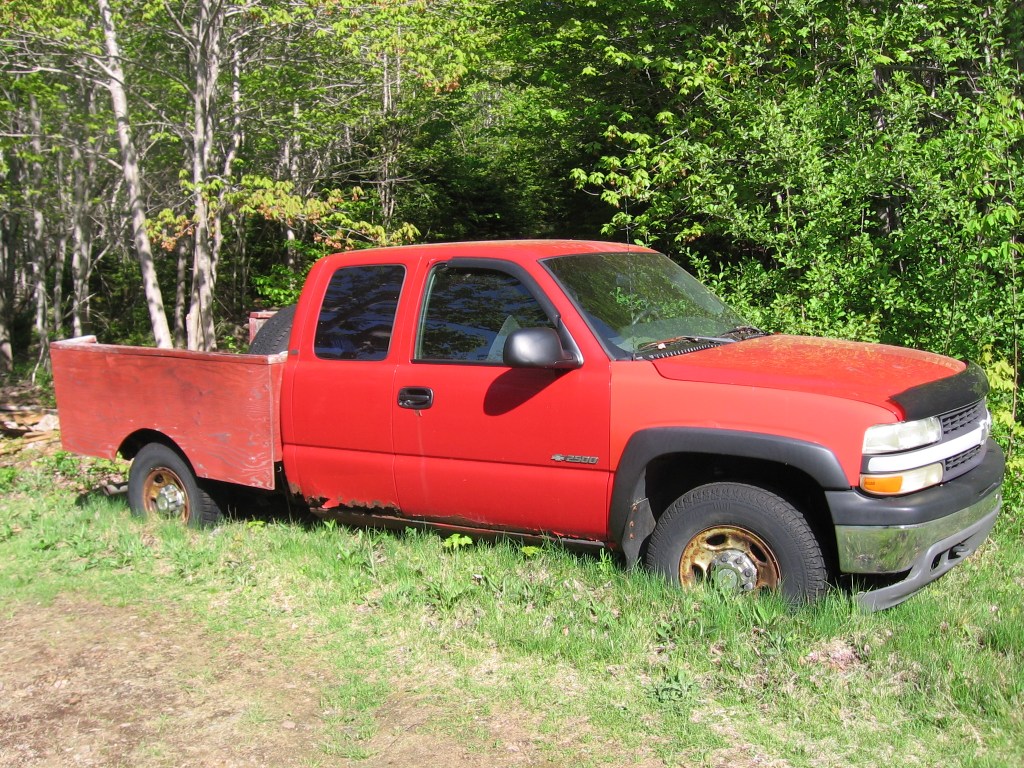
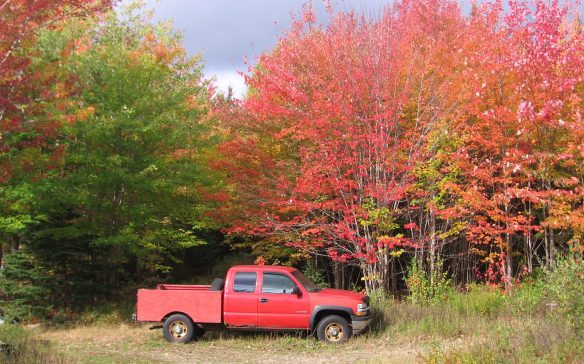
Shortly after I quit my job and was getting ready to relocate to Cape Breton, my Gumby rig was fatally injured when a driver ran a stop sign (‘Red means Stop!’) I was suddenly in need of another truck. I didn’t particularly want a red one, but a used Chevy Silverado in Rocky Mountain House, Alberta, ticked a lot of boxes, including a front bench seat for Tundra to stretch out on. So red it was. I named it Roadeo for its Alberta origins and on-the-road purpose.
Roadeo was a real workhorse. It moved me from Calgary to Cape Breton, hauling a travel trailer in 2004 and a cargo trailer in 2005 (Travels with Tundra and Spot). Over the years, Roadeo hauled two woodstoves, a futon, used heavy appliances, and furnishings I scavenged from the dump, heavy garbage pickup, and thrift stores. It hauled loads of firewood and ploughed through the snow on my driveway in 4WD. In 2008 Roadeo and I hit the road again, this time from CB to BC, driving the backroads in search of remote hot springs.
But red is the colour of the rust, and rust ate away at Roadeo. Even with a new wooden bed it was only a matter of time. When the iron in steel oxidizes it rusts and turns red. Iron oxides also colour rocks, soils, and beaches red – here on Earth and way out there on Mars.
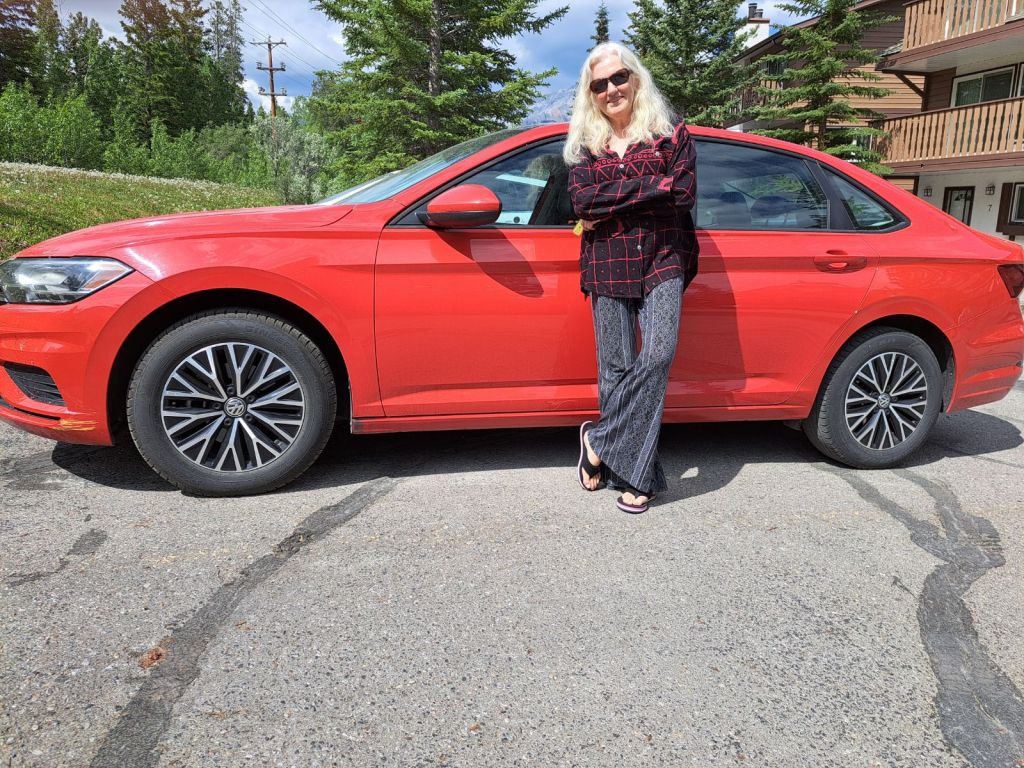
I went for a whirlwind trip to Alberta in 2023 and my rental was this bright red Jetta, and jetta we did, around the prairies and the foothills and the mountains. Vroom!
Remembering Red
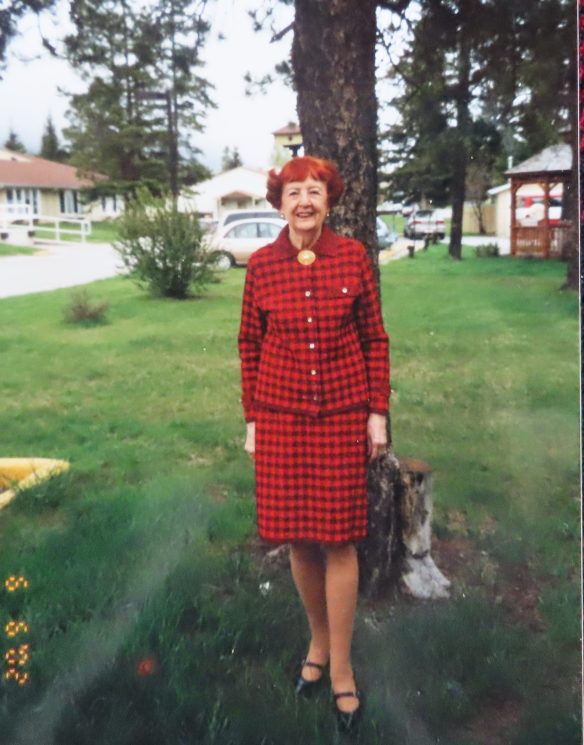
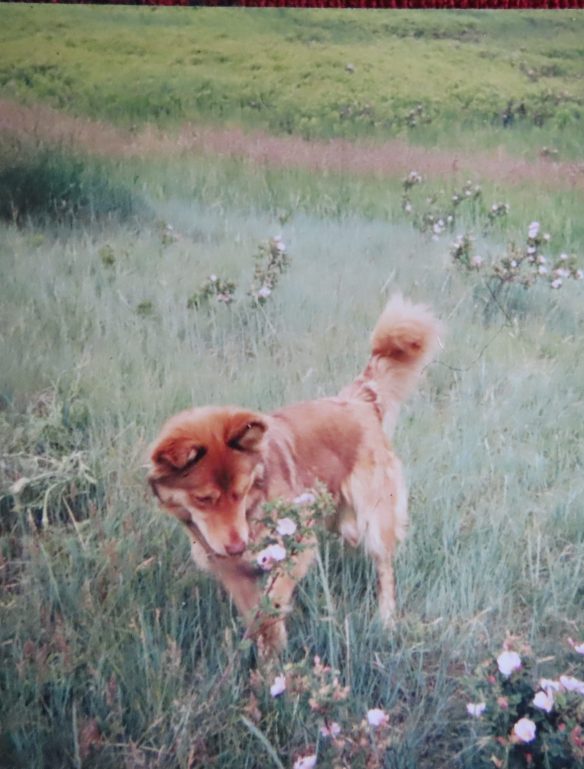
Like the fiery fall foliage, so too our lives must pass. I still miss my dear mum, my red dog, and my old red truck. There just might be a country song in there somewhere …
Sue McKay Miller
November 17th, 2026


Love your colour blogs, Sue. Great photos, too. Thanks for taking the time to write and share your work.
LikeLike