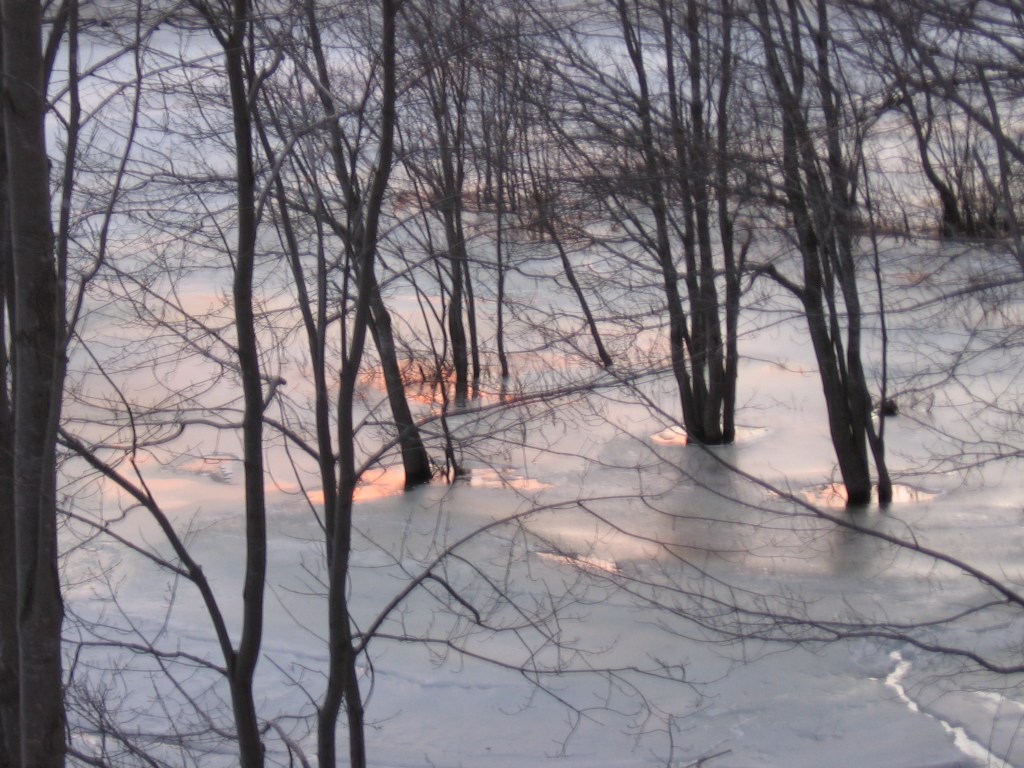
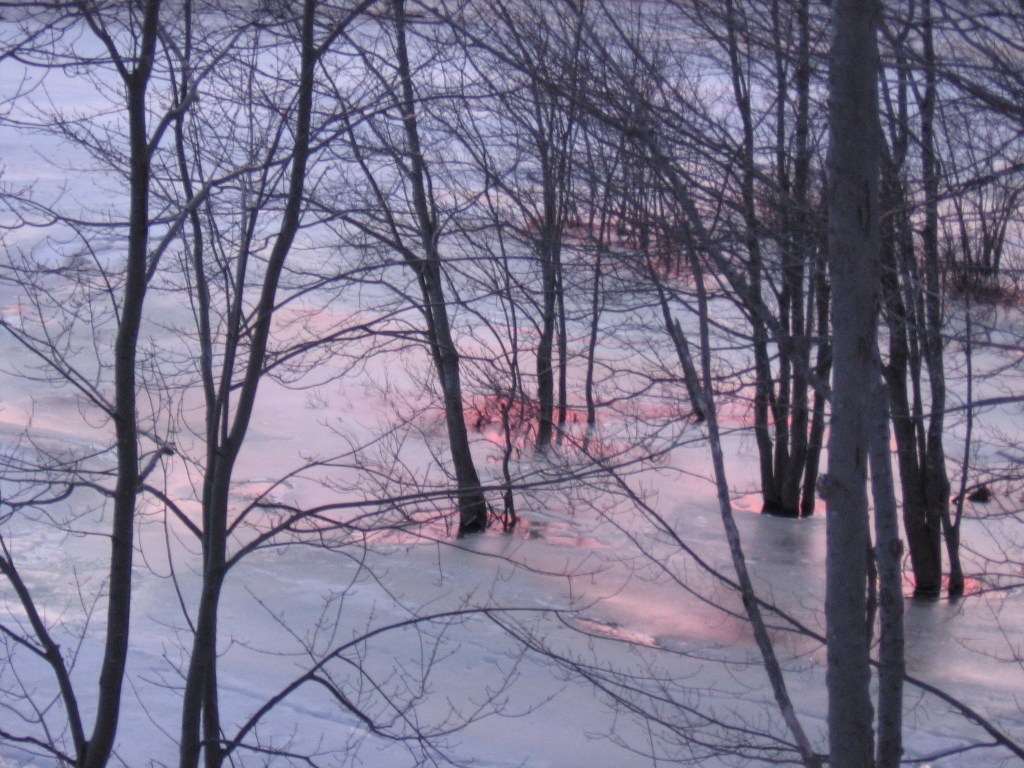
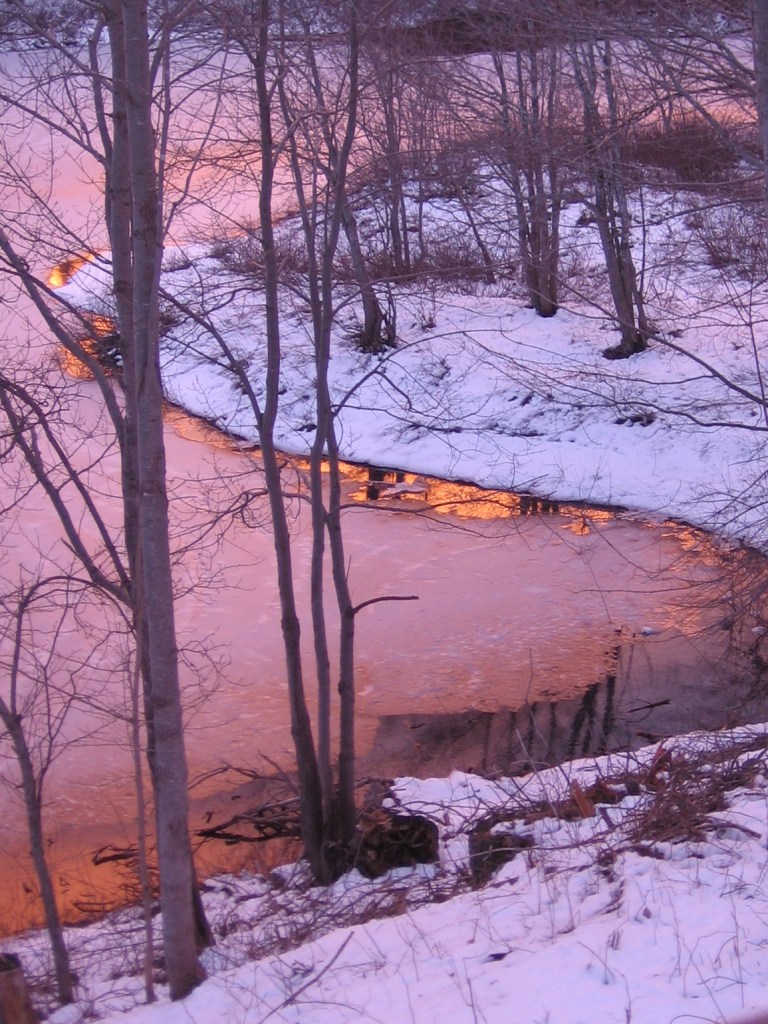
One Too Many

No, not that type of one too many. One too many drinks or donuts is never a good thing and usually fits under the category ‘it seemed like a good idea at the time’. No, I mean pushing a season just a bit past its best-before date. In my case, going out just one more time after that perfect hike, swim, or snowshoe at the end of the season.

Snowshoe Season

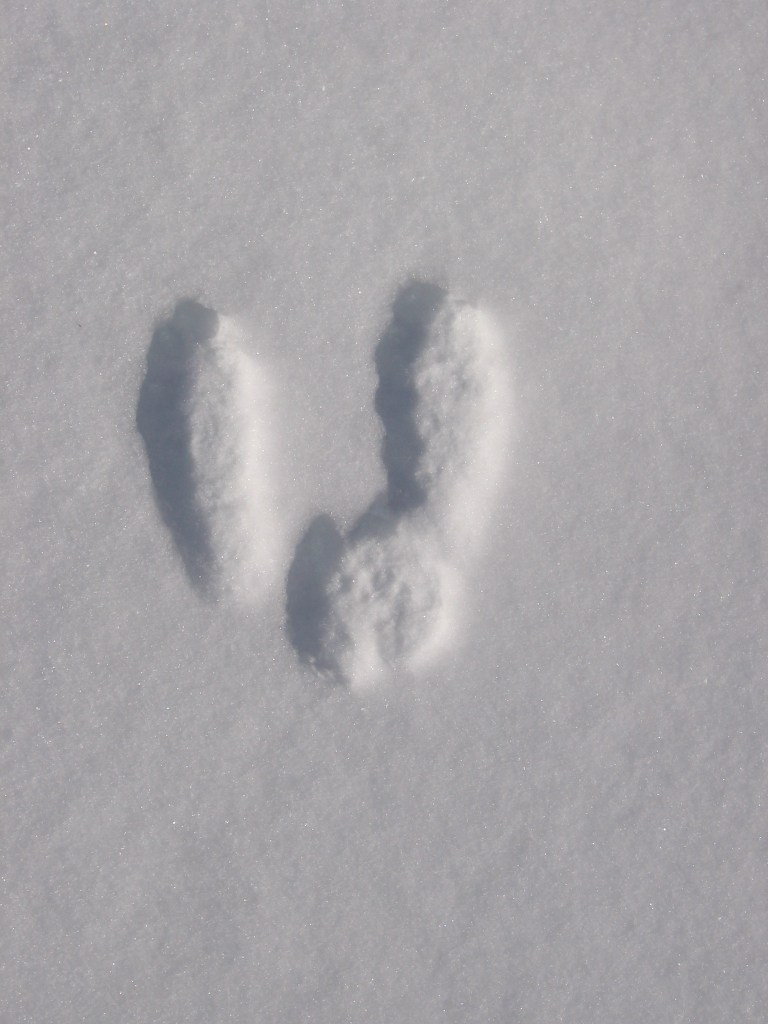
We haven’t had much snow this year, but as I wrote in The Secret Lives of Animals, my winter joy is strapping on my snowshoes and following animal tracks. With warm weather on the way I took advantage of a sunny afternoon in mid-March and went snowshoeing up the hill behind my house along an old wood road. I hadn’t gone far when I saw fresh tracks – first a pair of coyotes, then a moose. I followed the tracks up until they all fed into a narrow trail I’d cut through new growth blocking the road. I was pretty chuffed that the critters were using my trail, but it was too narrow for snowshoes, so I headed back down, past some grouse tracks. (These photos were taken a couple of days later, hence not-so-fresh or clear, and with human tracks alongside. They’re a bit better full size.)

Ruffed grouse (aka partridge) tracks in the snow.

I crossed the slope over to a trail, then went down, down, down to Little River. The river was beautiful. The boulders wore icy skullcaps and stranded branches were festooned with fairy goblets and lacy necklaces of glittering ice. I paused to admire Winter’s Art Gallery, then snowshoed downstream. Before long I spotted small tracks emerging from the open water, up a steep slope, and along the riverbank. It was a mink, I think. Next came the tracks of a coyote who’d crossed the river, and, farther along, a second coyote who’d crossed over.

By chance I found myself following in the footsteps, so to speak, of these two coyotes on my way back home. We all took the same route away from the river and through the woods, but I parted ways when their tracks went straight up a very steep slope. I was almost home when I crossed their paths again. The coyote tracks went up the hill through the forest – and then out onto the old wood road above my house. This was the same coyote pair I’d started tracking when I first set out. I’d come full circle. Perfect! It was the best snowshoe I’d had in a couple of winters.
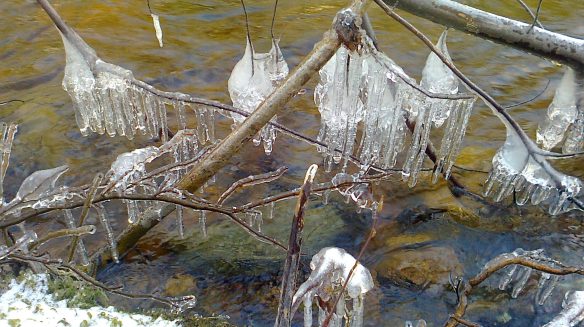
Little River ice art.

One Too Many Snowshoes

What a great way to finish up the season, right? Wrong. Of course I had to try to squeeze in just one more snowshoe before the snow disappeared. A couple of days later I set off with hope in my heart, detouring to take the track photos before heading off in the opposite direction, away from the river. It wasn’t a complete loss. I did see the tracks of a mother moose with her yearling, and a depression left by a sleeping moose. But I also had to snowshoe across moss and grass, jump over streams of snow-melt, and detour around puddles to get back onto the icy snow crust. April and the Albedo Effect was in full swing, even though it was only mid-March. It was my one-too-many snowshoe hike.

Dark late-day photo, but Moose had a snooze here.

I’ve done ‘one-too-many’ snowshoe hikes so often that it has become a Rite of Spring. A fantastic snowshoe must be followed by a rotten one. Sometime literally. When deep snow rots from below, I might break through up to my knees, as described in April – Awful or Awesome?

So why do it? Why not end on that perfect note, that ideal snowshoe? I can trace the whole one-too-many business back to 2019. I had a sublime snowshoe one brilliant blue-sky afternoon at the end of March. I’d seen lots of animal signs and enjoyed views of two waterfalls. I paused on a hilltop and looked back across the expanse of pristine white snow, shining under the sun and stretching to the next hill. I felt a deep sense of belonging, of being in the exact right time and place in the universe.

The snow had started to rot in the woods, but I couldn’t resist going again the next day, trying for just one more day of bliss. Hardly bliss. The conditions were atrocious. I tried an old wood road to the ocean, I tried through the woods to the river, but everywhere I went I kept breaking through the rotting snow. It was all frustration and no fun. I cursed myself for not having the sense to finish the season on a high note. But later I realized that ending on a sour note wasn’t all bad. It meant that I had pushed the season to its limit and a bit beyond. There was no second-guessing if I coulda/woulda/shoulda gone out one more time. And the one-too-many didn’t tarnish my memory of that perfect, penultimate snowshoe.

After my one-too-many snowshoe this year, I washed the mud off my snowshoes (no lie!) and stored them away. Why so reluctant to call it quits? Partly because now there is a pause. There is too little snow to snowshoe, but too much to bushwhack through the forest. So now I wait. And wait. Until the snow melts enough to swing into – spring hiking!

Spring Hiking Season

I don’t really ‘hike’ so much as mosey through the forest, bushwhacking up and down the highland slopes. I follow freshets and brooks flowing from the highland plateau, linger in hemlock stands, and watch waterfalls tumble down. I explore new places and revisit to my special spots, as described in The Humbled Hiker.

I head for the hills as soon as the snow melts. I live and play in a mixed forest, so there is a time before the trees leaf out at the end of May that is ideal for exploring. The lack of leaves allows for more open vistas, better ocean views, and easier route-finding. But before the veil of leaves appears, a spring scourge drops the curtain on my spring hikes. I jotted down these notes a few years ago:

One Too Many Spring Hikes

“I went on ‘one too many’ hikes the other day. I realized it as I was beating off black flies during one of my Highland explorations. The black flies won this bout, and even the dreadful DEET didn’t stop their frenzy. The plan had been to climb part way up a ridge to a hemlock stand, and see how far I could traverse along that slope. I aborted my plan once I reached the hemlock stand. I just wasn’t having fun anymore.

I enjoyed the ocean view – briefly – and the towering hemlocks – briefly – and then made my way down slope and out onto the cutline where the gusty southwest winds kept the little buggers at bay. I set out on this walk somewhat tentatively. The flies had exploded a week earlier and were annoying on a couple of previous treks, but not enough to spoil the walk.

In fact, my previous walk to a waterfall had been delightful. There were flies, here and there, and it wasn’t a good time to linger by the water, but it was worthwhile. So why not end on that high note? Because fomo. Fear of missing out on one more wonderful walk in the woods. I didn’t regret my last bushwhack, even though I had to flee from the blackflies. That one-too-many hike confirmed what I had suspected: Time to stash away the hiking gear.”

So there you have it. If a lack of snow marks the end of snowshoe season, an abundance of black flies has me fleeing the forest each spring. They breed in fresh running water – abundant on the highland slopes – and usually emerge in mid-May. I find the wee pests so distracting that it’s hard to focus on my footing, which is dangerous as well as frustrating. As my notes suggest, I’d had a wonderful walk to a waterfall that would have made for a grand finale, but I just had to push my luck.

As with the end of snowshoe season, there is a hiatus after spring hiking. The black flies are biting but the ocean is still frigid – and it takes a long, long time to warm up. So I must bide my time before I can dive into …. swim season!

Swim Season

Ah, summer in Cape Breton. We are blessed with an abundance of places to swim: lakes, rivers, and ponds galore – including my own L’il Pond (Swimming with Frogs). But my favourite place to swim is the ocean. And by ‘swim’ I mean being immersed in water. I might swim a few strokes, then roll over and float on my back and gaze at the clouds bobbing by above. Or I might do a little bobbing myself, gently rocked by the waves while I watch the terns and gulls and gannets. I’m a prairie girl who fell in love with the ocean and I feel happiest when I’m held in her briny embrace.
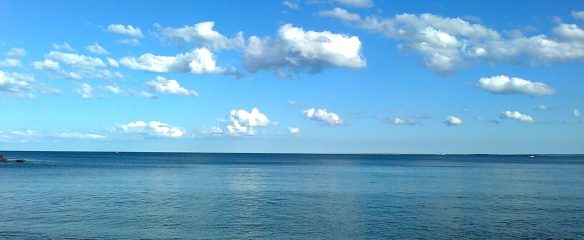
Dive into blue bliss!

Summer is sun, suds, sand, swimming in the salty sea, and a smiling Sue. The perfect beach day is hanging out with friends, going for a swim, drying off in the hot sun with a cold drink, then diving back into water. Repeat.

One Too Many Swims

Unlike snowshoeing or hiking, there can be one-too-many swims in a single day as well as a season. The water is so tempting and the air so warm, but that last swim of the day can be a bit risky. The air temperature drops abruptly when the sun drops behind the highlands. One swim too many and I might get … the dreaded chill. Cold that gets so deep into my bones that there’s only one cure. I have to go home and get immersed again – in a nice hot bath.

Swim season in Cape Breton is sweet but vanishingly short, which is why I try to get in the water every day that the weather allows. That’s also why I push the season and end up diving in one-too-many (or even two-too-many or three-too-many) times, because it’s a long while before beach season rolls back around. Here’s a (lightly-edited) passage from my diary dated Sept. 15th, 2023. (Mervi is my beach buddy (pictured above) who is a glass blower, which is very hot work.)

“Went for a beach walk and to see waves ahead of (tropical storm) Lee. Wore tights and a cotton shirt but threw in my swimsuit and towel in at last minute. After walking in the tidal wash I felt quite warm and a couple of tourists were in the waves. It was cloudy but warm and humid. Tourists said they felt fine getting out, so after they left I put on my swimsuit – still damp from previous swim – and immediately felt chilly. Considered putting clothes back on but opted to wait for Mervi. She was hot from glass blowing and went right in. I waded out but a biggish wave soaked me almost to my neck so, after hesitating, I dove under and floated a bit cuz probably final swim.

Got out and brrr – cold. Needed to get out of wet swimsuit. Tried to wrap a towel around and change back into dry clothes but skin so clammy I couldn’t really get really dry … everything sticking and icky … I felt all chilly and clammy and sticky. Yuck! Wished I hadn’t gone in. But it was okay, I told Mervi, because this had been my one-too-many swim.”

Swim season is the hardest one of all for me to let go. And sometimes we do get a surprise blast of heat late in the season. But there comes a time when the heat has gone out of the air and the ocean is cooling down. A time to rinse out of all my beach gear and store it away, to accept that swim season is over for another year.

Just as a day at the beach must end, so swim season must come to an end.

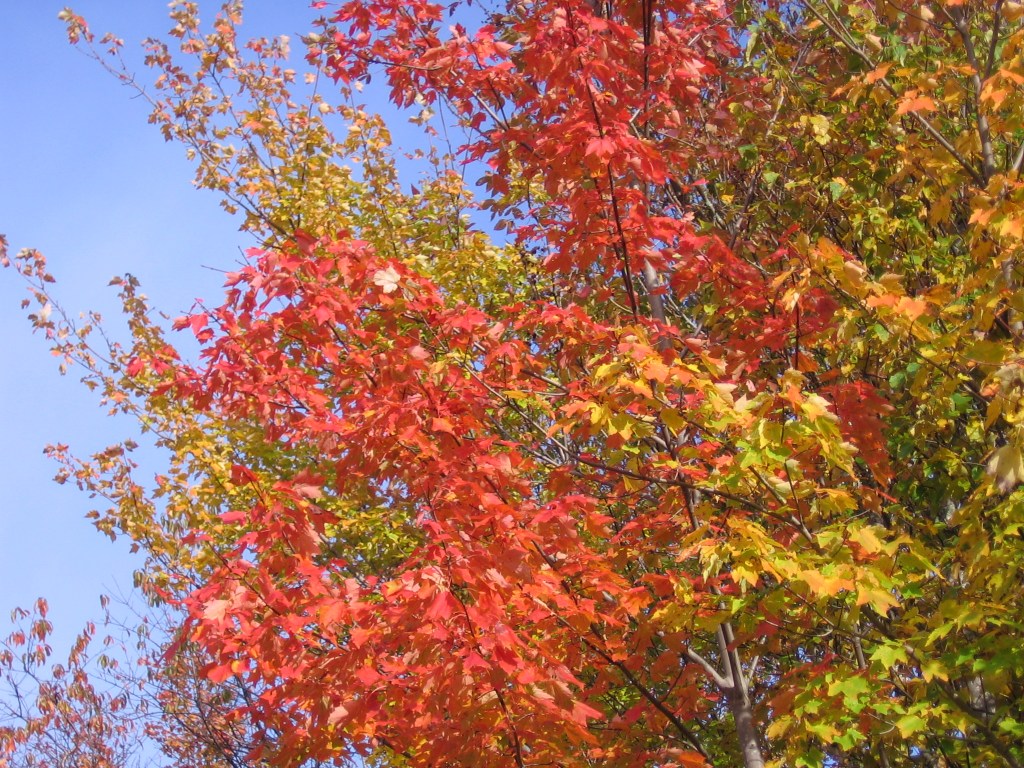
The consolation is that there isn’t any waiting around for the next fun activity to begin. Just as the ocean turns grey and cold, the forest begins to glow with red, gold, yellow, and orange. The autumn woods are warm and welcoming, blazing with colour and fecund with fungi. Fall hiking season begins when swim season ends, and carries on through November, as I wrote in my very first (and very short) blog Bared Trees and Barred Owls. But one day the snow will fall and stay put, hiding all the hazards underfoot. Then it’s that in-between time again – too much snow to bushwhack but not enough to form a good base for snowshoeing. It’s time to wait for more snow so the seasonal cycle can start all over again.

One Too Many and Me

This one-too-many thing is a sign of my reluctance to switch gears. Even if that means shifting into neutral and idling until I can start my next fun outdoor activity. But doing something one-too-many times is also a strategy of sorts. It’s a way of forcing me to face the facts, ma’am – this season is over.

If the ideal snowshoe, hike, or beach day is a perfectly-crafted sentence, the one-too-many day is the period that ends the sentence and closes out that chapter. For me, one too many is just about right. Happy April everyone!

Sue McKay Miller
April 6th, 2025
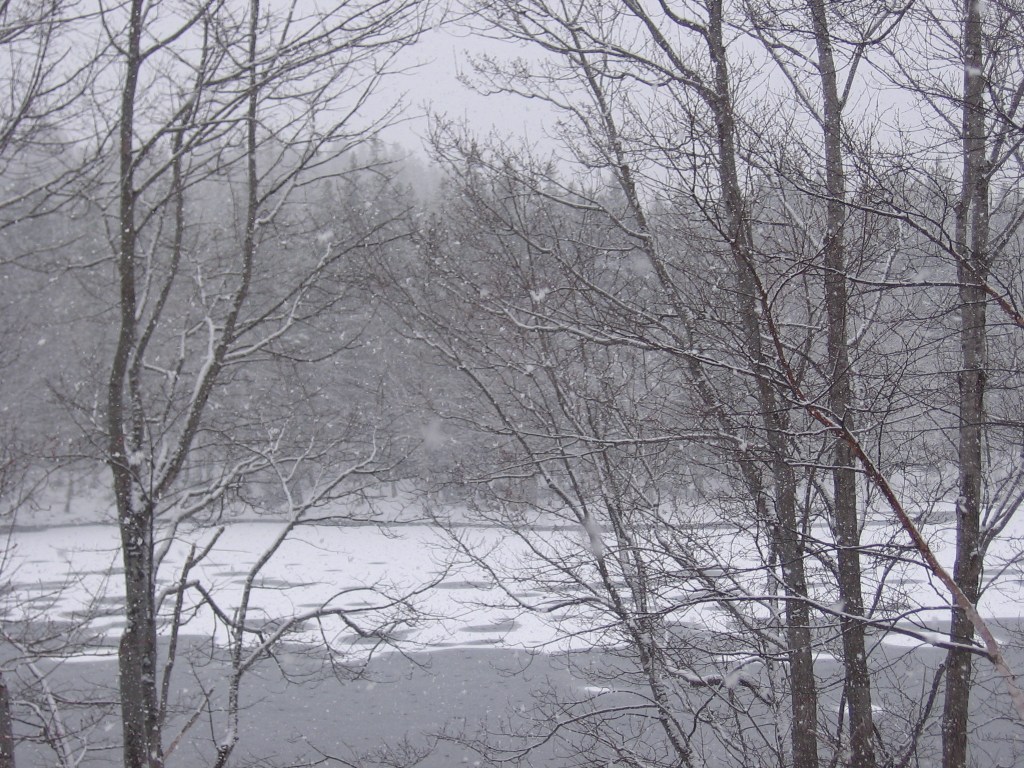
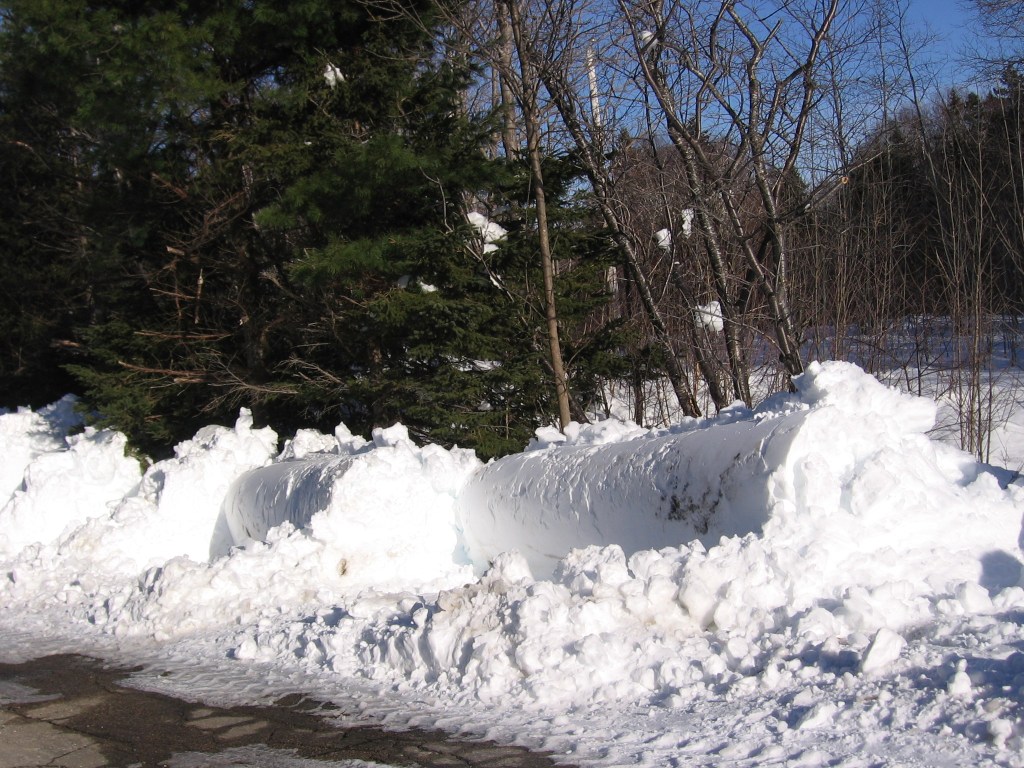
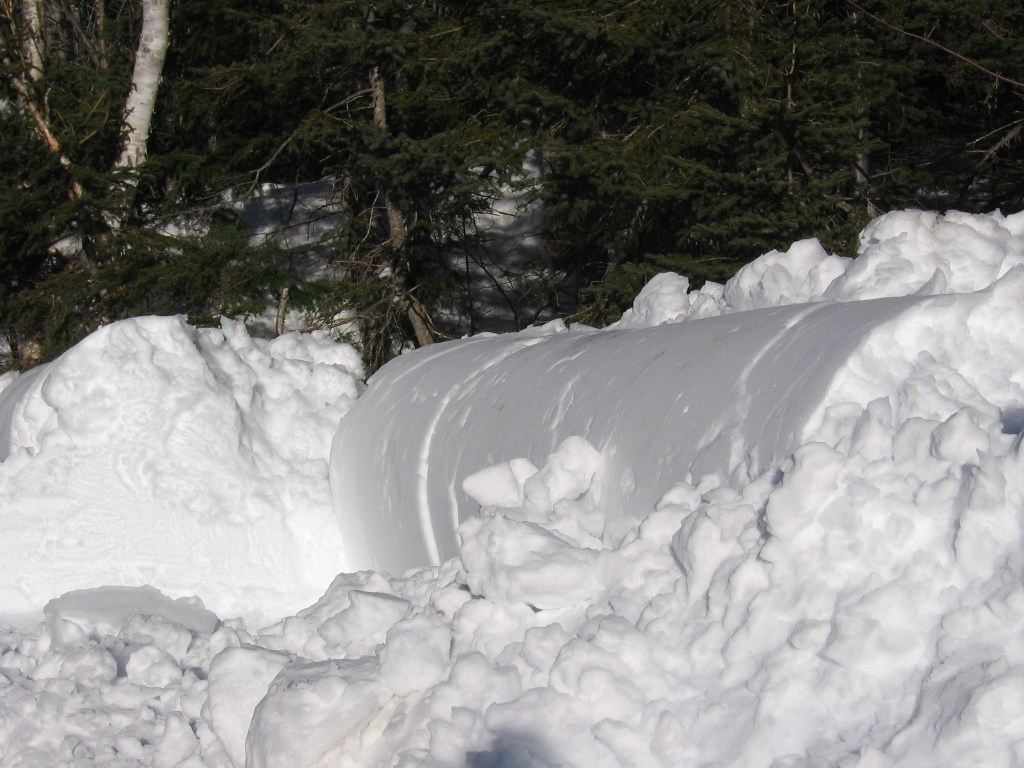
Winter Wonderland in April. We’ve had three-too-many of these this past week!

The Great Groundhog Day Dump

This is the first time I’ve written two blogs in one month, but it’s Leap Day, so why not? I posted Fabulous February on Groundhog Day, a celebration of this much-maligned month. It was an idea I’d tossed around for a while, and 2024 seemed like a good year to finally do it. This is a leap year, plus the Chinese Year of the Dragon began in February. As I was working on the the blog I had no idea that February 2024 would turn out to be memorable for another reason altogether. The month would begin with a huge snowstorm I dubbed the Great Groundhog Day Dump.

On February 2nd a nor’easter stalled offshore and began dumping heavy, wet snow on Cape Breton. And it kept dumping heavy, wet snow on Cape Breton for the next three days. We were buried. This is not the light fluffy flakes that powder skiers dream of – it is very fine, wet, and so densely packed it’s hard to move. It is also hard to measure.

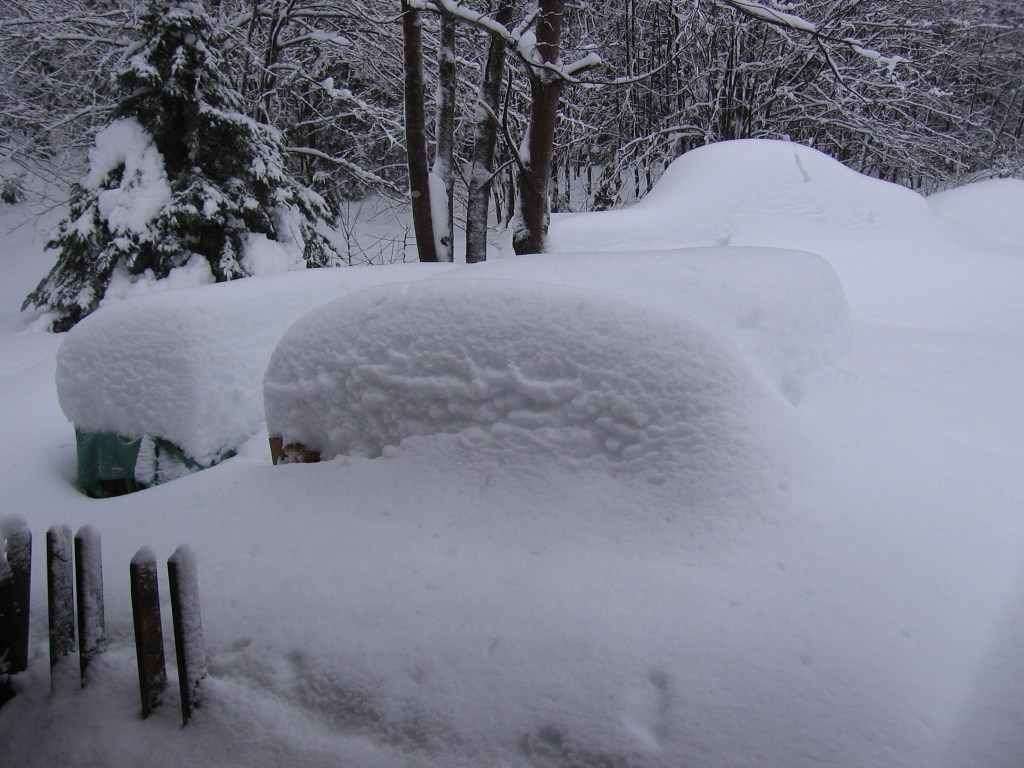
I kept shoveling my deck throughout the storm, finding it hard to move even 20 cm of the white stuff. I record our weather, including snowfall and rainfall amounts, so I measured snow depth every time I shoveled. I also left a couple of blocks untouched so I could verify the accumulation. But the snow was compacting so rapidly under its own weight that those blocks were shrinking even while it was still snowing. I estimate I got 90 cm, or 3 ft, of snow (on top of ~18″ already on the ground). It was wet and finely textured and temperatures were mild, so it compacted into a dense 2′ deep layer covering everything. (Like many a Canuck of a certain age, I switch between metric and imperial units somewhat randomly.)

Those lumps are 4′ tall wood stacks buried in snow. My old truck is the bump at the back.

And we got off lucky. Sydney and environs got a whopping 5 ft (1.5 m) of snow in places. Short people and children could vanish! Drifts were double that and more, not to mention massive plow banks. Chaos ensued. Cape Breton shut down for the week. No school, no transit, and many stores stayed closed. The police begged people to stay home. Those who ventured out got stuck and left their vehicles strewn along the road, hindering clearing efforts. Even snowplows were getting stuck. Or breaking down. Or both.
Cape Breton is a snowy place and it’s not unusual to have deep snow in February, but it is unusual for so much to fall all at once. We get a lot of our snow from nor’easters: low-pressure systems formed when cold continental air carried on the jet stream meets warm Gulf-stream air off the east coast. The moisture-laden system tracks northeasterly and counter-clockwise winds dump copious amounts of precipitation on the eastern seaboard. Once the system arrives southeast of Cape Breton, we get lots of heavy snow – often 1-2 feet. Then the system continues on its merry northeast trajectory and dumps on Newfoundland. But this particular nor’easter got derailed. It somehow slipped off the jet stream and stalled just offshore. It kept churning in circles and dumping snow for days.

This is off the NOAA website and focuses on New England, but Cape Breton is the green blob in the upper right. Once the storm is southeast of Nova Scotia we get northeast winds and wet snow – lots of it.

A historic winter storm deserves a name, but nothing really stuck. Snowmaggedon and its counterpart, Snowpocalypse, were invoked and certainly fit, but neither is original. I heard Frigid Fiona (after Hurricane Fiona) but that’s not quite right because it wasn’t very cold – which was part of the problem. I dubbed it the Great Groundhog Day Dump, which makes the date easy to remember, but that’s not quite right either. Yes, the storm started on Groundhog Day, but it lasted much longer than a day, which was also part of the problem.

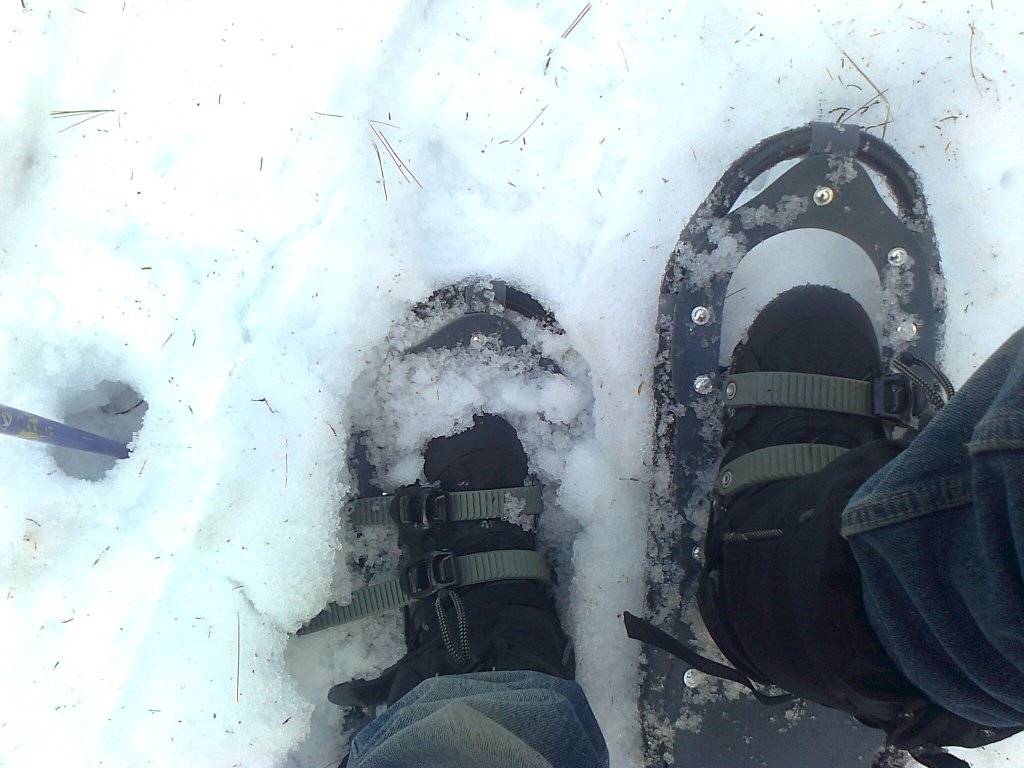
The snow finally eased up on February 5th, but we still had to dig out. I was snowbound for a week. Not trapped inside my house (although this happened to a number of people whose doors were blocked by snow) because I (cleverly) have doors that open in and are protected by overhangs. But my vehicle was trapped for a week, even though I had (again, cleverly) parked down at the road ahead of the storm. I have a long driveway, some 350 m., so once the snow gets deep I snowshoe in and out rather than trying to keep it plowed.

With so much snow I feared I’d sink in to my thighs if I waited to break trail so I started while it was still snowing on Saturday. The snow was an odd consistency and I was bogging down unevenly. Down to my knees and then to my ankles and then to my shins, leaving tracks of all different depths instead of a level trail. I didn’t get far before I retreated.

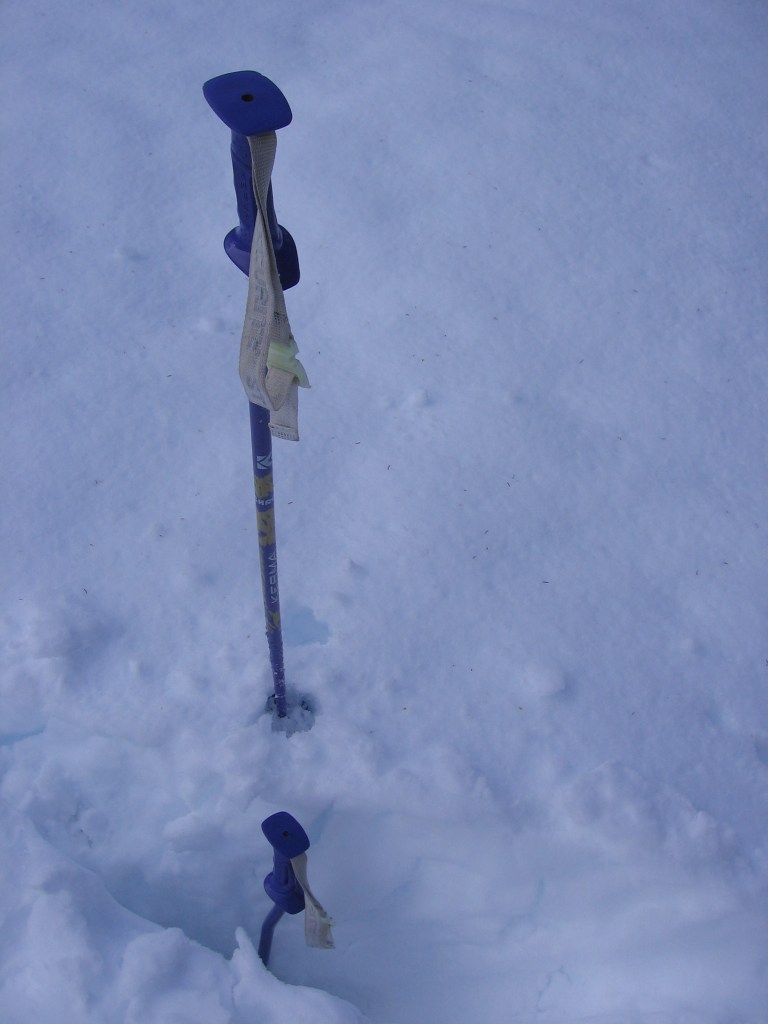
Sunday I was too busy shoveling to snowshoe, but on Monday I tried again. A moose had plowed through the snowbank onto my driveway and punched a meandering set of deep holes into the drive. I was skirting moose holes and my own uneven tracks and still sinking in to different depths. My poles would be there for balance and then vanish into the void. I made it about 1/4 of the way to the road before I gave up. Between the moose and me my trail was an utter mess of uneven holes.

Tuesday came and try, try again. My driveway was dreadful so I climbed 2 feet up onto the bank. I was still sinking in but evenly – better! Moose had plowed a few trenches through the bank so I had to leap across the gaps – exciting! I got halfway to the road – progress!

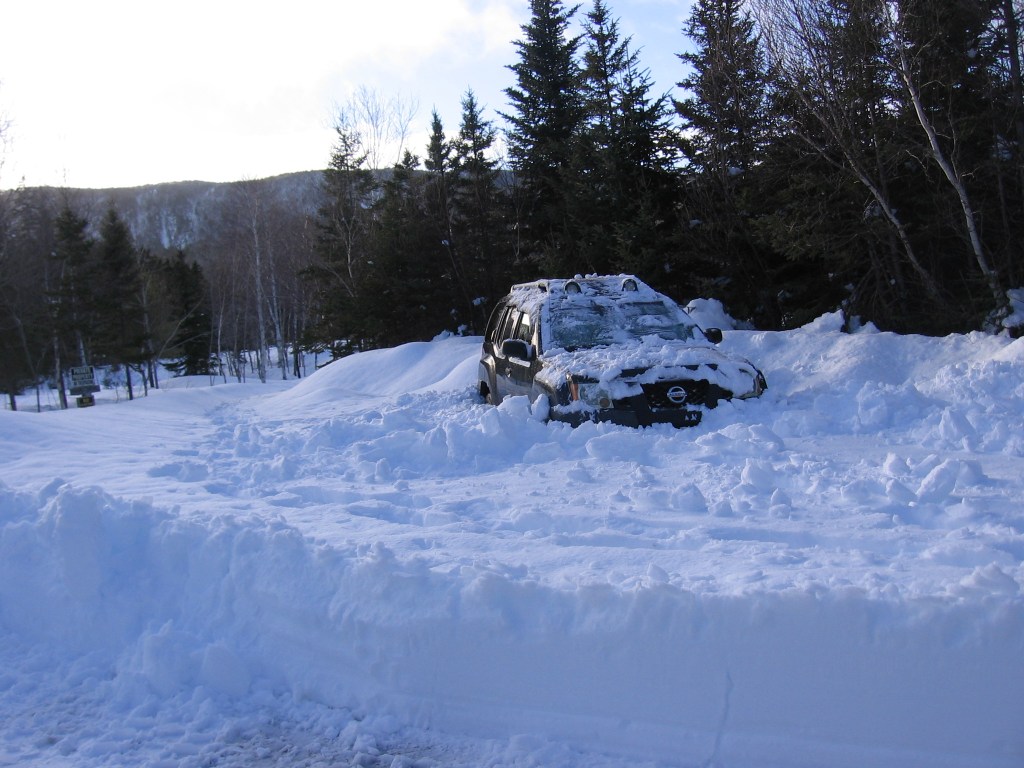
Later that day I was outside fetching firewood and heard the beep-beep-beep of a reversing vehicle. It sounded like it was right at the bottom of my driveway. Could someone be clearing around my vehicle? Intrigued and motivated, I set out yet again, maneuvering through the obstacle course of pitfalls. And so, four days in and on my fourth attempt, I finally made it to the road. My vehicle was encased in snow, barely visible. But the road in front of it had been cleared – exciting!

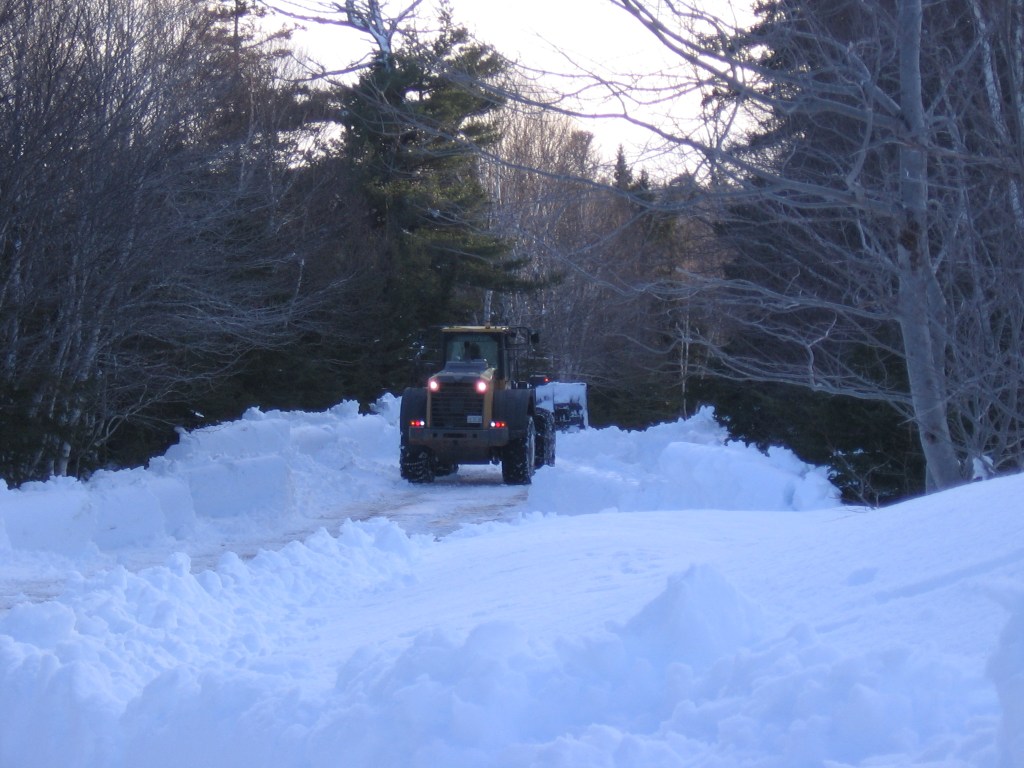
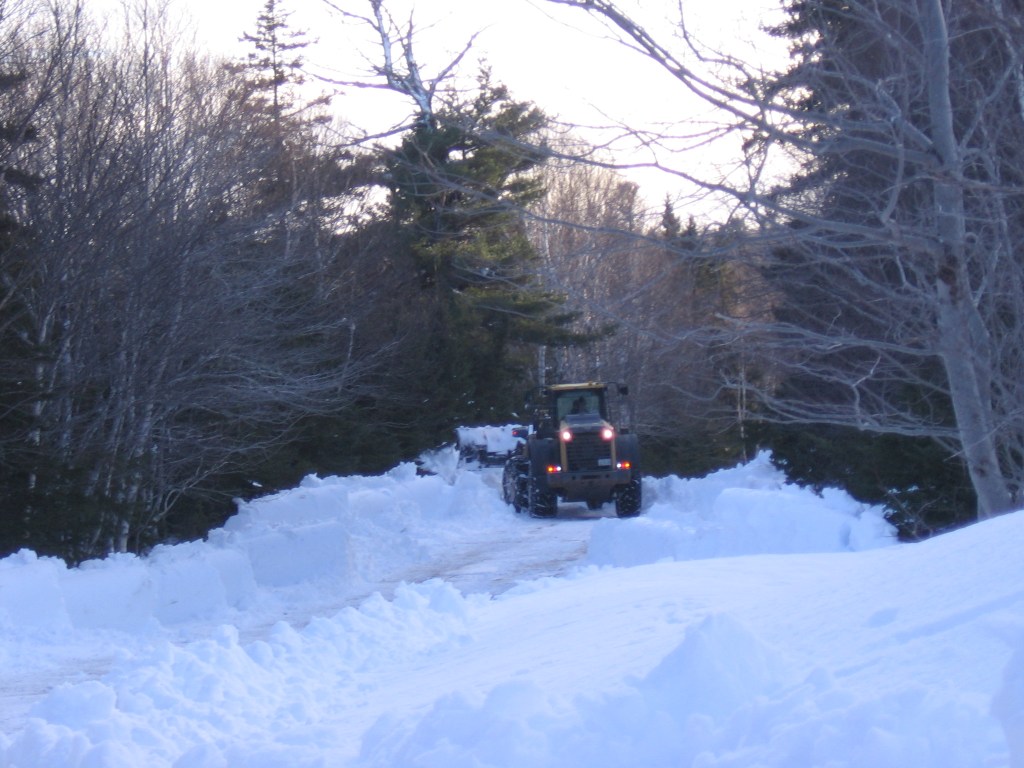
The beeping machine had moved farther down the road. It was a front loader, clearing a lane along our side road four days after the storm began. Usually the county plow gets to us within a day or two of a snowfall, but this time the plows skipped side roads. It was a Herculean effort just to keep one lane passable on main roads like the Cabot Trail. So our little road filled with snow until it was too deep and heavy to be plowed. It took a front loader to do the job. Push snow with the bucket, lift and roll the load against the side of the road. Reverse – beep-beep-beep – and repeat. It was very slow going, but buddy was getting ‘er done, one bucket-load at a time.

I was strangely elated to see that front loader slowly clearing our road. I wished I’d arrived a few minutes earlier so I could wave and grin and shout my thanks to the driver. But I doubted he’d appreciate an idiotic pedestrian standing behind him when he went beep-beep-beep into reverse.

On Wednesday the temperatures plummeted. My driveway, a mess of uneven holes, turned into a frozen mess of uneven holes. I realized that my earlier forays had been folly. Had I just waited I could’ve snowshoed out on top of the snow. Sometimes procrastination pays. And hindsight is always 20/20.

My own rig was still encased in snow, almost invisible. I’d parked as far back as I could to accommodate plowing, so there was some 15 feet of 2′ deep compacted snow between my rig and the road. On the plus side, standing atop that snow in my snowshoes meant I could actually reach the roof of my vehicle. It still took over half an hour to clear the roof and hood. Then I took off my snowshoes and walked down the road to visit my neighbour and share storm stories.

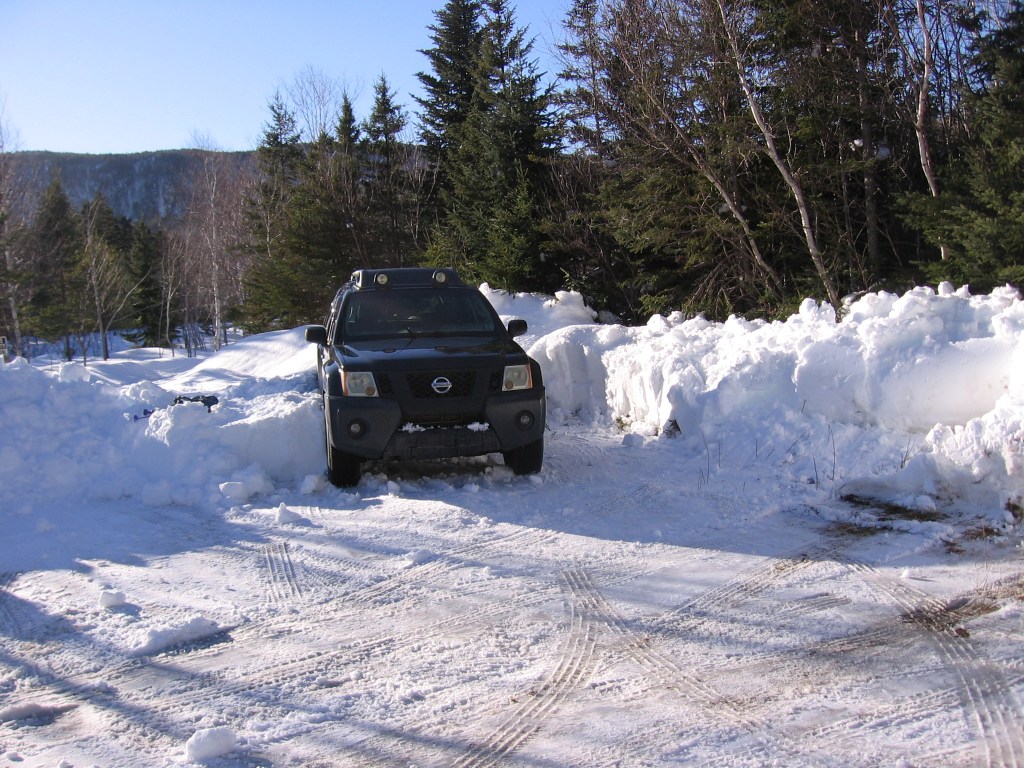
A couple of days later I got a call from that same neighbour. Unasked and unbeknownst to me, he spent almost 3 hours clearing the snow around my vehicle by hand, using a scoop. My back hurt just thinking about it. So, eight days after I’d parked at the road, I was free! I snowshoed out and went for a drive. Not far, just a kilometre down the road to thank my neighbour for his hard work and kindness.

And that’s Cape Breton all over. Weather can be challenging here, but people step up and help out. This storm was especially difficult. The snow was too deep and heavy to move with a regular truck-plow setup – it required tractors with snow-blower attachments, bulldozers, front loaders – heavy equipment. Operators, public and private, went non-stop trying to clear roads and driveways, but couldn’t keep up. And equipment kept breaking down. Or getting stuck.

But people pulled together. Hats off to the people who worked endless hours to clear snow. Neighbours helped neighbours, digging out doorways blocked by deep snow, clearing driveways and cars, snowshoeing or snowmobiling in to the housebound with food, medicine, and company. Local CBC radio programs gave us information and a feeling of connection, even in our individual isolation.

Cape Bretoners are renowned for their hospitality, hard work and helpfulness. I have always been helped out my neighbours, from my first winter house-sitting ‘down north’ near Bay St. Lawrence to my years here in the Holler. I didn’t ask my neighbour for help, but he saw a need and got ‘er done.


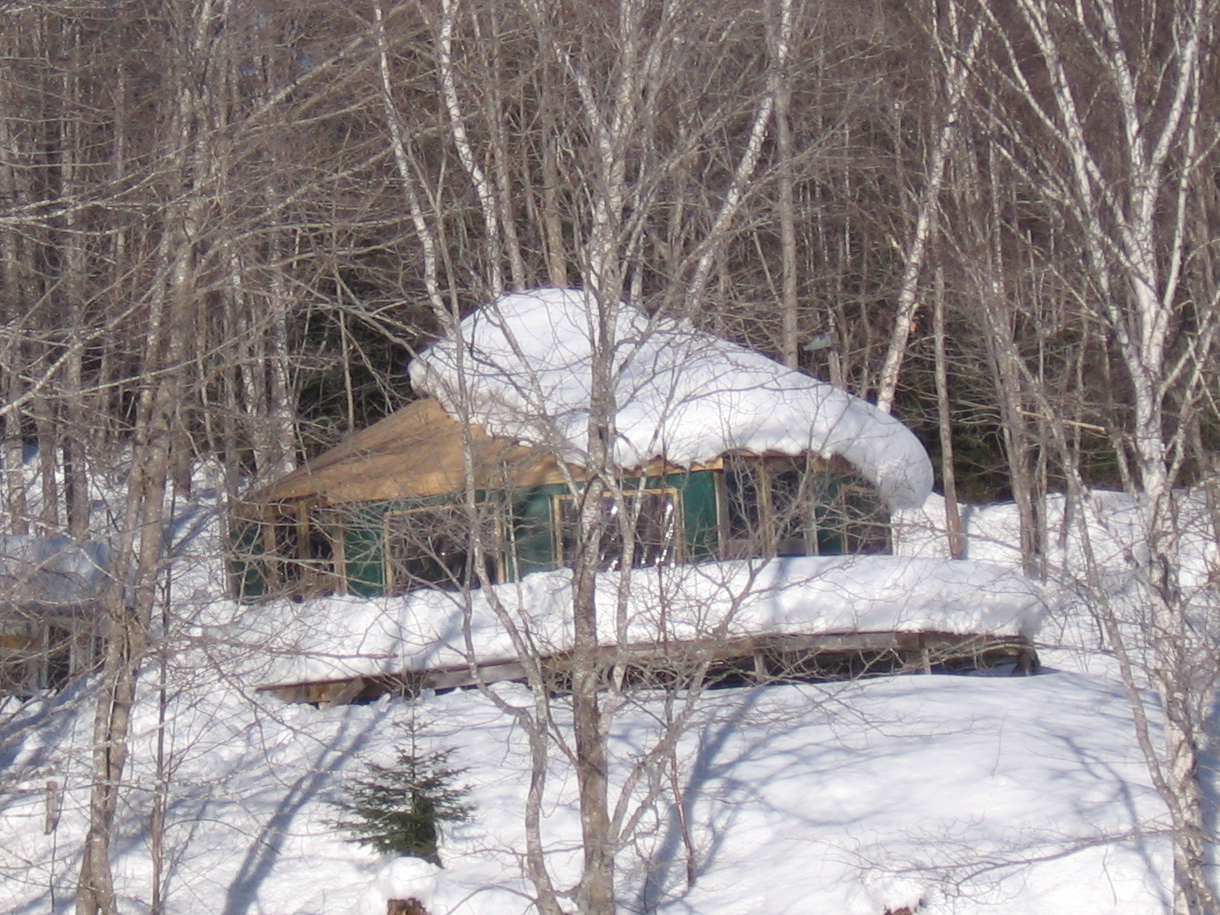
After freeze up the snowshoeing was great. I did a few fun forays and discovered that Yellowbird, a ramshackle cabin that was on my land when I bought it, had finally collapsed under the weight of the snow. I also saw 3′ deep trenches through the snowy woods, plowed by meandering moose. Snow this deep is a challenge even for these long-legged beasts.

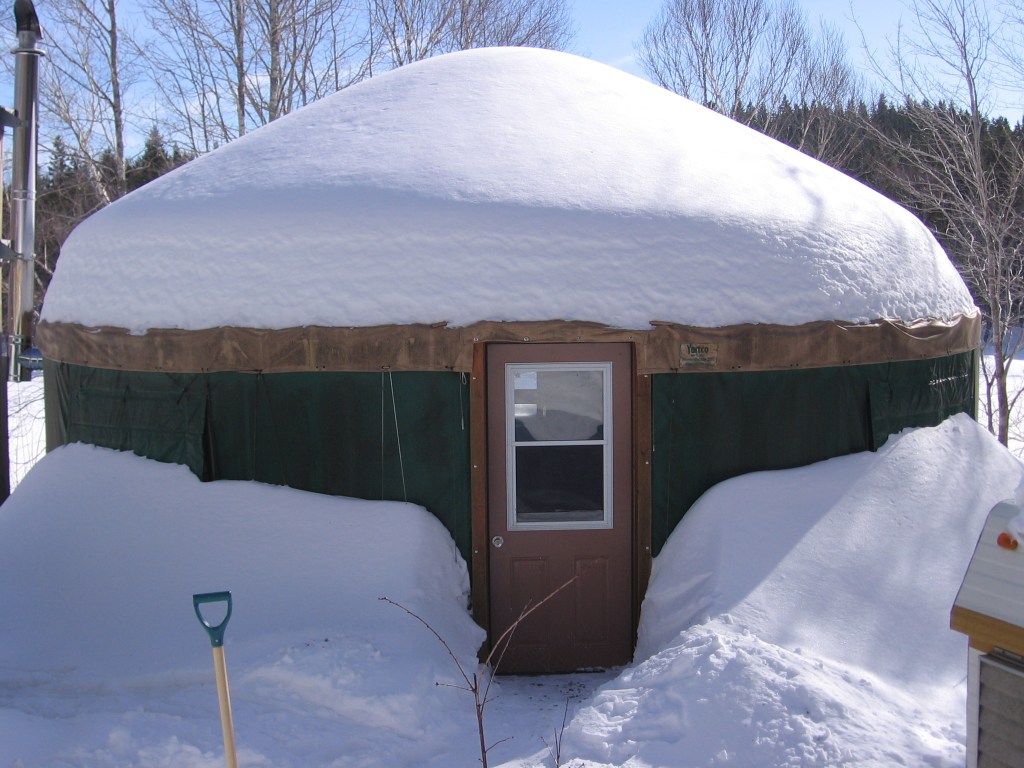
In the end I was storm-stayed for a week but that was fine. I’m a somewhat solitary animal anyhow and had plenty of food because I always stock up for winter. The less I have to haul in by sled, the better. During the yurt years I had to haul everything in, including drinking water. I didn’t have running water or storage space, and the yurt would freeze on cold nights. I wonder how I did it. Winter in my cabin is comparatively easier, but still a challenge. Of course, I’m also older. In fact, it seems I am getting older every year.

I marked a birthday in February, one of the reasons I’m fond of this month. And now, writing on Leap Day, I must say that February 2024 was a doozy. It started with the Great Groundhog Day Dump. We were still digging out when it warmed up and dumped 84 mm of rain on all that snow, followed by a hard freeze. One day I was snowshoeing on and around the banks of the pond. The next day everywhere I’d been was under water as the pond rose to flood levels. And today, on Leap Day, we mark the exit of this marvelous month with crazy mild temperatures, rapid melting, rain and gusty south winds – all to be followed by a rapid hard freeze and then snow squalls to welcome in the month of March. Never a dull moment here in the Holler.

Sue McKay Miller
February 29th, 2024

p.s. I wrote this on Leap Day but didn’t post it until March 1st. Happy St. David’s Day! (It’s a Welsh thing.)

Rain and melt and a hard freeze in one day – the pond is way up and the icicles are way down.

Fabulous February

Okay, I’m biased. February is my birth month. I liked being a February baby, maybe because it’s an oddball, quirky month and I was an oddball quirky kid – a left-handed, redheaded tomboy. It’s a short month that gets the longest mention in that familiar rhyme.

Thirty days has September,
April, June, and November,
All the rest have thirty one
Save February at twenty eight
But leap year, coming once in four
February then has one day more.

‘I am a groundhog. Hear me squeak.’

And guess what? 2024 is a Leap Year, so we get to enjoy a whole extra day of this fabulous month. My birth month takes a lot of flack. People complain because it’s cold and snowy. They even complain about its name. Granted, it is a bit awkward. Feb-RU-ary? The hosts of ‘As It Happens’ on CBC always make fun of the ‘RU’ part. And I always mean to write a letter explaining that, according to Webster, Feb-yoo-wary is also an acceptable pronunciation. Me? I usually blend it together and mumble something like Feb-oo-ary.

Given how many times I’ve hear people dis February, I am dedicating this blog to celebrating February – however you say it. I usually try to use my own photos, but I’m making an exception for this exceptional month. Credits at the end of the blog.

Groundhog Day. What other month boasts such a silly ritual? It makes no sense. Especially in Canada where, except on the west coast, the idea of only six more weeks of winter in February is as hilarious as the idea that a rodent’s shadow can forecast the weather. And now it’s a movie. A movie that repeats. And repeats. Every Groundhog Day.

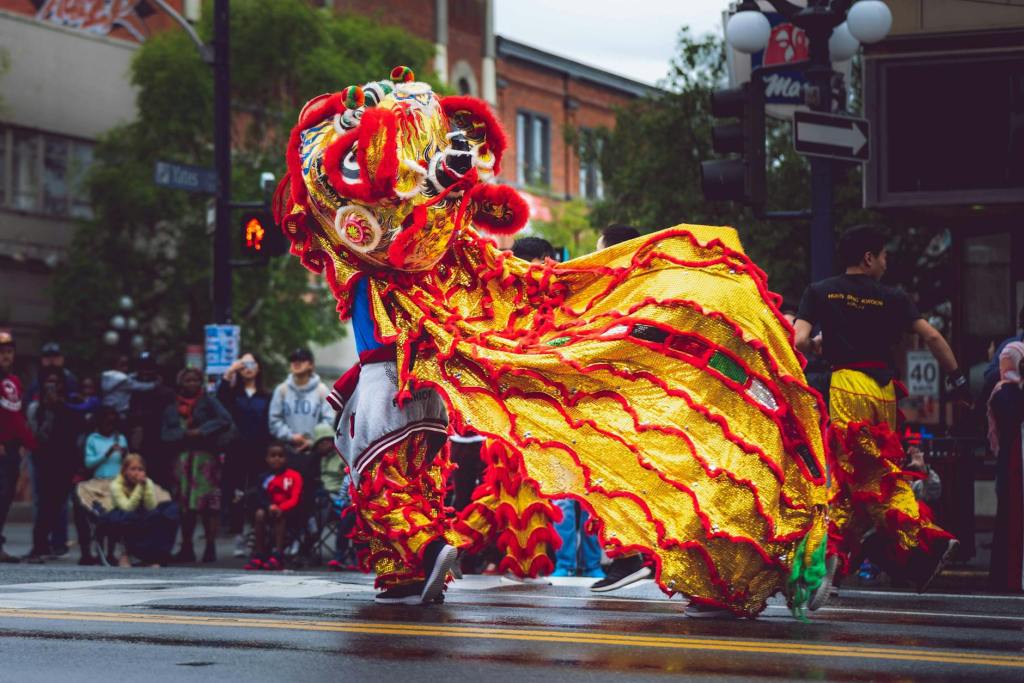
Chinese New Year is based on the lunar calendar and shifts around, but in 2024 it’s on February 10th. This is the Year of the Dragon and should be a colourful celebration. My son has Welsh blood, and the Welsh are also big on dragons. In fact, they like them so much they put one on their flag.

February is the month for the Winter Olympics. No Winter Olympics this year, but Calgary hosted the 1988 Winter Olympics and it was a whole lotta fun. My young son and I went to see the ski jumping and witnessed the debut of Eddie the Eagle. No one could appreciate the true distance these athletes flew until Eddie from England landed so far short that we were all astonished. Then we applauded and cheered. Eddie was dubbed ‘the Eagle’ and became a popular favourite. We admire winners, but we love underdogs. And speaking of underdogs, that was also the year of the Jamaican Bobsleigh team. Another February movie was born.

This is not Eddie the Eagle.

In 1990 Alberta became the first province to declare a statutory holiday in February. And it just so happened that it fell on my birthday that year. I was pretty chuffed. Don’t we all feel like we should have a holiday on our birthday? Since then many other provinces have followed suit. Now we have Heritage Day in Nova Scotia, and, as it happens, it falls on my birthday this year. Somehow it’s not quite as exciting now that I’m retired.

Celebrating my 50th in the yurt, complete with fiddlers, step dancers and (maybe a bit too much) Irish whiskey. That’s Tundra in the bottom left.

Valentine’s Day, on February 14th, is also less exciting for me now, at least in terms of getting cards and flowers and such. (Ah, there was a day …) But this day is very special for another reason – it’s the anniversary of my two favourite people. This day of love marks the years of love between them. And as anniversaries go, it’s an easy one to remember.

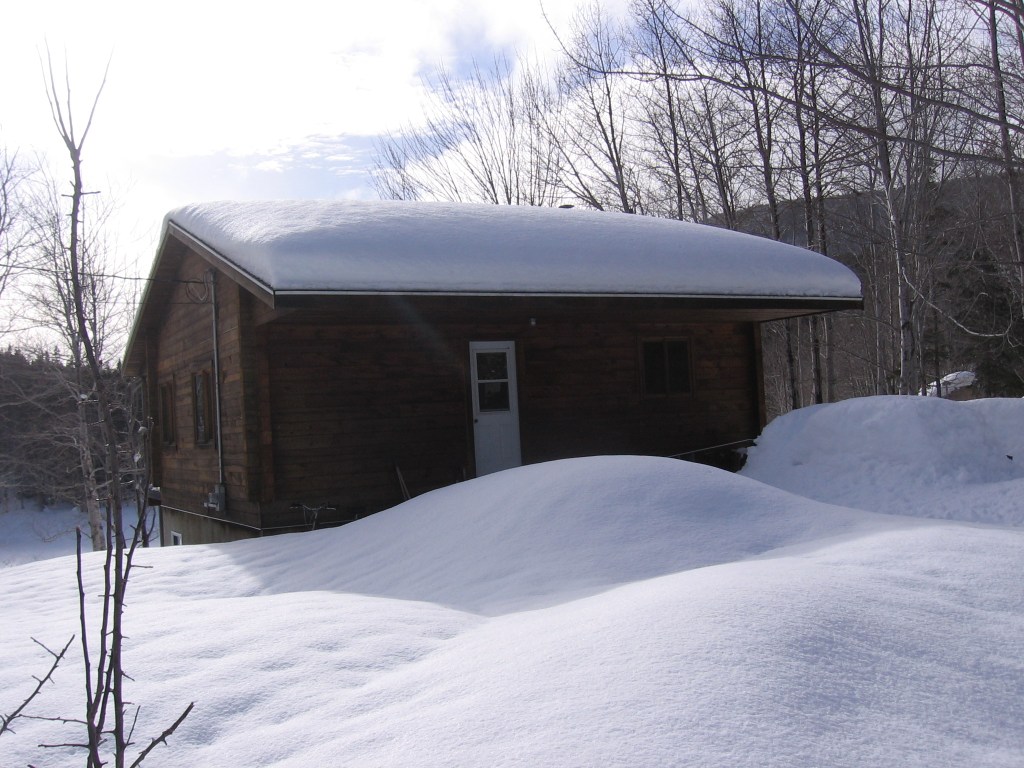
February has a few other anniversaries that are personally meaningful. Back in 2003, after a few months of negotiation, I finally bought my land in Cape Breton. By chance, the deal closed on my birthday – and what a fantastic birthday present it was! I moved onto the land in the summer of 2004. Ten years later, on Feb 7, 2014, I moved from my yurt into my comfy log home. Hard to believe that 2024 marks 10 years in my cozy cabin.

For winter haters, February can be abysmal. It can be the coldest and snowiest month of the year. But for winter lovers, February is the time to enjoy skiing, skating, sledding or snowshoeing, followed by a warm drink by a cozy fire. My favourite winter activity is tracking animals on snowshoes. I wrote about this in The Secret Lives of Animals. The snow reveals who is out and about. Snowshoes allow me to bushwhack through the forest following those tracks and find out where those animals came from and where they are going.

Like most children, I loved winter and had tons of fun in the snow. I also had the great good fortune to grow up skiing. My English father took up the sport and took my older brother and me skiing in the Rocky Mountains every Sunday, from opening day until the last of the spring skiing. Other kids had to go to church, we worshiped at the alter of the mountains. The highlight of the ski season was in February, when schools closed for Teachers Convention, giving us a four-day break. We’d meet up with my dad’s friend and his daughter and spend all four days skiing. We’d start in Kimberley, BC, and then drive down to Whitefish, Montana, to ski amongst the towering snow ghosts on Big White. In the evenings my friend Ann and I felt very sophisticated as we sipped our Shirley Temples.

The Miller family at Sunshine Village in Banff National Park, in the mid-’60’s. We weren’t quite as fuzzy and faded as this old photo suggests.

But winter isn’t all fun and games. It can be difficult and challenging. When the third nor’easter in a week dumps a load of wet heavy snow, when we get weary of toting firewood to keep the stove going, when vehicles are buried and roads are treacherous. And then there’s the short days and those long nights. That’s where February, while it may be cold and snowy, has a special pick-me-up for winter-weary folk – we reach the midpoint between winter solstice and spring equinox.

The Gaels celebrate this occasion on February 1st with the traditional festival of Imbolc, also known as St. Brigid’s Day. In 2024 the midpoint falls on February 3rd. And while it’s true that the days start getting a wee bit longer after winter solstice, it’s in February that I really notice the days stretching out and the sun getting higher. In my yurt I would mark the day when the sun would get high enough to shine through the overhead dome. The yurt was like a mini Stonehenge, marking seasonal changes within its circle. I still track the northward progression of the sun by watching where it sets behind the highlands. This photo was taken the eve of February 1st.

The sun sets a little farther north each day as we head towards the spring equinox.

On clear nights in February I see the winter constellation Orion heading for the hills in the west as Leo rises in the east, heralding the news that spring, while not here yet, is coming. I once read this phrase about February in the Farmer’s Almanac: ‘Winter’s back is broken‘. That’s how it feels to me. It may be the month of the full Snow Moon, but the days are longer, the sun is higher, and while there is almost certainly a lot more than six weeks of winter to go, it’s time to embrace the winter wonderland knowing that it won’t last forever.

So strap on your snowshoes or skates, or maybe just bundle up for a bracing walk. Then enjoy a hot toddy or hot chocolate by the fire and immerse yourself in that big fat book you’ve been meaning to read. Put on a pot of soup or start a jigsaw puzzle or kiss a groundhog. February is fabulous, but it’s short – so don’t miss a minute!

Sue McKay Miller
February 2nd, 2024

p.s. What did I forget? Let me know a few of your favourite things about February in the comments below.

My driveway in February 2019. Sometimes the road looks long, but we’ll get there in the end!

Photos from pixel.com: Groundhog by Oleg Mikhailenko; Chinese dragon by Vlad Vasnetsov; Welsh flag by Lisa Fotios; Ski jumper by Todd Trapani.

The Colours of Winter

Cape Breton boasts a coat of many colours. From the bright greens and colourful wild flowers of spring, deepening into the mature greens and late bloomers of summer, and climaxing with the spectacular flaming foliage of fall. This glorious palette is set against the brilliant blues of sea and sky.

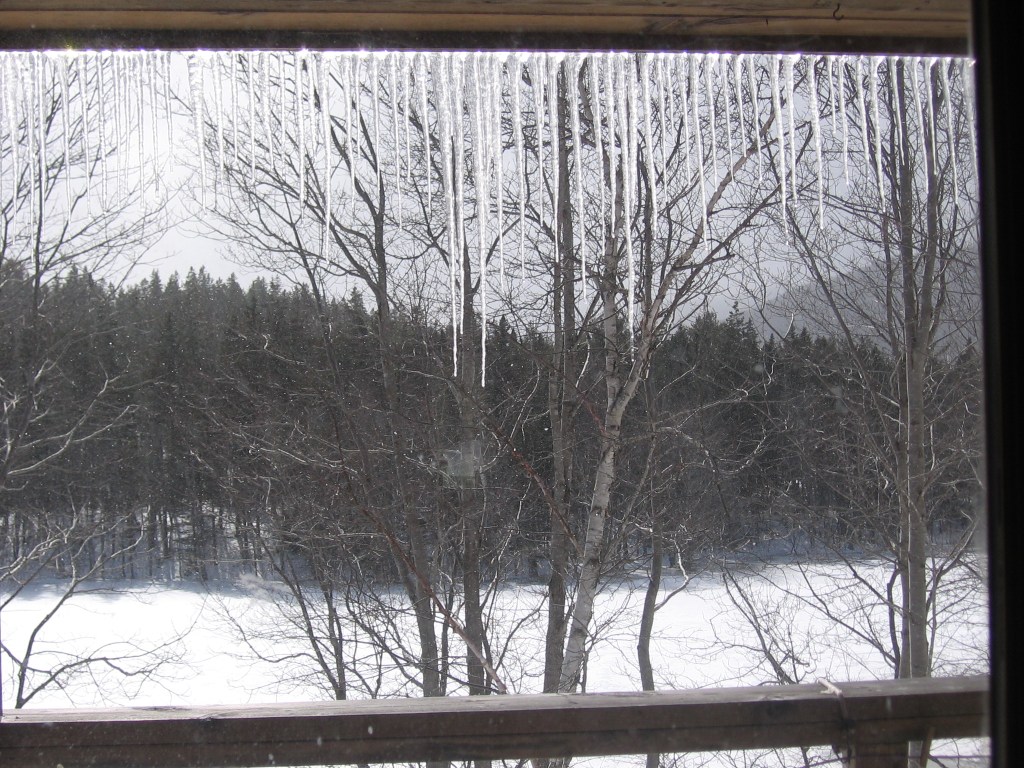
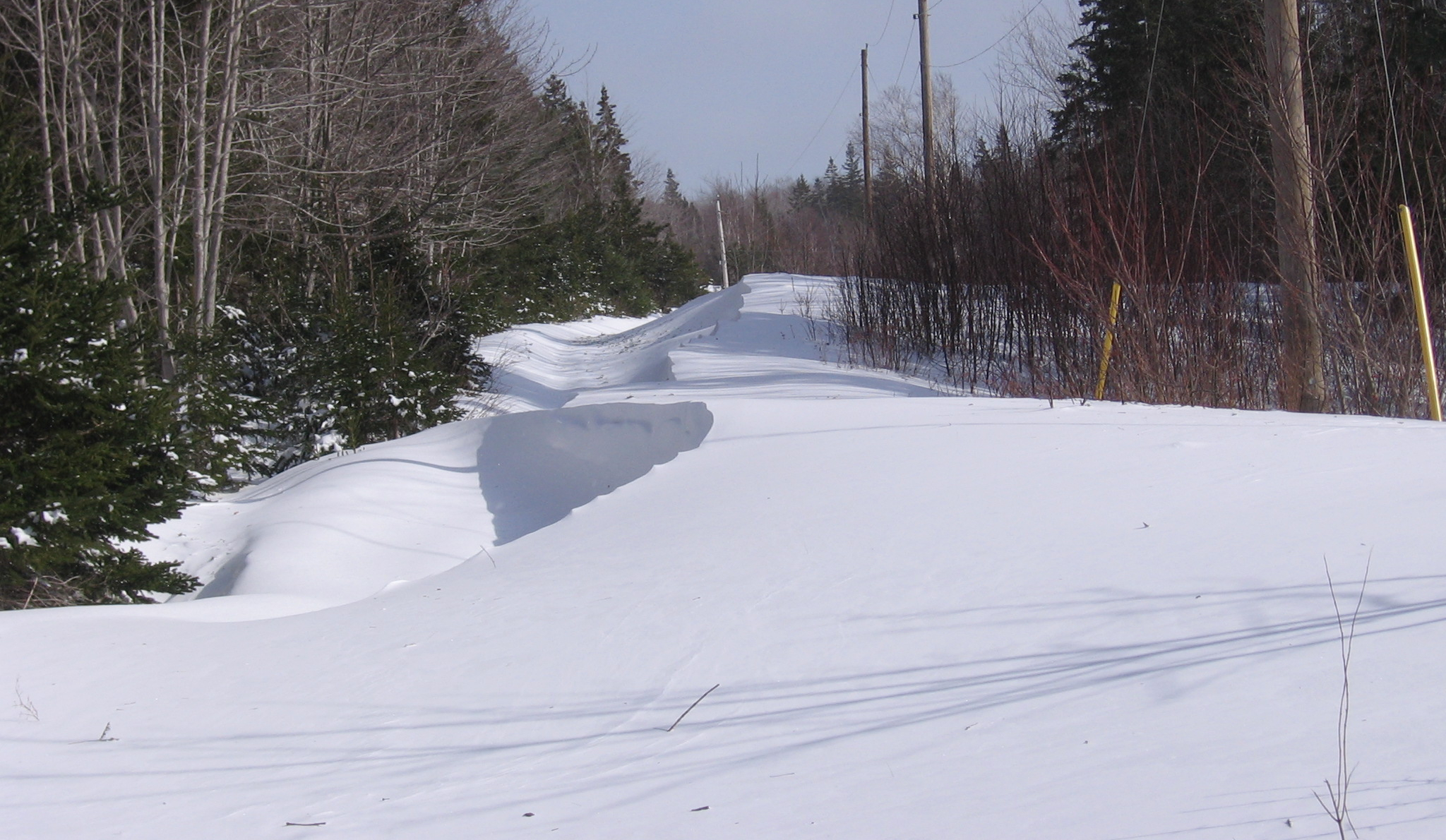
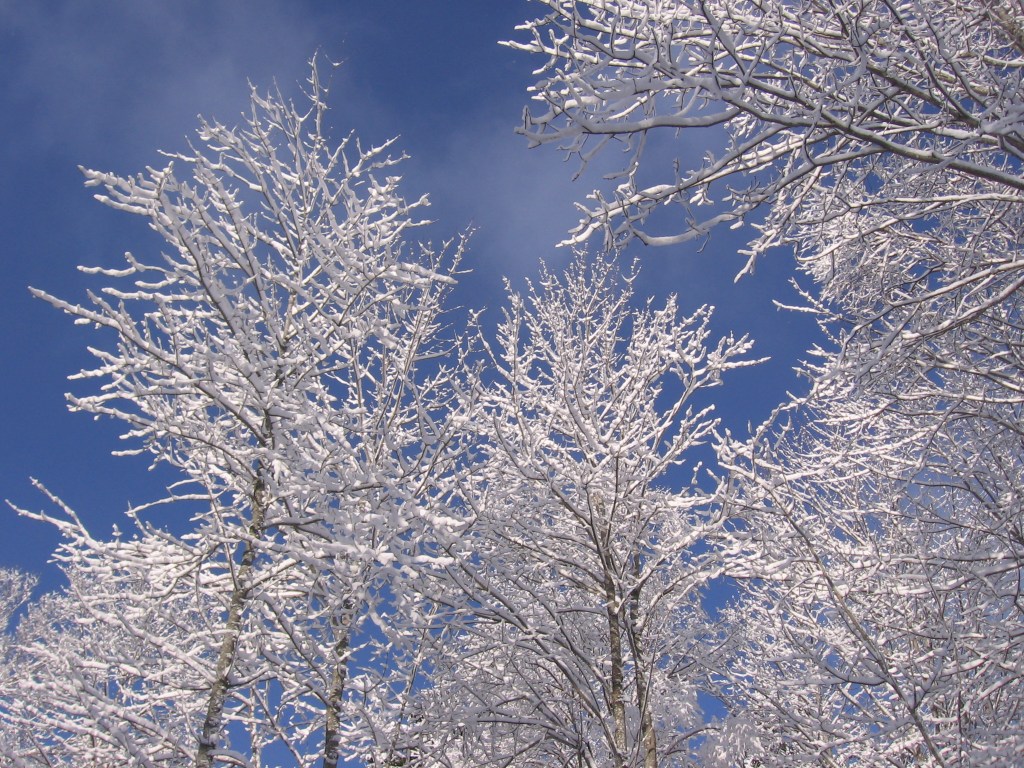
Winter has its own special beauty, featuring wind-sculpted snow drifts, lace spun from ice, and abundant patterns and textures illuminated by light and shadow. I explored this aspect of winter in Winter’s Art Gallery. But for all its icy beauty, Winter seems to specialize in monochrome, like a photographer who works in black and white, or a blue-period Picasso.

This is a colour photo but you wouldn’t know it.

And yet there is colour in winter, all the more special because it stands out against winter’s white. So here is another wintry art gallery, this time focusing on the colours of winter, captured over the years here in the Holler. I hope these colours brighten your day as we make our way toward Spring Equinox. And remember, you can click on small pics to see them full size.

Digging the Winter Blues

Winter days are not always grey, and on sunny days those blues really pop when contrasted with bright snow white. What makes that sky so blue?

The short answer is Rayleigh scattering. We know that visible (white) light is composed of a spectrum of colours, displayed in rainbows and light refracted (bent) by a prism. Light has wave-like properties, and the red end of the spectrum has longer wavelengths while the blue and violet light have the shortest wavelengths. As yellow-white sunlight enters our atmosphere it interacts with air molecules and the waves are scattered. Short wavelengths are scattered the most and thus give the sky its blue colour. (Violet is the shortest wavelength, but there is more blue in sunlight and our eyes are more sensitive to blue.) At sunrise and and sunset, the light travels through more atmosphere. The blue light is scattered away, leaving the longer wavelength reds and oranges to delight our eyes.

Drift ice on the deep blue sea.

Why is the Ocean Blue?

Of course water reflects light like a mirror, as in this photo from Dogs and Drift Ice. But water also filters sunlight. Water molecules absorb more long-wavelength reds and oranges and leave behind the shorter-wavelength blues and blue-greens. So while a glass of water appears colourless, water does have a blue hue that we can see when looking into deep bodies of water like the ocean. Divers observe this blue light because it penetrates deeper into the water than long-wavelength red light.

Winter’s Pond Art

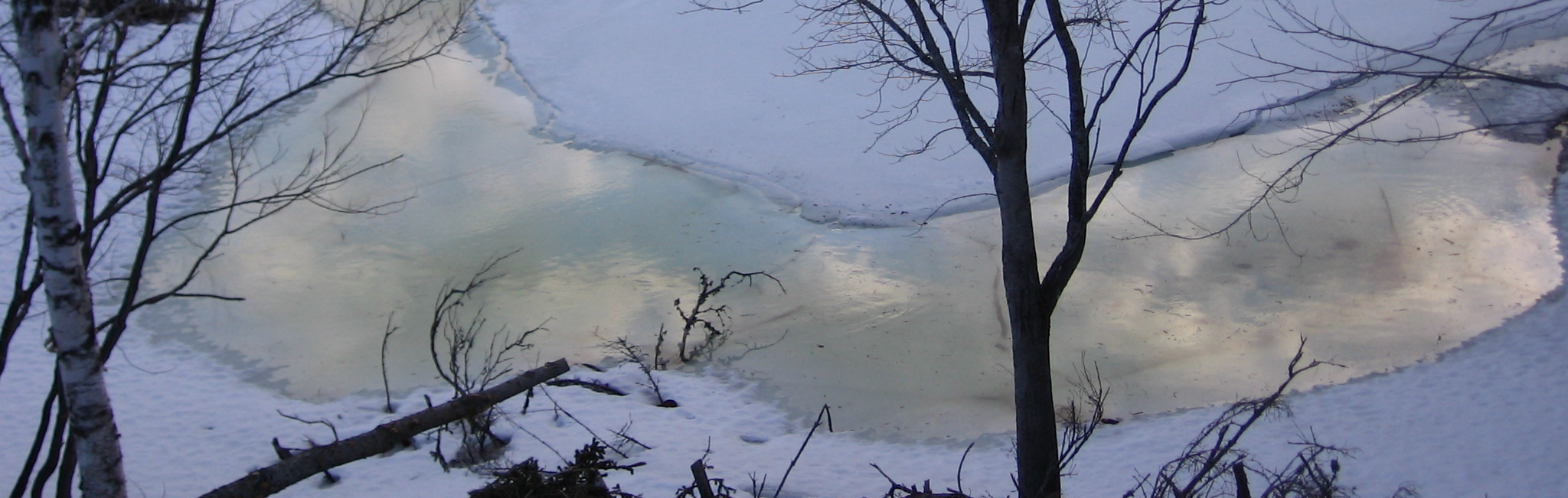
I feel very lucky to live above a pond that offers something for every season. I’ve written about L’il pond and its various inhabitants a number of times, but winter is a surprisingly dynamic season for this little body of water. It goes something like this: Ice forms on the surface as temperatures drop. Snow blankets the ice. Under the ice, just as in summer, (see Ups and Downs in the Holler) water continues to drain out through the permeable soil. As water levels drop the ice eventually collapses under its own weight, sometimes cracking like a rifle shot, other times slumping with a whump.

Pond ice collapses as water levels drop

But of course, this being Cape Breton, sooner or later everything changes. It rains buckets. Or we get a warm spell and a big snowmelt. Or both. Rain water and snowmelt from the highlands pour into the pond, raising the water level. Some ice may be frozen to the ground, but most of the ice surface will be lifted by the rising water. This is one of the miracles of water – most matter is denser in solid form, but ice is less dense than liquid water and thus floats, enabling aquatic life to survive winter’s deep freeze.

So the ice rises along with the rising water, but the ice surface is now smaller than the expanding pond perimeter. Water flows around the edge of the ice, over grounded ice, and collects in low-lying melt-water pools. And it is in these places where water and light do their magic dance.

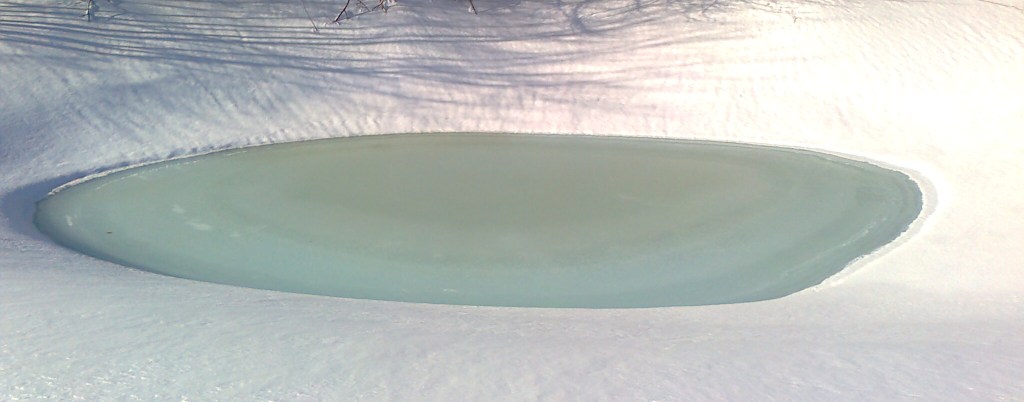
Over the years I have enjoyed a gorgeous array of colours. The three photos below are all of the same place, just below the yurt where I lived for eight years.

A pool like an
ammonite,
a spiral
shining with the
nacre sheen of
mother-of-pearl.

Oh wait!
Now that same
pool is an aquamarine gemstone!

And now, transformed yet again, it’s like an amulet for a giant,
carved from jade.

So if water is true blue, why does it display such a kaleidoscope of colours?

This is a multi-coloured question with a multi-faceted answer. I’m no expert on optics – you could even say I’m walking on thin ice – but here is my best shot. (As always, I welcome your comments and corrections.) Water can take on a variety of colours due to light being reflected, filtered, or scattered; by suspended particles like silt or clay; by dissolved substances like iron or copper; or by microorganisms like bacteria or algae. Or, just to keep things interesting, by some combination of the above.

Take mountain lakes, like Moraine Lake in Alberta, featured on older $20 bills. These lakes are famously turquoise from ‘glacial flour’, finely-ground rock particles suspended in the water column. The rock particles scatter light in the blue-green part of the spectrum, and some is scattered back to the surface to our appreciative eyes. So, suspended particles + light scattering = turquoise lake photo op.

Rivers can be muddy brown or reddish from suspended silt or clay (like ‘The Big Muddy’ Missouri River). If the silt or clay settles out, the water will become clear. Conversely, substances that dissolve in water give it intrinsic colour. Think of rushing rivers in spring, tawny with the dissolved tannins released by decaying organic matter. Water with high iron content may look pale yellow or rust-coloured. Dissolved copper from corroding pipes will give water a blue/green tinge.

Reflections on a Pond

When light shines on still water, some rays penetrate the water and are refracted (bent) while others are reflected back off the surface. Depending on your viewing angle, the water may act like a mirror, echoing the world above its surface. In winter these watery pond mirrors are neatly framed by ice and snow.

You could say this pool of water is sky blue.
And you could say this water is ‘cloudy’.
And you could say … Wait. Spruce trees are green but not that green – and a green sky?

Why is the Water Green?

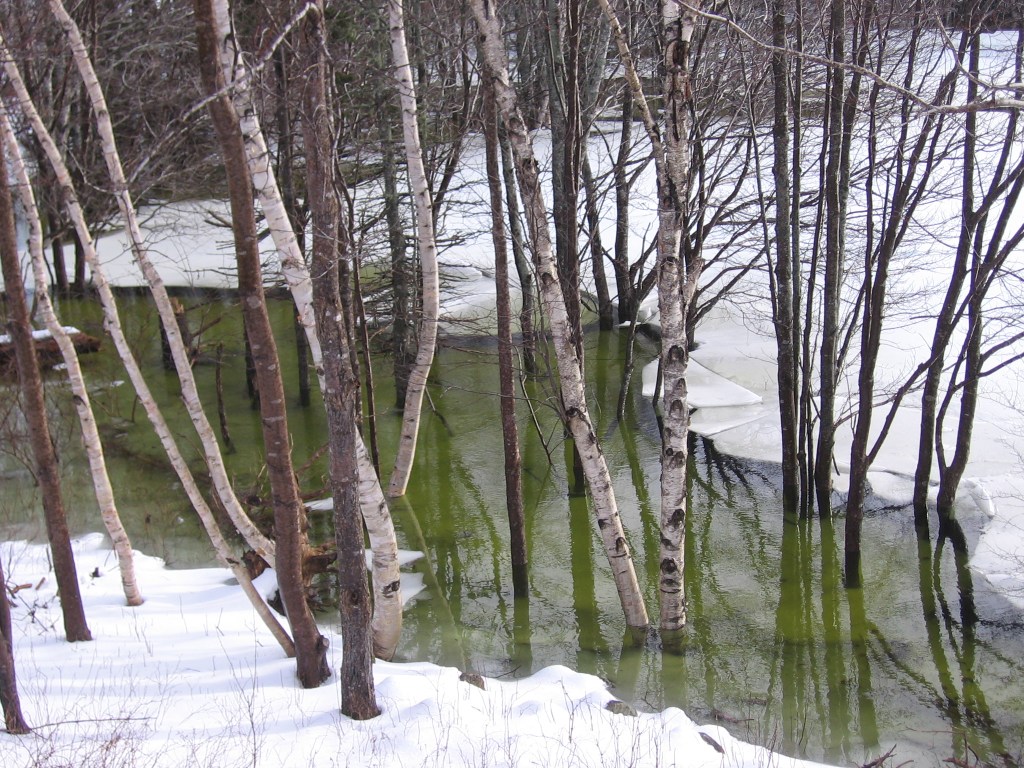
I posted the photos below on Facebook and they sparked a question: ‘Why is the water so green?’ I’d always attributed the pond’s wintry colours to light reflecting and refracting and scattering, but that question got me thinking more ‘deeply’ about that vivid green.

L’il Pond is a lively place all summer, teeming with aquatic plants, including its namesake lilies, that die off each fall. Eutrophic bodies of water like the pond are rich in nutrients, like nitrogen and phosphorous, that allow phytoplankton to thrive. Apparently some of these single-celled algae can survive all winter, feeding from that rich nutrient bath and giving off oxygen that benefits the aquatic organisms beneath the ice. These suspended microscopic algae contain chlorophyll that can give water a green colour. Decaying organic matter consumes oxygen and releases dissolved tannins that dye the water a tawny gold or sepia brown.

Like an artist mixing paint on a palette, winter blends these watercolours to achieve a rich array of hues, from earthy ochres and warm olive greens, to gem-like emeralds, peridots, and the many shades of jade.

Why is the Water Green and Blue?

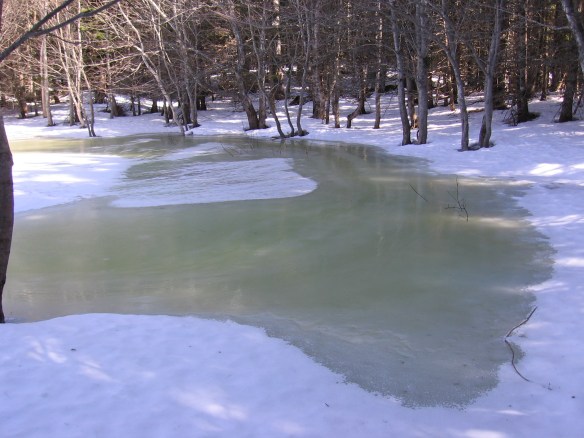
I’ve ‘reflected’ on this and here’s my best guess. The green water at the top is last year’s pond water that escaped to the surface as the ice contracted. It has that rich olive-green colour from suspended and dissolved organic matter as described above. The water on the bottom is fresh from the highlands and relatively pure. It has a crisp minty-blue colour from reflected and scattered light. As the fresh water mixes with the older pond water, winter will blend yet more watercolours to enrich its paintings on the snow-white canvas.


The Colours of Ice

When water retains its colour after freezing, the colour must be due to dissolved or suspended matter that remains captured in the ice lattice. This gorgeous green ice supports the idea that those watery greens were not just a trick of the light.


Delving Deeper into the Blues

I’ve been lucky enough to see glaciers out west and icebergs off the east coast. Both glaciers and icebergs can display striking blues within the white. As with liquid water, both ice and snow filter white sunlight. The surface reflects almost all the light and is a blinding white, but as the light penetrates deeper, the long-wavelength reds are absorbed and the blue and blue-green wavelengths are scattered, some finding their way back to our eyes.

There haven’t been any glaciers in Cape Breton for about 10,000 years, and although we do get smaller ice floes, you have to hop on the ferry to Newfoundland to see the really big bergs. But dig a hole in a snowbank, or look into a crack in the ice, and you might detect a hint of blue.

It was more obvious to the eye, but can you see a hint of blue in this mini-crevasse on the pond?
Leaf: ‘Help! I’ve fallen into a crevasse and I can’t get out!’

Like liquid water, ice can also reflect light for subtle displays of colour, as seen here.


The Colours of Snow – the Shadow Knows (but I don’t)

Next time you’re looking at snow, take a gander at the colour of the shadows. When the sun is low in the morning sky, shadows on snow are a beautiful blue. When the sun is high overhead, they tend to fade to grey, but as the sun drops to the western horizon, the shadows stretch out and shift back to blue.

The length of these tree shadows is an indication of how low the morning sun is.
Later in the afternoon, these beautiful draped shadows are almost as blue as the sky.

Shadows occur when light is blocked – a shadow is the absence of light. When the sun is high a shadow is the absence of white light. That should make shadows black, but often there is enough reflected light bouncing into the shadow zone that they tend to shades of grey. As I described earlier, there are more long-wavelength reds and oranges when the sun is lower in the sky. When this light is blocked, the absence of red and orange light results in a blue shadow, visible on the snow-white backdrop. I think. Maybe.

But it’s more complicated than that. I’ve seen both blue and grey shadows at different times of day. What’s going on? There are a handful of differing opinions on the cause of blue shadows on the web, but which, if any, is correct? I have my own ideas, but I’m not sure if they’re correct either. This is the kind of conundrum my science-geek buddies and I use to discuss over pints at the pub. So if any of you want to join me in puzzling over snow shadows, I’ll buy the beer.

Okay, ‘nuf of dem blues – it’s time to get in the pink. There is a lovely phenomenon known as ‘alpenglow’ when snowy mountain peaks glow rosy pink at sunrise or sunset. But pink snow can be more than just a transient reflection. Algae can lend their colour to snow as well as to water, as shown in the photo below from Dogs and Drift Ice.

Feeling in the pink with watermelon snow.

Our drift ice often displays this red-pink tinge. I’d always heard the colour came from the red soils of PEI hitching a ride, but then why is the red on top of the floe? While writing that blog I learned that pink snow is caused by Chlamydomonas nivalis, a unicellular green alga that contains a red carotenoid pigment called astaxanthin. That’s a mouthful, but it goes by the wonderful moniker ‘watermelon snow’ and can also be seen in the mountains.

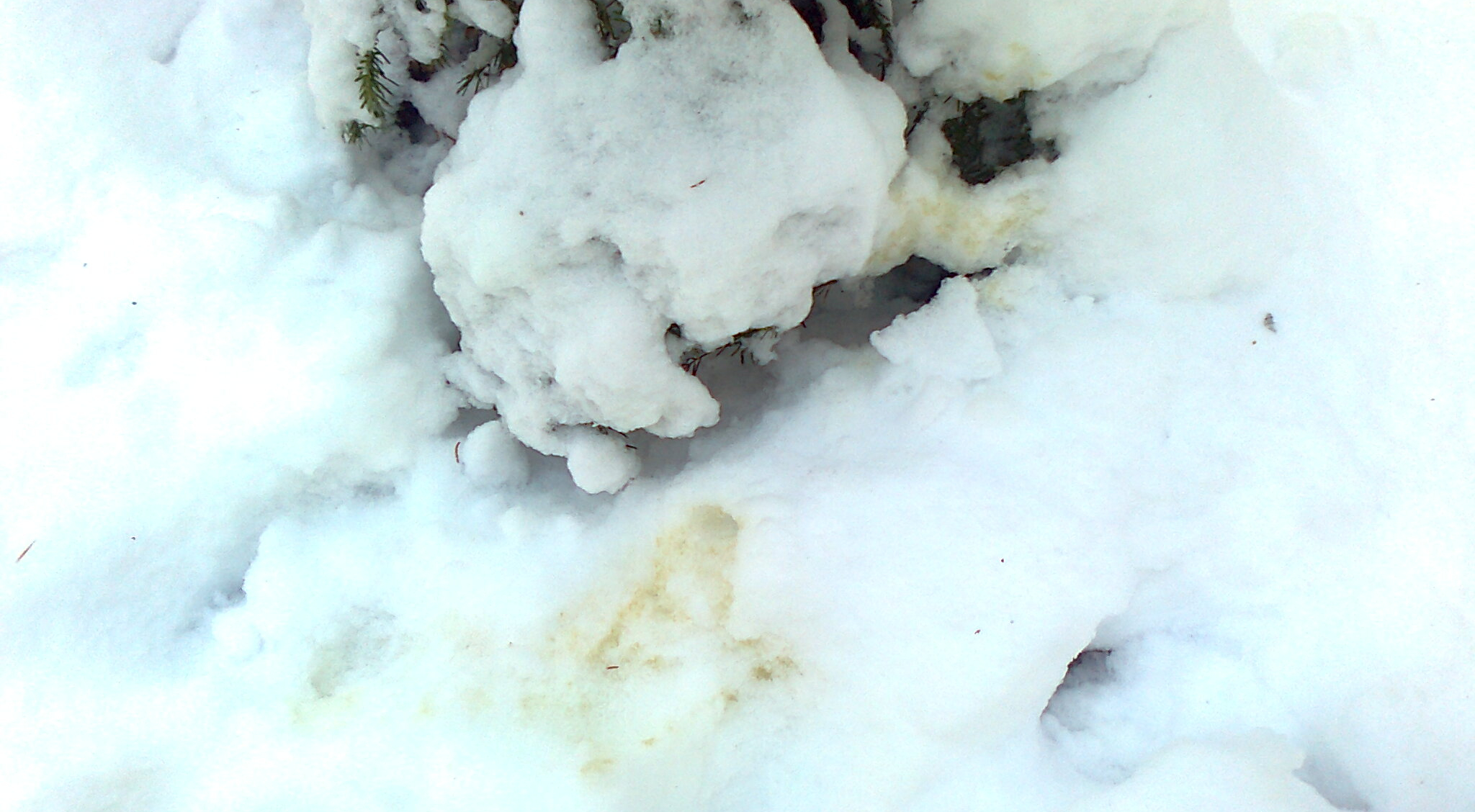
And just a final word of caution about the colour of snow: If it’s yellow? Don’t eat it!

Coyote calling card.

More Colourful Signs of Life

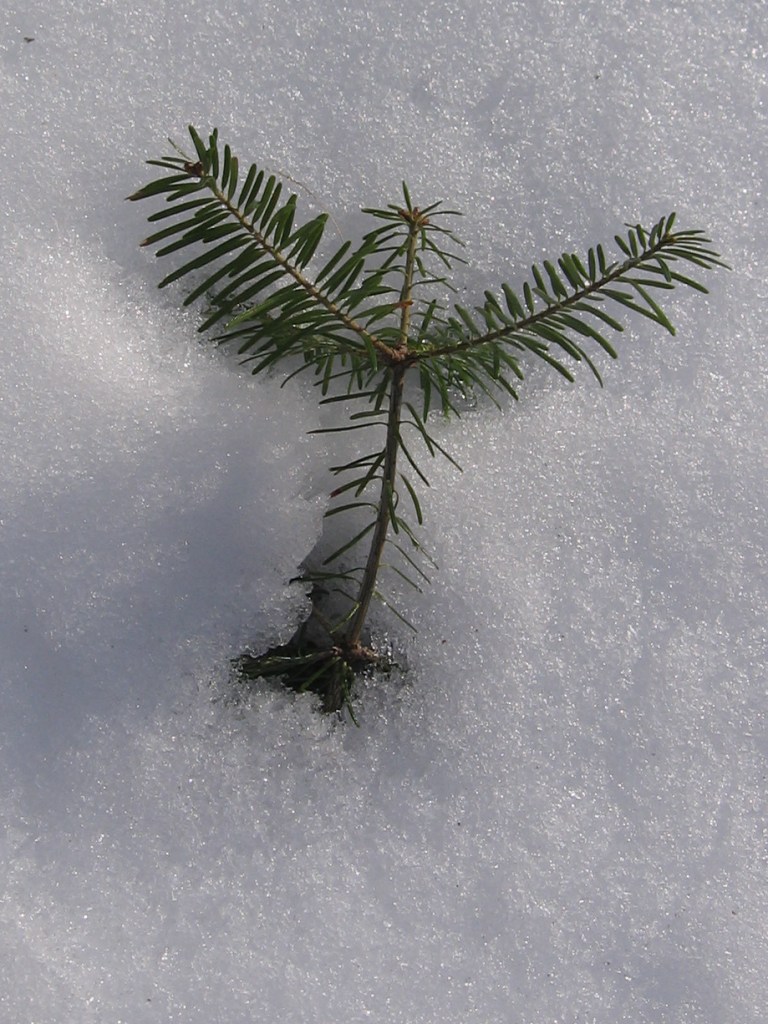
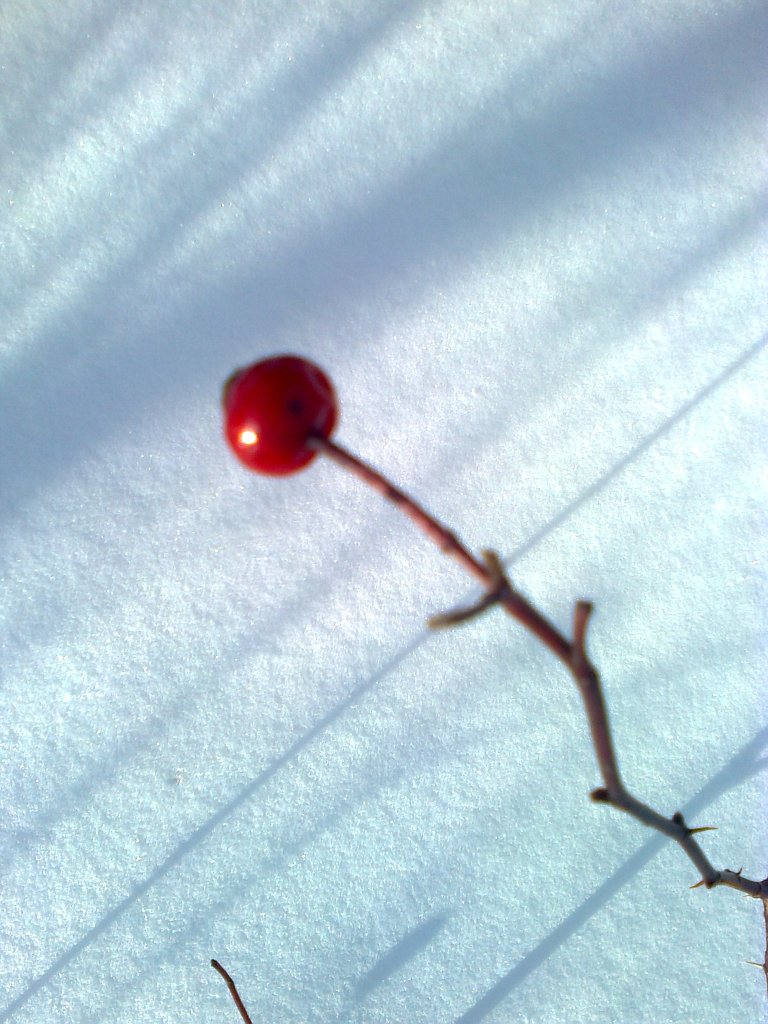
Winter snows cover grass, shrubs, mosses and such with a soft white blanket. Amphibians burrow into mud. Critters go underground or even hibernate. Many of our colourful birds fly south. All those formerly brilliant leafy trees are now bared to their buff. But life goes on in winter and sometimes brings a bit colour into our lives.

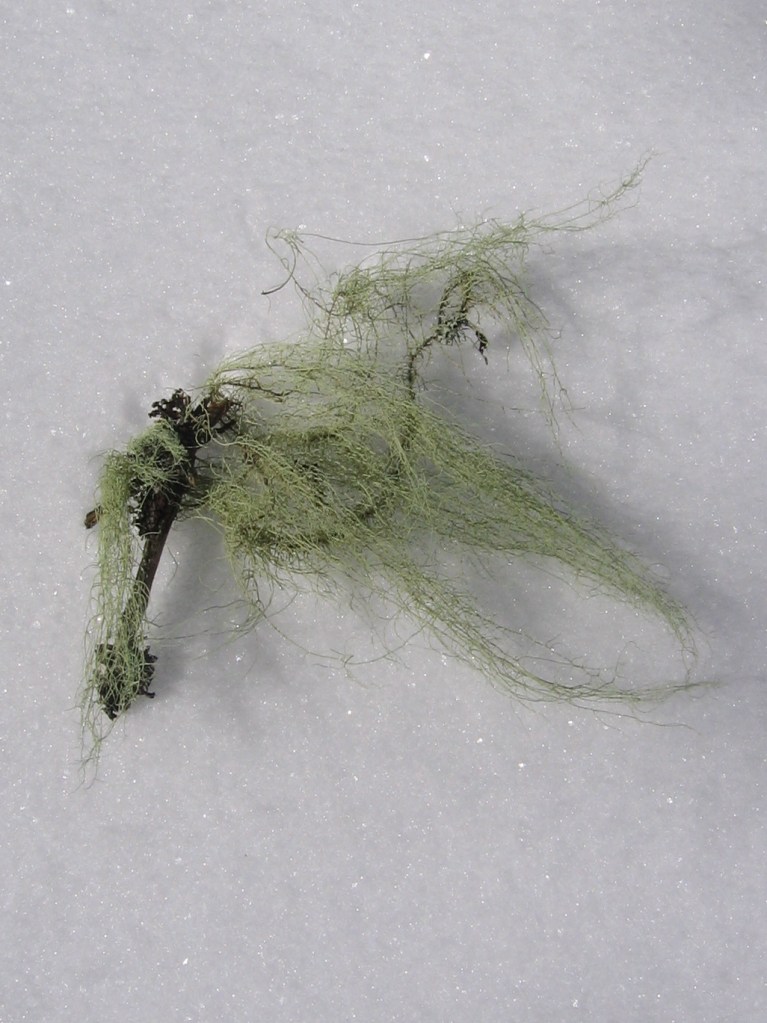
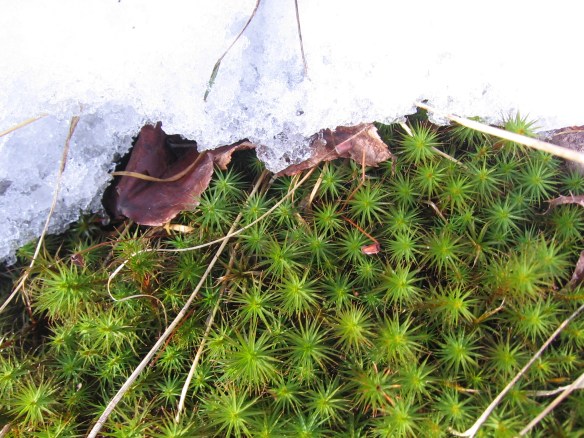
Leafy trees are winter bare but here in the mixed forest there is still greenery. Conifers may lack the pizzazz of deciduous trees most of the year, but they are indeed ‘evergreen’ and wear their subdued colours all year round. Many of our aging white spruce are draped with ‘old man’s beard’, a sage-green lichen (genus Usnea). Last year’s bird’s nest is suspended high above the snow and made mostly from this lichen. This year we’ve had barely any snow, so green things normally hidden are making a rare winter appearance.


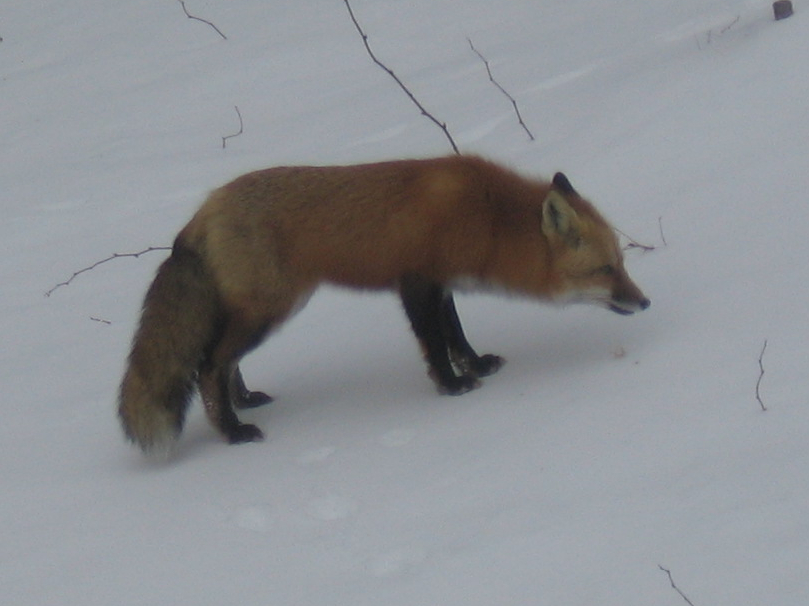
And, of course, there are still animals out and about. While many birds head south, blue jays stay and brighten our day. Most mammals wear coats of grey or brown, but there are a few more colourful characters in the neighbourhood.

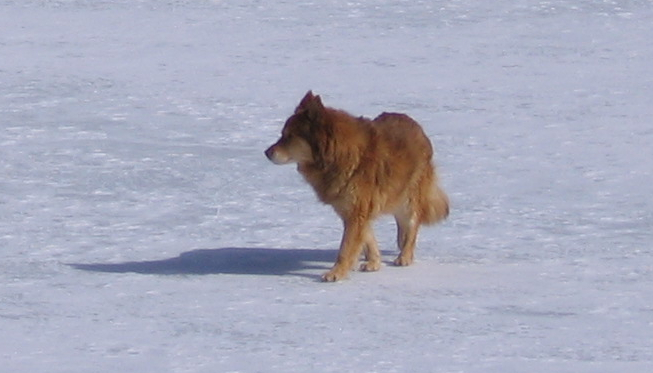
Not a fox! Our red dog Tundra also stood out as she walked across the frozen pond back in 2006.

Sunrise, Sunset

It seems fitting to end this post with sunset and its spectacular colours. Back in Calgary I used to ride my bicycle to work along the Bow River bike path. I loved those mornings when the river glowed red and rose just before sunrise. Here in the Holler I marvel at the sunset colours captured by the pond and framed by white snow and ice. I’ll leave you with these final reflections on the Colours of Winter.

Nature always wears the colors of the spirit.” – Ralph Waldo Emerson

Sue McKay Miller
March 16, 2023

p.s. Phew! Just under the wire to get this winter blog posted before we swing into spring.

Have a Happy Spring Equinox!