The Drought of 2025

As I write this it’s raining. It’s pouring. It’s raining cats and dogs and pouring buckets and falling in sheets. And we are glad of it. The rivers and brooks and ponds and wells are finally filling after the longest drought anyone can recall. All summer and into the fall the ground was parched. Thirsty plants were slow to grow, and water levels in rivers and ponds and wells kept dropping. One by one, ponds, brooks, and wells went dry.

There were forest fires on the mainland and the woods were tinder dry all over the province. At the end of July the government declared a province-wide fire ban, with $25,000 fines for numbskulls who ignored the ban. A few days later the province went a step further and closed the woods. No hiking, no biking, no ATVs allowed in the forest. People working in the woods required permits.

The woods ban did affect some tourism operators and disappoint keen hikers. Others were just whinging about their personal rights and freedoms. But many of us living in the woods were glad of the ban. One hundred people can go in the woods and cause no harm, but it only takes one idiot to toss a butt or start a campfire that can destroy our forests, our homes, even our very selves. I could still walk around on my own forested property, but why would I? Why risk being stranded up on the highland slopes if a fire broke out?

Besides, for me summer in Cape Breton is beach season. The silver lining in the lack of rain clouds was a grand beach season. Hot, sunny weather and warm ocean waters day after day. Nova Scotia is blessed with miles of beaches, for walking and swimming and all manner of watery fun for us and our visitors. We are, after all, Canada’s Ocean Playground.

Playing in the ocean in Canada’s Ocean Playground.

But even at the beach we wished for rain. For overnight soakers, or even a post-tropical storm that would bring a drenching and move on, anything. But every forecast of rain fizzled to a drizzle. Now and then showers would bring 10 or 12 mm, but it was soaked up and burned off so quickly it seemed like a wet dream. Sometimes the rain came in thunderstorms – a terrifying forecast with the woods a tinderbox. More than once, I gathered a few important papers and piled them by the door, ready to grab if a nearby tree ignited and I had to flee in the middle of the night.

Apparently one of those lightning strikes did find a target, not far from my place. I was visiting friends when we got word of forest fire on our shore. When fire trucks roared by, sirens screaming, I decided to hightail it home. I passed by where the fire trucks had pulled up and saw smoke billowing out of the woods. It was 3-4 kms north of here. Once again, I piled essentials near to hand and waited. But we were lucky – our local firefighters managed to douse the blaze, which had been smouldering for some time.Thank you firefighters! We so appreciate your work and dedication.

So this drought has been historic, one for the record books. I’m from Calgary, from a dry prairie climate where droughts are part of the normal cycle. But lately it seems that Calgary keeps flooding while both east and west coasts suffer droughts. It’s all topsy turvy as the climate changes and there in no ‘normal’ anymore.

L’il Pond Vanishes

As I wrote in Ups and Downs in the Holler, the water level in L’il Pond rises and falls with the season. In spring it can rise so high with snow melt and rain that it floods into the forest. Over the summer it subsides, a few inches a day, until it stabilizes at the local water-table level. Sometimes there is enough water to go Swimming with Frogs or drift around in a dinghy. Other summers the water is grungy and shallow and only fit for frogs and other aquatic flora and fauna.

Shallow parts of the pond routinely dry out and I’ve transported tadpoles, stranded in a shrinking pool, to deeper water so they have a chance to metamorphose, as I described in Frogs, Globs, and Pollywogs. As summer goes on the lilies grow up, the water drops down until the pond is covered in lily pads – hence L’il Pond, aka Lily Pond.

So the pond almost always gets low in the summer but it very seldom dries out completely. And yet it dried out by mid-September last year, the first time since I moved into my cabin ten years earlier. And then along came 2025 – and blew all the records out of the water.
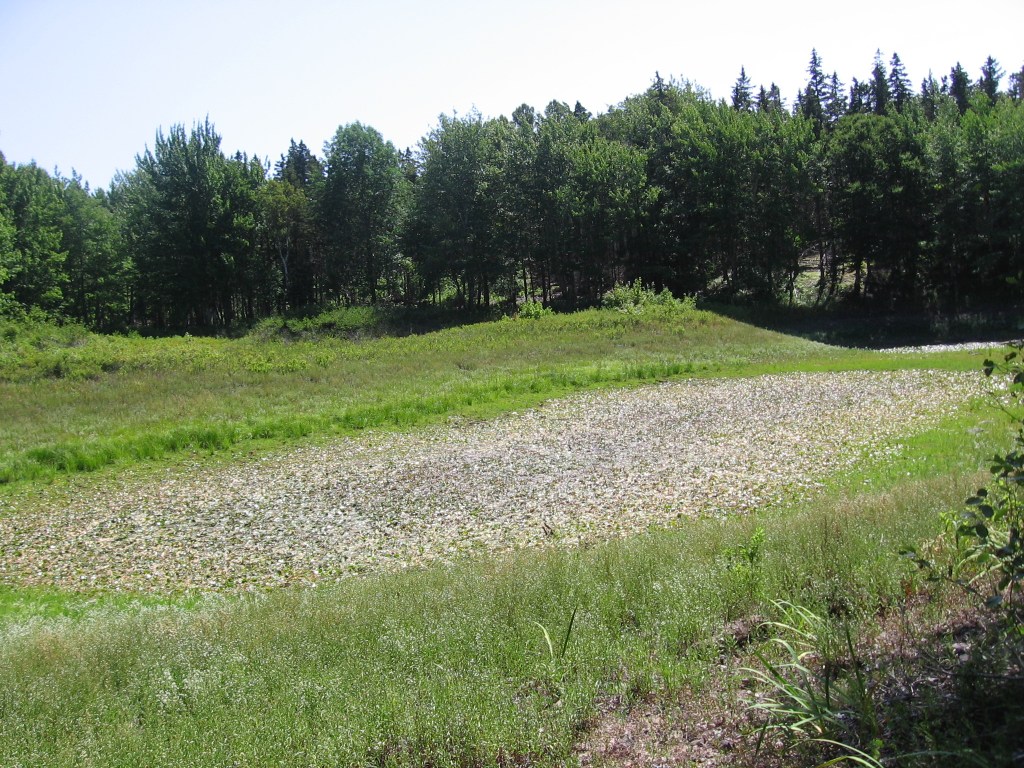
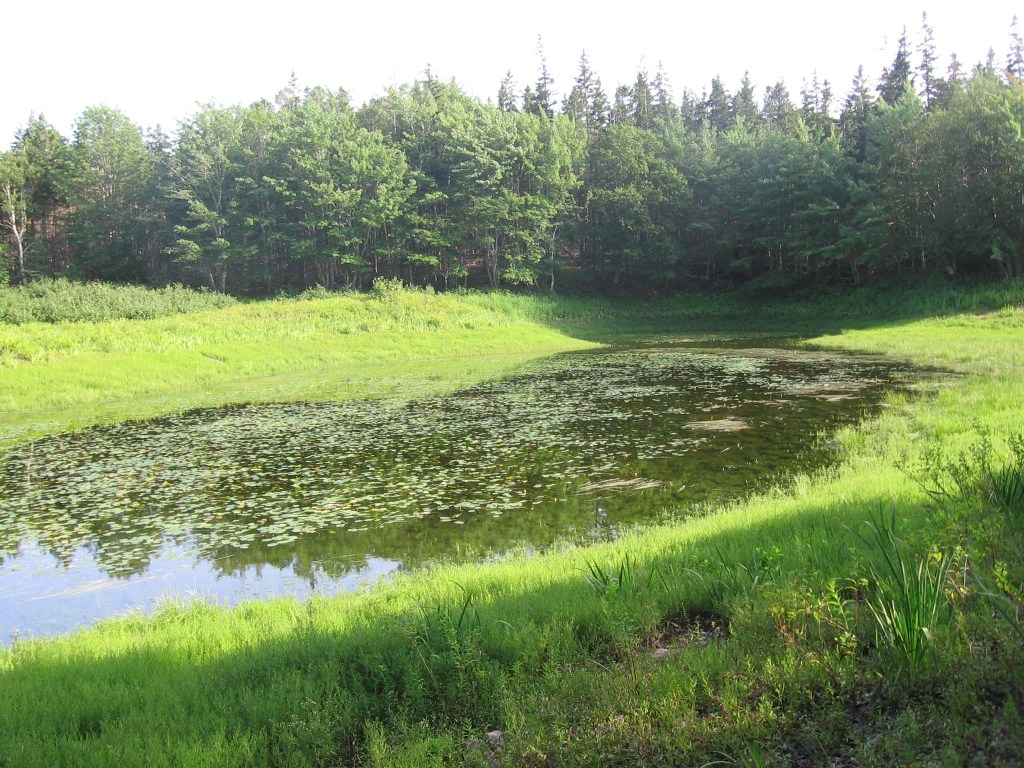
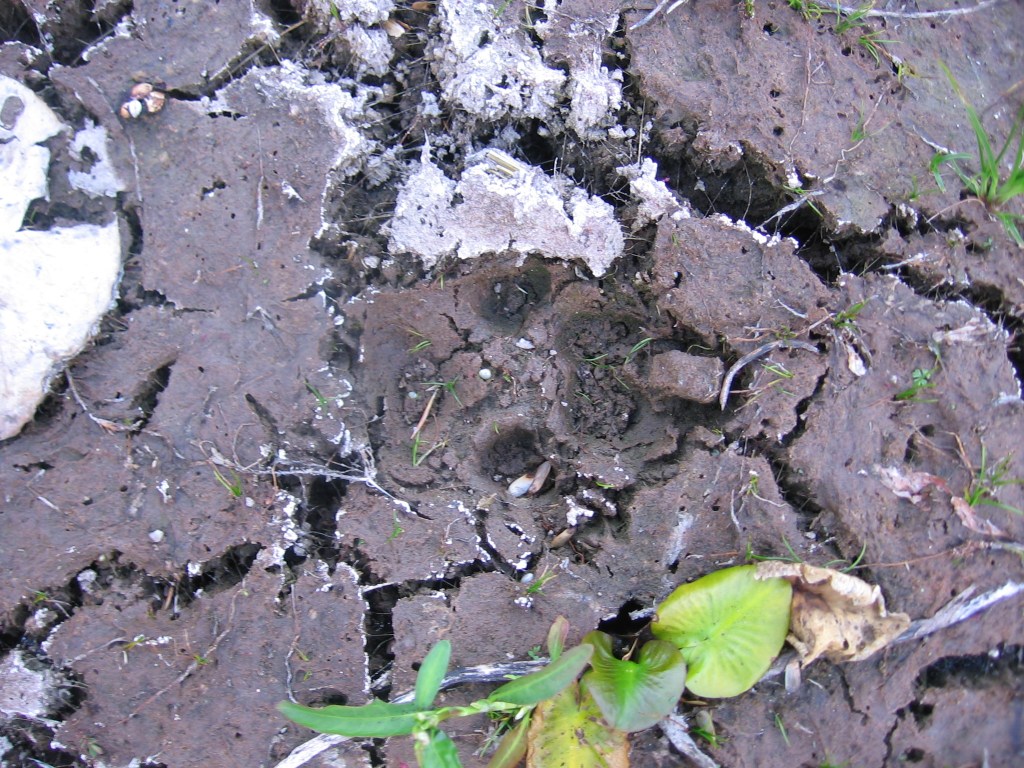
This year the pond dried out in August. And it stayed dry, all though September and October. Even when it does dry out, it’s usually muddy – the kind of mud that could suck you in and never let you go. But this year even the mud dried out until it cracked. I could walk right out to the deepest section of the pond.
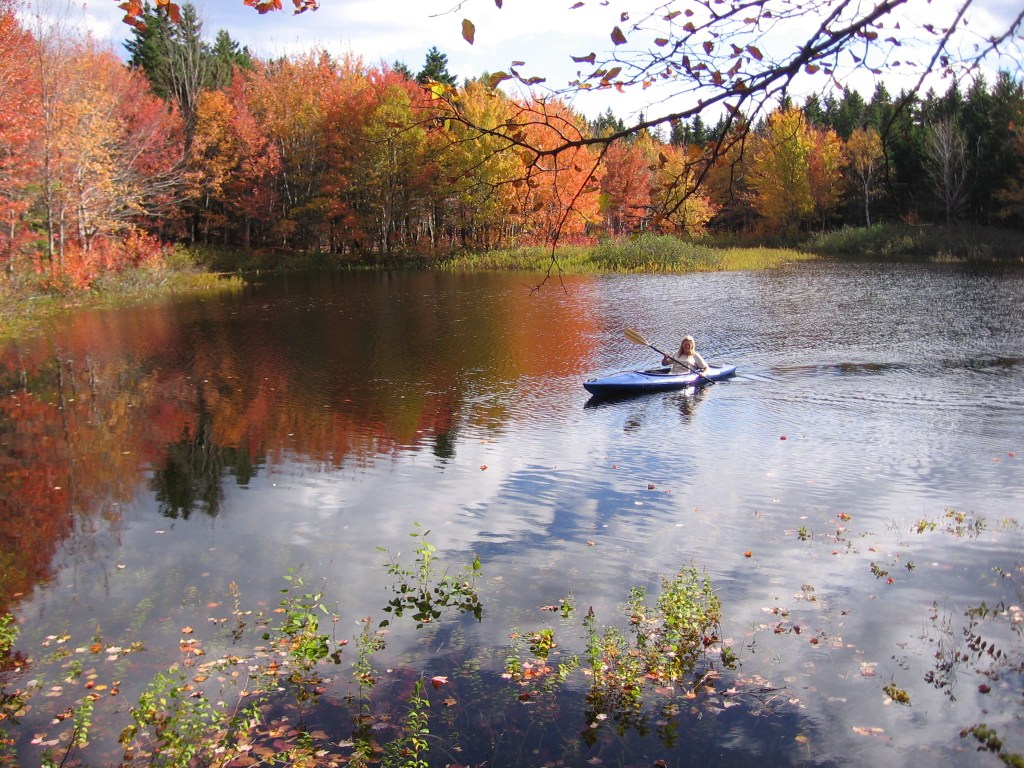
Quite a difference from 2023, when it wouldn’t stop raining. By October the pond had flooded into the forest and I went kayaking among the trees. Or October 2006, when we paddled around on the pond and enjoyed the fall foliage.

Wee Brooks Falls Hike

There is a trail nearby that follows the Little River valley westward, ending at a fork where an unnamed brook meets Little River. My son and I dubbed it ‘Wee Brook’, to match the ‘Little River’ theme. If you cross Wee Brook and follow it upstream into a box canyon it leads to a waterfall. Wee Brook Falls reveals itself one section at a time as you climb upward, twisting this way and that as it tumbles down from a lake, high up on the highland plateau.

I have walked this trail dozens of times, but, as often as not, I don’t cross the brook and so don’t get to the waterfall. Crossing involves stepping on unstable river rocks that are slippy with moss and tend to tumble under your feet. And there is usually a wide gap of fast-running water to cross. I don’t want to ‘fill my boots’ with icy water, or worse, fall and twist a knee, turn an ankle or even smack my skull on a stone. So I err on the side of caution and instead walk upstream on the near side of the brook, until the slope becomes too steep to traverse.

But in mid-October, with the woods ban ended and the colours still blazing, it seemed the perfect time to get to the falls, with the rivers still so low. I walked for half an hour or so until the trail led me to the water at the fork where Wee Brook flows into Little River. And there I stopped – gobsmacked.

I expected the brook to be low, but I was staring at a bone-dry creekbed, just a jumble of river rocks. Even the Little River was mostly dry rockbed, with a narrow stream of shallow water on one side. In all my visits to this place over 22 years I’ve never seen the like.

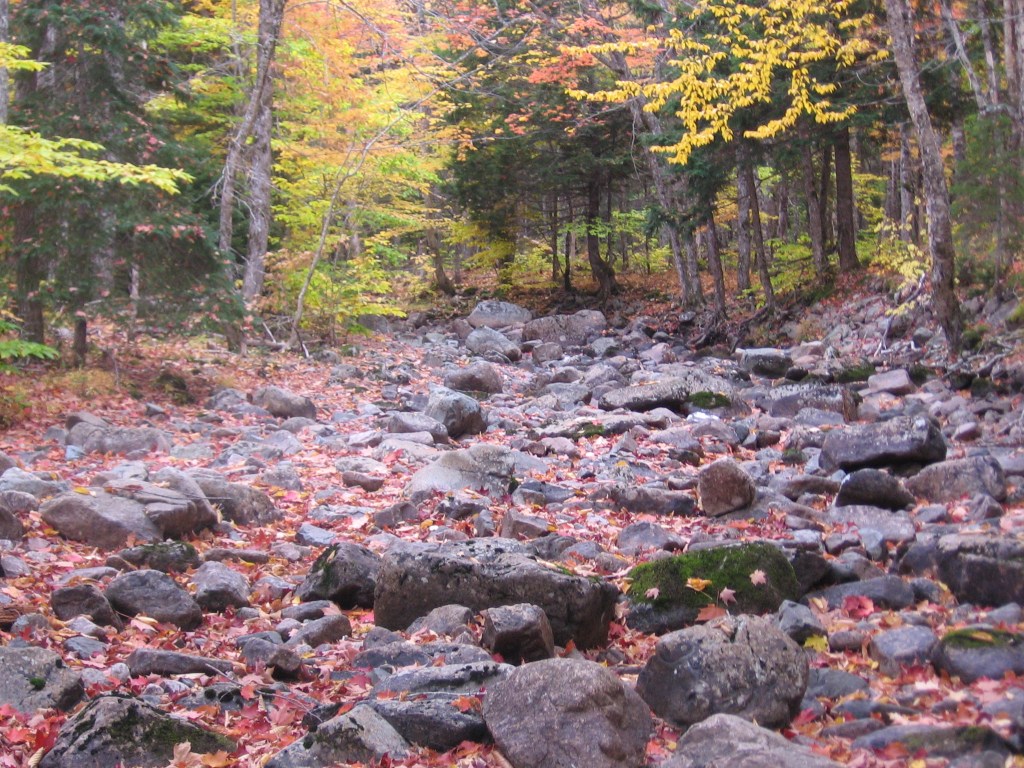
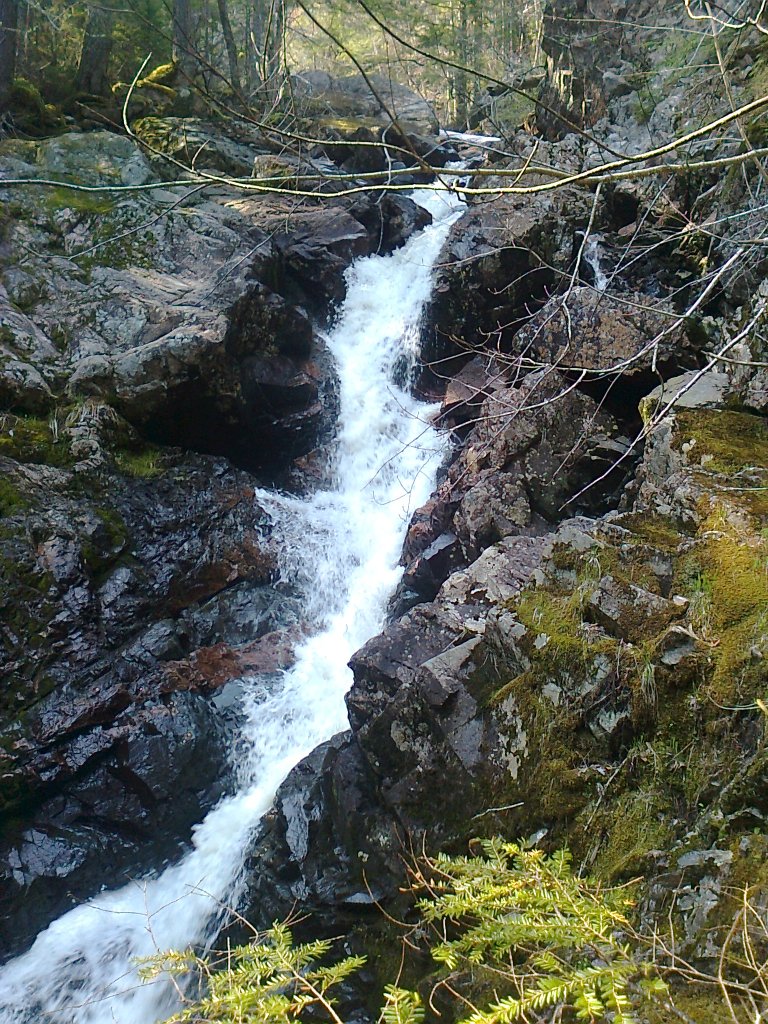
So, no problem crossing, no boots required, every stone a stepping stone. I crossed and walked upstream. A narrow stream of water surfaced, but so shallow it had gone underground when it reached the fork. After about 10 or 15 minutes I arrived at the lower section of the waterfall. This is usually a broad wall of water, but there was only a narrow stream. I’m showing a photo from 2021 for comparison, but remember – I only cross when the river is quite shallow, so the photo on the right is when water levels are relatively low.
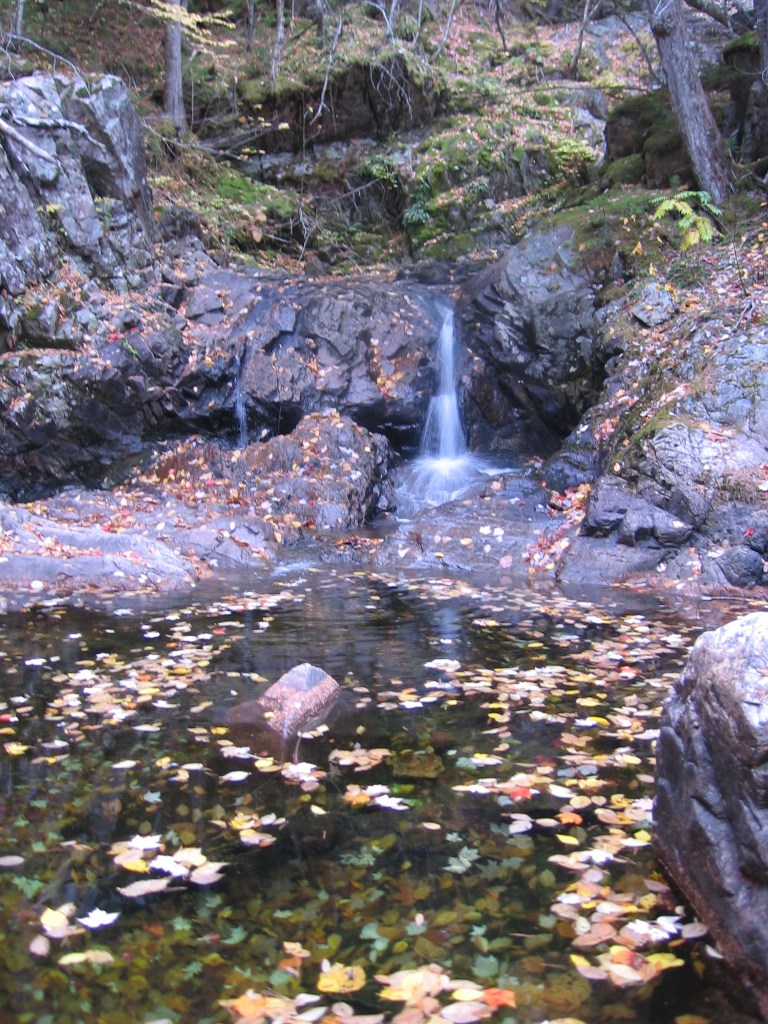
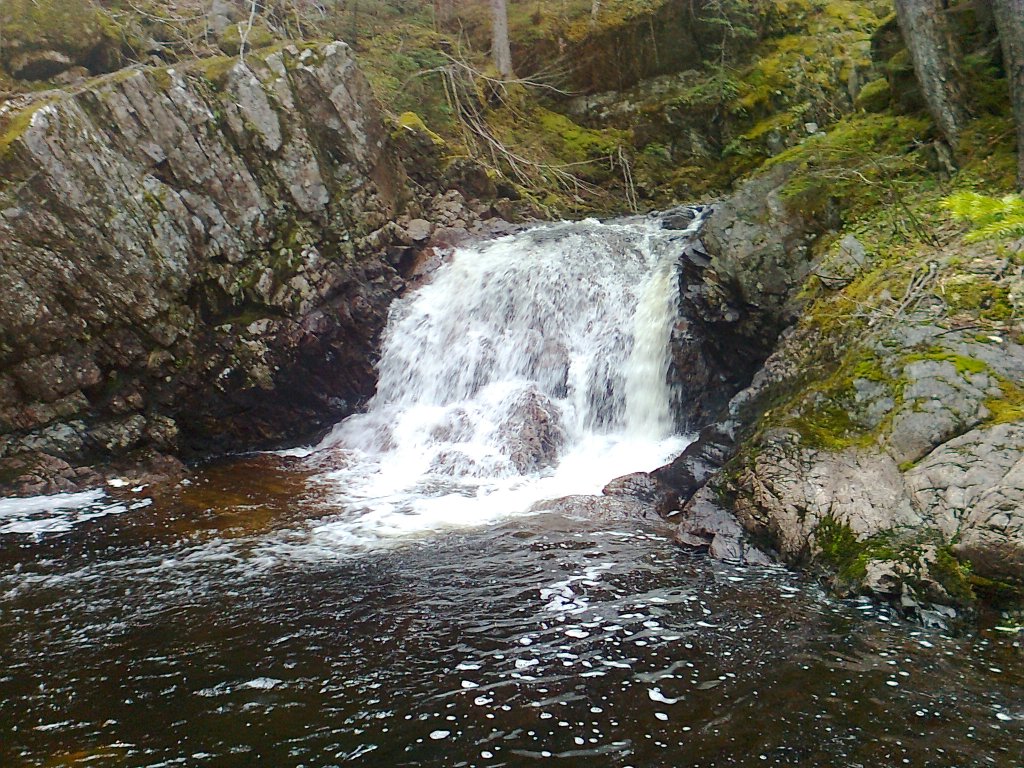
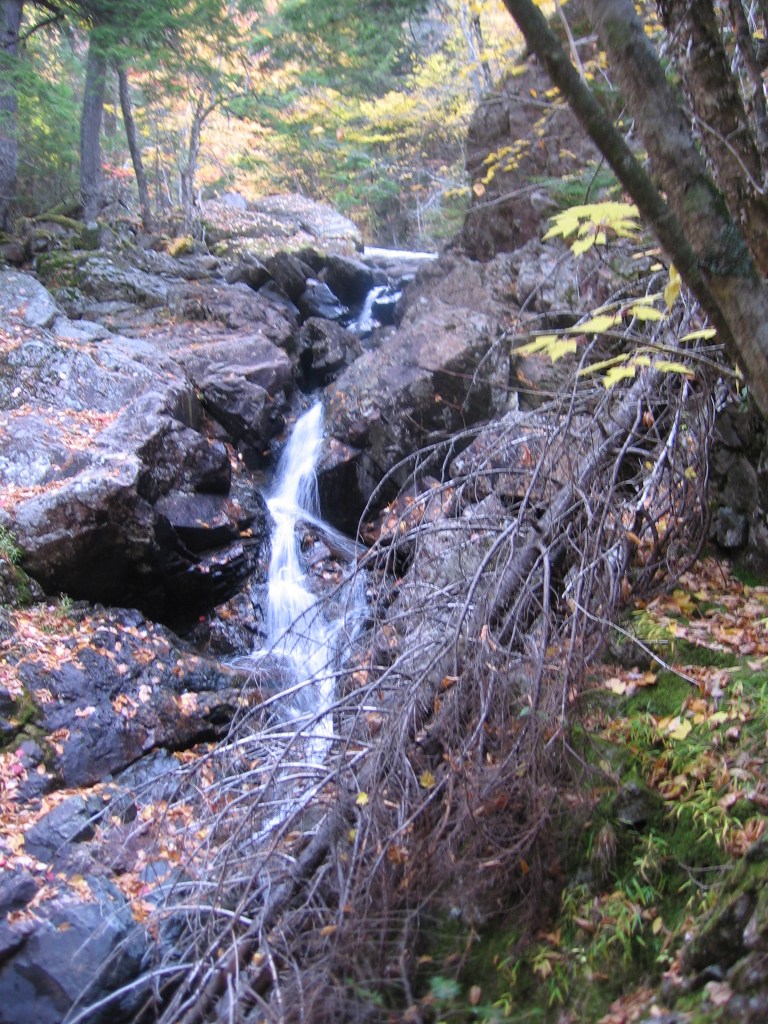
I climbed upward over fallen logs and scrambled up a short, steep slope and around the bend. From here you can see the next section of the falls, before it curves away out of sight again. Here are the 2025 vs 2021 pictures, for the record.
Halloween and the Rains Begin

On Halloween the rains came at last – bad timing for trick-or-treaters but still very welcome. Amounts varied widely across short distances, but my rain gauge recorded 50 mm on October 31st and 15 mm on November 1st. A good soaking. And yet all that appeared in the pond was a shallow mud puddle, mere inches deep and about 5′ across. The water table was so low that 65 mm barely showed. (Note: I’m mixing units because I’m Canadian and that’s what we do.)

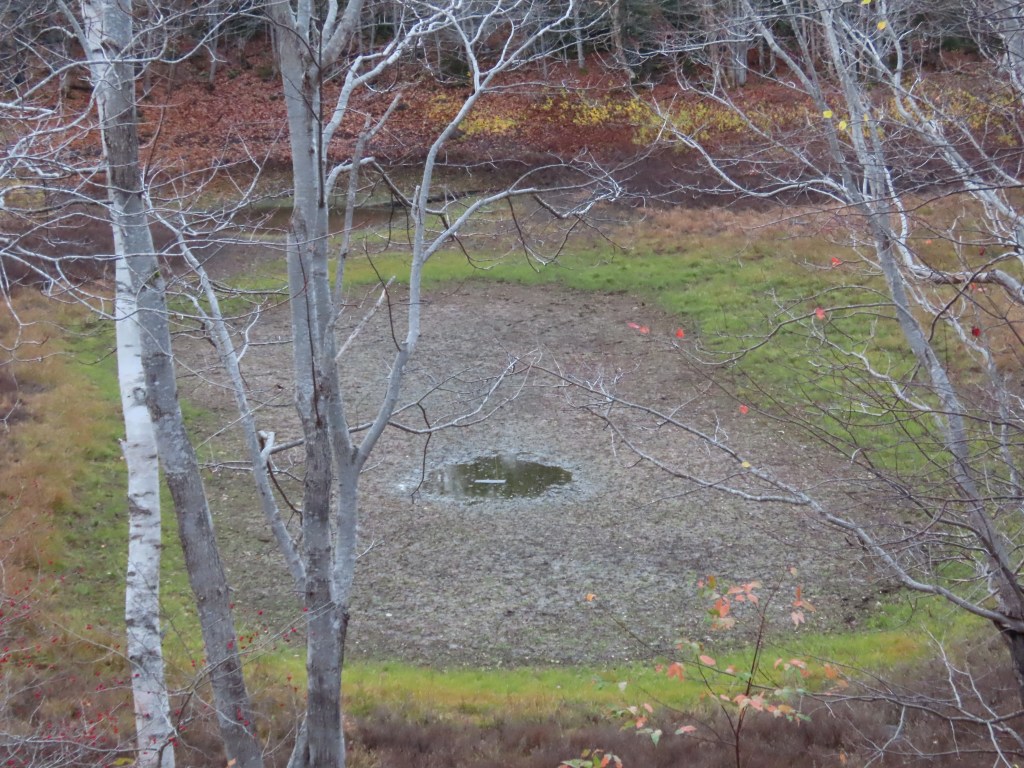
Then came another dousing of some 40 mm a few days later. More mud puddles appeared and they began to spread out and join up. But even with over 100 mm of rain, the pond was still a shallow pool with a wide rim of mud.That demonstrates how large a water deficit we incurred during this prolonged drought.

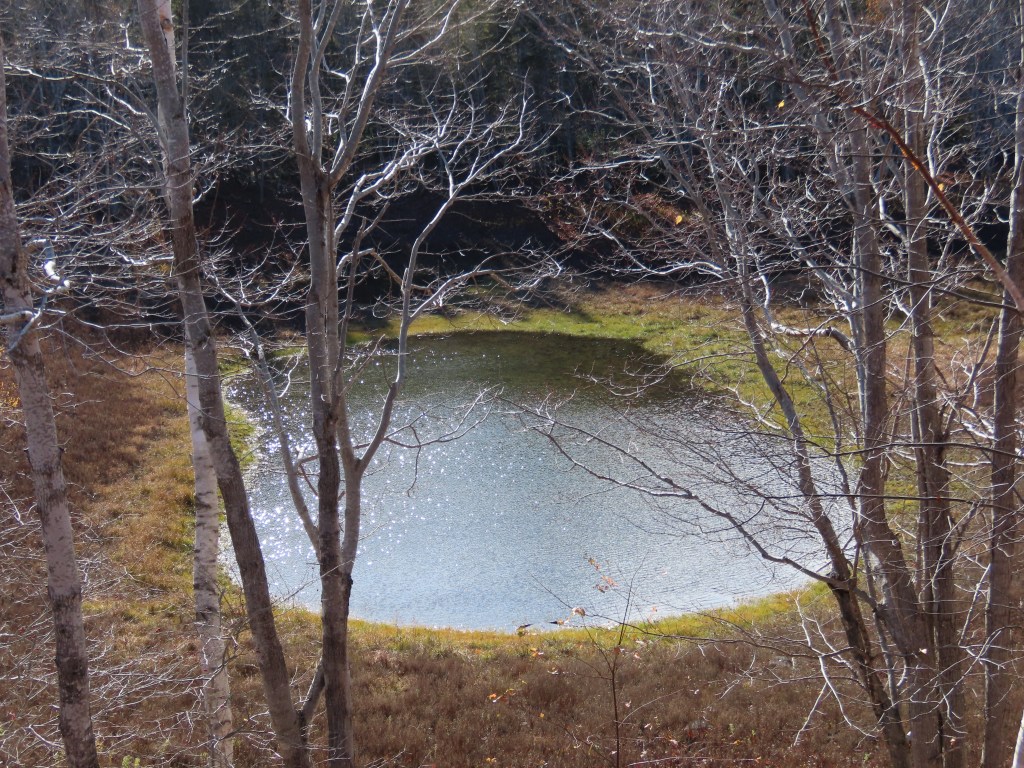
After all that heat and sunshine, we seem now to be stuck in a cycle of rain, rain and more rain. It never rains but it pours? Yesterday, when I started writing this, another 33 mm poured down. So, after 138 mm in the course of a week, the pond has risen to the grassy verge. Much better but still very low – no kayaking through the forest this fall. But the forecast is for lots more rain (be careful what you wish for) so the pond will keep filling and rising. It’s been a long dry spell, but Hallelujah! The great drought is over. Now if only it would stop raining long enough for me to stack my wood, which was bone dry for weeks and is now sopping wet – doh!

Sue McKay Miller
November 7th, 2025

p.s. After I posted this blog we had 125 mm of rain over two days, for a total of 281 mm of rain in 12 days. The pond kept rising and rising until it overflowed and flooded into the woods. But with fresh snow on the mountains, I won’t be kayaking though the forest this year!

The pond on November 12th, 2025, after 281 mm of rain over 12 days.

One Too Many

No, not that type of one too many. One too many drinks or donuts is never a good thing and usually fits under the category ‘it seemed like a good idea at the time’. No, I mean pushing a season just a bit past its best-before date. In my case, going out just one more time after that perfect hike, swim, or snowshoe at the end of the season.

Snowshoe Season

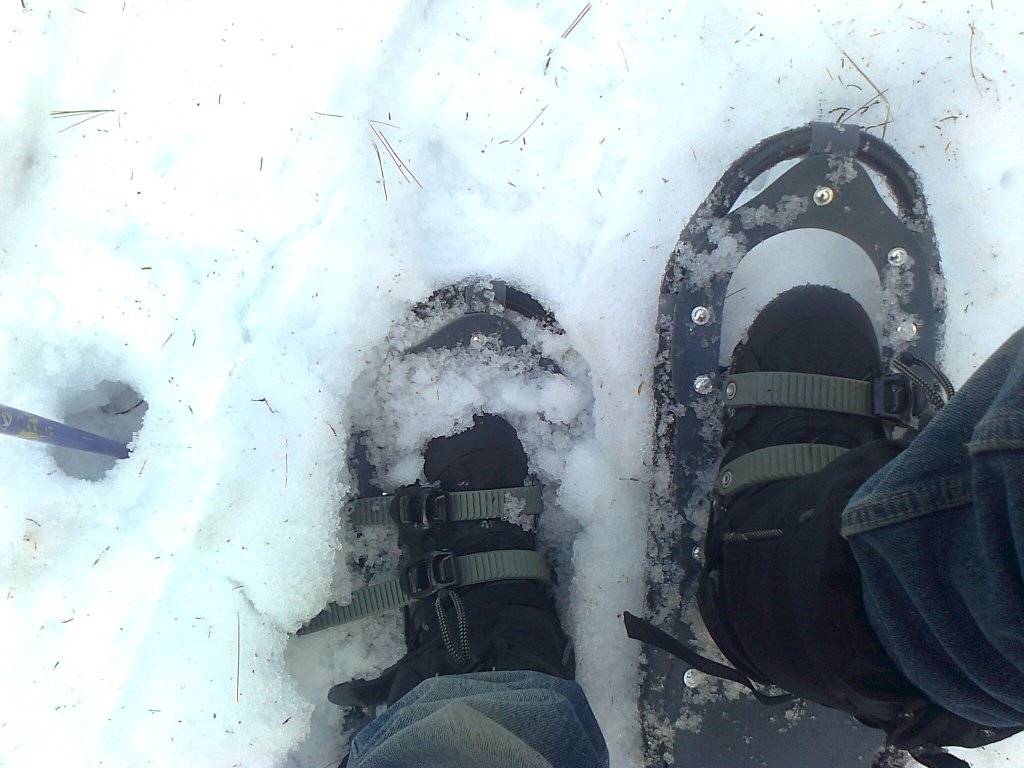
We haven’t had much snow this year, but as I wrote in The Secret Lives of Animals, my winter joy is strapping on my snowshoes and following animal tracks. With warm weather on the way I took advantage of a sunny afternoon in mid-March and went snowshoeing up the hill behind my house along an old wood road. I hadn’t gone far when I saw fresh tracks – first a pair of coyotes, then a moose. I followed the tracks up until they all fed into a narrow trail I’d cut through new growth blocking the road. I was pretty chuffed that the critters were using my trail, but it was too narrow for snowshoes, so I headed back down, past some grouse tracks. (These photos were taken a couple of days later, hence not-so-fresh or clear, and with human tracks alongside. They’re a bit better full size.)

Ruffed grouse (aka partridge) tracks in the snow.

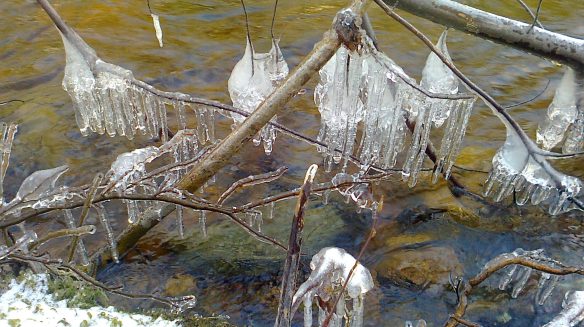
I crossed the slope over to a trail, then went down, down, down to Little River. The river was beautiful. The boulders wore icy skullcaps and stranded branches were festooned with fairy goblets and lacy necklaces of glittering ice. I paused to admire Winter’s Art Gallery, then snowshoed downstream. Before long I spotted small tracks emerging from the open water, up a steep slope, and along the riverbank. It was a mink, I think. Next came the tracks of a coyote who’d crossed the river, and, farther along, a second coyote who’d crossed over.

By chance I found myself following in the footsteps, so to speak, of these two coyotes on my way back home. We all took the same route away from the river and through the woods, but I parted ways when their tracks went straight up a very steep slope. I was almost home when I crossed their paths again. The coyote tracks went up the hill through the forest – and then out onto the old wood road above my house. This was the same coyote pair I’d started tracking when I first set out. I’d come full circle. Perfect! It was the best snowshoe I’d had in a couple of winters.

Little River ice art.

One Too Many Snowshoes

What a great way to finish up the season, right? Wrong. Of course I had to try to squeeze in just one more snowshoe before the snow disappeared. A couple of days later I set off with hope in my heart, detouring to take the track photos before heading off in the opposite direction, away from the river. It wasn’t a complete loss. I did see the tracks of a mother moose with her yearling, and a depression left by a sleeping moose. But I also had to snowshoe across moss and grass, jump over streams of snow-melt, and detour around puddles to get back onto the icy snow crust. April and the Albedo Effect was in full swing, even though it was only mid-March. It was my one-too-many snowshoe hike.

Dark late-day photo, but Moose had a snooze here.

I’ve done ‘one-too-many’ snowshoe hikes so often that it has become a Rite of Spring. A fantastic snowshoe must be followed by a rotten one. Sometime literally. When deep snow rots from below, I might break through up to my knees, as described in April – Awful or Awesome?

So why do it? Why not end on that perfect note, that ideal snowshoe? I can trace the whole one-too-many business back to 2019. I had a sublime snowshoe one brilliant blue-sky afternoon at the end of March. I’d seen lots of animal signs and enjoyed views of two waterfalls. I paused on a hilltop and looked back across the expanse of pristine white snow, shining under the sun and stretching to the next hill. I felt a deep sense of belonging, of being in the exact right time and place in the universe.

The snow had started to rot in the woods, but I couldn’t resist going again the next day, trying for just one more day of bliss. Hardly bliss. The conditions were atrocious. I tried an old wood road to the ocean, I tried through the woods to the river, but everywhere I went I kept breaking through the rotting snow. It was all frustration and no fun. I cursed myself for not having the sense to finish the season on a high note. But later I realized that ending on a sour note wasn’t all bad. It meant that I had pushed the season to its limit and a bit beyond. There was no second-guessing if I coulda/woulda/shoulda gone out one more time. And the one-too-many didn’t tarnish my memory of that perfect, penultimate snowshoe.

After my one-too-many snowshoe this year, I washed the mud off my snowshoes (no lie!) and stored them away. Why so reluctant to call it quits? Partly because now there is a pause. There is too little snow to snowshoe, but too much to bushwhack through the forest. So now I wait. And wait. Until the snow melts enough to swing into – spring hiking!

Spring Hiking Season

I don’t really ‘hike’ so much as mosey through the forest, bushwhacking up and down the highland slopes. I follow freshets and brooks flowing from the highland plateau, linger in hemlock stands, and watch waterfalls tumble down. I explore new places and revisit to my special spots, as described in The Humbled Hiker.

I head for the hills as soon as the snow melts. I live and play in a mixed forest, so there is a time before the trees leaf out at the end of May that is ideal for exploring. The lack of leaves allows for more open vistas, better ocean views, and easier route-finding. But before the veil of leaves appears, a spring scourge drops the curtain on my spring hikes. I jotted down these notes a few years ago:

One Too Many Spring Hikes

“I went on ‘one too many’ hikes the other day. I realized it as I was beating off black flies during one of my Highland explorations. The black flies won this bout, and even the dreadful DEET didn’t stop their frenzy. The plan had been to climb part way up a ridge to a hemlock stand, and see how far I could traverse along that slope. I aborted my plan once I reached the hemlock stand. I just wasn’t having fun anymore.

I enjoyed the ocean view – briefly – and the towering hemlocks – briefly – and then made my way down slope and out onto the cutline where the gusty southwest winds kept the little buggers at bay. I set out on this walk somewhat tentatively. The flies had exploded a week earlier and were annoying on a couple of previous treks, but not enough to spoil the walk.

In fact, my previous walk to a waterfall had been delightful. There were flies, here and there, and it wasn’t a good time to linger by the water, but it was worthwhile. So why not end on that high note? Because fomo. Fear of missing out on one more wonderful walk in the woods. I didn’t regret my last bushwhack, even though I had to flee from the blackflies. That one-too-many hike confirmed what I had suspected: Time to stash away the hiking gear.”

So there you have it. If a lack of snow marks the end of snowshoe season, an abundance of black flies has me fleeing the forest each spring. They breed in fresh running water – abundant on the highland slopes – and usually emerge in mid-May. I find the wee pests so distracting that it’s hard to focus on my footing, which is dangerous as well as frustrating. As my notes suggest, I’d had a wonderful walk to a waterfall that would have made for a grand finale, but I just had to push my luck.

As with the end of snowshoe season, there is a hiatus after spring hiking. The black flies are biting but the ocean is still frigid – and it takes a long, long time to warm up. So I must bide my time before I can dive into …. swim season!

Swim Season

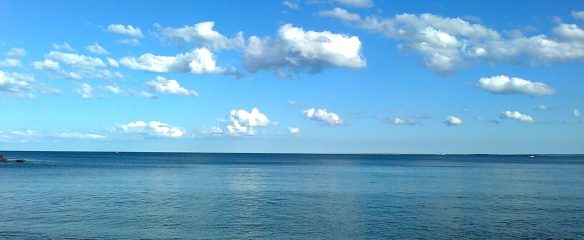
Ah, summer in Cape Breton. We are blessed with an abundance of places to swim: lakes, rivers, and ponds galore – including my own L’il Pond (Swimming with Frogs). But my favourite place to swim is the ocean. And by ‘swim’ I mean being immersed in water. I might swim a few strokes, then roll over and float on my back and gaze at the clouds bobbing by above. Or I might do a little bobbing myself, gently rocked by the waves while I watch the terns and gulls and gannets. I’m a prairie girl who fell in love with the ocean and I feel happiest when I’m held in her briny embrace.

Dive into blue bliss!

Summer is sun, suds, sand, swimming in the salty sea, and a smiling Sue. The perfect beach day is hanging out with friends, going for a swim, drying off in the hot sun with a cold drink, then diving back into water. Repeat.

One Too Many Swims

Unlike snowshoeing or hiking, there can be one-too-many swims in a single day as well as a season. The water is so tempting and the air so warm, but that last swim of the day can be a bit risky. The air temperature drops abruptly when the sun drops behind the highlands. One swim too many and I might get … the dreaded chill. Cold that gets so deep into my bones that there’s only one cure. I have to go home and get immersed again – in a nice hot bath.

Swim season in Cape Breton is sweet but vanishingly short, which is why I try to get in the water every day that the weather allows. That’s also why I push the season and end up diving in one-too-many (or even two-too-many or three-too-many) times, because it’s a long while before beach season rolls back around. Here’s a (lightly-edited) passage from my diary dated Sept. 15th, 2023. (Mervi is my beach buddy (pictured above) who is a glass blower, which is very hot work.)

“Went for a beach walk and to see waves ahead of (tropical storm) Lee. Wore tights and a cotton shirt but threw in my swimsuit and towel in at last minute. After walking in the tidal wash I felt quite warm and a couple of tourists were in the waves. It was cloudy but warm and humid. Tourists said they felt fine getting out, so after they left I put on my swimsuit – still damp from previous swim – and immediately felt chilly. Considered putting clothes back on but opted to wait for Mervi. She was hot from glass blowing and went right in. I waded out but a biggish wave soaked me almost to my neck so, after hesitating, I dove under and floated a bit cuz probably final swim.

Got out and brrr – cold. Needed to get out of wet swimsuit. Tried to wrap a towel around and change back into dry clothes but skin so clammy I couldn’t really get really dry … everything sticking and icky … I felt all chilly and clammy and sticky. Yuck! Wished I hadn’t gone in. But it was okay, I told Mervi, because this had been my one-too-many swim.”

Swim season is the hardest one of all for me to let go. And sometimes we do get a surprise blast of heat late in the season. But there comes a time when the heat has gone out of the air and the ocean is cooling down. A time to rinse out of all my beach gear and store it away, to accept that swim season is over for another year.

Just as a day at the beach must end, so swim season must come to an end.

The consolation is that there isn’t any waiting around for the next fun activity to begin. Just as the ocean turns grey and cold, the forest begins to glow with red, gold, yellow, and orange. The autumn woods are warm and welcoming, blazing with colour and fecund with fungi. Fall hiking season begins when swim season ends, and carries on through November, as I wrote in my very first (and very short) blog Bared Trees and Barred Owls. But one day the snow will fall and stay put, hiding all the hazards underfoot. Then it’s that in-between time again – too much snow to bushwhack but not enough to form a good base for snowshoeing. It’s time to wait for more snow so the seasonal cycle can start all over again.

One Too Many and Me

This one-too-many thing is a sign of my reluctance to switch gears. Even if that means shifting into neutral and idling until I can start my next fun outdoor activity. But doing something one-too-many times is also a strategy of sorts. It’s a way of forcing me to face the facts, ma’am – this season is over.

If the ideal snowshoe, hike, or beach day is a perfectly-crafted sentence, the one-too-many day is the period that ends the sentence and closes out that chapter. For me, one too many is just about right. Happy April everyone!

Sue McKay Miller
April 6th, 2025

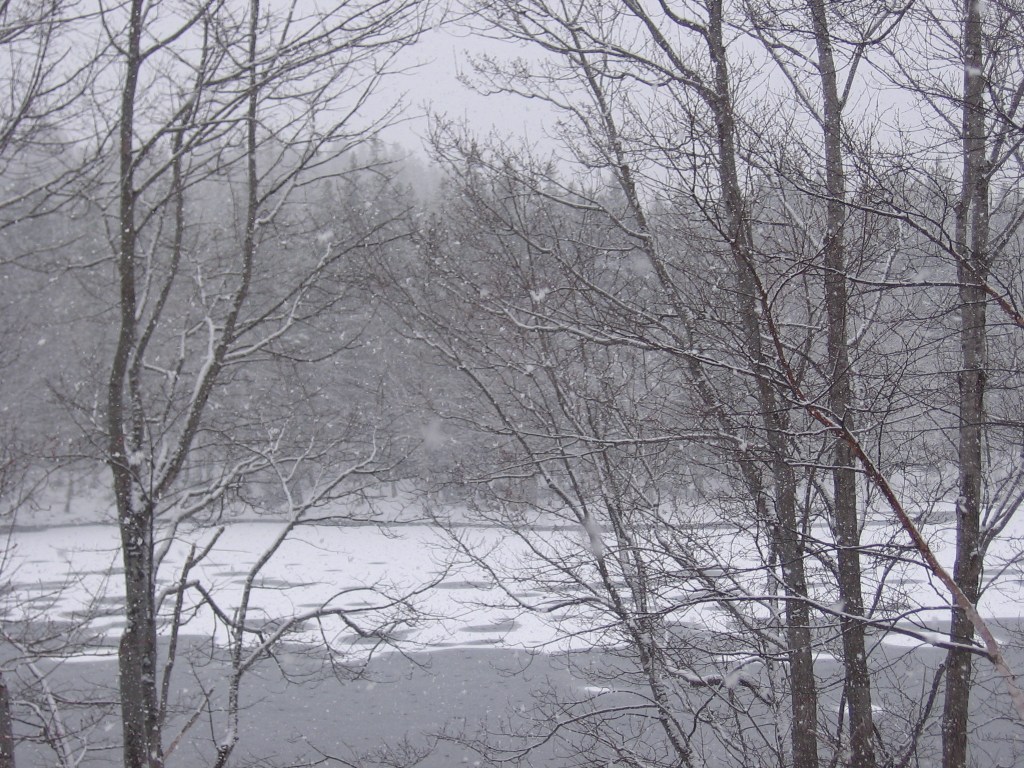
Winter Wonderland in April. We’ve had three-too-many of these this past week!